
Crete Road Trip Itinerary: A Realistic 7-Day Route by Car (With 10 and 14-Day Options)
A Crete road trip itinerary works best when it follows the island’s shape, west to east, and respects its mountains.
Crete is long and narrow. A single highway runs along the north coast. The villages, gorges, and Minoan palaces you came for sit on slower roads that climb, twist, and drop toward the Libyan Sea. On a map, everything looks close. Behind the wheel, a 60-kilometer stretch can take two hours.
This guide gives you a flexible, day by day framework for driving around Crete. The route takes in Balos in the far west and Preveli and the gorges of the south coast. It continues to Phaistos in the Messara Plain and ends at Kato Zakros, on the island’s eastern edge. You will find honest drive times, notes on mountain roads and rental rules, and ways to stretch the route to 10 or 14 days.
Quick answer: For a first visit, plan 7 days and move west to east. Use three or four bases: Chania, the south coast near Plakias, the Messara Plain near Phaistos, and Sitia in the east. Keep most driving days under three hours, save long transfers for mornings, and leave room to stop. With 10 to 14 days, you can add Mount Ida, the Lasithi Plateau, and slower village days.
What Is the Best Crete Road Trip Itinerary?
The best Crete road trip itinerary for most travelers is a 7-day west-to-east route with three or four overnight bases. Crete stretches about 260 kilometers (160 miles) from end to end, but mountain roads mean most transfers between regions take two to three hours. A balanced route spends two nights in Chania for Balos and one night on the south coast for Preveli and the gorges. It then spends two nights in the Messara Plain for Phaistos and two nights in the east for Kato Zakros. Seven days covers the highlights. Ten to fourteen days allows a slower, more rewarding pace.
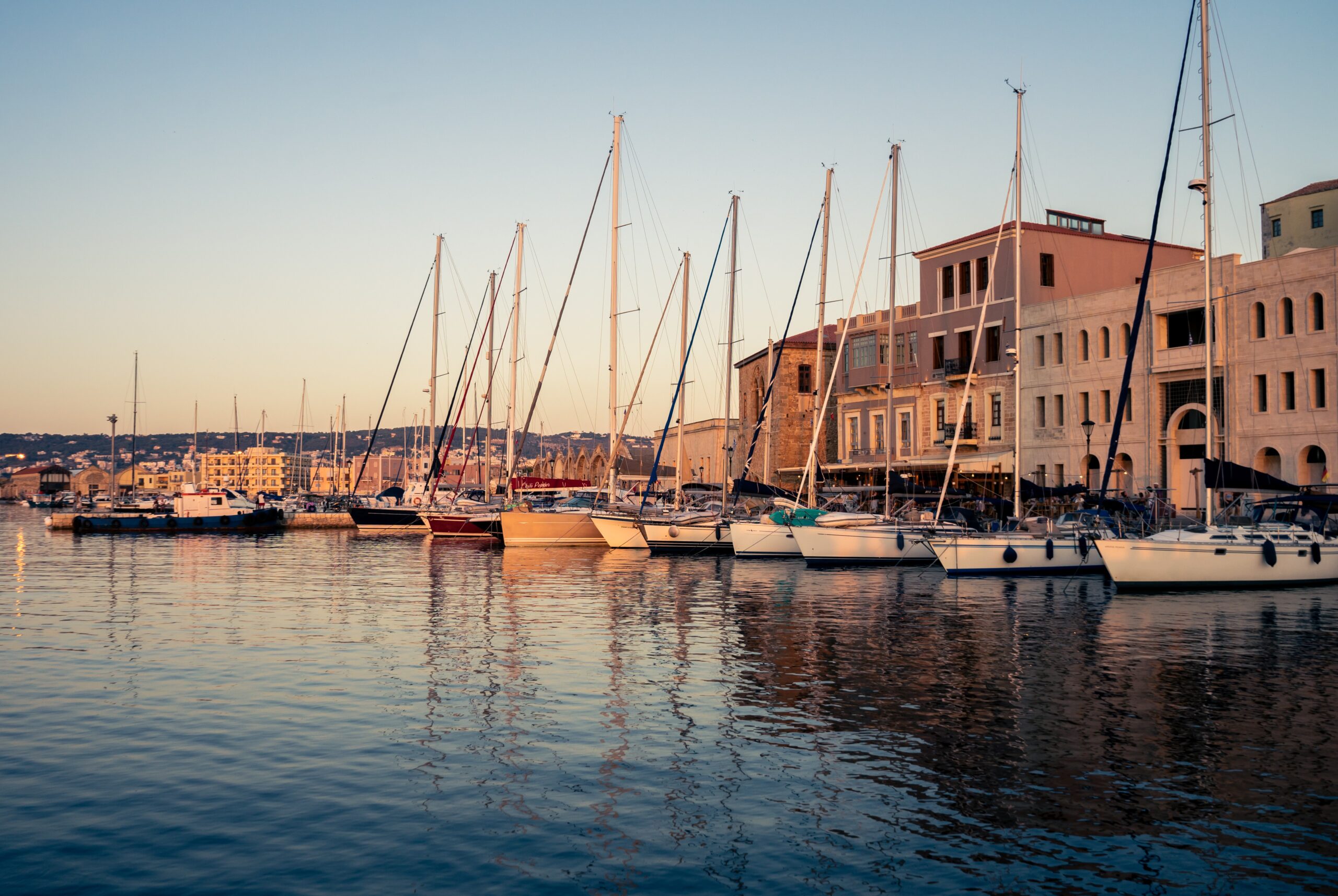
Image by Leonhard Niederwimmer from Pixabay
Your Crete Itinerary at a Glance
The table below shows the core Crete road trip itinerary. Drive times are realistic averages without stops. Add at least 30 to 50 percent for photo stops, village coffees, and slow trucks on mountain bends.
| Day | Route | Approx. driving | Overnight |
| 1 | Arrive in Chania | 20 minutes from the airport | Chania |
| 2 | Balos Lagoon and Falasarna | About 1.5 hours total | Chania |
| 3 | Askifou Plateau, Imbros Gorge, Frangokastello | About 2.5 hours total | Plakias |
| 4 | Preveli, Spili, drive to the Messara Plain | About 2 hours total | Near Phaistos |
| 5 | Phaistos, Agia Triada, Gortyna, Matala | Under 1 hour total | Near Phaistos |
| 6 | Heraklion Museum or Knossos, drive east | About 3.5 hours total | Sitia |
| 7 | Kato Zakros Palace and the Gorge of the Dead | About 2 hours total | Sitia |
| 8 | Drive to Heraklion for departure | About 2.5 hours |
If you are flying in from the mainland, our guide to getting from Athens to Crete explains ferries and flights before you pick up the car.
Before You Drive: What Driving Around Crete Is Really Like
Driving around Crete is manageable for confident drivers, but it rewards patience more than speed. Most visitors find the roads easier than expected on the north coast and slower than expected everywhere else.
The North Highway Is Faster, Not Fast
The main road along the north coast, often called the VOAK, links Kissamos, Chania, Rethymno, Heraklion, and Agios Nikolaos. Parts of it are modern. Other parts are two lanes with no divider, busy junctions, and tractors. Local drivers expect slower cars to move onto the wide shoulder so they can pass. Do this carefully and only when the shoulder is clear. Chania to Heraklion is about 140 kilometers and usually takes a little over two hours.
Mountain Roads and the South Coast
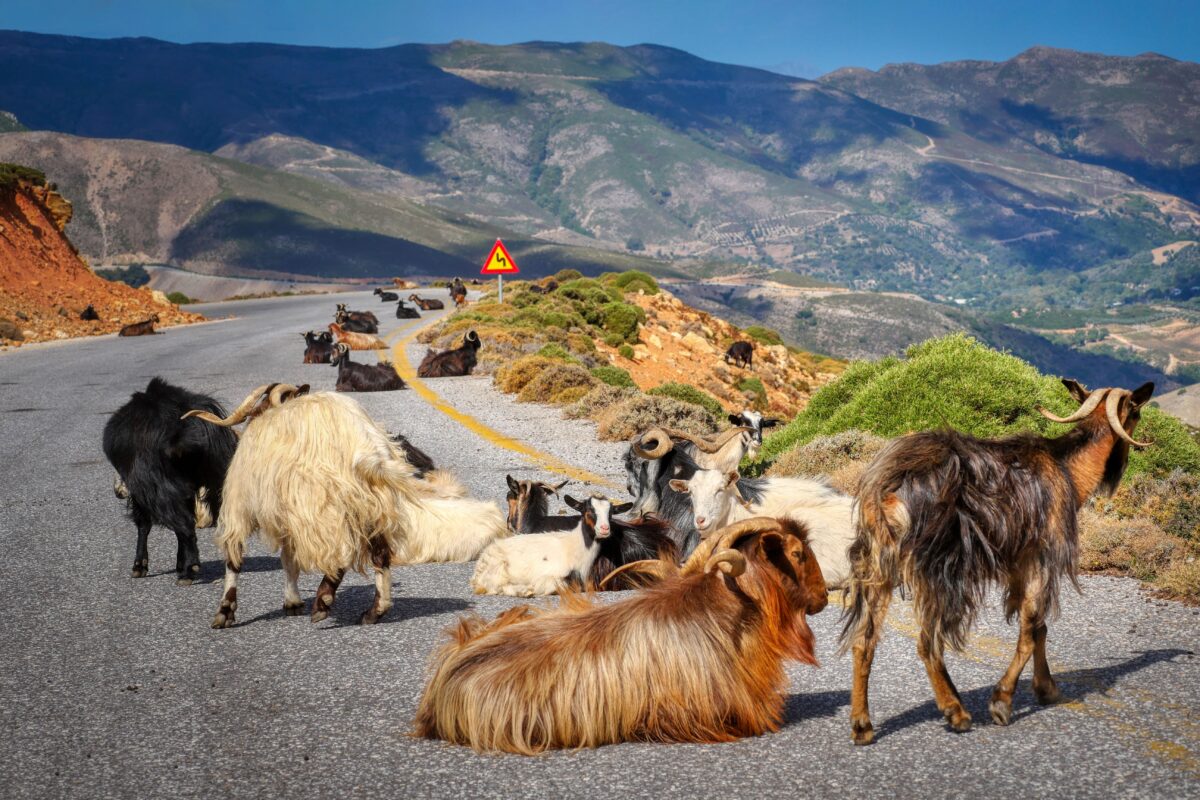
Every road to the south coast crosses the mountains. These roads are paved and generally well kept, but they are narrow, full of hairpin bends, and often shared with goats and sheep. Small rocks sometimes fall onto the road after rain. Drive in daylight when you can, use your horn before blind corners, and fill your tank before heading south or east. Gas stations thin out quickly in Sfakia, the Messara, and the far east.
Dirt Roads, Balos, and Your Rental Agreement
A few famous places sit at the end of unpaved roads. The best known is the track to Balos, which runs for about 8 kilometers of gravel from the village of Kaliviani. Most rental agreements do not cover damage on unpaved roads, including tires and the underside of the car. Read your contract before you go. For Balos, the boat from Kissamos port is often the calmer choice.
Choosing Your Car and Rental Route
A compact car with a decent engine handles almost every road on this route. It also fits narrow village streets and tight parking. Manual transmission is the default in Crete, so reserve an automatic early if you need one. Drivers with a license from outside the EU, including US licenses, should carry an International Driving Permit alongside it.
The simplest Crete rental car route is a one-way rental: pick up in Chania and return in Heraklion. You avoid backtracking across the island on the last day. Ask about drop-off terms when you book, since one-way returns are not always included.
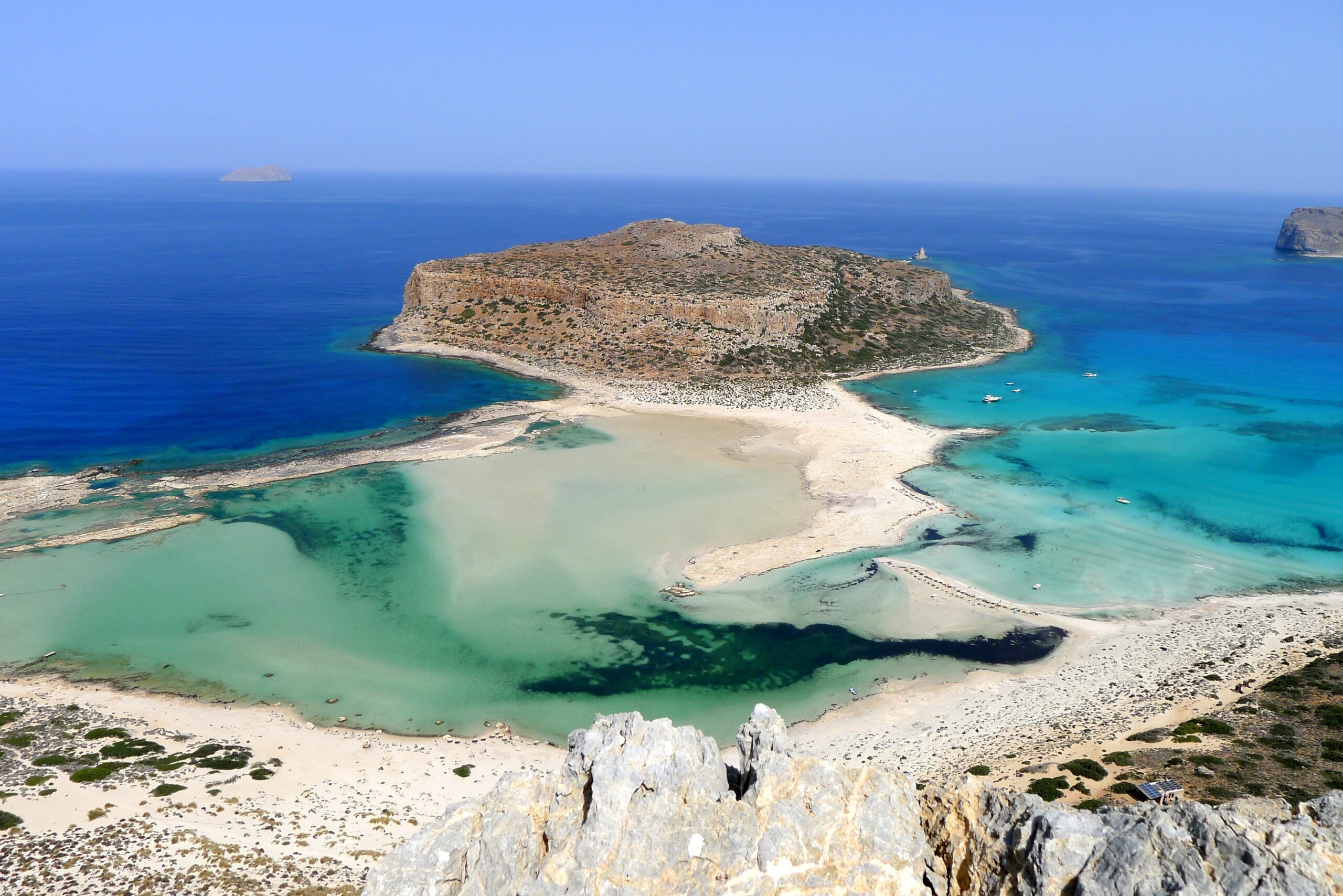
Image by Karl Egger from Pixabay
Crete Itinerary 7 Days: The Route Day by Day
This self-drive Crete itinerary keeps each day focused on one region. It groups nearby places together and saves longer transfers for mornings, when roads are quieter and the light is soft.
Day 1: Arrive in Chania
Pick up your car at Chania airport and drive about 20 minutes into town. Park outside the old town, since its lanes are narrow and many are closed to traffic. Spend the late afternoon walking the Venetian harbor, the old leather market street, and the quieter lanes of the Splantzia quarter. If you arrive early, the wineries around Chania make an easy first outing, and one short drive is enough on arrival day.
Day 2: Balos Lagoon, Gramvousa, and Falasarna
Balos is the reason many people plan a Crete itinerary by car in the first place. From Chania, drive about 45 minutes west to Kissamos. From there, you can take the morning boat, which also stops at Gramvousa island and its Venetian fortress. The other option is the gravel road from Kaliviani, followed by a steep walk of about 25 minutes down to the lagoon. The climb back up takes longer in the afternoon heat. Our Balos Lagoon guide covers both options in detail.
In the late afternoon, drive south to Falasarna for a long, open beach facing west. Stay for sunset, then return to Chania. If you prefer a shorter day, the unusual cove of Seitan Limania on the Akrotiri peninsula sits only about 30 minutes from town.
Day 3: Over the Mountains to the South Coast
Today you cross from north to south. Leave Chania early and drive through Vrises up to the Askifou Plateau, a high, flat basin ringed by the foothills of the White Mountains. Just beyond it, the village of Imbros marks the start of Imbros Gorge. The walk is about 8 kilometers downhill and takes two to three hours. It ends near the coast, and local taxis wait to take hikers back up to their cars.
After the gorge, continue to Frangokastello, a square Venetian castle on a wide beach. Then follow the coast road east toward Plakias for the night. This stretch passes small villages and long views over the sea. For more ideas along this coast, including Sfakia and Loutro, see our south Crete travel guide.
Day 4: Preveli, Spili, and the Road to the Messara
Start with a morning at Preveli Beach and its monastery, about 25 minutes from Plakias. A path of steps leads down from the parking area to the river mouth, where palm trees line the water. It takes about 20 minutes down and a little longer to return. The Preveli Monastery sits on the cliffs above and played a key role in Cretan resistance through the centuries.
Drive north through the Kourtaliotiko Gorge to Spili, a mountain village known for its Venetian fountain with a row of lion-head spouts. Stop for lunch. Then continue southeast to the Messara Plain, about 1.5 hours away. Stay in a village near Phaistos, such as Pitsidia, Kamilari, or Zaros on the southern slopes of Mount Ida.
Day 5: Phaistos, Agia Triada, and Gortyna
This is a slow day by design, with very little driving. Arrive at Phaistos Palace close to opening time, before the heat. The palace sits on a ridge above the plain, looking north toward Mount Ida. It was one of the great Minoan centers, and the famous Phaistos Disc was found here in 1908.
The smaller site of Agia Triada lies only a few kilometers away and is often quiet. In the afternoon, visit Gortyna, where the Law Code of Gortyn is carved in stone, then end the day at Matala. Its sandstone cliffs are full of carved caves, first used as tombs and later as homes.
Day 6: Heraklion, Then East to Sitia
Today is the longest driving day, so plan it carefully. Drive about 1 hour 15 minutes to Heraklion. Choose one main stop: the Heraklion Archaeological Museum or Knossos. Both together make a very full day.
The museum is often the better choice on a road trip. It holds the Phaistos Disc, the Minoan frescoes, and the faience goddess figurines from Knossos, which bring the palaces you have visited back to life. Afterward, continue east along the coast past Agios Nikolaos to Sitia, about 2 hours 15 minutes. Arrive before dark if you can.
Day 7: Kato Zakros and the Gorge of the Dead
From Sitia, the road to Kato Zakros takes about an hour. The last stretch winds down to a small bay. There you will find Kato Zakros, Crete’s fourth Minoan palace, set just behind the beach. Its remote position helped protect it from looting, and archaeologists recovered thousands of objects here.
Behind the palace, a trail follows the Zakros Gorge. Locals call it the Gorge of the Dead, because Minoans buried their dead in caves in its walls. Walk part of it in the morning, swim in the bay, and eat a late lunch by the water. Return to Sitia for a last quiet evening. On Day 8, drive back to Heraklion (about 2.5 hours) for your flight.
Road Trip Crete Days: How Many You Really Need
Most travelers need 7 days for a first Crete road trip, 10 days to see the island without rushing, and 14 days to include the mountains and slower village stays. Crete is the largest Greek island, and its variety takes time.
- 5 days: Choose one half of the island. The west (Chania, Balos, Imbros, Preveli) works well on its own.
- 7 days: The full west-to-east route above, with some long drives.
- 10 days: The same route with extra nights, so no day has more than two hours of driving.
- 14 days: Time for the mountains, the southwest, and days with no driving at all.
How to Stretch the Route to 10 or 14 Days
A longer route adds places that don’t fit on a tight schedule. These additions are also some of the places where Crete’s older stories are most present.
Add a Night in Rethymno
Split Day 3 by spending a night in Rethymno. Its Venetian old town and Fortezza are worth an evening, and the city sits well for the drive south to Preveli.
Add Mount Ida and Anogia
From Rethymno or the Messara, drive up to Mount Ida, Crete’s highest mountain. The road from Anogia climbs to the Nida Plateau. From there, a short walk leads to the Idaean Cave, one of the caves tradition names as the birthplace of Zeus. Anogia itself is one of the island’s most traditional villages, known for music, weaving, and a strong local identity.
Add the Lasithi Plateau
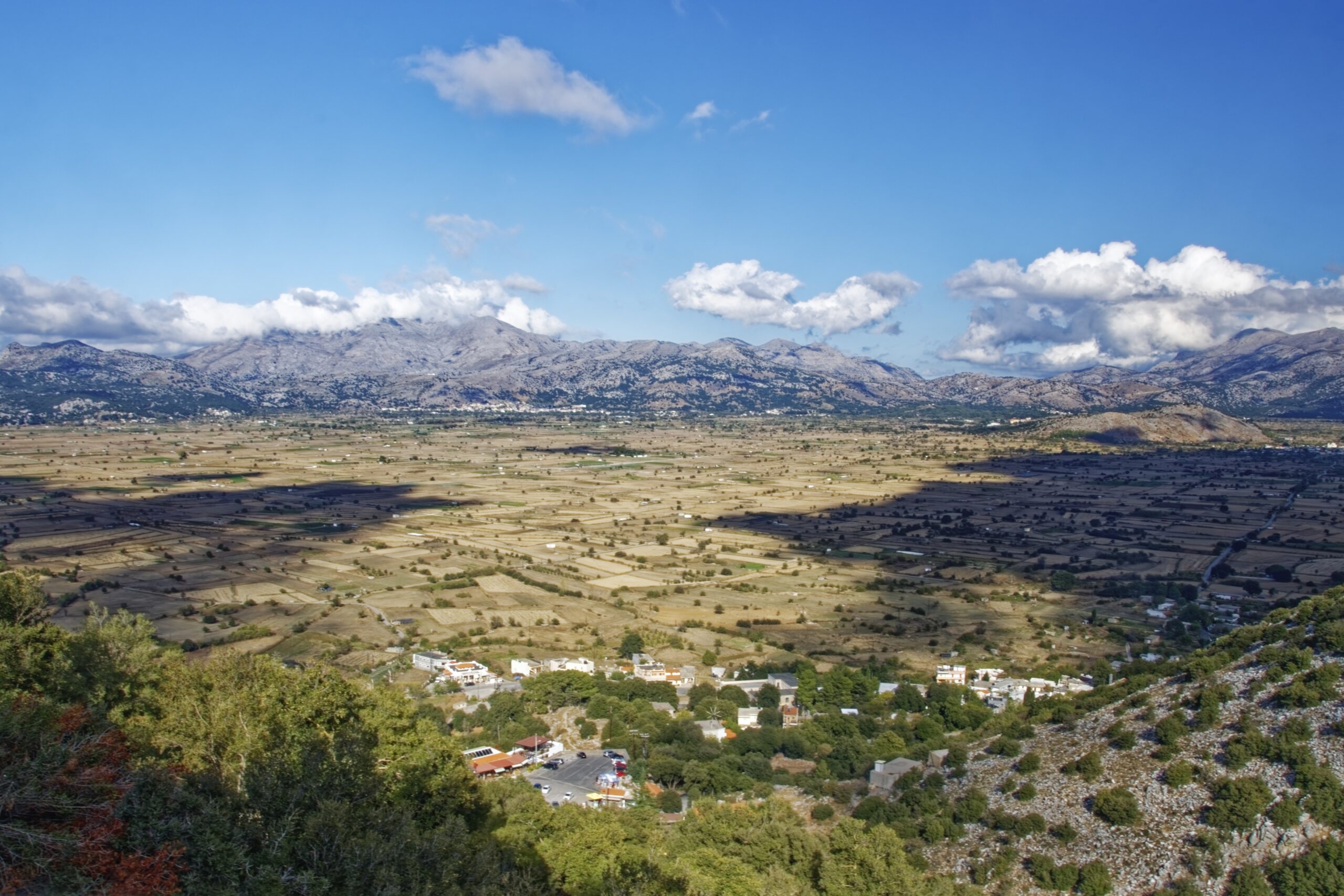
On the way east, detour to the Lasithi Plateau. Its flat fields, ringed by mountains, lead to the Diktaean Cave above Psychro. According to myth, Rhea, the mother goddess of Crete, hid the infant Zeus in a cave here. Allow half a day for the winding climb and the cave. Our guide to Crete’s caves covers both sites and several others.
Add the Southwest and the Far East
With 14 days, add two nights in Paleochora or Sougia for Elafonisi and the western gorges of Crete. In the east, give yourself time for Toplou Monastery and the palm forest at Vai, both close to Sitia.
When to Take a Road Trip in Crete
The best months for a Crete road trip are May, June, September, and October. Days are warm, the sea is swimmable, and roads are calmer than in midsummer. In July and August, traffic builds near Balos, Elafonisi, and Knossos, and the midday heat makes gorge walks harder. In winter, snow can close high roads on Mount Ida and around the Lasithi Plateau, and some boat trips, including those to Balos, run only in the warmer months.
September adds grape harvests and village feast days, known as panigyria, which often fill village squares with music in the evening. For a month-by-month view, see our guide to the best time to visit Crete.
Why a Slower, Guided Pace Shows You More of Crete
A fast road trip can reach many places in a week. A slower Crete road trip itinerary tends to understand them. The difference shows most at the Minoan sites. Phaistos and Kato Zakros are beautiful, but their walls and courtyards are hard to read without context. A guide who knows the archaeology can point out the storerooms, the shrines, and the objects found there. That context connects the ruins to the goddess figurines and frescoes in Heraklion.
Villages work the same way. A local companion knows which kafeneio still serves the village, where a panigyri is happening that week, and which road to the south coast is closed after rain. They can also introduce you to the women who keep traditions alive, the weavers, bakers, and keepers of family recipes. This thread runs back to the women of Minoan Crete and their place in the island’s early society.
None of this means you should skip driving. Many travelers mix the two. They drive themselves between regions and book a private guide for one or two days, often for the palaces, a sacred cave, or a mountain village. That balance keeps the freedom of a self-drive trip and adds the local knowledge a map cannot give you.
Image by Ralf Kronenberger from Pixabay
Conclusion
A good Crete road trip itinerary is realistic about distance. Move west to east over 7 days, with bases in Chania, the south coast, the Messara Plain, and Sitia. This lets you see Balos, Preveli, Phaistos, and Kato Zakros without spending every day in the car. Allow extra time on mountain roads, check your rental terms before any dirt track, and keep at least one day in each region free of long drives.
If you have 10 or 14 days, use them. The extra time brings in Mount Ida, the Lasithi Plateau, and the slower village days where Crete’s myths, traditions, and Minoan past feel close. For travelers who want that deeper layer, Elissos can help shape a private route around the island’s sacred sites, villages, and Minoan palaces. The pace leaves room to understand what you see.
Frequently Asked Questions
How many days do you need for a road trip in Crete?
Seven days is enough for a first road trip in Crete if you move west to east with three or four bases. Ten days lets you keep most driving days under two hours. Fourteen days adds the mountains, the southwest coast, and slower village stays.
Is driving in Crete difficult?
Driving in Crete is manageable for confident drivers. The north coast highway is straightforward, but mountain roads to the south coast are narrow and winding. Expect goats on the road, slow trucks on bends, and fewer gas stations in the south and east. Driving in daylight makes these roads much easier.
Can you drive to Balos Lagoon in a rental car?
You can, but the last 8 kilometers from Kaliviani are unpaved gravel, and most rental agreements do not cover damage on dirt roads. Many visitors take the boat from Kissamos port instead, which also stops at Gramvousa island.
Do I need an International Driving Permit to drive in Crete?
Drivers with a license from outside the European Union, including US license holders, should carry an International Driving Permit along with their regular license. Rental companies may ask for it, and police can request it at road checks.
Should I start a Crete road trip in Chania or Heraklion?
Starting in Chania and ending in Heraklion works well for a west-to-east route. It lets you use a one-way rental and avoid a long drive back on your last day. Starting in Heraklion and driving west works just as well if your flights suit it.
Is it better to stay in one base or move around Crete?
Moving between three or four bases is usually better. Crete’s distances make day trips from a single base long and tiring. Staying in one base works only if you plan to focus on one region, such as Chania and the west.
What is the best time of year for a road trip in Crete?
May, June, September, and October are the best months. The weather is warm, the sea is good for swimming, and roads are quieter than in July and August. In winter, snow can close high mountain roads.
Can you combine a self-drive trip with guided tours in Crete?
Yes. Many travelers drive between regions and book a private guide for one or two days, often for Minoan palaces like Phaistos and Knossos, sacred caves, or mountain villages. This mix keeps your freedom and adds context the sites don’t give on their own.
Featured Image by Albrecht Fietz from Pixabay