
Balos Lagoon, Crete: A Local’s Guide to Visiting
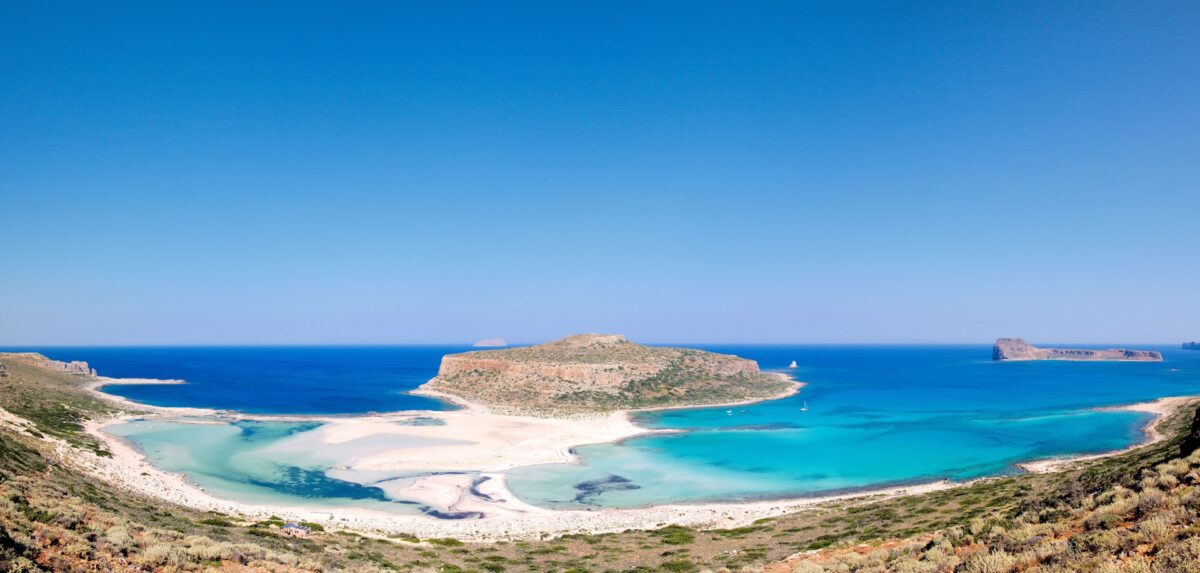
Balos Lagoon in Crete is easy to find directions to.
Every travel site links to Balos and every west Crete photo feed features it. The boats leaving Kissamos port each morning prove that the word has spread. Fewer people mention how quickly the boats become crowded. They also rarely explain how rough the dirt road can feel in a rental car. Once you reach the sand, you will find almost no shade, and the best view of the lagoon may actually be from above rather than from the beach itself.
This guide draws on years of making the journey by boat and by car, both during July crowds and in the quiet of early morning. It explains both routes honestly, including what each one requires in time and comfort, and shows where Balos fits within the wider coastline of west Crete.
Quick answer: most visitors reach Balos Lagoon either by a boat trip from Kissamos port, a roughly 40 minute crossing that stops at Gramvousa Island on the way, or by driving the unpaved road toward Kaliviani and walking down from a fee based parking area. Both routes end at a small municipal entrance fee, and neither leads to a beach with facilities, so water, sun protection, and proper shoes matter here more than at most Cretan beaches.
Balos Lagoon is a shallow, turquoise inlet on the northwest tip of Crete, formed between Cape Gramvousa and the smaller Cape Tigani, roughly 56 kilometers from Chania and 17 kilometers from Kissamos. The lagoon sits inside a Natura 2000 protected area that shelters nesting Eleonora’s falcons and feeding grounds for loggerhead sea turtles. Visitors reach it by a 40 minute boat trip from Kissamos, which typically stops at Gramvousa Island, or by a dirt track that ends in a parking area followed by a 30 to 45 minute walk down to the water. A small municipal fee applies at the entrance, and there are no permanent facilities on the beach itself.
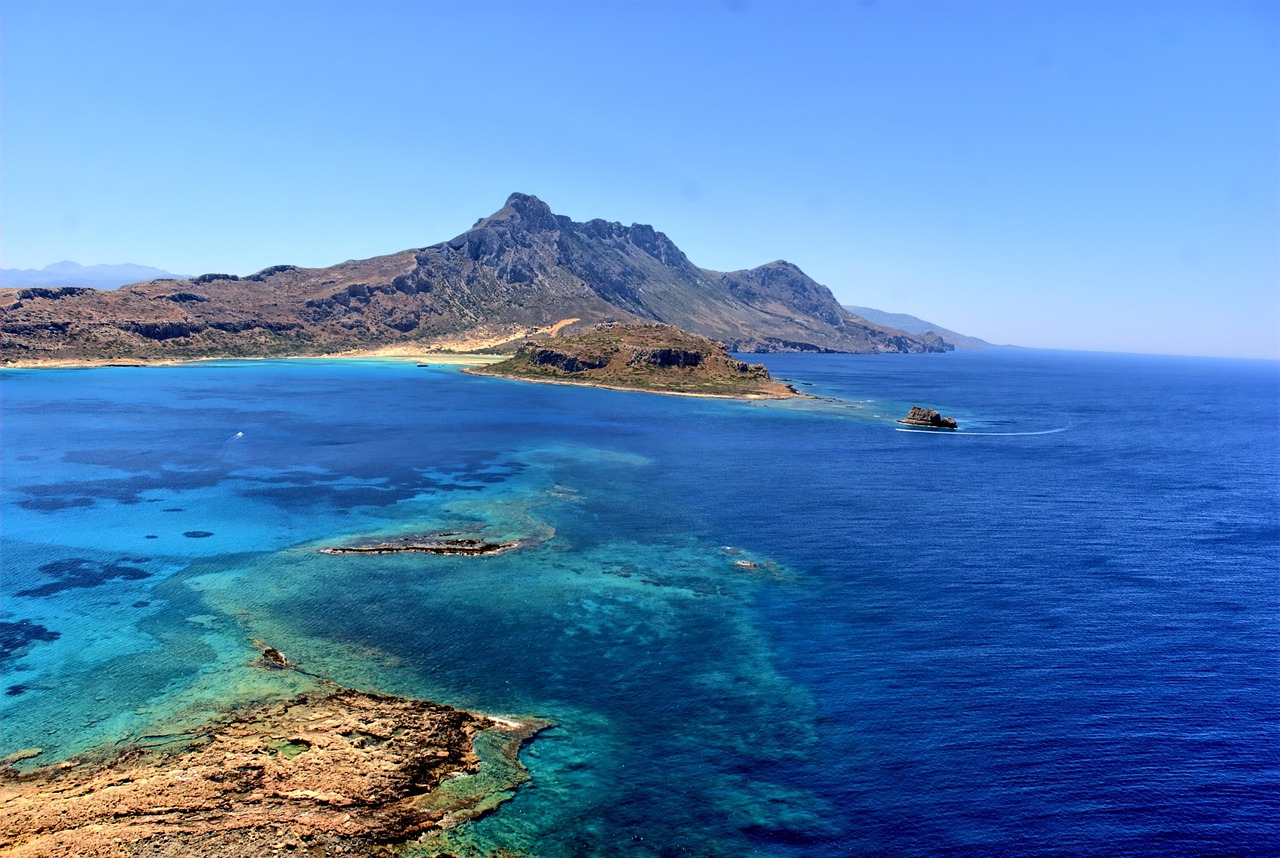
Where Balos Lagoon Is and Why So Many People Want to See It
The colors are the first thing anyone mentions. The lagoon’s water shifts between pale turquoise and deep blue depending on depth and light, and the sand along the shallow shore has a soft pink tint, the result of millions of crushed shells mixed into the white. Where the lagoon meets the open sea beyond a low ridge of rock, the water turns colder and clearer, good for snorkeling among small fish and sea grass beds.
The shallow inner lagoon rarely rises above the knee for long stretches, which makes it one of the safer swimming spots on the island for young children. That same shallowness, combined with the surrounding Natura 2000 protection, is part of why Balos still looks the way it does in photographs from a decade ago. The area is a nesting site for Eleonora’s falcons, a feeding ground for the loggerhead sea turtle, and a rare habitat along a coastline that has otherwise seen heavy tourist development.
Two Ways to Reach Balos Lagoon
There is no single correct way to get to Balos. The dirt road and the boat each solve a different problem, and which one makes sense depends on how much time, driving comfort, and walking you are prepared to trade.
The Boat Trip from Kissamos Port
The boat trip Balos Crete travelers usually choose runs daily through the warmer months, with several departures each morning and one or two in early afternoon. The crossing takes around 40 minutes and almost always includes a stop at Gramvousa Island before continuing on to Balos, so passengers get two destinations for one ticket. Boats range widely in size, and the larger ones can carry several hundred people at once, which explains why the beach can feel crowded by midmorning even though it is enormous.
A round trip ticket typically falls in a mid range bracket for adults, with reduced pricing for children. Snacks, coffee, and beach umbrellas are usually sold on board for an extra cost. Booking a day or two ahead during July and August is worth doing, since the busiest departures do sell out.
The Dirt Road and the Hike Down
Driving from Kissamos to Balos means following signs toward Kaliviani village, then continuing onto an unpaved road that winds along the Gramvousa peninsula for several kilometers. The surface is uneven, dusty, and slow going, closer to a gravel farm track than a road, and most rental agreements are less than enthusiastic about it. Cars manage it at low speed, but it takes patience.
At the end of the road is a fee based parking area, where a marked path drops down toward the lagoon. The walk down takes 30 to 45 minutes depending on pace and heat, on a rocky, uneven path with almost no shade. The climb back up in the afternoon sun is the harder half, so pacing water for the return matters as much as the way down.
Which Route Suits You Best
In peak season, the boat trades physical effort for crowd exposure and a fixed schedule. You skip the hike and the dusty road, and you get Gramvousa included, but you are on the beach at the same time as everyone else on your ferry, and you leave when the boat leaves. Driving trades convenience for control. You set your own arrival and departure time, which matters if you want the early morning light or a quieter late afternoon, but you take on the road, the parking fee, and a tiring walk in July heat.
Families with small children and travelers who would rather not manage a steep walk in the sun tend to do better on the boat. Travelers who want flexibility, or who plan to combine Balos with other stops in west Crete, generally prefer driving.
Gramvousa Island: The Venetian Fortress and Its Pirate Past
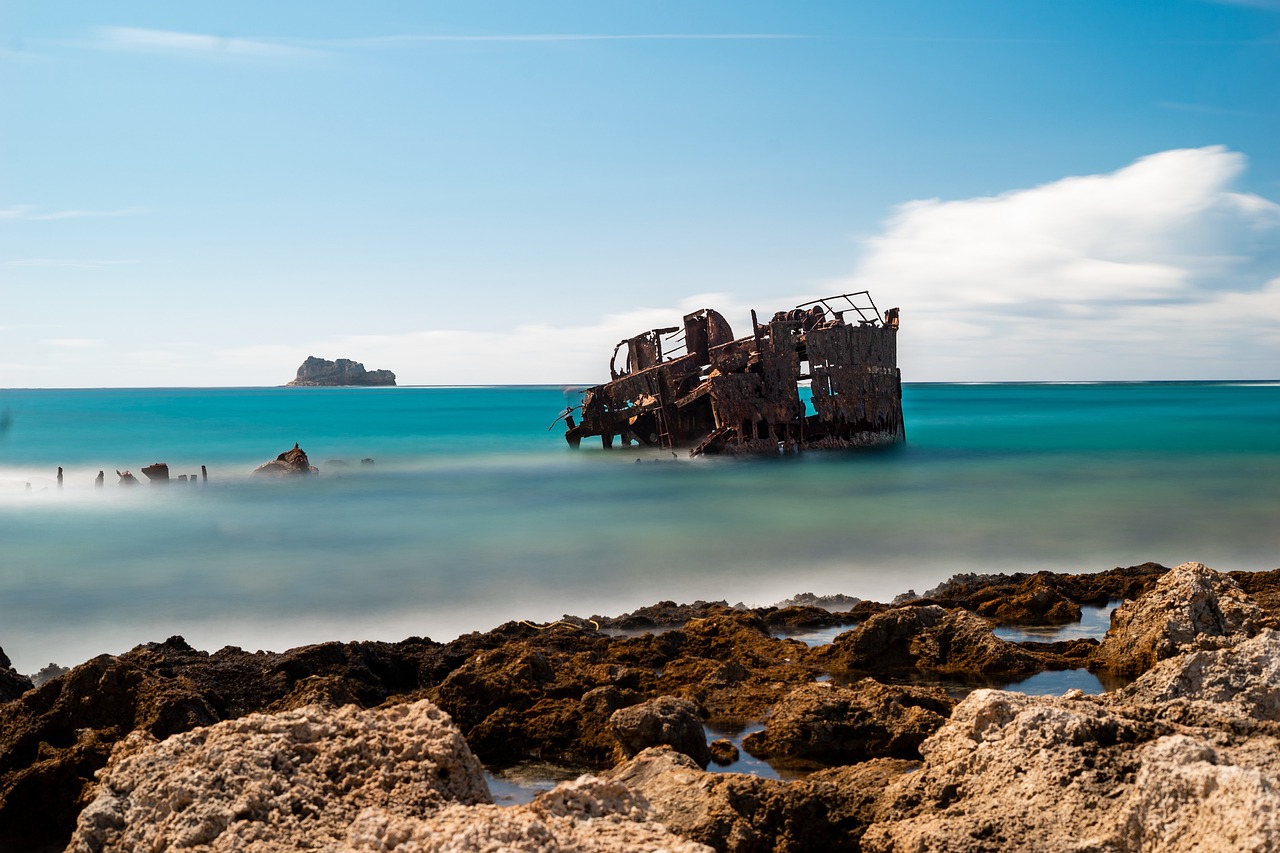
Most boats to Balos stop first at Gramvousa Island Crete travelers photograph in passing, and it is worth treating that stop as more than a photo break. A Venetian fortress sits at the top of the island, built between 1579 and 1584 to guard the sea approach to Crete against Ottoman fleets. It held out through the long Cretan War and, under the 1669 treaty that ceded most of the island to the Ottomans, Gramvousa remained one of only three fortified points still held by Venice, alongside Souda and Spinalonga.
The more colorful chapter came later. In 1825, during the Greek War of Independence, a group of Cretan fighters disguised themselves as Ottoman soldiers and seized the fort, using it as a base for the insurgency. Cut off and under siege for more than two years, the defenders turned to piracy against Ottoman and European shipping to survive, and the island earned a reputation that outlasted the war itself. European naval forces eventually intervened in 1828 to shut the operation down.
Climbing to the fortress adds roughly 30 to 45 minutes to the island stop and a good set of stairs, but the view from the top, looking out over Balos and the open sea beyond, puts the whole peninsula into context in a way the beach alone does not. Readers interested in the island’s older layers of history will find more context in our guide to archaeological sites across Crete.
The Balos Entrance Fee and What to Pack
Balos lagoon how to visit questions usually come down to cost and packing, and both are simpler than the crowds might suggest. The Municipality of Kissamos collects a flat, small entrance fee (about €1) from every visitor over 13, regardless of arrival method, as a contribution toward maintaining the protected area. That fee is separate from the boat ticket or the parking charge for drivers.
Once inside, there is very little infrastructure. A small kiosk near the upper parking area sells drinks and light snacks, but the beach itself has no shops, no permanent shade structures, and only limited toilet facilities near the entrance. A few practical Balos lagoon tips make the difference between an easy day and an exhausting one:
- Carry more water than feels necessary. There is no reliable source once you are past the entrance.
- Bring your own shade. An umbrella or a wide brimmed hat matters more here than sunscreen alone, since the sand offers no natural cover.
- Wear closed shoes or sturdy sandals for the walk down if you are driving. The path is loose gravel and rock in places.
- Bring cash in small denominations for the entrance fee and parking.
- Pack out what you bring in. The protected status of the area depends on visitors treating it carefully.
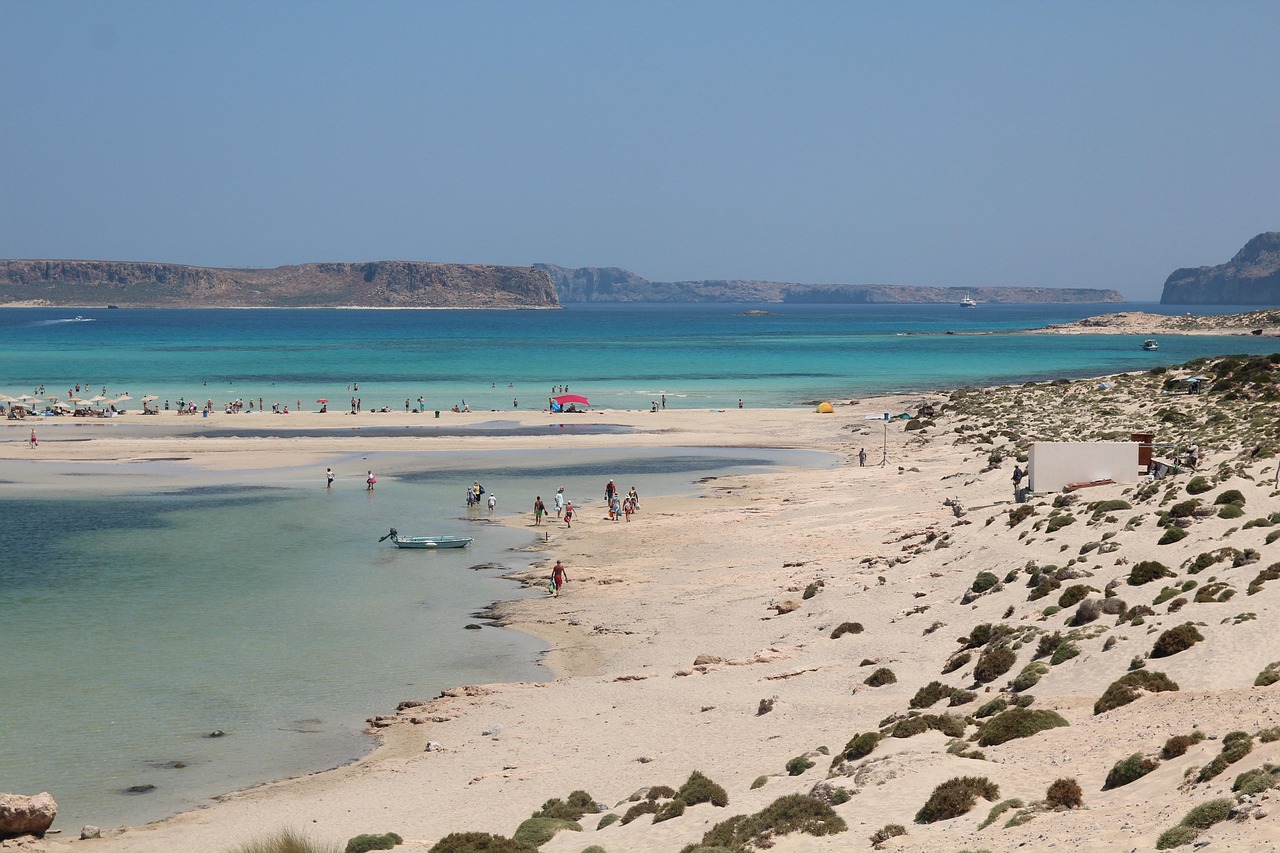
Image by stefanlanghp1 from Pixabay
When to Visit Balos Lagoon for the Best Experience
Why July Is Both the Best and Busiest Month
July gives Balos its best conditions: the sea has warmed through, the sky holds clear through most of the month, and the color contrast between the turquoise shallows and the deeper blue beyond the ridge is at its most dramatic. It is also, predictably, the month everyone else has the same idea. Boats run close to capacity, the parking area fills by midmorning, and the walk down can feel more like a procession than a hike.
None of that means July should be avoided. It means it should be planned around. Readers weighing a broader trip should also see our guide to visiting Crete in July for how the month plays out island wide, or consider Crete in June as a slightly quieter alternative with similar weather.
A Timing Strategy That Actually Works
For boat travelers, book the first departure of the day. Boats leaving before 10am reach Balos well ahead of the midday peak, giving an hour or more of comparatively open beach before later arrivals catch up. For drivers, aim to reach the parking area by 8am, before the day’s heat sets in and before the lot fills. The early walk down is cooler, easier, and rewards you with a mostly empty lagoon for the first stretch of the morning.
Midday, roughly noon to 3pm, is when both routes converge and the beach is at its fullest. Late afternoon thins out again as boats begin their return trips, though drivers should factor in enough daylight and energy for the climb back up.
Where Balos Fits Among West Crete’s Beaches
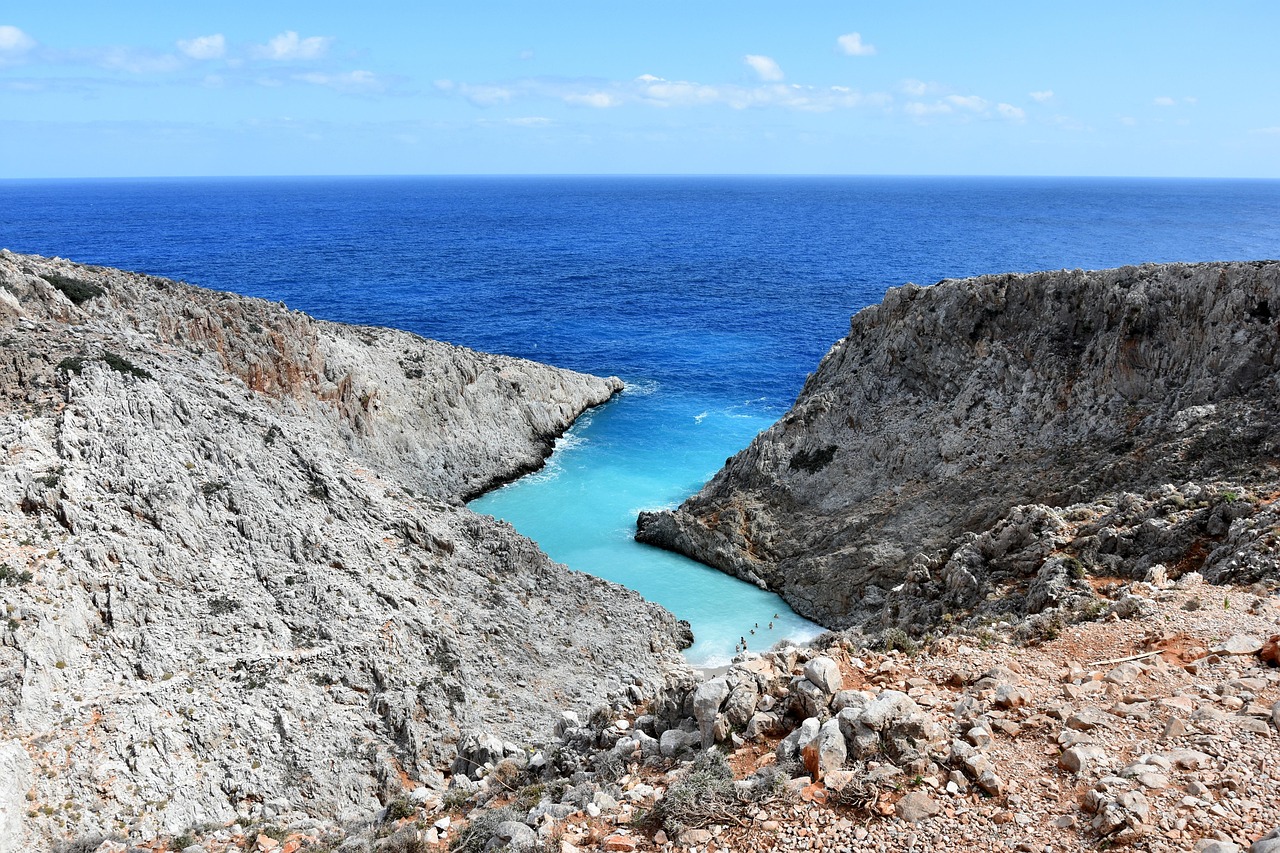
Balos is one entry in a longer list of west Crete beaches that each offer something different. The beaches closer to Chania town cover a wider range, from organized stretches with full facilities to smaller coves reached on foot, detailed further in our guide to Chania beaches. Seitan Limania, on the Akrotiri peninsula, trades Balos’s scale for a narrow rock walled cove with similarly striking water, covered in our Seitan Limania guide. Elafonisi sits at the island’s southwestern tip and shares Balos’s pink sand and shallow lagoon. It lies roughly two hours farther south and attracts its own separate wave of visitors.
Balos stands apart from the other beaches in this group. Its scale creates a stronger sense of place. The history of Gramvousa adds another layer to the visit. Both routes require genuine effort. Balos rewards careful planning more than most beaches on this list and makes an unplanned visit far more difficult. For a broader sense of what the coastline around here offers, our Crete beaches overview covers the wider region.
The View Most Visitors Never See
Most guides rarely mention the path above the lagoon. It offers one of the best views of Balos. Everyone walks down this path and curses it on the way back up. Many visitors never stop long enough to take in the view. From partway up the hillside, the entire lagoon opens below. You can see the color shift from pale shallows to deep blue. You can also see the curve of the sandbar and Gramvousa rising behind it. Very few people pause there. Most are focused on getting down to the water or getting back to the car.
Early morning changes that view completely. The low, warm light spreads across the water before the first boats arrive. It reaches the lagoon before the heat sets in. At noon, the lagoon can look bright but ordinary. In the early light, it gains a color and depth that photographs struggle to capture. That hour brings a stillness that feels less like sightseeing. It feels more like the quiet the sea offers when nobody asks anything of it. West Crete holds other places with that same restorative quality, a theme we explore further in healing the feminine energy.
Conclusion
Balos Lagoon in Crete rewards anyone willing to plan around its two personalities. Most photographs capture the crowded midday spectacle, while most visitors miss the quieter early morning version entirely. You can reach it by boat from Kissamos or by taking the dirt road and walking down. Whichever route you choose, you will pay a small fee and find only minimal facilities. Your preparation will matter more than the guide you follow.
You can experience Balos and Gramvousa with someone who knows this coastline and understands its history. Elissos Travelling Philosophy designs private days across west Crete. Each experience makes room for both the view everyone photographs and the quieter one just above it.
For broader planning ideas, the Elissos guides to things to do in Crete and Crete’s beach landscapes can help place Balos within a more balanced itinerary.
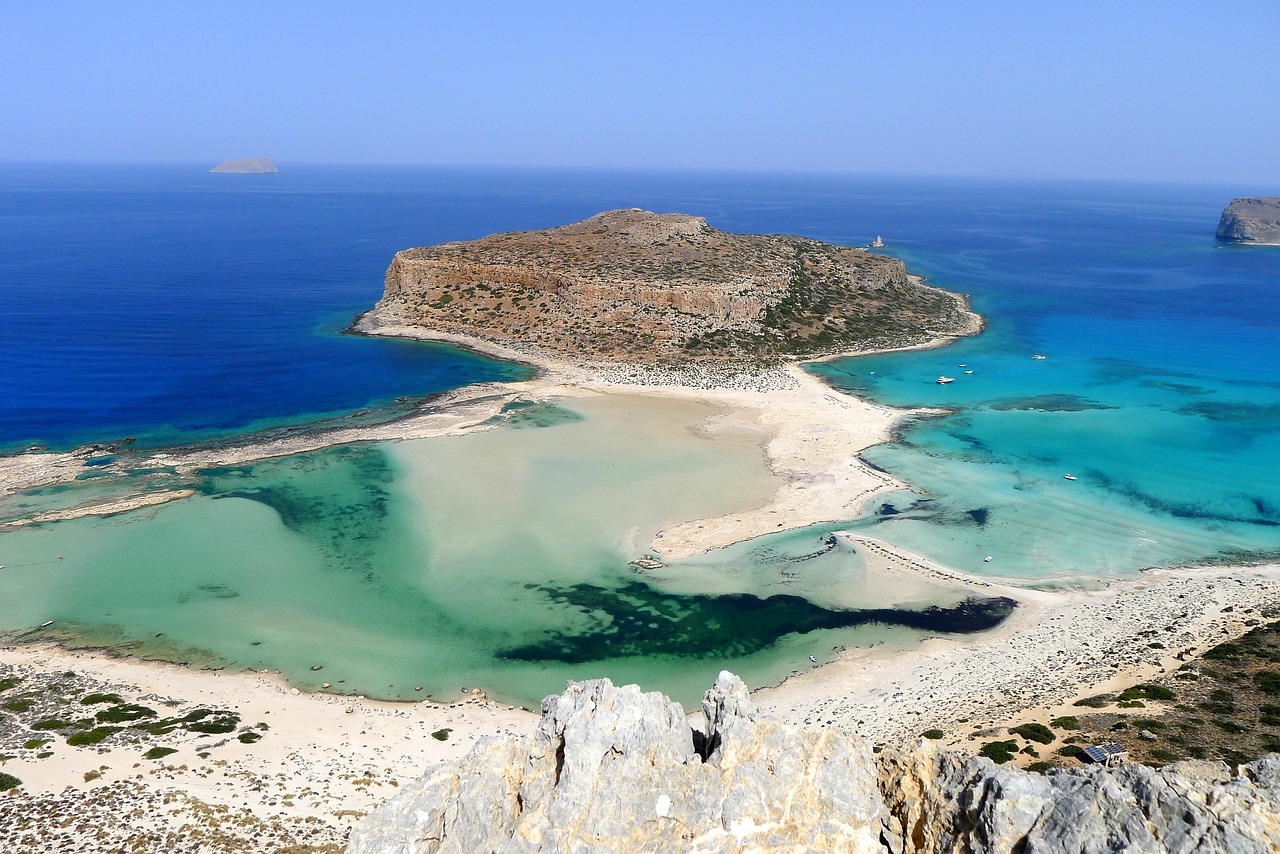
Image by Karl Egger from Pixabay
FAQ
How do you get to Balos Lagoon?
You can reach Balos by taking a boat from Kissamos port. The crossing takes about 40 minutes and usually includes a stop at Gramvousa Island. You can also drive the unpaved road toward Kaliviani. From the parking area, the walk takes 30 to 45 minutes each way.
Is there an entrance fee for Balos Lagoon?
Yes. The Municipality of Kissamos charges a small flat fee. Visitors over the age of 13 pay about €1. They pay this fee in addition to the boat ticket or the parking fee for drivers.
How long is the boat trip from Kissamos to Balos?
The crossing takes roughly 40 minutes each way. Most boats stop at Gramvousa Island on the outbound trip. They then continue to Balos.
Is it better to drive or take the boat to Balos Lagoon?
Neither option is universally better. The boat suits travelers who want to skip the hike and include Gramvousa Island. Driving suits travelers who want control over their arrival and departure times. It also allows them to reach the lagoon early in the morning.
Is Balos Lagoon worth visiting in July?
Yes, July offers the warmest water and clearest skies of the year, but it is also the busiest month. Arriving with the first boat departure or the first cars in the parking area avoids most of the midday crowd.
What should I bring to Balos Lagoon?
Bring more water than usual. Carry sun protection, such as an umbrella or a wide-brimmed hat. Wear sturdy shoes for the walk if you drive. Carry cash for the entrance and parking fees because the beach itself has no facilities.
Feature Image: by Roman Schmitz on Unsplash