
The Christmas Fast in Crete: 40 Days of Lenten Food Before the Feast
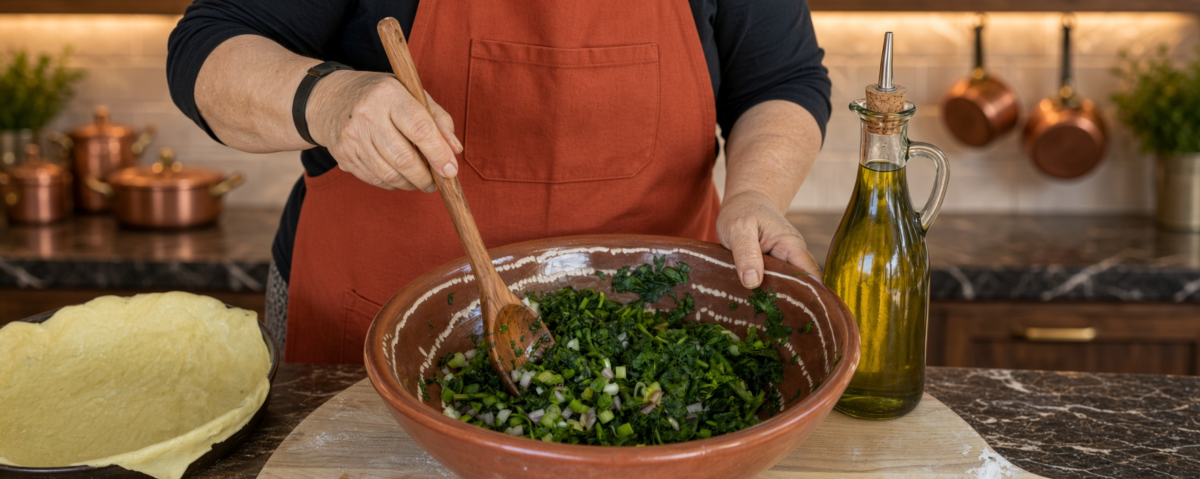
The Christmas fast in Crete begins on November 15, forty days before Christmas.
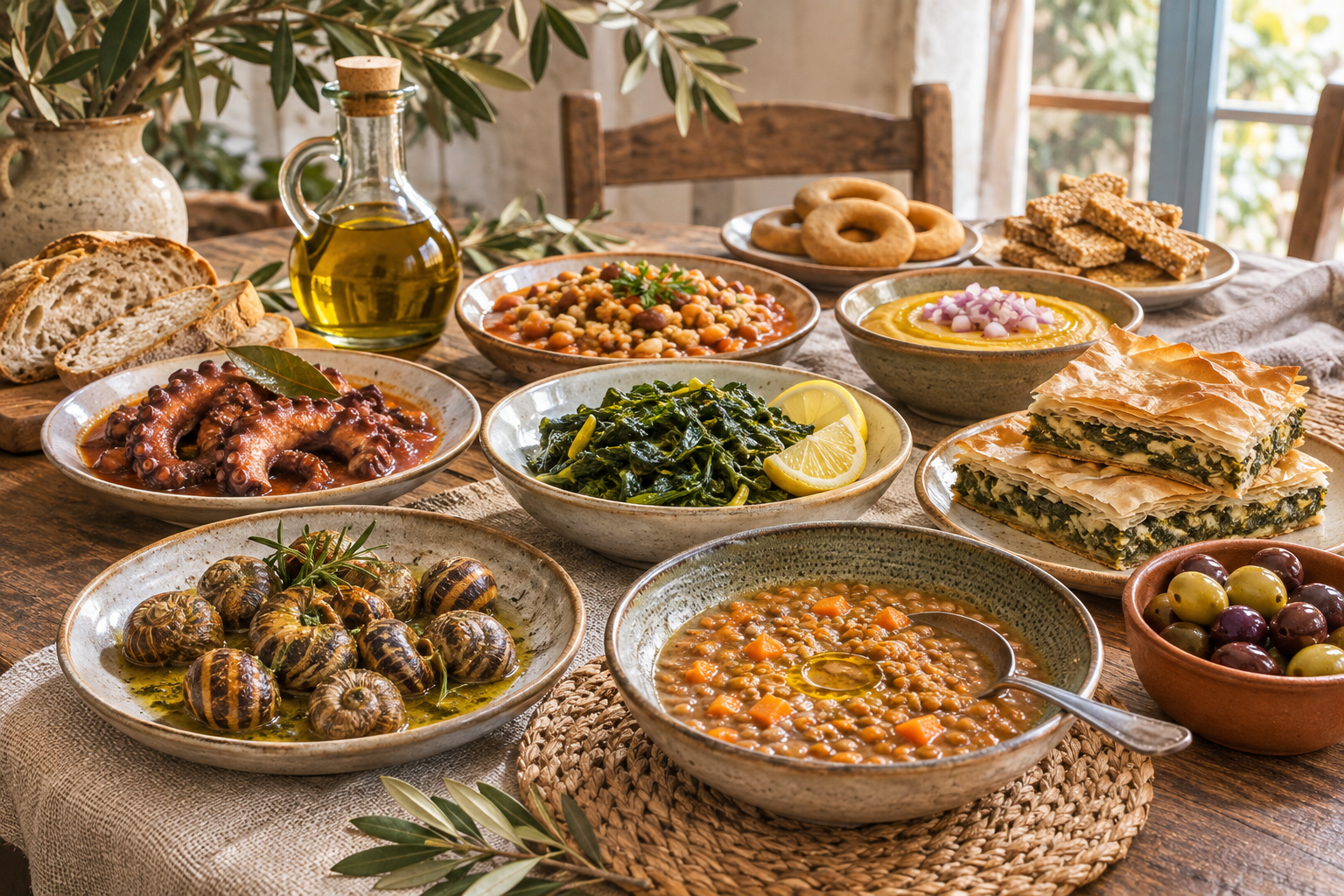
From that morning, meat, cheese, and eggs leave many kitchens across the island. What replaces them is some of the oldest cooking Crete has: pots of pulses, wild greens with lemon, snails with rosemary, octopus in wine, and bread dipped in the first olive oil of the season.
The timing is not an accident. The fast falls in the weeks of the olive harvest, when the hills are green again and the new oil is at its sharpest. This guide explains the rules in plain language and the dishes Cretans actually cook. It also covers the feast days inside the fast and how a visitor can eat this way. For the holiday itself, see our guide to Christmas in Crete.
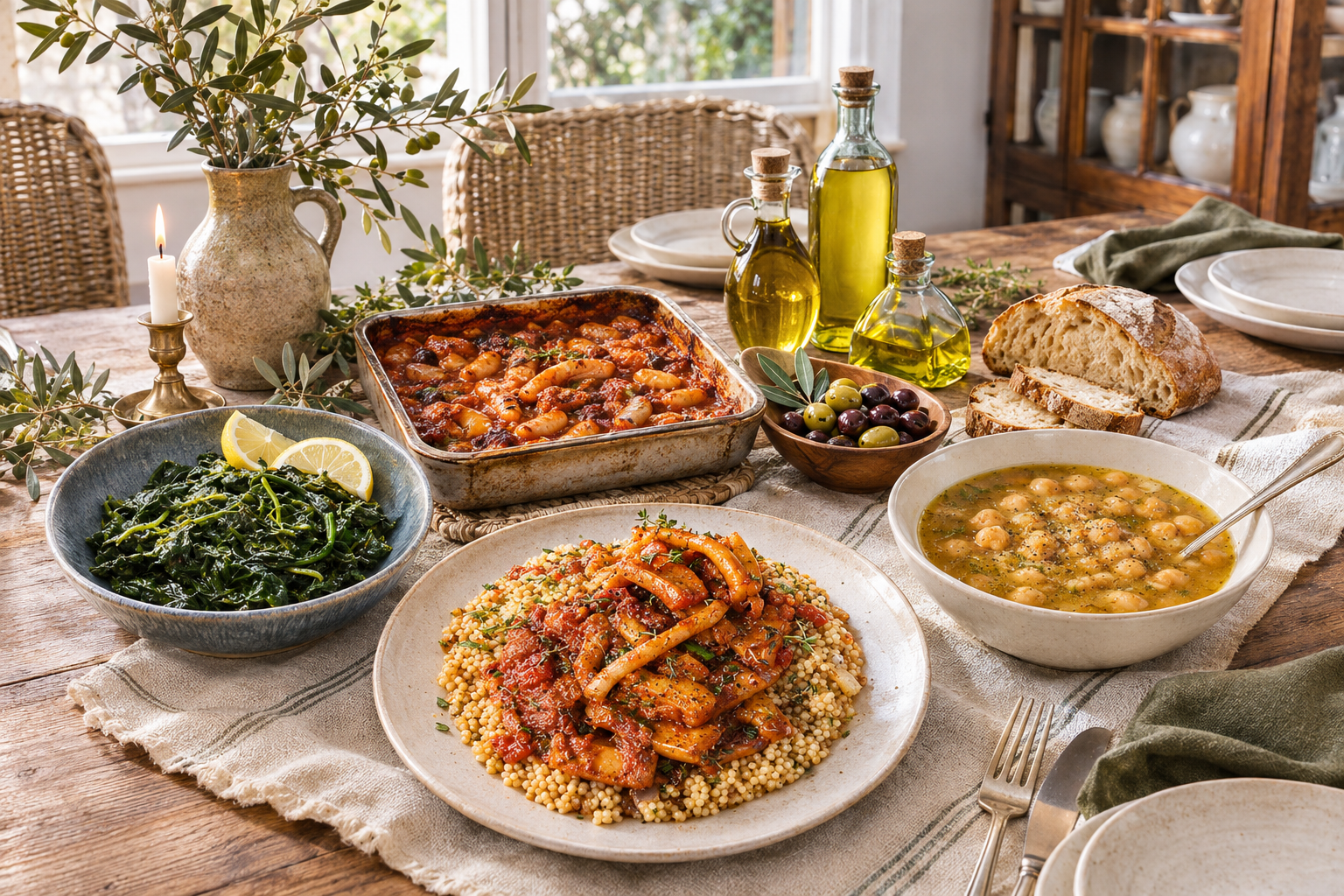
Quick answer: The Christmas fast in Crete, also called the Nativity Fast, lasts 40 days, from November 15 to December 24. People who keep it avoid meat, dairy, and eggs. They can still eat fish on many days until December 17, but the final week is stricter. Typical Cretan fasting food includes lentils, chickpeas, fava, wild greens, snails, octopus, cuttlefish, olives, olive oil, tahini, and sweets made with honey or grape must.
Illustrative image created with AI
What Is the Christmas Fast in Crete?
The Christmas fast in Crete is the 40-day Orthodox fast that runs from November 15 to December 24, also known as the Nativity Fast. Those who keep it give up meat, dairy, and eggs. They can still eat fish on most days until December 17, except Wednesdays and Fridays, but the last week is stricter. Cretan tables fill instead with pulses, wild greens, snails, octopus, cuttlefish, olives, and the new season’s olive oil. The fast ends on Christmas Day with pork and the festive bread called Christopsomo.
Greeks call this period the Sarantaimero, “the forty days.” In English you will see it called the Nativity Fast, the Advent fast, or Christmas Lent. It is the second longest fast of the Orthodox year after Great Lent, which leads to Easter in Crete and opens each spring with Clean Monday. The Christmas fast is gentler, though. Fish appears often, and the mood is one of quiet preparation, not mourning.
Greek fasting food has its own name: nistisima. The word comes from nisteia, “fasting,” and it describes any dish made without meat, dairy, or eggs. You will see it on bakery labels and taverna boards all through these weeks.
Not everyone fasts, of course. Some families keep all forty days, while many keep Wednesdays and Fridays, or only the last week before Christmas. Others do not fast at all. But the cooking of the season shapes what shops sell, bakeries bake, and tavernas serve, so every visitor meets it.
Illustrative image created with AI
The Rules of the Greek Orthodox Christmas Fast
The Greek Orthodox Christmas fast covers the 40 days before Christmas in Greece. It begins on November 15, the day after the feast of Saint Philip, and it ends after the Christmas liturgy. Practice varies between households and parishes, so read the rules below as the common pattern, not a strict code.
What Is Off the Table
For the full 40 days, those who fast avoid:
- Meat and poultry, including broth and animal fat
- Dairy: milk, cheese, yogurt, and butter
- Eggs, including in pastry and pasta
Most fasters keep olive oil and wine on the table. However, stricter fasters also give them up on Wednesdays and Fridays and in the final days before Christmas.
When Fish Is Allowed
Fish is what sets this fast apart from Great Lent.
- November 15 to December 17: you can eat fish on most days, except Wednesdays and Fridays.
- November 21: fish returns for the feast of the Virgin Mary, even when it falls on a Wednesday or Friday.
- December 18 to 24: no fish. This is the strict week, and Christmas Eve is the plainest day of all.
In 2026, the fast begins on Sunday, November 15, and Christmas Day falls on a Friday. Some parishes follow slightly different fish days, so households tend to follow their own priest or their own grandmother.
Why Snails and Octopus Are Allowed
Orthodox fasting excludes animals with red blood. Shellfish, octopus, squid, cuttlefish, and snails do not count, so fasters can eat them on any day. This is why a strict fasting day in Crete can still include a plate of grilled octopus or a pan of snails. It is also why seafood tavernas stay busy through December.
Illustrative image created with AI
What to Eat During the Nativity Fast in Crete
Nativity Fast food in Crete is not a reduced version of normal cooking. Most nistisima Cretan dishes are the everyday food of the island’s past, when meat was rare and pulses, greens, and oil fed families through the winter. Many Cretan lenten recipes have barely changed in generations. Our guide to the traditional dishes of Cretan households covers more of this home cooking.
Pulses and Palikaria
Pulses carry the fast. A pot of something is on the stove most days.
- Fakes: lentil soup with bay leaf, garlic, and a spoon of vinegar at the table.
- Revithia: chickpeas baked slowly or stewed with lemon or bitter orange.
- Fasolada: white bean soup with carrot, celery, and plenty of olive oil.
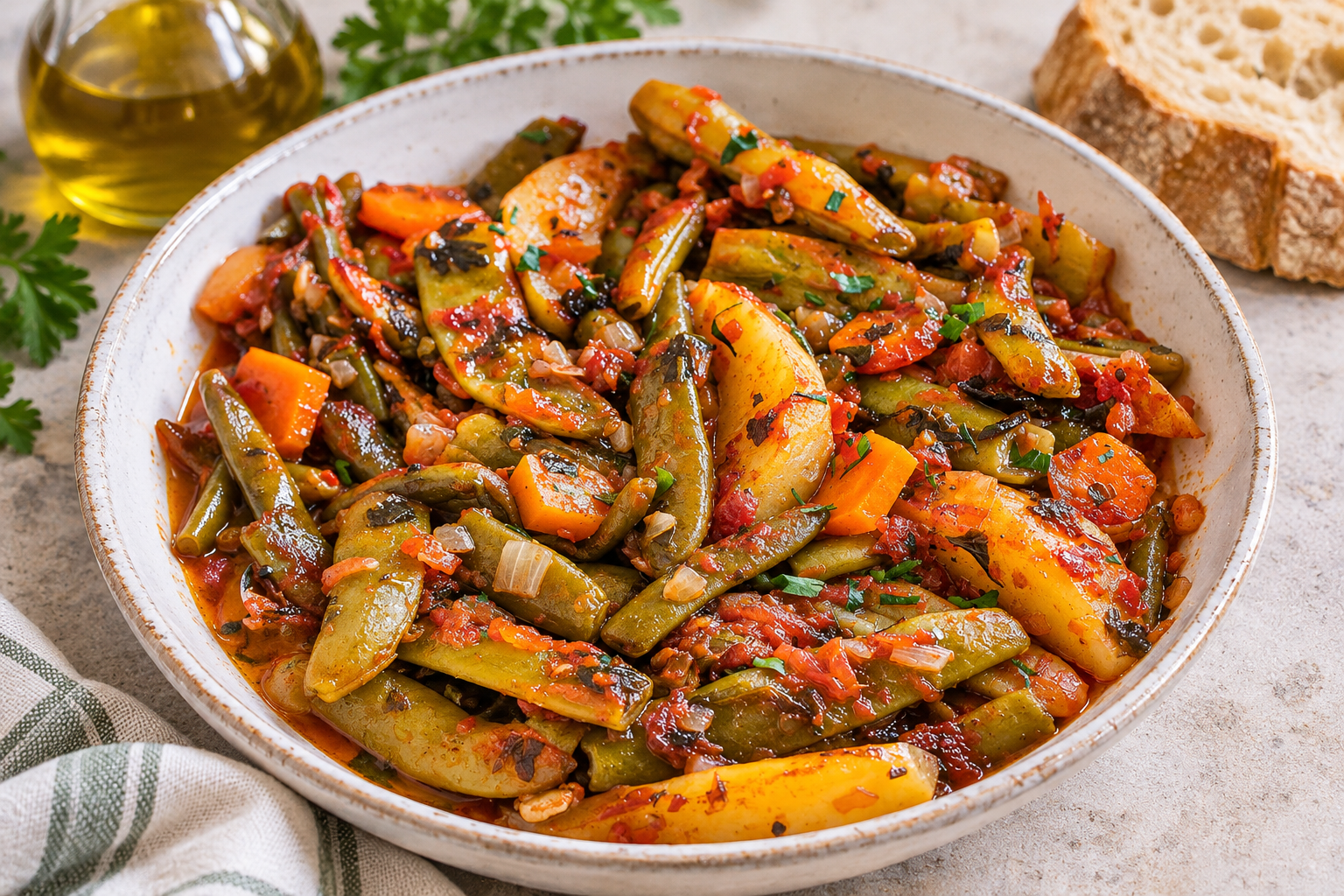
- Fava: a smooth puree of yellow split peas, topped with raw onion and oil.
- Black-eyed beans: boiled and dressed as a salad, often with greens.
- Palikaria: the dish most tied to this season.
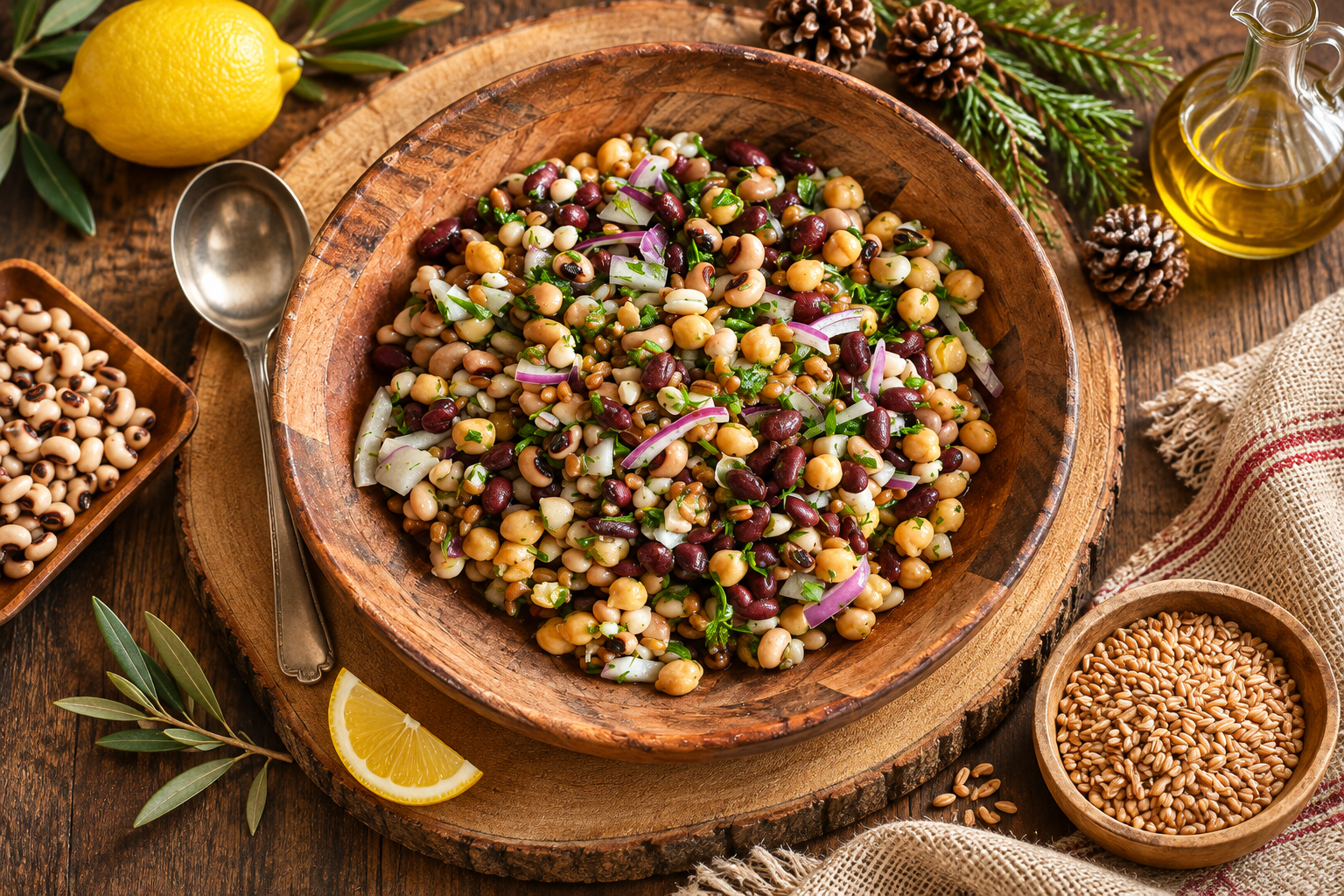
Palikaria is a mix of boiled wheat and several kinds of pulses, such as chickpeas, lentils, broad beans, and beans. Cooks serve it warm as a soup or drain it for a salad, then dress it with olive oil, lemon, onion, and herbs. The name probably comes from polysporia, “many seeds.” Cretans cook it on November 21 and again on the eve of Epiphany in January.
People have eaten pulses on Crete since the Bronze Age. In fact, archaeologists have found lentils, peas, and broad beans in the storerooms of Minoan houses and palaces. Our article on Minoan cuisine looks at that early table.
Wild Greens and Pies
The first autumn rains bring wild greens back to the hillsides, just as the fast begins. Cretans gather dozens of kinds and call them all horta.
- Boiled greens: served warm or cold with olive oil and lemon. Stamnagathi, a bitter wild chicory, is the best known.
- Stewed greens: cooked with onion, tomato, and potatoes, or with broad beans.
- Hortopites: small fried or baked pies filled with mixed greens and herbs.
- Marathopites: thin fennel pies, a favorite in the Chania region.
During the fast, cooks make the dough with flour, water, oil, and often a splash of raki. The fillings contain no cheese. Our guide to the herbs of Crete explains the plants that flavor them.
Snails
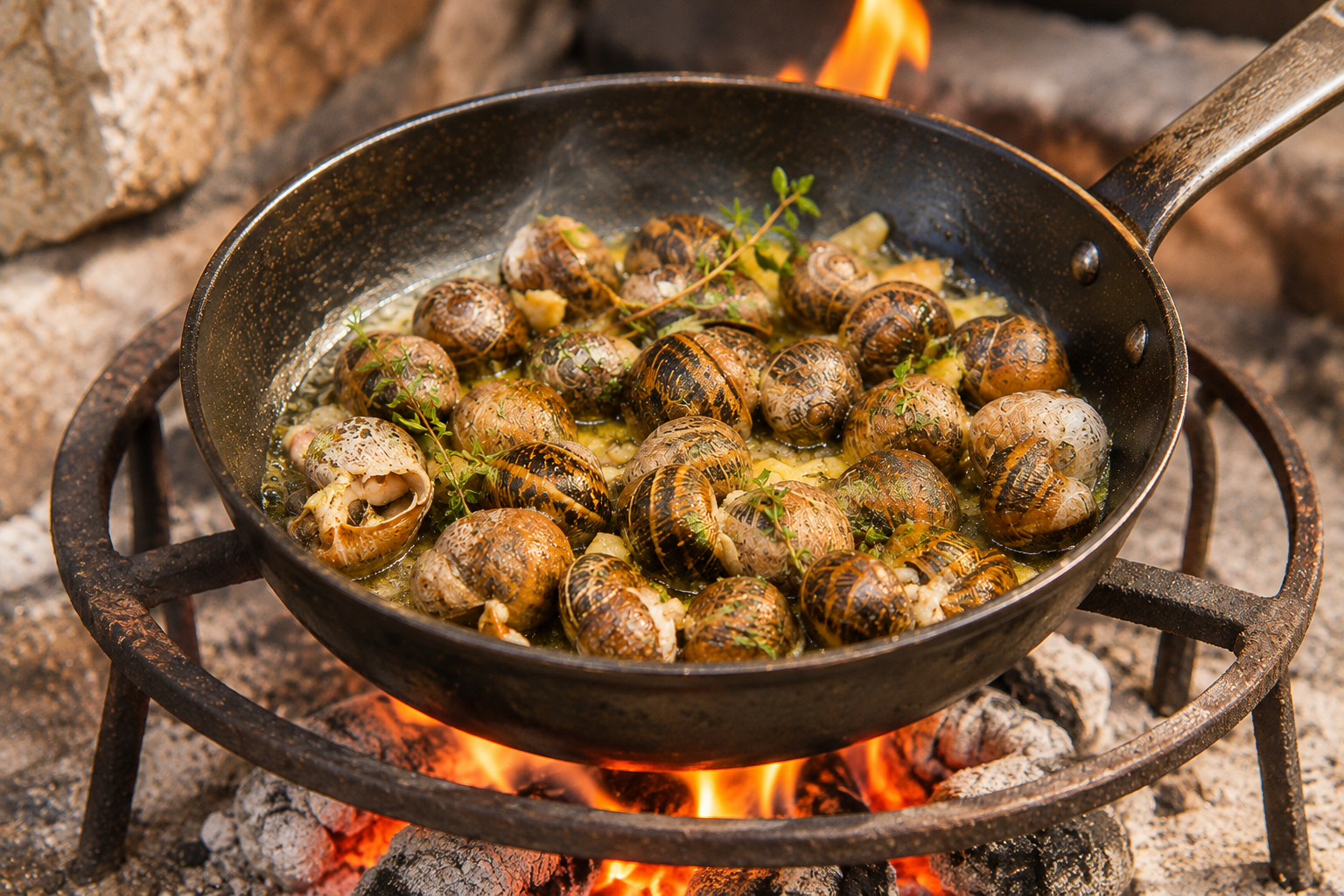
Snails are a signature of Cretan cooking, and fasting is a large part of the reason. Cretans call them chochlioi and gather them after rain.
- Chochlioi boubouristi: fried face down in a pan with coarse salt, then finished with vinegar and rosemary.
- Snails with hondros: stewed with cracked wheat and tomato.
- Snails with potatoes and zucchini: a tomato-based oven dish.
Octopus, Cuttlefish, and Fish Days
Because it has no red blood, this seafood stays on the table throughout the fast.
- Cuttlefish with fennel and olives: a winter classic of western Crete.
- Octopus in wine, or stewed with short pasta.
- Squid, fried or stuffed with rice and herbs.
- Taramosalata: a fish roe spread eaten with bread.
On fish days, the choice widens further. Small fried fish, baked cod, and fish soup all appear. For example, December 6, the feast of Saint Nicholas, is a fish day almost everywhere.
Olives, New Oil, and Dakos
November is when the olive presses open. The new oil is green, cloudy, and peppery, and people taste it the simplest way: poured over warm bread or a barley rusk. The season’s first cracked green olives arrive at the same time.
Dakos, the Cretan rusk salad, also has a fasting version. Instead of the usual soft cheese, the cook wets the rusk lightly and tops it with grated tomato, oil, oregano, and olives. Pickled wild bulbs called askordoulakoi often sit beside it.
Lenten Sweets
Fasting sweets rely on olive oil, honey, grape must, nuts, and sesame.
- Halva: made with tahini, or cooked at home with semolina and oil.
- Ladokouloura: crisp cookies made with olive oil and orange juice.
- Moustokouloura: soft cookies made with grape must syrup.
- Pasteli: sesame and honey bars.
- Loukoumades: fried dough puffs with honey and cinnamon.
- Dried figs, raisins, walnuts, and carob, the old winter pantry.
The must syrup comes from the autumn grape harvest. Greek fasting practice accepts honey, so it appears freely.
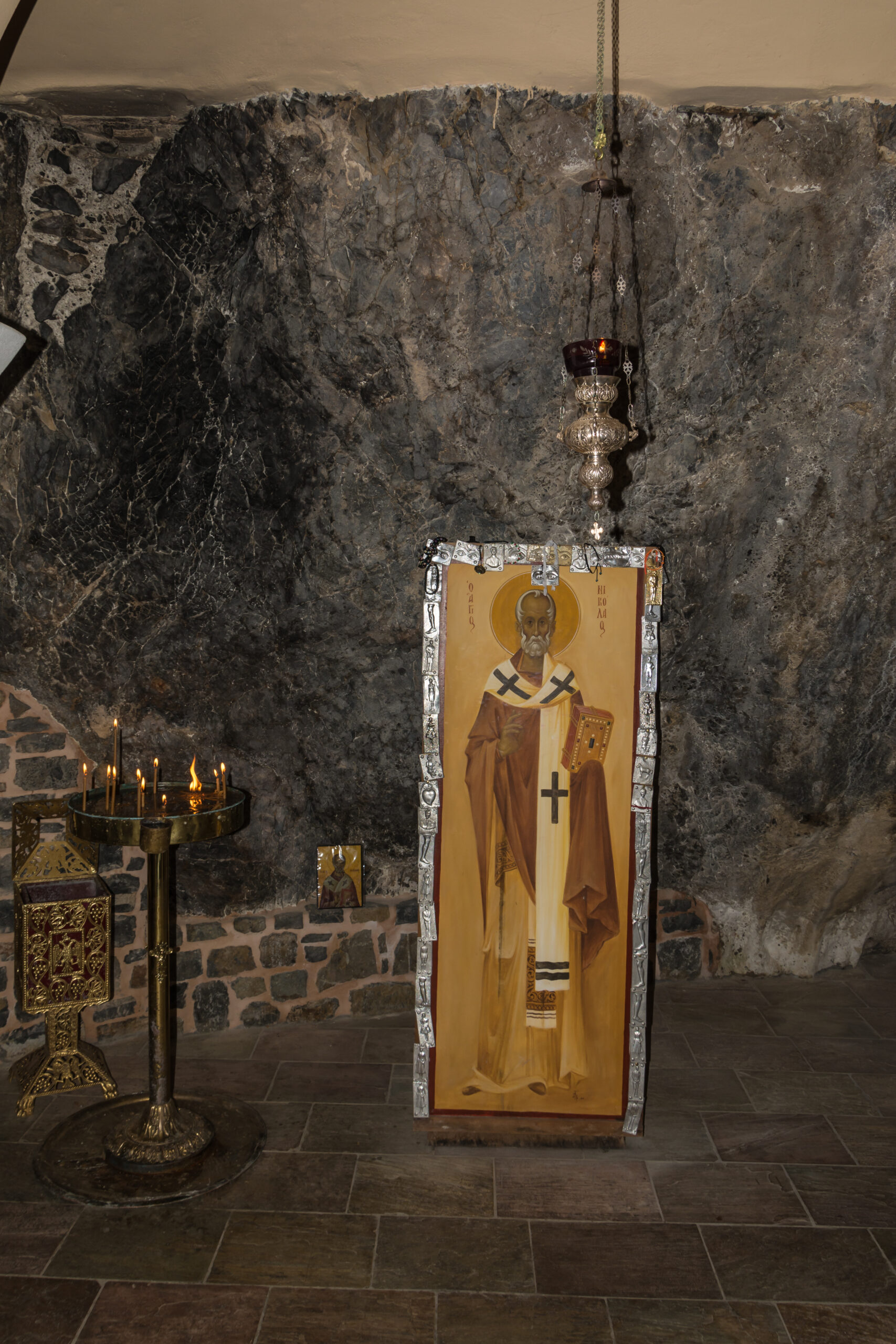
Interior of Agios Nikolaos Chapel, Kotsifou Gorge, Crete. Photo: Uoaei1 / Wikimedia Commons / CC BY-SA 4.0. No modifications.
Feast Days Inside the Fast
The forty days are not uniform, because several feast days break them up, each with its own food.
November 21: Panagia Mesosporitissa
November 21 marks the Entry of the Virgin Mary into the Temple. It is one of the major feasts of Mary in the Orthodox year, alongside the Assumption of Mary in August. In farming villages, however, the day has an older and more practical name. Farmers call the Virgin Panagia Mesosporitissa, “Our Lady of the mid-sowing,” because the feast falls halfway through the sowing of the winter wheat. In other places she is Polysporitissa, “Our Lady of the many seeds.”
On this day, women boil a pot of mixed grains and pulses. In Crete it is the palikaria described above, known elsewhere as polysporia. First, a bowl goes to church, where the priest blesses it and the congregation shares it after the liturgy. Then plates go to neighbors with a wish for a good harvest. In the past, a share also went to the animals that pulled the plow, and the farmer scattered a handful on the field.
Folklorists link the custom to the ancient Greek panspermia, a pot of “all seeds” offered at sowing time, and to the worship of Demeter, goddess of grain. On Crete, the idea of a female figure who protects the seed and the harvest is older still. Our articles on the Divine Mother and the Minoan sacred year explore that thread. Nobody can prove the link step by step. Still, a pot of seeds offered to a holy mother at sowing time is a habit this island has kept for a very long time.
November 21 is also a fish day, and a name day for many women called Maria and Despina.
The Saints of Early December
Three feast days arrive together in the first week of December: Saint Barbara on the 4th, Saint Savvas on the 5th, and Saint Nicholas on the 6th. Greeks call them the Nikolovarvara, and they often bring the first real cold of winter.
Saint Nicholas is the protector of sailors and fishermen, and the town of Agios Nikolaos in eastern Crete celebrates him as its patron. So families with a Nikos or a Nikoleta at the table mark the name day with fish. Saint Spyridon then follows on December 12. After December 17, the table grows plainer as Christmas approaches.
Illustrative image created with AI
Why the Fast Suits the Cretan Diet
Fasting days are part of what made the traditional Cretan diet what it is. In fact, between the Christmas fast, Great Lent, shorter summer fasts, and most Wednesdays and Fridays, a devout Cretan ate without meat or dairy for a large part of the year.
Researchers at the University of Crete studied this directly. Their study, published in the British Journal of Nutrition in 2004, followed 120 Orthodox Christians in Crete for a year. Half fasted regularly, while half did not. During fasting periods, the fasters ate less saturated fat and more fiber and folate, thanks to more pulses, fruit, and vegetables. As a result, the authors described Orthodox fasting as an important part of the Mediterranean diet of Crete.
So the fast is not an interruption of Cretan food. Rather, it is one of its foundations. Our guide to traditional Cretan food shows how many of the island’s best-known dishes began as fasting food.
Visiting Crete During the Christmas Fast
Late November and December are quiet months on the island. The olive harvest is under way, and the last stills of the raki distilling season are still running. However, nobody expects visitors to fast. Restaurants serve their full menus, so meat is easy to find. The Christmas fast in Crete simply adds a second, older menu beside the usual one.
How to Find and Order Fasting Food
- Learn one word. Nistisimo (plural nistisima) means “suitable for fasting.” Bakeries and pastry shops label trays with it.
- Ask directly. “Echete nistisima?” means “Do you have fasting dishes?” Any taverna will understand.
- Look for ladera. These are vegetables or pulses cooked in olive oil and tomato. They are the dishes of the day in most traditional kitchens.
- Go on a Wednesday or Friday. These are fasting days all year, so many tavernas cook extra pulse and greens dishes.
- Visit the market. In the municipal markets of Chania and Heraklion, look for new olives, wild greens, snails, tahini, and halva sold by weight.
- Try a bakery in the morning. Greens pies, olive bread, and oil cookies are at their best early.
A Note for Vegan and Vegetarian Travelers
The fast makes Crete an easy place to eat plant-based food. Still, nistisimo does not mean vegan. Fasting dishes can include honey, shellfish, octopus, squid, snails, and fish roe. On fish days, they can also include fish. If you avoid these, say so when you order. For pulses, greens, pies, and sweets, a simple question about honey is usually enough.
How the Fast Ends
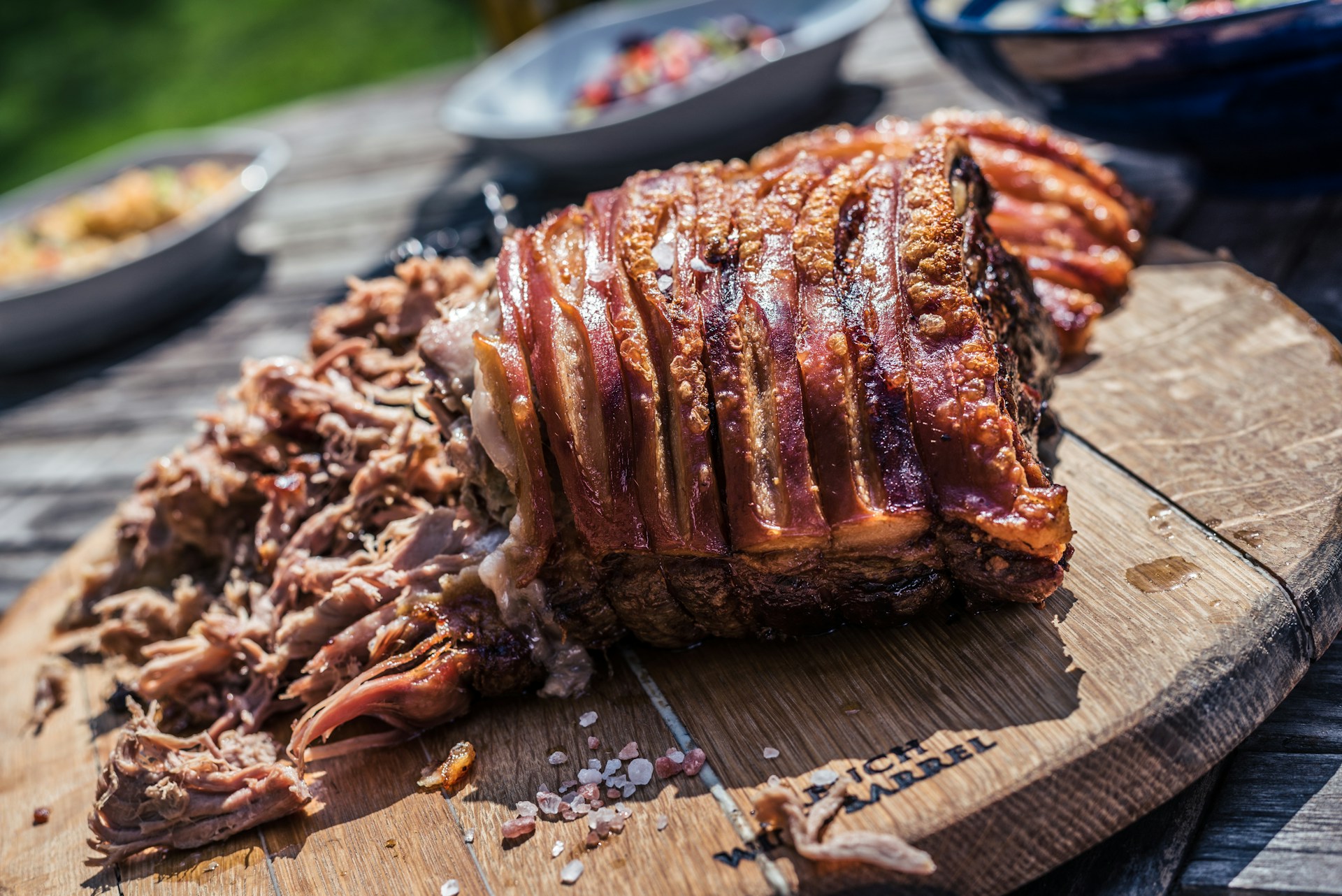
The last days are the plainest. On Christmas Eve, many households eat only pulses or greens, sometimes without oil. At the same time, the kitchen is at its busiest. This is when families knead and bake the Christopsomo, the decorated Christmas bread. In village tradition, Christmas Eve was also the day the family slaughtered its pig.
The fast ends after the Christmas liturgy, early on the morning of December 25. Then families come home from church to a table that has waited forty days: pork in several forms, the Christmas bread, and the first butter cookies of the season. Our guide to the traditional Christmas table in Crete describes that meal region by region.
The pot of mixed seeds returns once more. On January 5, the eve of Epiphany, Cretans cook palikaria again and share it with the household and, by old custom, with the animals.
Conclusion
The Christmas fast in Crete turns the 40 days before Christmas into a season of its own. From November 15 to December 24, meat, dairy, and eggs give way to pulses, wild greens, snails, seafood, olives, and new oil. Fish days and feast days break up the weeks, above all November 21, when women cook the pot of mixed seeds for Panagia Mesosporitissa. These Cretan lenten recipes are among the oldest foods on the island, and the fast is one of the reasons the Cretan diet became known for its balance.
For travelers, these weeks offer a calm and generous table. Ask for nistisima, taste the new oil, and stay until Christmas to see how the fast gives way to the feast. Our guide to Crete in December is a useful next step for planning a winter visit.
Illustrative image created with AI
Frequently Asked Questions
When does the Christmas fast start in Greece?
The Christmas fast starts on November 15 and ends on December 24. It lasts 40 days. In 2026, it begins on a Sunday. Churches that follow the old calendar start on November 28 and celebrate Christmas on January 7.
What can you eat during the Nativity Fast?
You can eat pulses, grains, vegetables, wild greens, fruit, nuts, olives, bread, tahini, honey, shellfish, octopus, squid, and snails. Most fasters also keep olive oil and wine, and they eat fish on many days until December 17.
Is fish allowed during the Christmas fast?
Yes, on most days. In common Greek practice, fasters eat fish from November 15 to December 17, except on Wednesdays and Fridays. They also eat it on November 21. However, from December 18 to 24, fish leaves the table.
Why are snails allowed during Orthodox fasting?
Orthodox fasting rules exclude animals with red blood. Snails, like octopus, squid, and shellfish, fall outside that rule, so fasters can eat them. This is one reason snails became such a common food in Crete.
What does nistisimo mean?
Nistisimo means “suitable for fasting.” It describes food made without meat, dairy, or eggs. The plural is nistisima. It is not the same as vegan, because fasting food can include honey and some seafood.
Do restaurants in Crete serve meat during the fast?
Yes. Restaurants and tavernas serve their normal menus throughout the fast, and nobody expects visitors to take part. Instead, many kitchens simply add more fasting dishes, mostly on Wednesdays and Fridays.
Is the Christmas fast the same as Lent?
No. Great Lent comes before Easter and is stricter, with almost no fish. The Christmas fast, sometimes called Christmas Lent or Winter Lent, is the same length but allows fish on many days.
What is polysporia?
Polysporia is a dish of boiled wheat and mixed pulses, cooked on November 21 for the feast of the Virgin Mary. Cretans usually call it palikaria. Families share it with neighbors as a wish for a good harvest.
Feature Images is an illustrative image created with AI