
Olive Oil Experience in Crete: Minoan Roots, Ancient Trees & Tastings
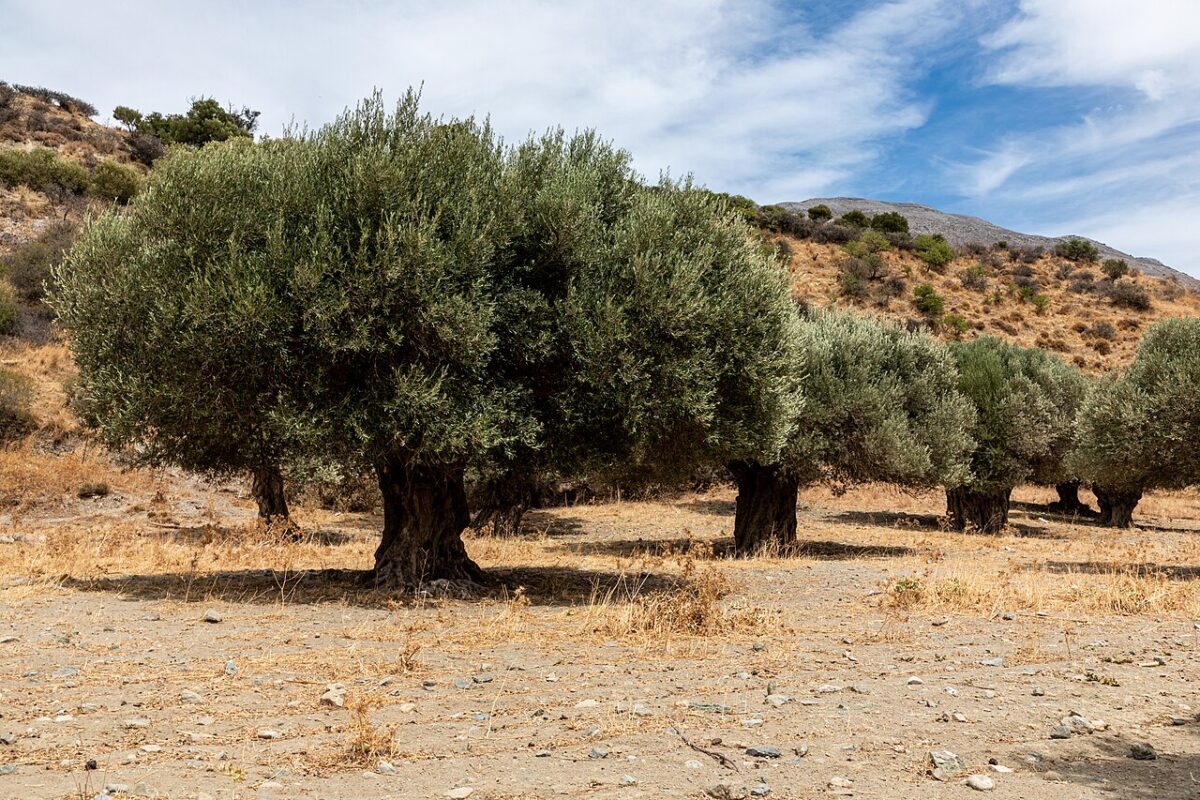
The olive oil experience in Crete is unlike any food encounter you will find elsewhere in the Mediterranean.
This is not about sampling a condiment. It is about stepping into a practice that has shaped this island for thousands of years, one that threads through Minoan palace storerooms, ancient sacred rituals, family harvest traditions, and the rural rhythms still very much alive today.
Crete produces some of the finest extra virgin olive oil in the world, and it does so from groves that, in many cases, have been tended for generations by the same families. The island accounts for a remarkable share of Greece’s total olive oil output, and Cretans themselves consume more olive oil per person than almost anywhere else on earth. But what makes an olive oil experience in Crete truly distinct is depth: the Minoan roots of olive cultivation here go back over three millennia, and the island still holds what is widely considered the oldest olive tree in the world.
Whether you are visiting an olive oil farm in Crete, joining a guided tasting, or simply trying to understand what you are pouring onto your salad, this guide covers everything you need to know.
An olive oil experience in Crete means far more than a standard food tasting. Crete has been producing olive oil continuously since the Minoan period, roughly 3,500 years ago, making it one of the longest unbroken olive oil traditions on earth. A thoughtful traveler can visit ancient olive groves, tour a traditional press, taste multiple single-estate extra virgin oils side by side, and stand before the Olive Tree of Ano Vouves, a living monument estimated at between 2,000 and 4,000 years old. Cretan olive oil is predominantly produced from the Koroneiki variety and carries a Protected Geographical Indication (PGI) status, guaranteeing its regional origin and quality.
What Is a Cretan Olive Oil Experience?
A Cretan olive oil tasting or farm visit typically includes a guided tour of an olive grove, an explanation of the cultivation and cold-pressing process, and a structured tasting of multiple extra virgin oils, often paired with local bread, herbs, and traditional foods. Some experiences are hosted by large family estates that welcome visitors year-round. Others are intimate sessions led by independent olive oil educators in working groves.
The best experiences go beyond pouring oil on a plate. They connect what is in the bottle to the land it came from, the variety of olive used, the time of harvest, and the long history of the people who have been doing this work since before written history as most of the world knows it.
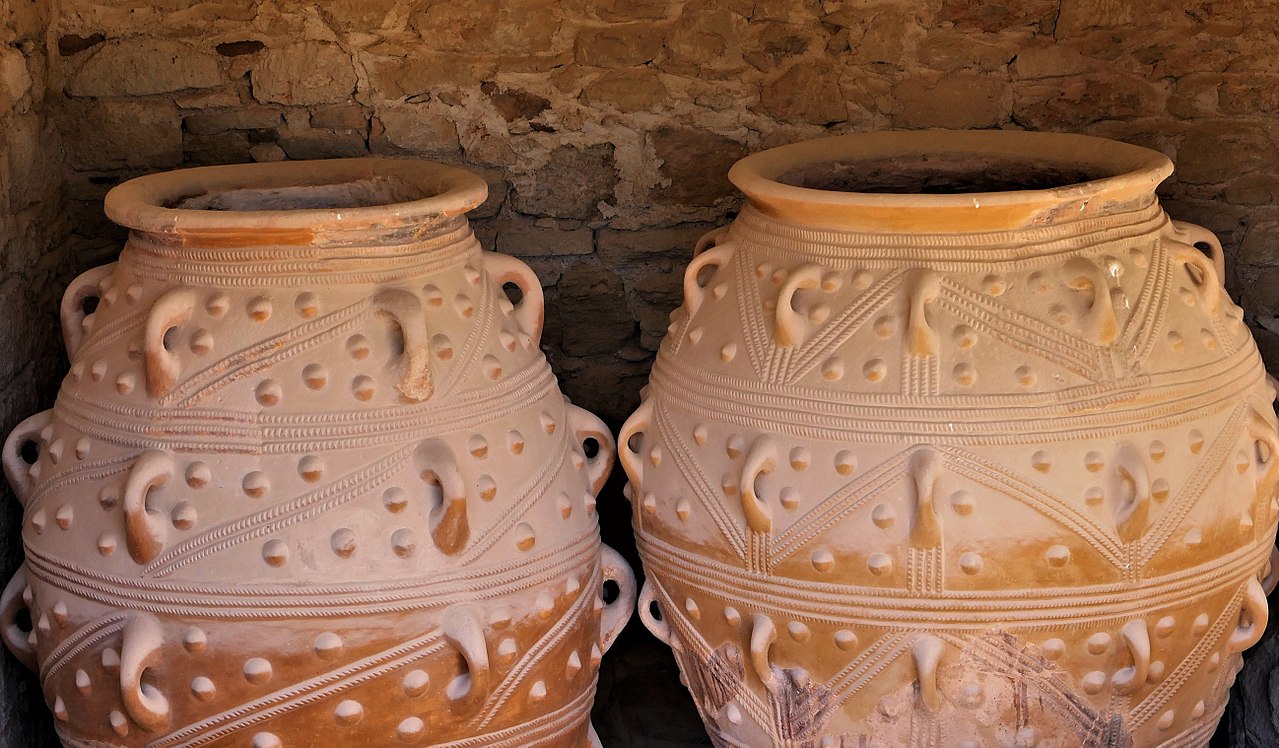
Ancient pithoi storage jars. Photo by Rolf Dietrich Brecher, via Wikimedia Commons, licensed under CC BY-SA 2.0. No changes were made.
Olive Oil in Minoan Crete: Where It All Began
Cretan olive oil history reaches back to the Bronze Age. Scholars identify Minoan Crete as the source of the earliest known evidence of large-scale olive oil production in the world, with systematic cultivation beginning around 3,500 BC or earlier. The Minoans did not simply use olive oil; they built entire systems of economy and culture around it.
Pithoi, Palaces, and Linear B Tablets
The most dramatic physical evidence sits in the ruins of the Minoan palaces themselves. At Knossos, the West Magazines, a long corridor of storage rooms, once held rows of massive clay jars called pithoi. The total estimated storage capacity of these rooms reached approximately 250,000 kilos of olive oil, a figure that speaks to industrial-scale production and distribution. Similar storage arrangements have been found at Kato Zakros, Palaikastro, and other Minoan sites across the island, some with actual preserved olives still inside.
The Minoan palace at Vathypetro, near Archanes, contains what is believed to be the oldest olive press in Europe. Archaeological finds from this site and others across the island demonstrate that Minoan olive oil production was not a domestic cottage activity but a managed, palace-controlled industry. Ideograms on clay tablets in both Linear A and Linear B scripts record olive oil inventories, distribution records, and trade transactions, placing Crete at the center of Bronze Age Mediterranean olive oil commerce.
Olive oil from Crete traveled to Egypt and across the Aegean, likely as a prestige commodity. The Minoans used it for food, lighting, medicine, perfume-making, textile processing, and body care. In their hands, olive oil was not a single product but a versatile material that made civilized life possible.
Travelers who want to place this story within the broader Bronze Age landscape can read about Minoan civilization in Crete, Ancient Crete, and the island’s major archaeological sites in Crete.
Olive Oil, the Minoan Goddess, and Sacred Ritual
The relationship between olive oil and Minoan culture runs deeper than economics. According to Cretan mythology, it was the Cretan goddess Athena who gifted the sacred olive tree to the Minoans. Scholars note references to a “Mistress Athanas” on Linear B tablets found at Knossos, which suggest that the island’s earliest spiritual traditions already connected the olive with feminine divine power.
People considered the olive tree sacred and believed that the goddess watched over it. They used olive oil for ritual anointing, offerings at sacred sites, and the care of the dead. This dual function, practical sustenance and sacred substance, is a thread that runs through Cretan culture from the Bronze Age to the present day, where olive oil still plays a role in Greek Orthodox baptismal rites, in the lighting of church oil lamps, and in the blessing of homes.
For travelers who come to Crete with an interest in the Divine Feminine, sacred landscapes, or the roots of goddess-centered spirituality in the Aegean, the olive tree carries meaning well beyond its fruit. It was a living symbol of the nurturing, generative power that the Minoans recognized in the natural world, and its cultivation was part of a way of life that honored the earth as a source of sacred provision. The prominence of feminine imagery allows a careful conversation about the Divine Mother, Minoan women, the Minoan Sacred Year, and the Minoan Snake Goddess.
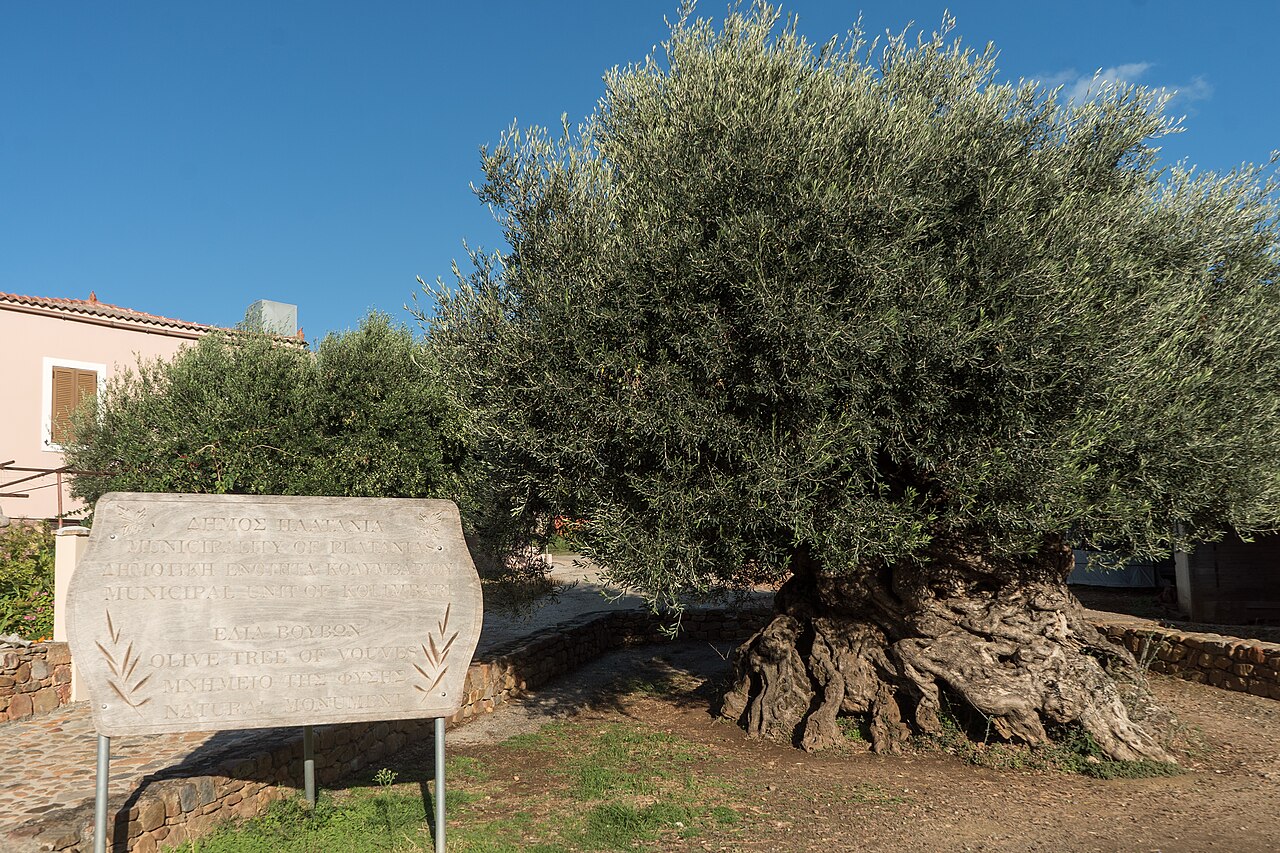
The ancient Olive Tree of Vouves in Crete. Photo by Alexey Komarov, via Wikimedia Commons, licensed under CC BY-SA 4.0. No changes were made.
The Olive Tree of Ano Vouves: A Living Monument
In the village of Ano Vouves, in the Kolymvari area of western Chania, stands a tree that stops visitors in silence. Scientists estimate that the Olive Tree of Vouves is between 2,000 and 4,000 years old, with researchers from the University of Crete placing it near the higher end of that range. The Region of Crete has declared it a Natural Monument, and many consider it one of the oldest living olive trees in the world.
The trunk has a circumference of 12.5 meters and a diameter of nearly 4.7 meters. Its heartwood has hollowed out over the centuries, making precise dating difficult, but the tree’s staggering dimensions and the presence of nearby cemeteries from the Geometric Period (roughly 700-900 BC) point to a life measured in millennia. What makes it extraordinary is not just its age but the fact that it still produces olives. Local harvesters collect fruit from this tree each season, and the oil it yields is considered among the most historically significant in the world.
At the upper end of the age estimate, this tree was alive when Minoan civilization was still flourishing. It would have been a mature tree during the time of classical Greece. It predates Alexander the Great, the Parthenon, and the entire Roman Empire. A small museum near the site provides context, and a visit pairs naturally with other destinations in the Kolymvari and Chania region.
Standing before this tree is one of the more quietly powerful experiences Crete offers. It asks for nothing from you except presence.
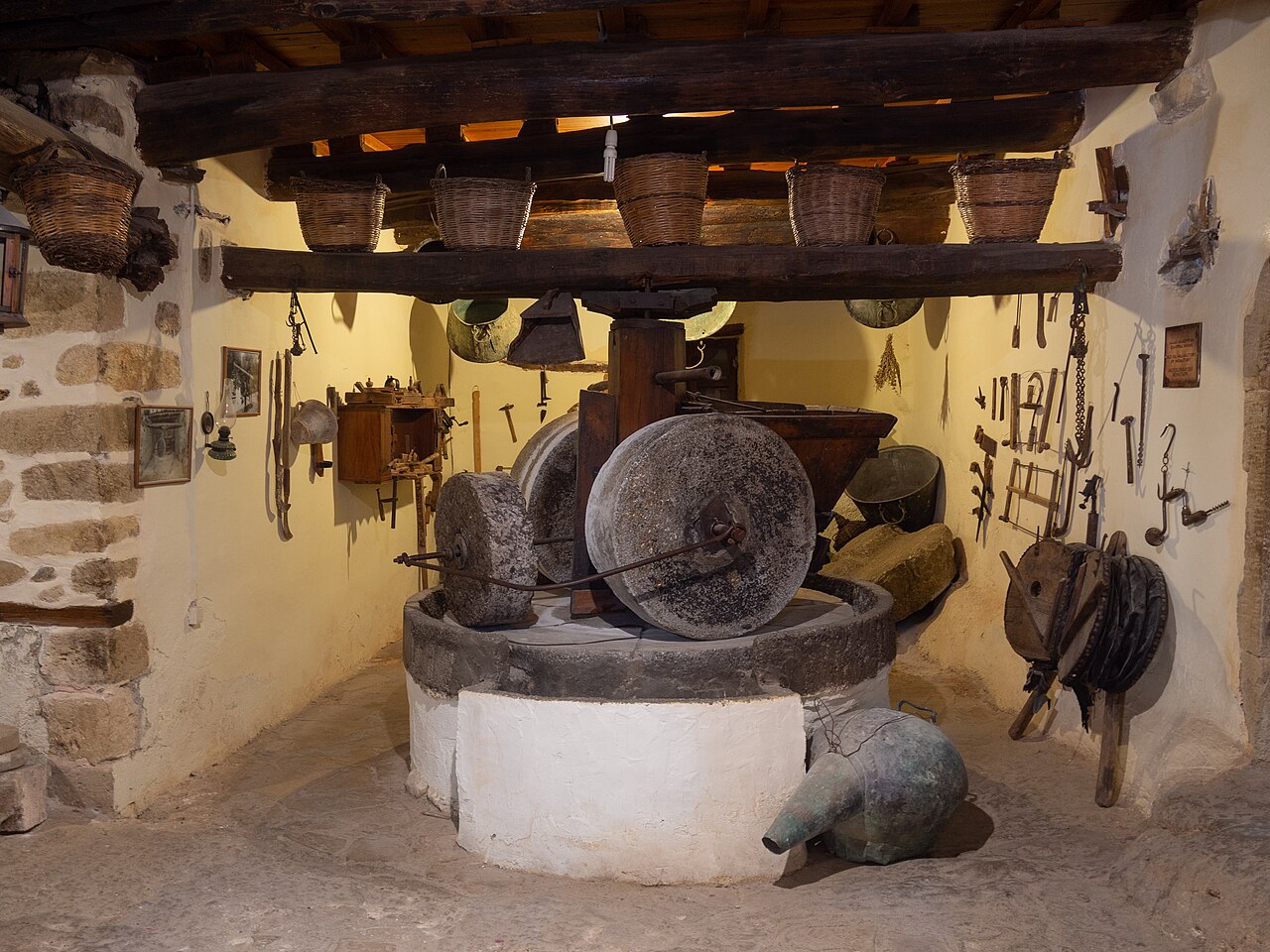
Traditional olive oil mill at Odigitria Monastery in Crete. Photo by C messier, via Wikimedia Commons, licensed under CC BY-SA 4.0. No changes were made.
Oleotourism in Crete: What Travelers Can Do Today
Oleotourism Crete is a growing part of the island’s experiential travel landscape in 2026. Unlike wine tourism, which has established itself in Crete’s vineyards over the past two decades, olive oil tourism is still finding its form. What already exists, however, is genuinely good: a range of family-run estates, artisan producers, and dedicated hosts who bring real knowledge and warmth to every visit.
To understand this continuity more broadly, Elissos’ guide to traditional farming in Crete shows how agricultural practice remains tied to identity, season, and community.
Visiting an Olive Oil Farm in Crete
A visit to an olive oil farm in Crete typically takes you into a working grove. You can walk among trees, some of them centuries old, and observe the environment that shapes the oil’s character. The best farm visits include time in the orchard, where you can understand the rocky soil, altitude, and olive variety.
Estates around Chania, Heraklion, and Rethymno offer structured visitor experiences throughout the year. The harvest season from October through January provides a stronger sense of the agricultural cycle. Some farms offer free guided tours, while others charge a modest fee that usually includes a tasting and the opportunity to buy directly from the producer.
Joining a Cretan Olive Oil Tasting
Cretan olive oil tasting sessions have evolved considerably beyond simply dipping bread in oil. Dedicated experiences led by trained tasters walk visitors through the sensory evaluation of multiple oils: color, aroma, taste, and finish. You learn to distinguish fruitiness from bitterness and pungency, and to understand what these qualities tell you about harvest timing, olive variety, and production method.
Pairing sessions that match different oils with local foods, including traditional Cretan cheeses, rusks (paximadia), wild herbs, and honey, give context to the flavors in a way that makes them genuinely memorable. A few hosts in Crete offer evening tastings in working groves, where the setting itself becomes part of the experience.
Watching an Olive Press in Action
An olive press, or eliotrivi, has been at the center of Cretan village life for centuries. Several family-run mills across Crete welcome visitors during the production process. Guests can watch the olives arrive from the grove. They can then follow the cold-pressing process until fresh oil emerges. During harvest season, working presses fill the air with the green, grassy, and slightly peppery scent of freshly pressed fruit. Traditional stone mills crush the olives with millstones before workers spread the paste onto fiber mats and press it. This method produces a mild, smooth oil rich in natural compounds. Some estates have preserved historical mill equipment alongside modern machinery, giving visitors a direct comparison between old and new methods.
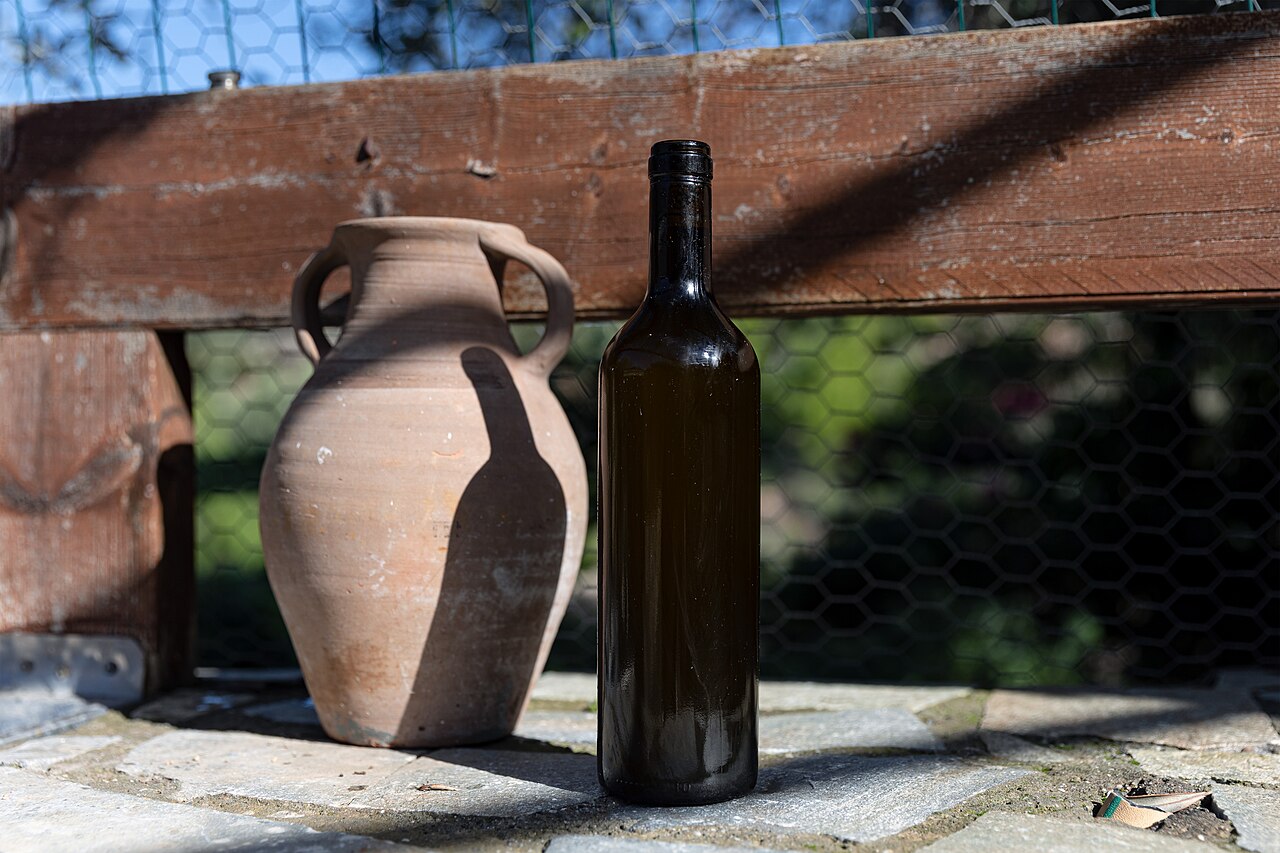
Bottle of fresh olive oil beside an amphora. Photo by Manfred Werner (Tsui), via Wikimedia Commons, licensed under CC BY-SA 4.0. No changes were made.
How to Recognize Quality Cretan Olive Oil
Cretan extra virgin olive oil now carries a PGI (Protected Geographical Indication) certification, designated as PGI Kriti. This guarantees that the oil was produced from olives grown in Crete, pressed in Crete, and bottled in Crete. It also sets quality thresholds including maximum acidity levels of 0.6% and a profile of rich fruit aroma with natural bitterness and pungency.
When tasting or buying Cretan extra virgin olive oil, here are the key things to look for:
- Olive variety: The dominant variety in Crete is Koroneiki, a small but oil-rich olive that produces a green, fresh, complex oil with notes of artichoke, freshly cut grass, green almond, and a clean peppery finish. Tsounati is a secondary variety, associated with older trees and a mellower, rounder profile.
- Harvest date and campaign year: Fresh olive oil is best. Look for a harvest campaign date, not just a best-before date. Oil from the most recent harvest will have fuller aroma and higher polyphenol content.
- Cold-pressed or cold-extracted: This matters. Heat-assisted extraction damages delicate aromatic compounds and reduces polyphenol levels. Cold pressing (below 27 degrees Celsius) preserves the full sensory and nutritional profile.
- Low acidity: Quality Cretan extra virgin olive oil typically has acidity well below the EU limit of 0.8%. The PGI standard sets the bar at 0.6%. Some premium producers achieve acidity as low as 0.2%.
- Single estate or single region: An oil that names its origin precisely, whether a specific grove, village, or valley, carries a guarantee of traceability that blended oils cannot offer.
- Dark bottle or tin: Light degrades olive oil quickly. Responsible producers package in dark glass or tins to protect the oil through its shelf life.
One additional tip from local producers: Cretans themselves traditionally try the fresh oil by pouring it over a piece of warm bread with a pinch of salt. It is a simple and honest way to meet the oil directly, without distraction.
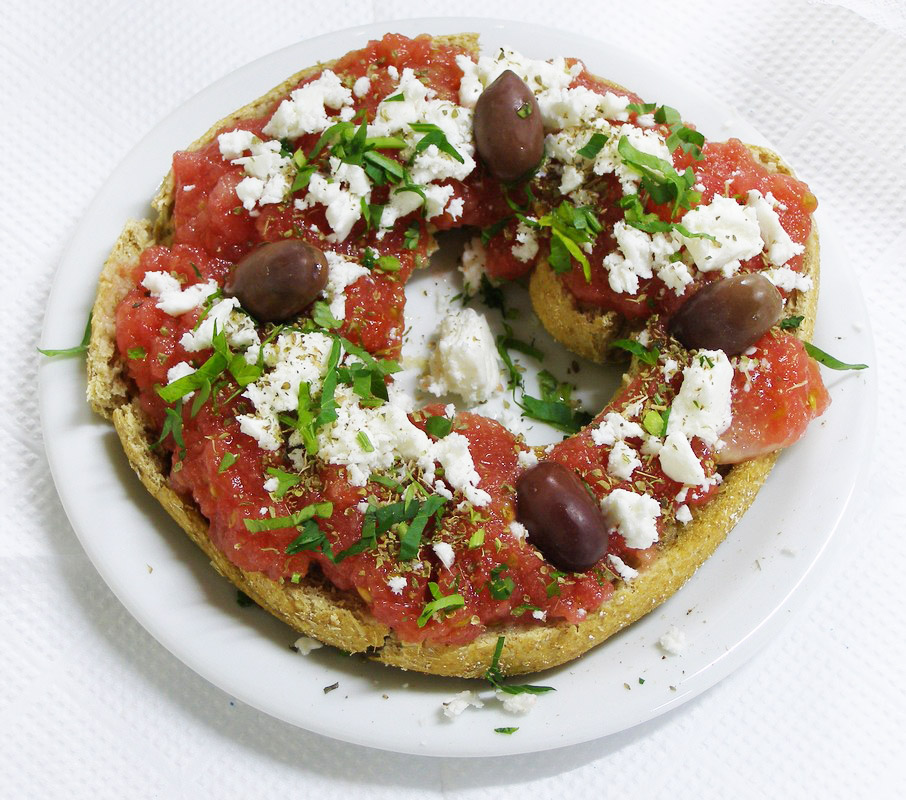
Cretan dakos, also known as koukouvagia, with barley rusk, tomato, cheese, olive oil, oregano, and olives. Photo by Frente, via Wikimedia Commons, licensed under CC BY-SA 3.0. No changes were made.
When Is the Best Time for an Olive Oil Experience in Crete?
The olive oil tour in Crete is available year-round. Most farms and estate experiences operate continuously, and tasting sessions do not depend on the harvest calendar.
The harvest season typically runs from mid-October through January, depending on the variety, elevation, and location. It offers an experience that no other time of year can replicate. During harvest, the groves are active. Nets are spread under the trees. Families gather, sometimes for days, to complete the picking before the olives over-ripen. The air around working mills is thick with the scent of fresh oil. Visiting during this period, even as an observer, connects you to an agricultural tradition that has looked essentially the same in Crete for centuries.
Spring and early summer bring the groves into full leaf and flower. The light is softer, the temperatures more comfortable for walking, and the island is less crowded than in the peak summer months. For travelers who prefer a quieter Crete, the shoulder seasons offer the best combination of accessibility and atmosphere.
For travelers curious about where an olive oil experience fits within a broader exploration of Cretan food and culture, the island’s relationship with its land runs deep. To understand the full context of what Minoan civilization built here, the article on Minoan civilization in Crete offers an excellent foundation. Those interested in combining an olive oil visit with other sensory experiences in the Chania region will also find the guide to traditional Cretan food a useful companion, as well as the Minoan tastes and culinary experience article.
A traditional Crete experience is strongest when the people, place, and agricultural practice belong together.
Conclusion
An olive oil experience in Crete offers travelers one of the island’s most grounded and historically layered activities. You do not need a tour bus or a fixed itinerary to enjoy it. You only need curiosity and a willingness to slow down and notice what surrounds you. Ancient trees still produce fruit after thousands of years, while family mills continue processing the harvest as they did a century ago. Olive oil also shapes everything from daily meals to church rituals and wedding customs. The Minoans understood that food production formed part of spiritual and cultural life. They treated olive oil as sustenance, medicine, trade, and a sacred offering. Crete has never fully moved away from this understanding. When you stand in a Cretan olive grove, you may taste oil from trees that first grew when Minoan culture reached its height. At that moment, you are not simply sampling a product.
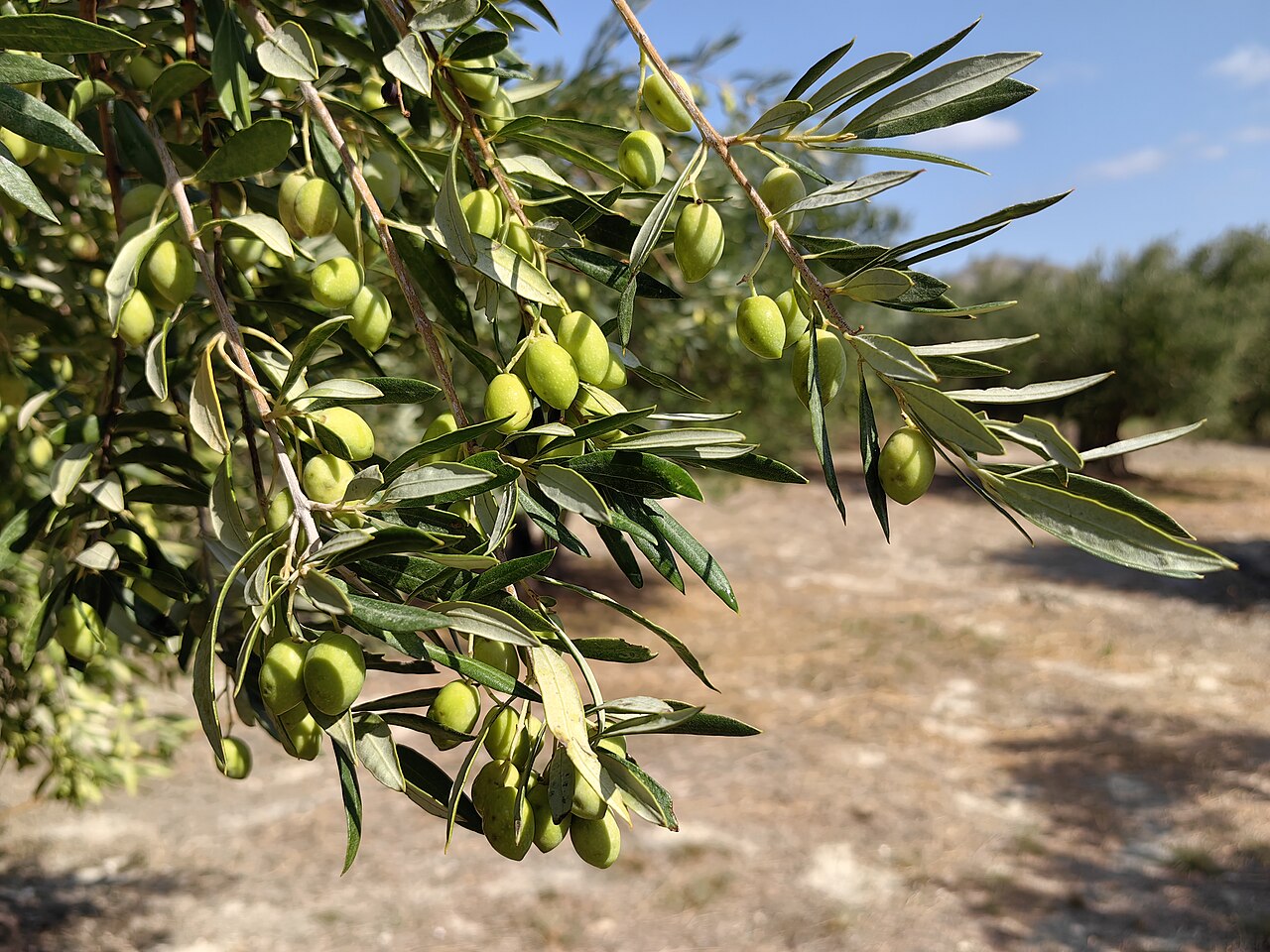
Koroneiki olive tree in Sitia, Lasithi, Crete. Photo by Petro Stelte, via Wikimedia Commons, licensed under CC BY-SA 4.0. No changes were made.
FAQ: Olive Oil Experience in Crete
What is an olive oil experience in Crete?
An olive oil experience in Crete takes visitors to a working olive grove or family estate. Guests learn about olive cultivation and the cold-pressing process. They also taste different grades or varieties of Cretan extra virgin olive oil, often paired with traditional local foods. Some experiences include a tour of historical press equipment and an explanation of Cretan olive oil history.
Where can I find an olive oil tasting in Crete?
Olive oil tastings are available across several regions of Crete, with notable experiences near Chania, Heraklion, and Rethymno. Family estates such as Vassilakis Estate, Biolea, and Kleanthi Olive Farm offer guided tours and tastings, some at no cost. Independent tasting hosts also offer smaller, more intimate sessions in working groves.
What is the oldest olive tree in Crete?
The Olive Tree of Ano Vouves stands in the village of Ano Vouves, in the Kolymvari area of Chania. Experts estimate its age at between 2,000 and 4,000 years. Scientists from the University of Crete estimate it at approximately 4,000 years. It has been declared a Natural Monument by the Region of Crete and still produces olives today.
What is the connection between olive oil and Minoan civilization in Crete?
Archaeologists identify Minoan Crete as one of the world’s earliest centers of large-scale olive oil production. Systematic olive cultivation on the island dates to around 3,500 BC. The Minoan palaces stored olive oil in large clay jars called pithoi. Knossos could hold an estimated 250,000 kilos of olive oil. Linear A and Linear B clay tablets recorded olive oil inventories and trade. The Minoans used olive oil for food, medicine, ritual, lighting, and cosmetics. They also gave the olive tree sacred meaning within their goddess-centered spiritual tradition.
What variety of olive is used for Cretan olive oil?
The Koroneiki olive is the dominant variety in Crete. This small, high-yield fruit accounts for approximately 80% of the island’s extra virgin olive oil production. Koroneiki oil delivers medium-intensity green fruitiness with notes of artichoke, fresh grass, and green almond. Natural bitterness and a clean peppery finish complete its flavor profile. The Tsounati variety, associated with older trees and a mellower profile, is also cultivated in Crete, particularly in western Chania.
What does PGI mean for Cretan olive oil?
PGI stands for Protected Geographical Indication. Cretan extra virgin olive oil now carries the PGI Kriti designation. Kriti is the Greek name for Crete. This certification guarantees that producers grow the olives, extract the oil, and bottle it in Crete. It also sets quality standards, including a maximum acidity of 0.6%. In addition, it requires a rich fruity aroma, natural bitterness and pungency, and no sensory defects.
When is the best time to visit an olive oil farm in Crete?
Olive oil farm visits and tastings are available year-round. The harvest season runs approximately from mid-October through January. During this period, active groves create a more immersive atmosphere. Families often gather to harvest the olives together. Working mills also produce fresh olive oil throughout the season. Spring and early summer suit visitors who prefer cooler grove walks and fewer crowds.
Contact Elissos to plan a private cultural journey through Crete’s olive groves, ancient memory, and living rural traditions.
Feature image by: Dietmar Rabich, via Wikimedia Commons, licensed under CC BY-SA 4.0. No changes were made.
,_Asomatos,_Olivenhain_--_2023_--_8521.jpg)