
Villages in Crete: 10 Traditional Towns Worth the Detour
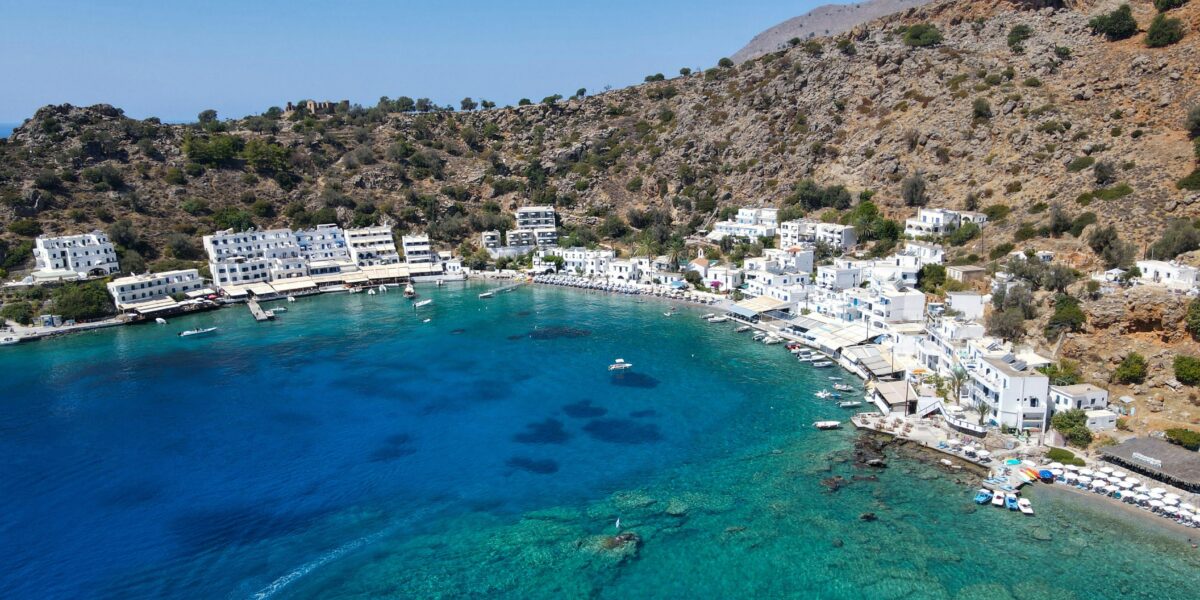
Villages in Crete stretch across every part of the island.
Most share the same defining features: a square, a church and a coffee shop where nobody is in a hurry.
Quick answer: The villages worth building a day around are Archanes, Assites, and Zaros in Heraklion for wine, olive oil, and Minoan history; Vamos and Therissos in Chania for restored stone streets and 20th-century history; Anogia, Margarites, and Spili in Rethymno for mountain life and pottery; and Kritsa in Lasithi for weaving and Byzantine frescoes. Sfakia and Loutro belong on the list too, but they deserve their own trip: see our South Crete Travel Guide for that region in full. A rental car is the only practical way to reach most of these places, and a slow morning in one village usually beats rushing through three.
Each of the villages below has its own history, its own relationship to Venetian or Ottoman rule, and its own reason for existing where it does, on a hillside, at a spring, or beside a monastery. What they have in common is a pace that has not been rebuilt for tour buses. Some are already well known. Others are the kind of place you find because a local guide takes you there, which is a large part of why we built this list.
What Makes a Cretan Village Worth the Detour
Nearly every village on this list surrounds a small square with a church at its centre. The church is often Byzantine, and its foundations sometimes predate the surrounding buildings. That is not a coincidence. Cretan village life still runs on the rhythm of the church calendar, saints’ feast days, Easter, and the August 15th Assumption, with the panigiria that follow them featuring music, food, and dancing that goes on long after visitors have gone to bed.
The villages that reward a visit are the ones where that rhythm is still visible: a weaver working in her doorway, a cheese-maker who will hand you a taste before you ask, a taverna that cooks whatever the family farm produced that week. The villages to be more skeptical of are the ones built entirely around a single photogenic street. Both kinds exist in Crete. This guide leans toward the former.
Heraklion: Wine Country and the Foothills of Psiloritis
Archanes: Neoclassical Streets and the Oldest Wine Region on the Island
Archanes sits in the heart of Crete’s most established wine region, and it looks the part: pastel neoclassical houses, bougainvillea over stone lintels, and a square that fills with locals rather than tour groups most evenings. The village earned real European recognition for the restoration work done here, and it shows in how well the old town has held together.
What makes Archanes worth more than a photo stop is what surrounds it. Within a few minutes’ drive are three of Crete’s most significant Minoan sites: the Fourni cemetery, the Anemospilia peak sanctuary, and Vathypetro, where archaeologists excavated the oldest known winery in Europe. Our Artistic and Spiritual Crete experience covers all three, along with the sacred hill of Juktas above the village, and closes with lunch in Archanes itself. For a more food-focused day built around the region’s olive oil and wine production, including a visit to Vathypetro and a working winery, our Olive Oil and Wine Now and Then tour is the better fit.
The village itself splits into Ano (Upper) and Kato (Lower) Archanes, about 4.5 kilometers apart, with Ano Archanes the center of local olive oil production. The Folklore Museum and the Museum of Cretan History are both worth an hour if you are staying the afternoon.
Assites: Where the Old Crafts Are Still Practiced, Not Performed
Ano and Kato Asites sit at the eastern foot of Mount Psiloritis, about 450 meters up, and they are less a postcard village than a working one. This is where you see sheep bells still forged by hand, baskets still woven from local reeds, and a 16th-century church that has never needed restoration marketing to feel genuine.
Our History, Tradition and Folk Arts tour is built almost entirely around Assites: a visit to the Folk Art Museum and craft workshops, a stop at a local dairy for cheese-making, a cooking lesson, and lunch at a family’s home using their own farm produce. It is the closest thing on this list to being invited into someone’s actual life rather than shown a version of it. The nearby Monastery of Agios Georgios Gorgolainis and the E4 trail up toward Psiloritis are both worth the extra hour if you have it.
Zaros: Spring Water, a Lake, and a Forest Worth the Hike
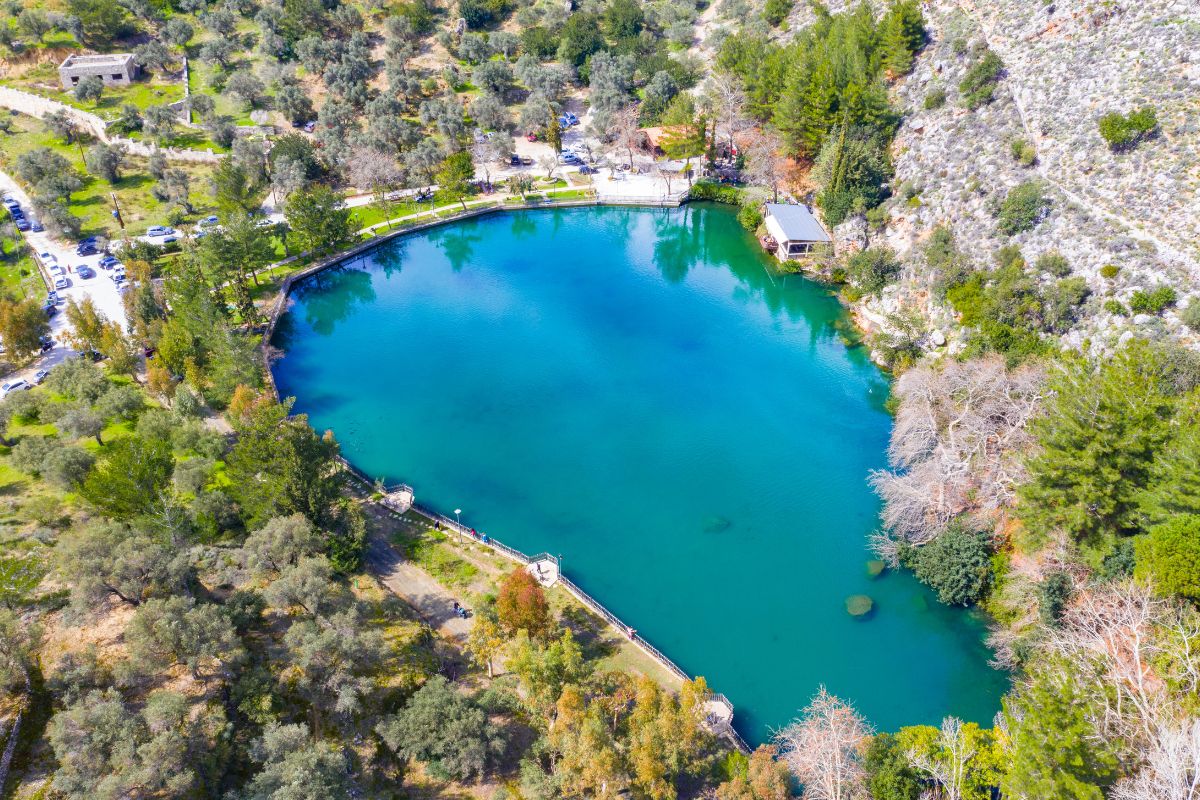
Zaros sits in a green valley on the southern slopes of Psiloritis, built around the springs that supply much of the island’s bottled water. The artificial lake at Votomos, ringed by plane and maple trees, is a genuinely restful place to eat, and the trout and salmon farmed in the cold spring water are on nearly every taverna menu nearby.
From the lake, a trail leads into the Rouva forest, one of the largest and oldest on the island, and down into the Agios Nikolaos gorge. Our Nature Whispers experience covers this ground properly: a session of contact improvisation and mindful movement in the Rouva forest, a moderate 2.5 to 3-hour hike down the gorge, lunch by the lake, and a swim in the Libyan Sea to close the day. It is one of the more physical entries on this list, and one of the most rewarding if you want a village day that is also a nature day.
Chania: Venetian Streets and Revolutionary Villages
Vamos: Where Cretan Hospitality Is Not a Marketing Line
Vamos sits at the foot of the White Mountains, where restoration has been done with unusual care and old neighborhoods and stone streets have been kept intact rather than modernized. What sets it apart is the welcome: it is common for visitors to be invited into someone’s home for raki, apaki, and cheese, treated the way Cretans treat long-lost relatives rather than customers. That is the real meaning of “philoxenia,” and Vamos still practices it without irony.
Our Explore the Traditional Aspects of Chania tour covers Vamos alongside the Venizelos family tombs, the 16th-century Monastery of St. George Karydiou and its olive oil press, an olive oil tasting at a working factory, and lunch in the equally picturesque village of Vrises. Anyone interested in Crete’s 20th-century political history and rural traditions can make a full day of this experience. It brings both aspects of the island together. Chania town is only about 40 minutes away if you want to combine both in one trip.
Therissos: The Village Where Modern Crete Was Declared
Therissos sits in a green valley 15 kilometers south of Chania, reached through the Therissia gorge, and it carries a specific weight in Cretan history: on March 10, 1905, fighters led by Eleftherios Venizelos gathered here to declare an armed revolutionary struggle for the island’s union with Greece. The statue of Venizelos still dominates the central square, and two small museums cover that period in detail.
Beyond its history, Therissos remains a genuinely lived-in village with two churches, a handful of cafés and several taverns. These taverns have served apaki, siglino and smoked lamb in the same traditional way for generations. The Explore the Traditional Aspects of Chania tour touches on this era of Cretan history if you want the fuller political context before or after visiting.
A Note on Sfakia and Loutro
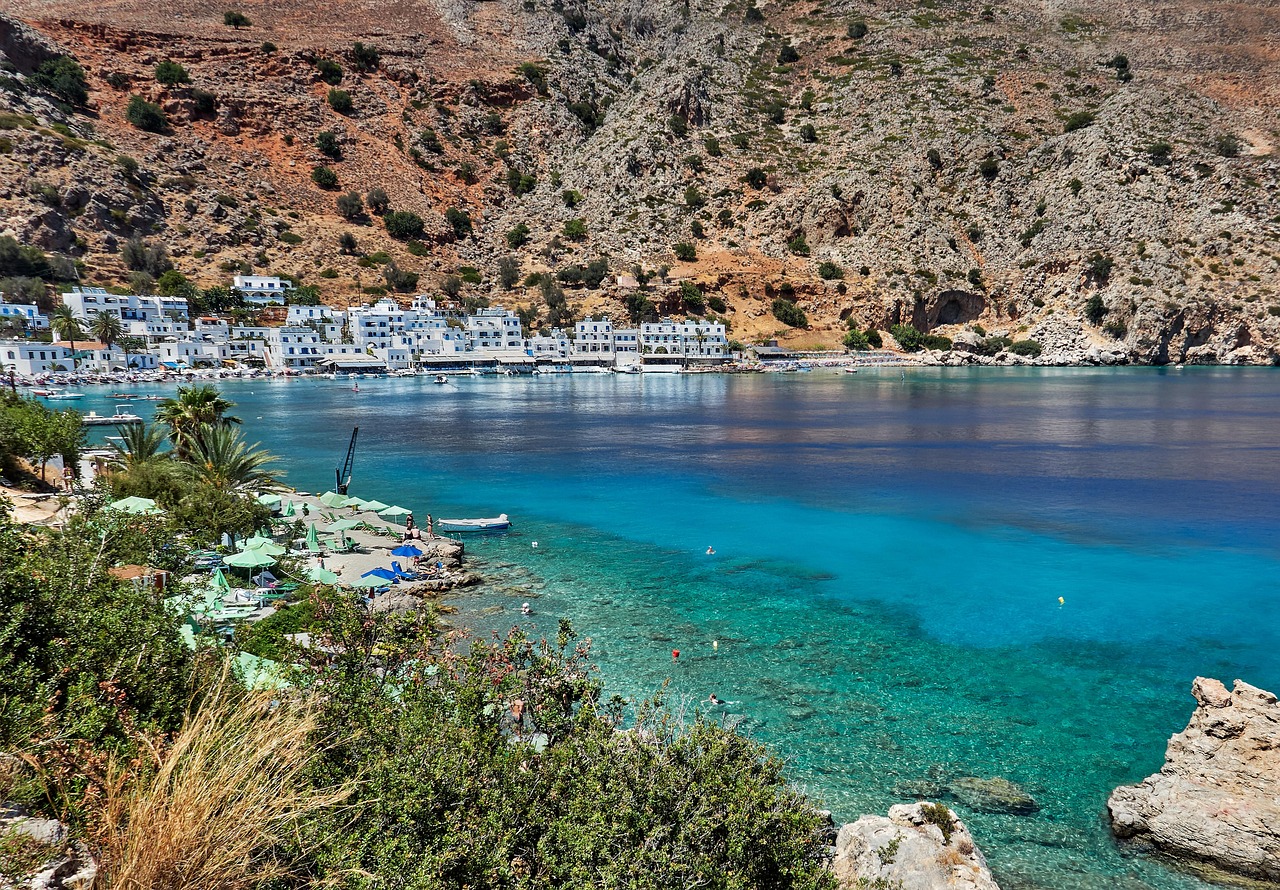
Chania’s south coast holds two villages that deserve more than a paragraph each: Chora Sfakion, the practical ferry hub for the roadless southwest, and Loutro, the whitewashed harbor village reachable only by boat or on foot. Rather than repeat that ground here, our South Crete Travel Guide covers both in depth, including ferry logistics, where to stay, and how to fit them into a longer south coast itinerary. If a sailing day along that coast interests you more than a base to stay in, our Sail Along the South Cretan Coast experience departs from Chora Sfakion and stops at Loutro, Agia Roumeli, and several beaches accessible only by boat.
Rethymno: Mountain Villages and Pottery Towns
Anogia: Shepherds, Lyra Players, and the Cave of Zeus
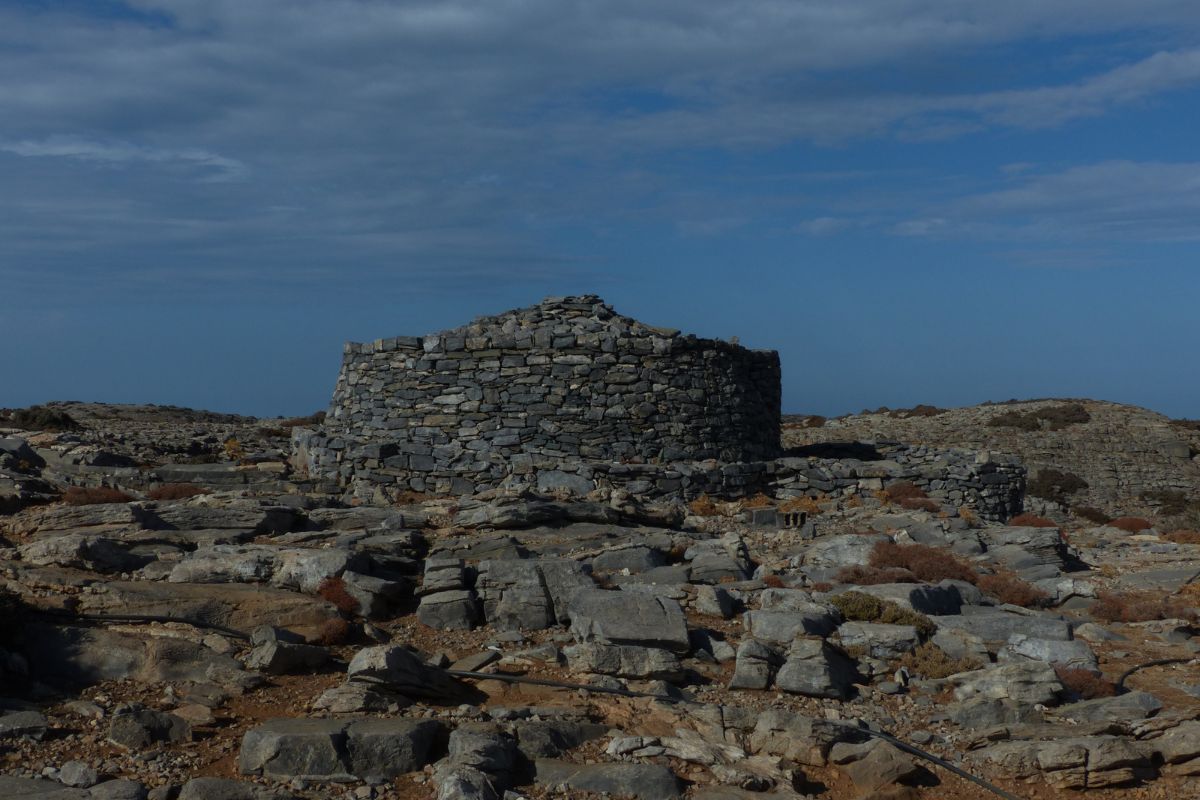
Anogia sits high on the slopes of Psiloritis, near the Nida Plateau and the Ideon Cave, where Cretan mythology places the birth and upbringing of Zeus. This is shepherd country in the most literal sense: you will see “mitata,” the traditional stone huts once used by shepherds working the high pastures, and flower-decked balconies on stone houses that have not changed shape in generations.
Anogia’s history runs deeper than its scenery. The village was a center of resistance during the Second World War and paid heavily for it, and it has produced some of Crete’s most significant lyra players and composers, including Nikos Xylouris, whose house is now a small museum. Our The Mysteries of the Cretan Born Zeus tour builds a full day around this region: a stop in the traditional village of Arolithos with folk art workshops, a moderate 20-minute hike each way to the sacred cave of Ida (in ritual use since roughly 6000 BC, and once a site of initiation for Pythagoras and other Greek philosophers), lunch in a shepherd’s mitato with roasted lamb, and a close in Anogia itself. For the wider context on the cave and the mountain, see our guide to caves in Crete and to Zeus in Crete.
Margarites: The Pottery Village of Western Crete
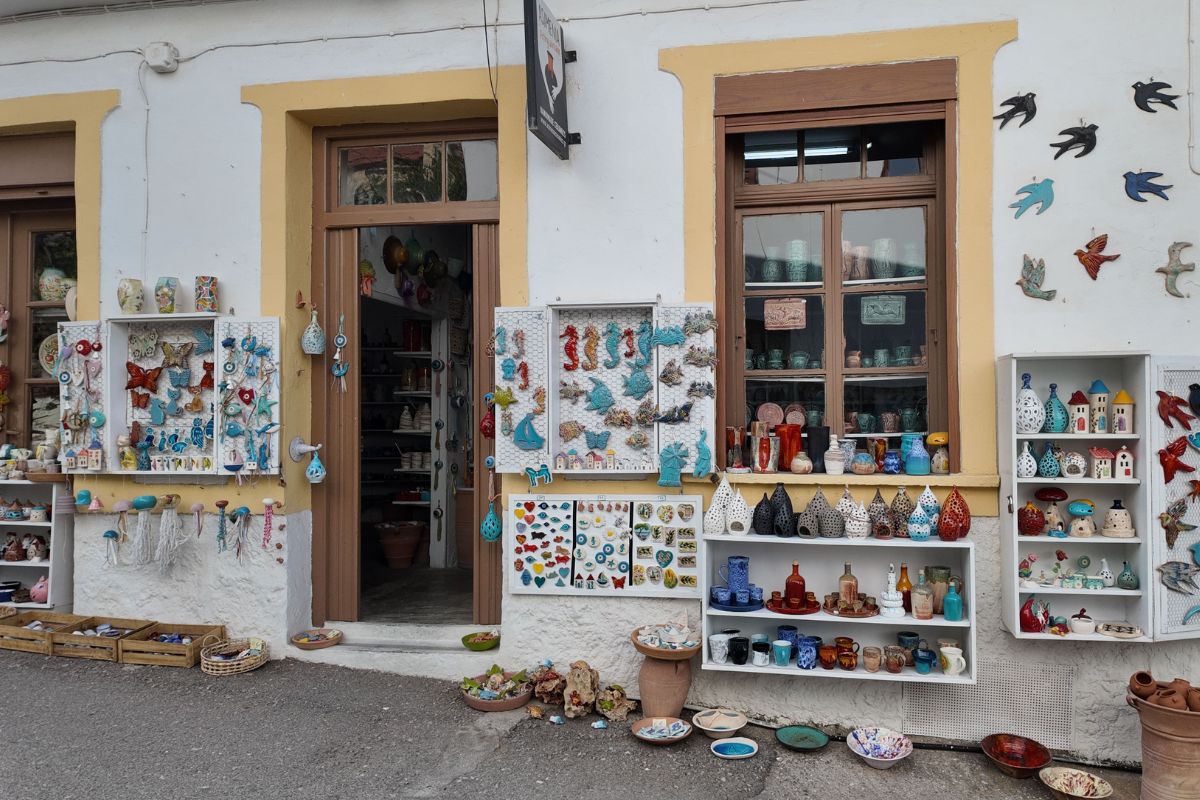
Margarites sits at 300 meters on the northern foot of Psiloritis, and it has been a center of pottery production for long enough that the tradition is now simply the village’s identity. Walk any street and you will pass large clay pots outside houses, ceramics hanging on walls, and workshops where potters still throw and fire pieces by hand.
Our Greco Roman Wonders tour pairs Margarites with the ancient city of Eleutherna, whose excavations and museum cover finds from the 9th century BC to the 5th century AD. You will get a hands-on pottery session in Margarites itself before a family-style lunch closes the day.
Spili: The Village of the Lion Head Fountains
Spili sits in the southern foothills of Psiloritis. A long stone fountain lined with lion heads, each still running with spring water, makes the village best known for the centre of its square. It is a smaller, quieter stop than Anogia or Margarites, with narrow streets, a handful of cafes, and green hillsides that make it worth a slow half hour rather than a rushed photo. It pairs naturally with a day that also includes Margarites or a drive toward the south coast.
Lasithi: Weaving, Byzantine Frescoes, and a Bay Below
Kritsa: One of Crete’s Oldest Living Villages
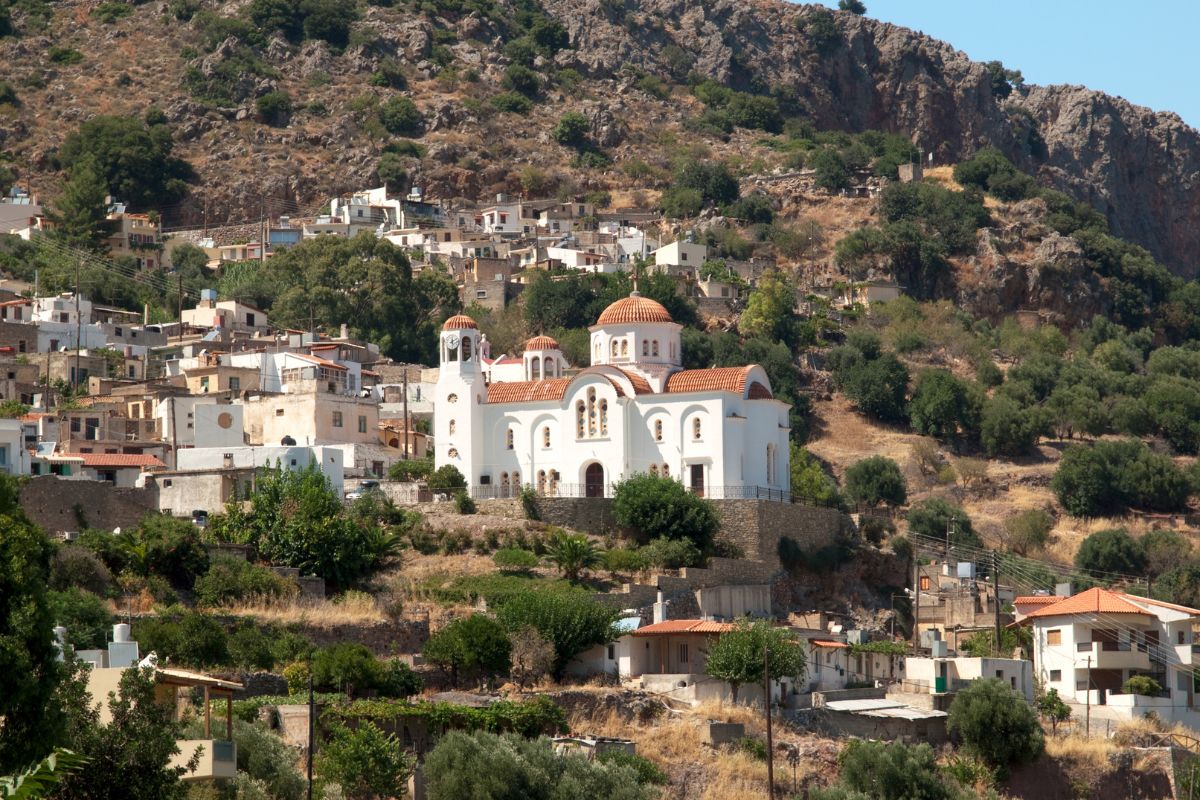
Kritsa stands amphitheatrically at the foot of Mount Kastellos, close to Agios Nikolaos. It is one of the oldest continuously inhabited villages on the island. Cobbled alleys, stone arches, and shops selling handwoven textiles and folk art give it a genuinely lived-in feel, even on the days when day-trip buses pass through.
The village’s olive oil, produced by the local Agricultural Cooperative, has won awards in national competitions, and the nearby Byzantine church of Panagia Kera holds some of Crete’s finest surviving frescoes. Our The Island experience combines Kritsa with a private boat trip to Spinalonga, the fortress island turned 20th-century leper colony, plus lunch in the harbor village of Plaka and a stop in Kritsa itself for its weaving tradition.
Visiting Cretan Villages Well
A rental car is close to essential. Buses connect the major towns, but they do not support flexible village-to-village day trips. Several of these places, including Assites, Zaros, Vamos and Therissos, also sit well outside the main road network.
Visit in the morning where you can. Village squares are at their most alive between roughly 9 and 11 AM, when locals are running errands and cafes are filling up, and again in the early evening once the heat breaks. Midday in July and August empties most squares out, locals included.
Time it around the calendar if you can. Panigiria, the local feast-day celebrations tied to a village’s patron saint, are the single best way to see a village at its most genuine, but they are not tourist events. Dress modestly for church visits, ask before photographing people, and let locals set the pace of the evening rather than the other way around. If you are building a trip around early summer, our Crete in June guide covers the start of the village festival season in more detail.
Eat where the village eats. A taverna with a handwritten menu and no photos of the food is a better sign than one with a laminated multilingual menu by the door. Ask what is local and in season, most of these villages have their own cheese, honey, or wine worth asking after specifically.
Image by Gabriel Bonis from Pixabay
Villages as the Slower Half of a Crete Trip
Crete’s beaches and archaeological sites tend to get the headline attention, and rightly so, but the villages are where the island’s actual daily rhythm still plays out: the church bell, the coffee that arrives whether you ordered it or not, the square that empties at 2 PM and fills again at 8. It is a slower register than Balos at midday or Knossos at the height of summer, and it is the register that most closely matches what we mean by “Elissos Travelling Philosophy,” meeting the island through its people and its pace rather than only its postcards. For a broader list of stops to round out the trip, see our Crete to do guide.
If you want a private day built around one region rather than a checklist of villages, our team can put together an itinerary around Heraklion’s wine villages, Chania’s mountain routes, or Rethymno’s pottery towns, matched to how much walking, driving, and stillness you actually want out of the day.
Frequently Asked Questions
What are the best villages to visit in Crete?
Archanes, Assites, and Zaros in Heraklion; Vamos and Therissos in Chania; Anogia, Margarites, and Spili in Rethymno; and Kritsa in Lasithi are strong first choices, each with a different character, from wine country to mountain shepherd villages to pottery towns.
Do you need a car to visit villages in Crete?
Yes, for almost all of them. Public buses connect major towns, but they do not support flexible village hopping. Several villages on this list also sit entirely outside the main road network.
What is the best time of day to visit a Cretan village?
Mid-morning, roughly 9 to 11 AM, or early evening once the heat has broken. Midday in peak summer empties most village squares, locals included.
Are Sfakia and Loutro included in this guide?
They get a brief mention here, but both deserve deeper coverage than a village list allows. See our South Crete Travel Guide for ferry logistics, where to stay, and how to build an itinerary around that part of the island.
Is it okay to visit a village during a panigiri (feast day)?
Yes, and it is often the best way to see a village at its most authentic, but remember these are local celebrations, not staged events. Dress modestly when entering a church, and ask people before photographing them. Let the community set the pace of the evening rather than the visitors.
Feature by Dimitris Kiriakakis on Unsplash