
Preveli Beach Crete: Palm Forest, Gorge, and a Monastery Above the Libyan Sea
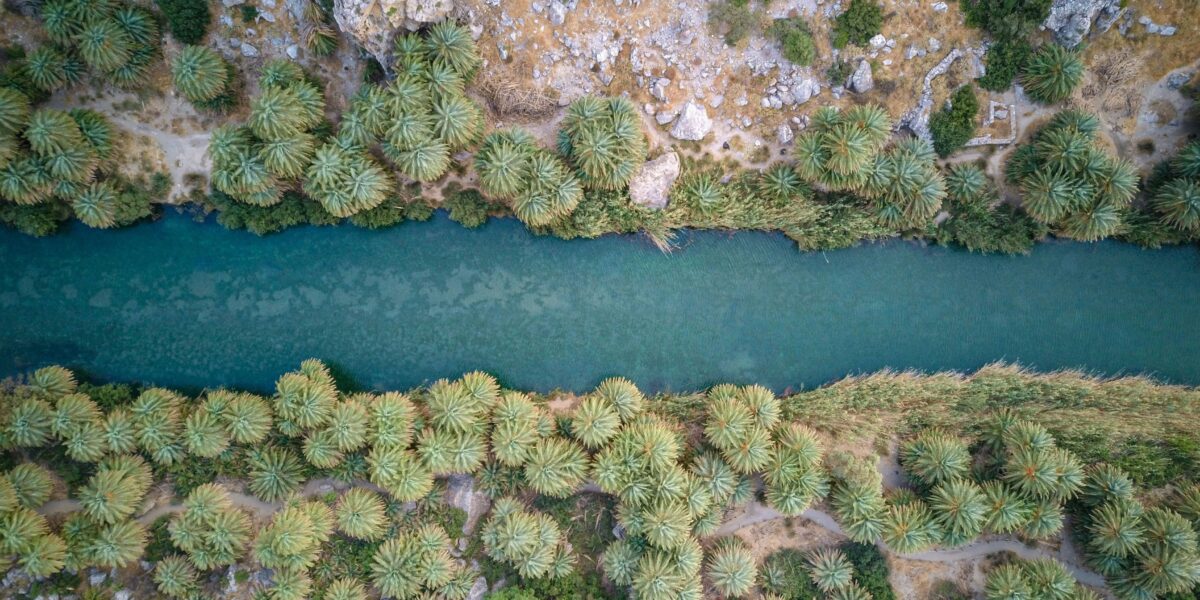
Preveli Beach is one of those places in Crete that genuinely surprises people, even those who think they already know the island well.
You arrive expecting a beach and find something much more layered: a wide stretch of sand where a freshwater river empties into the Libyan Sea, flanked by a dense grove of rare Cretan date palms, with a Byzantine monastery perched on the cliffs above and a limestone gorge threading back into the hills behind it. The whole landscape feels like it was assembled from different parts of the world and left here together at the southern edge of Crete.
This guide covers everything you need to plan a visit: the palm forest and the river, the Kourtaliotiko Gorge and the road through it, the monastery’s centuries of history including its quiet role in World War II, how to get there, and why June is an especially good time to go.
Preveli Beach is located on the south coast of Crete, around 35 km south of Rethymno town. It sits at the mouth of the Kourtaliotiko Gorge, where the Megalopotamos River flows through a grove of rare Cretan date palms before meeting the Libyan Sea. The beach is protected under the Natura 2000 program, so there are no sunbeds or umbrellas. You can swim in both the sea and the freshwater river. The nearby Preveli Monastery dates to the 16th century and played a documented role sheltering Allied soldiers during World War II. The best time to visit is May, June, September, or October, when temperatures are warm and the site is far less crowded than in July and August.
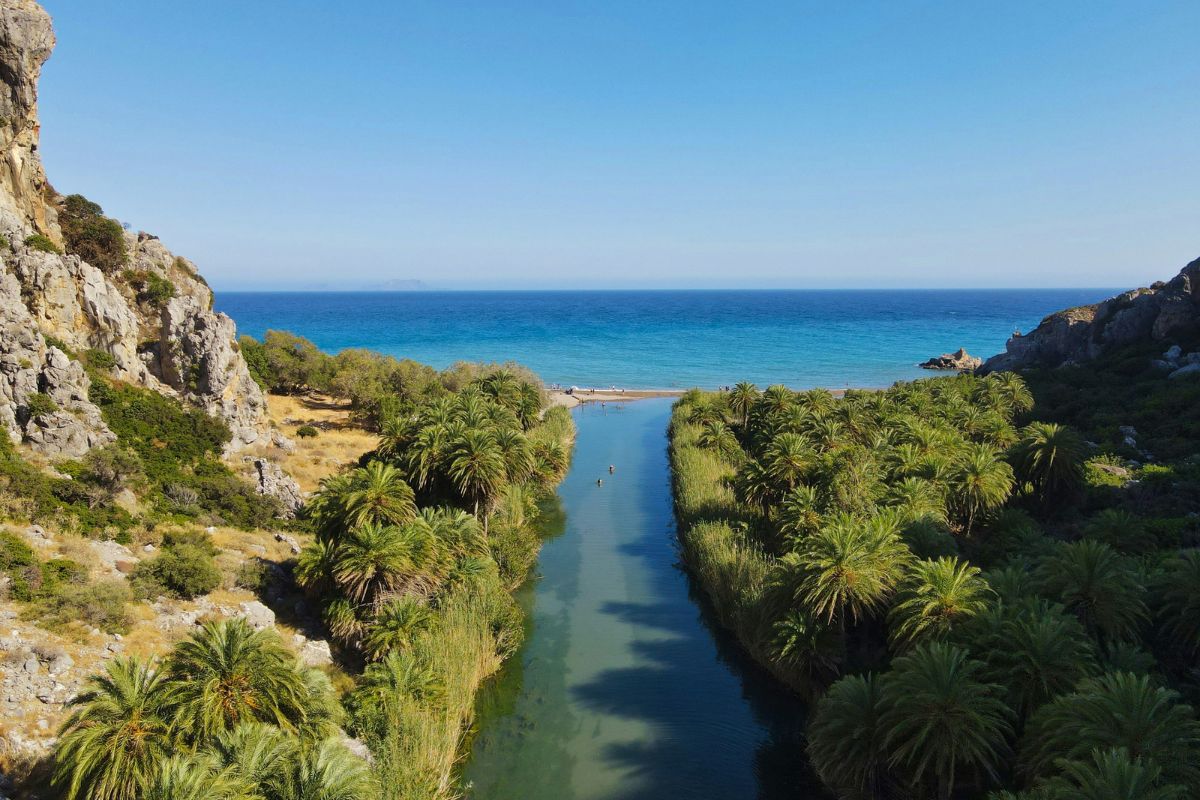
Photo by Dimitris Kiriakakis on Unsplash
What Makes Preveli Beach Different From Any Other Beach in Crete
Crete has some of the most beautiful beaches in Greece, and many of them are genuinely outstanding. But Preveli works differently from almost all of them. Most beaches are simply sea and shore. Preveli is a convergence of three separate environments at once: the gorge, the river delta with its palm forest, and the open sea.
The freshwater river does not just flow near the beach. It runs along the sand, forms a shallow lagoon before reaching the sea, and is cold enough on a hot August afternoon to feel almost medicinal. The palm trees growing on its banks are not ornamental or planted. They are Phoenix theophrasti, the Cretan date palm, a species found almost nowhere else on earth. The beach itself is wide and sandy, facing the Libyan Sea.
There are no sunbeds and no umbrellas. This is a Natura 2000 protected area, which means the landscape stays as it is. You bring what you need, you take your rubbish back with you, and the experience is defined by the place rather than the infrastructure.
For travelers curious about what to do in Crete beyond the standard options, Preveli represents something real: a specific landscape with its own logic, its own history, and its own rhythm.
The Palm Forest and the River Delta
The palm grove at Preveli is not large by global standards, but within the context of Crete and the Mediterranean, it is significant. It lines both banks of the Megalopotamos River (the name translates as «Great River») for several hundred meters before the river fans out and meets the sea.
The Cretan Date Palm (Phoenix theophrasti)
The palms here are Phoenix theophrasti, named after the ancient Greek philosopher Theophrastus, who documented them in his botanical writings around 300 BCE. The species is endemic to the eastern Mediterranean, with its largest known concentration at Vai on the eastern tip of Crete, and a secondary population here at Preveli. They look similar to a common date palm, but they are slower-growing, smaller, and far rarer. A fire in 2010 burned most of the grove, but the palms recovered with surprising resilience over the following years. Walking beneath them in June, when the light filters through the fronds and the river runs clear at your feet, the setting feels genuinely unlike anything else in Greece.
Swimming in the River vs. the Sea
At Preveli, you have a choice that most beaches do not offer. The river water, fed by springs higher in the gorge, is noticeably cooler than the sea and stays clear throughout the summer. The shallow lagoon it forms before reaching the sea is calm enough for children and gentle enough for an afternoon float. The sea at Preveli is the Libyan Sea, which is typically warmer and calmer than the northern Cretan coast. Many visitors split their time between both: cooling off in the river, drying off in the sun, then swimming in the sea.
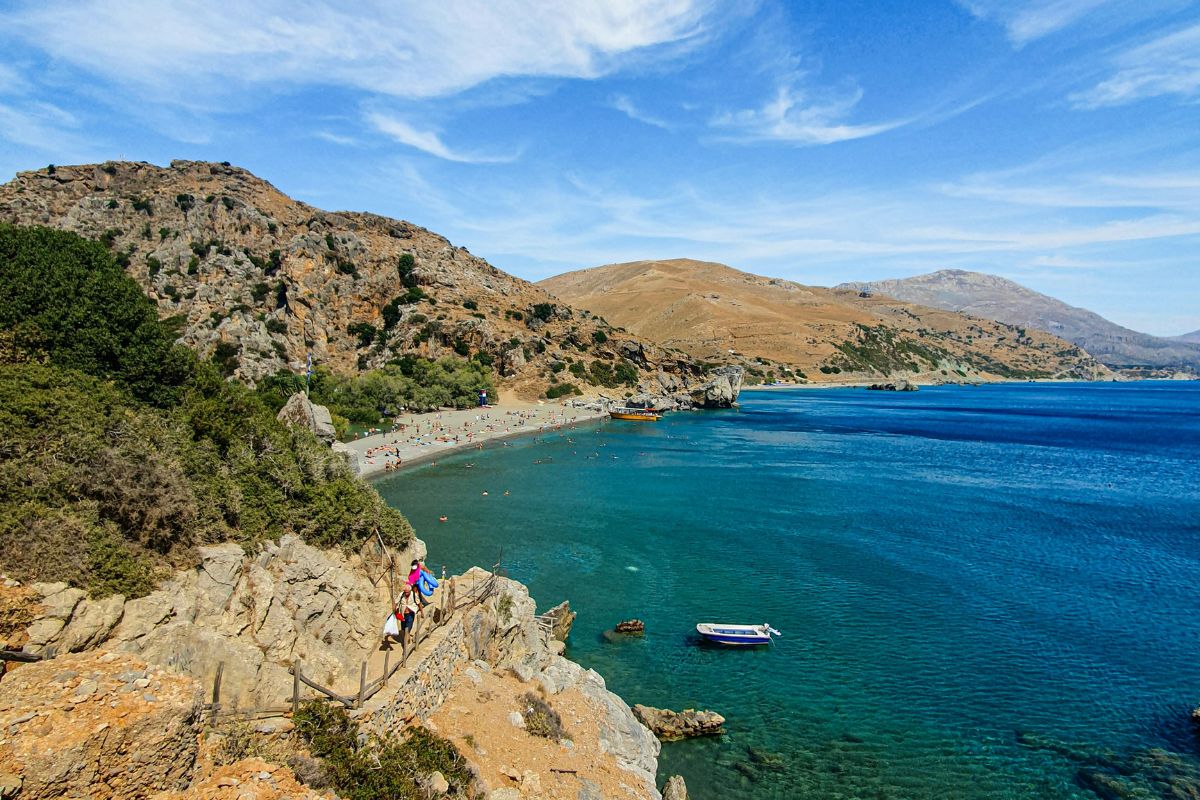
Photo by András Gál on Unsplash
Kourtaliotiko Gorge: The Road Down to Preveli
The drive to Preveli from Rethymno takes you through the Kourtaliotiko Gorge, and this should not be rushed. The gorge itself is one of the finer drives in the Rethymno region: narrow limestone walls, griffon vultures overhead on most mornings, a small chapel cut into the rock face, and the sound of water running through the gorge even in late summer.
The road winds through the gorge for several kilometers before the landscape opens toward the south coast. There are places to stop and look down into the canyon, and the whole drive takes less than fifteen minutes, but it deserves your attention. It also puts the beach in context: Preveli is not just at the end of a road, it is at the end of a landscape that has been building through the mountains since you left the main highway.
If you want to walk part of the gorge rather than just drive through it, a trail runs along the river from the lower section up toward the canyon. It is not as long or as demanding as the bigger gorge walks in Crete, but it rewards anyone who wants more than a beach day.
The rugged mountain landscapes of Crete visible from the gorge road give a clear sense of the terrain that separates the north coast from the south, and why reaching Preveli feels like arriving somewhere genuinely removed from the tourist centers.
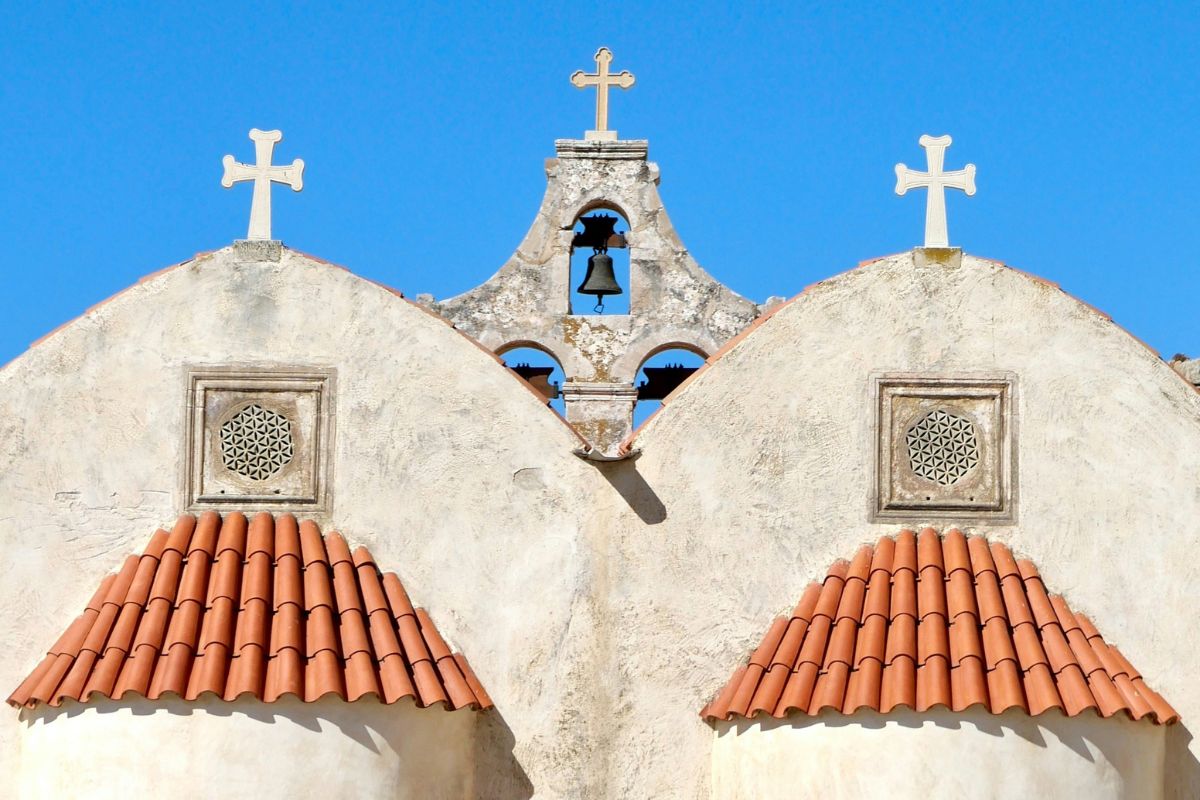
Photo by Claudio Poggio on Unsplash
Preveli Monastery: History, Architecture, and WWII
Most visitors to Preveli focus on the beach and give the monastery a passing glance from the road. That is a missed opportunity. The Preveli Monastery is one of the more historically substantial sites on the south coast, and spending thirty to forty minutes here before descending to the beach adds a dimension to the day that is difficult to find elsewhere in this part of Crete.
The Two Monasteries
There are actually two monasteries here, not one. The lower monastery, known as Kato Preveli, dedicated to Saint John the Baptist, dates to the mid-16th century and is now largely abandoned. It sits near the old stone bridge over the Megalopotamos River, and the ruins are worth a short stop. The upper monastery, Piso Moni (also called Piso Preveli), dedicated to Saint John the Theologian, is the active one. It is perched on the edge of the gorge with a clear view down to the Libyan Sea.
The monastery owes its name to the noble Prevelis family from Rethymno, who contributed to its restoration in the 18th century. Inside, a small museum holds icons, embroidered vestments, and relics. The entrance fee is around 4 euros. Dress modestly — shoulders and knees covered — as this is an active religious site. Opening hours during summer run from around 9:00 to 13:30 and again from 15:30 to 18:30, though hours vary seasonally.
On your way in, look for the ornamental fountain at the entrance. The inscription on it is a palindrome in Greek: it reads the same forwards and backwards, and translates roughly as «Wash your sins, not only your face.» It is the kind of small detail that stays with you.
The Monastery’s Role in World War II
After the Battle of Crete in May 1941, when German forces occupied the island, hundreds of Allied soldiers, primarily British, Australian, and New Zealand, found themselves stranded and unable to evacuate. Many made their way south through the mountains, and the monks of Preveli became central to a quiet but substantial resistance effort.
The monks sheltered the soldiers, fed them, and guided them down to the coast, where British submarines arrived at night to take them off the beach and carry them to Egypt. The monastery’s abbot of the time, Agathangelos Lagouvardos, played a key role in coordinating these evacuations. The Germans eventually raided the monastery in retaliation, but not before a significant number of soldiers had escaped. In 2001, to mark the 60th anniversary of the Battle of Crete, the monastery erected the Preveli International Memorial for Resistance and Peace on its land, overlooking the Libyan Sea.
One of those soldiers was Australian Corporal Geoff Edwards. After the war, he settled in Western Australia and named his coastal village Prevelly. In recognition of the monastery that had sheltered him. The name persists to this day.
This history gives the landscape around Preveli a particular weight. The gorge that today feels like a scenic drive was, in 1941, an escape route. The monastery above the Libyan Sea was not just a place of prayer but a place of calculated and dangerous human kindness.
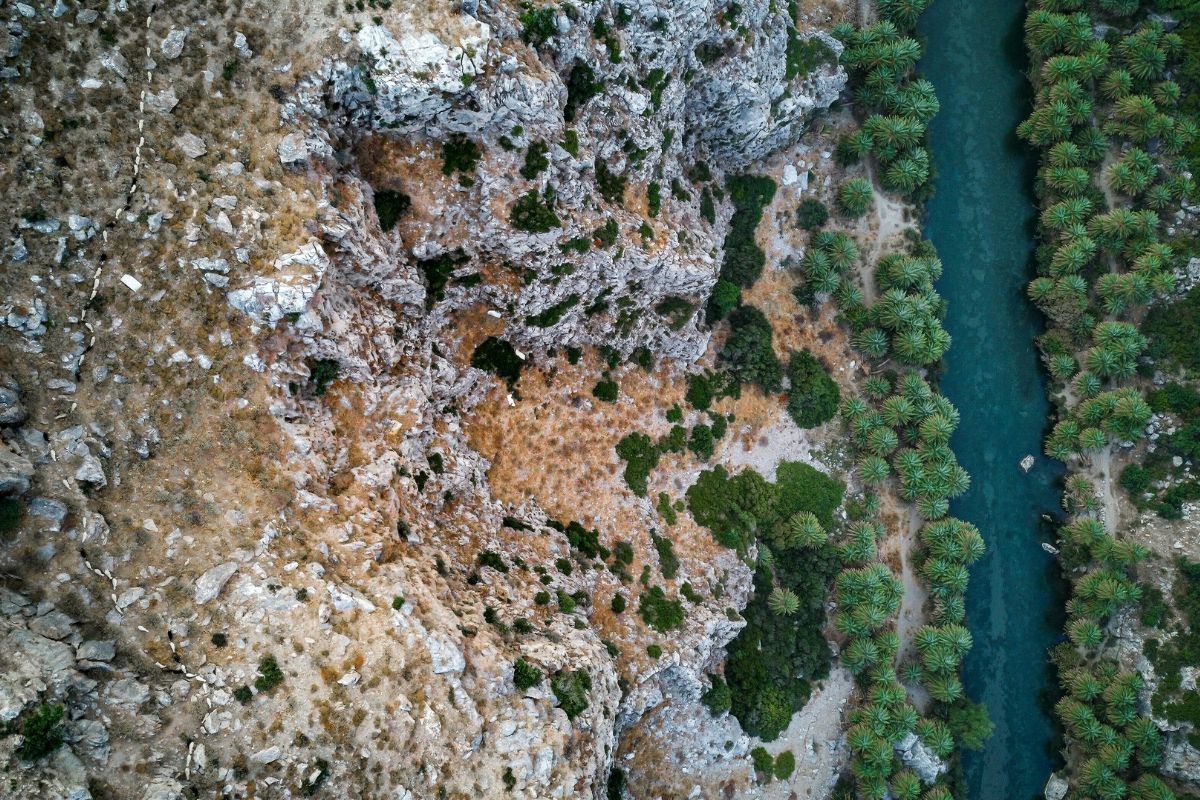
Photo by Joshua Kettle on Unsplash
How to Get to Preveli Beach
By Car From Rethymno
The most practical option. From Rethymno, drive south toward Armenoi, then continue through Koxare and into the Kourtaliotiko Gorge. Follow the signs toward Preveli Monastery and continue past the monastery to the main parking area. The drive takes around 50 minutes and covers approximately 34-40 km depending on your route.
The main parking area (signposted as Preveli Beach Parking) sits at the top of the cliffs above the beach. From there, a path descends to the sand via more than 400 steps. It is a 15-20 minute walk down, steeper on the return. There is a small parking fee (around 2 euros). Arrive before 10:00 in peak season to secure a space without waiting.
An easier alternative: drive a short distance further to the Drimiskiano Ammoudi beach on the east side, park there, and walk a short 5-minute path across to Preveli. The terrain is gentler and the approach gives you a different perspective of the palm forest.
By Boat From Plakias or Agia Galini
Seasonal boat trips depart from Plakias (about 10 km away) and from Agia Galini several times daily during summer. The boat approach to Preveli, arriving from the sea into the river delta, gives you one of the best views of the whole site. The palms, the sand, and the monastery cliffs all at once. This option also avoids the parking problem entirely and removes the steep climb back up at the end of the day. Check locally for seasonal schedules, as departure times vary.
By Bus From Rethymno
A bus runs from Rethymno to Preveli approximately five times daily during the summer season, with a journey of just under an hour. The ticket costs around 5 euros. The bus stops at the top of the road near the monastery, not at the beach itself, so you will need to walk the remaining distance to the parking area and then descend to the sand. The schedule makes this more feasible for an early departure than a flexible day trip.
Best Time to Visit Preveli: Why June Is the Sweet Spot
Preveli in July and August is busy. The parking fills early, the path down to the beach carries a steady stream of visitors through the middle of the day, and the beach itself, which is wide but not vast, feels noticeably crowded by midday. The experience is still good, but the quieter quality that makes Preveli worth the effort is harder to find.
June is different. The sea is already warm enough for comfortable swimming, the Libyan Sea temperature typically reaching 22-24°C by mid-June. The air temperature is in the low to mid-twenties, which makes the walk down and back manageable. The palm forest is in full leaf. And the crowds have not yet peaked.
If you are planning a trip to the south coast and want to know more about what visiting Crete in June looks like across the island, June is generally considered the best shoulder month for the south: warm, accessible, and still connected to the slower rhythms of early summer rather than the compressed intensity of August.
May and September are also strong. October remains viable for a beach day, though water temperatures begin to drop. Avoid the midday hours in July and August. But if you do visit in peak season: early morning or late afternoon visit gives you a better experience of the place.
For those interested in active exploration, spring hiking in Crete before the beach season opens is another worthwhile approach: the gorge trail is particularly good in April and early May when the wildflowers are at their best and the river runs high.
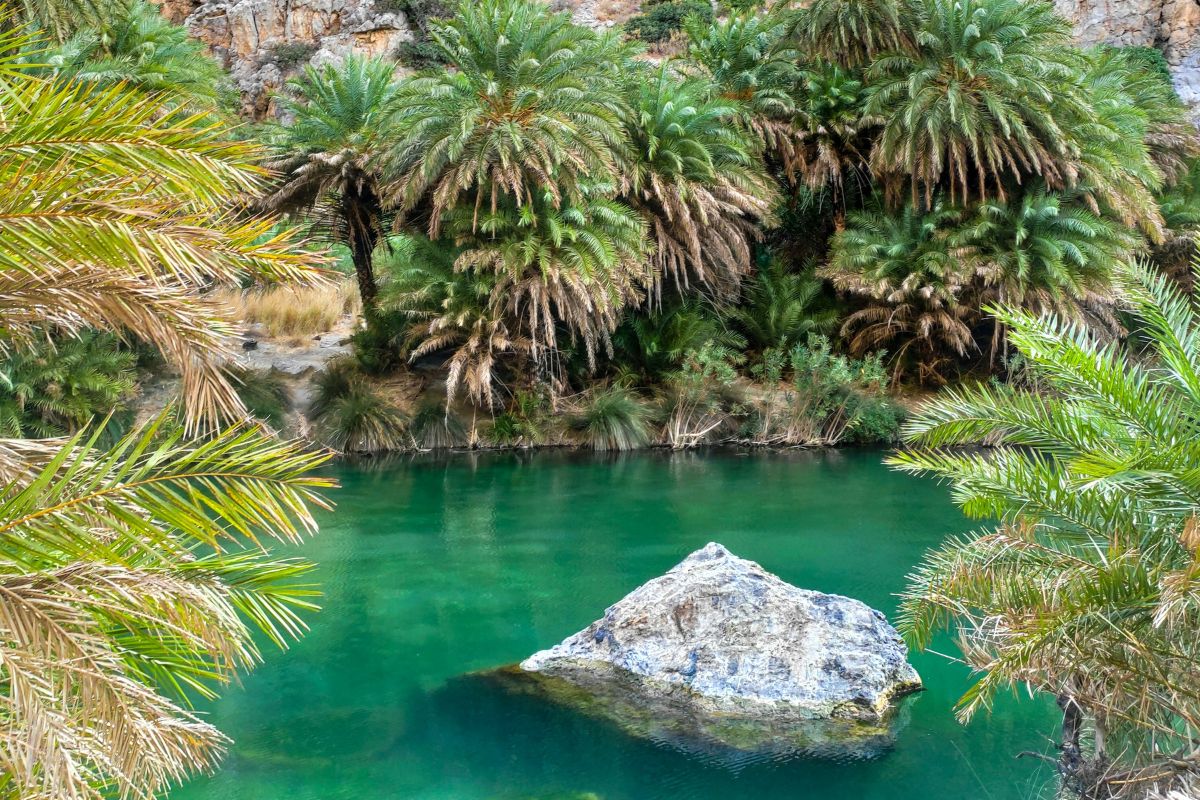
Photo by Joshua Kettle on Unsplash
What to Bring and What to Expect on the Day
Because Preveli is a protected natural area, there are no sunbeds, no umbrellas for hire, and no permanent food facilities. A beach cafe operates seasonally (roughly June through September) near the east parking area. But you should not depend on it. Plan your visit as you would a semi-remote beach.
Practical checklist:
- Water: bring more than you think you need, particularly if you are walking down and back in summer
- Food: pack lunch or snacks; the cafe, when open, is limited
- Shade: no umbrellas for hire, bring your own or plan to use the palm forest
- Shoes: the path from the main parking area involves steps and uneven ground; sandals are fine but avoid flip-flops for the descent
- Cash: parking fee, monastery entrance fee (around 4 euros), and the boat option if departing from Plakias
- Modest clothing: required for the monastery visit, which is worth doing before or after the beach
- Rubbish bag: no bins at the beach; the protected status depends on visitors carrying out what they bring in
Where to Combine Preveli in a South Rethymno Day
Preveli works best as part of a longer south Rethymno day rather than a single-stop visit. The distances between the main sites are short enough that a full day here feels substantial without feeling rushed.
A natural itinerary from Rethymno might look like this: drive south through the Kourtaliotiko Gorge in the morning, stop at the Lower Monastery and the old stone bridge for twenty minutes, visit the Piso Monastery, then descend to the beach for the middle of the day. In the afternoon, drive west to Plakias for a late lunch at one of the waterfront tavernas, then continue to Damnoni Beach for a quieter swim before heading back north.
From the south, Preveli also connects naturally to Agia Galini (about 30 km east). It is a traditional fishing village on the Libyan coast that retains more of its working character than many south Crete coastal towns. Triopetra Beach, further west between Preveli and Plakias, is another strong addition to the day: a wide, mostly empty stretch of sand with a small taverna and a sunset view across the Libyan Sea.
If you are putting together a broader south Crete itinerary, the most beautiful beaches in Crete guide on the Elissos blog covers a wider selection across the island’s southern coast, including beaches in the Heraklion and Lasithi regions that make sense as part of a longer loop.
Conclusion
Preveli Beach is not simply a beach. It is a place where a river, a palm forest, a gorge, and a monastery that sheltered soldiers in wartime all exist within a few kilometers of each other, at the southern edge of an island that has been layering history and landscape for thousands of years. The experience of arriving here, is genuinely different from most of what south Crete offers.
Come in June if you can. Walk down to the palm forest, wade in the river, spend time at the monastery. Give the place the kind of attention it deserves, and it will give you one of the more complete days you can have on the island.
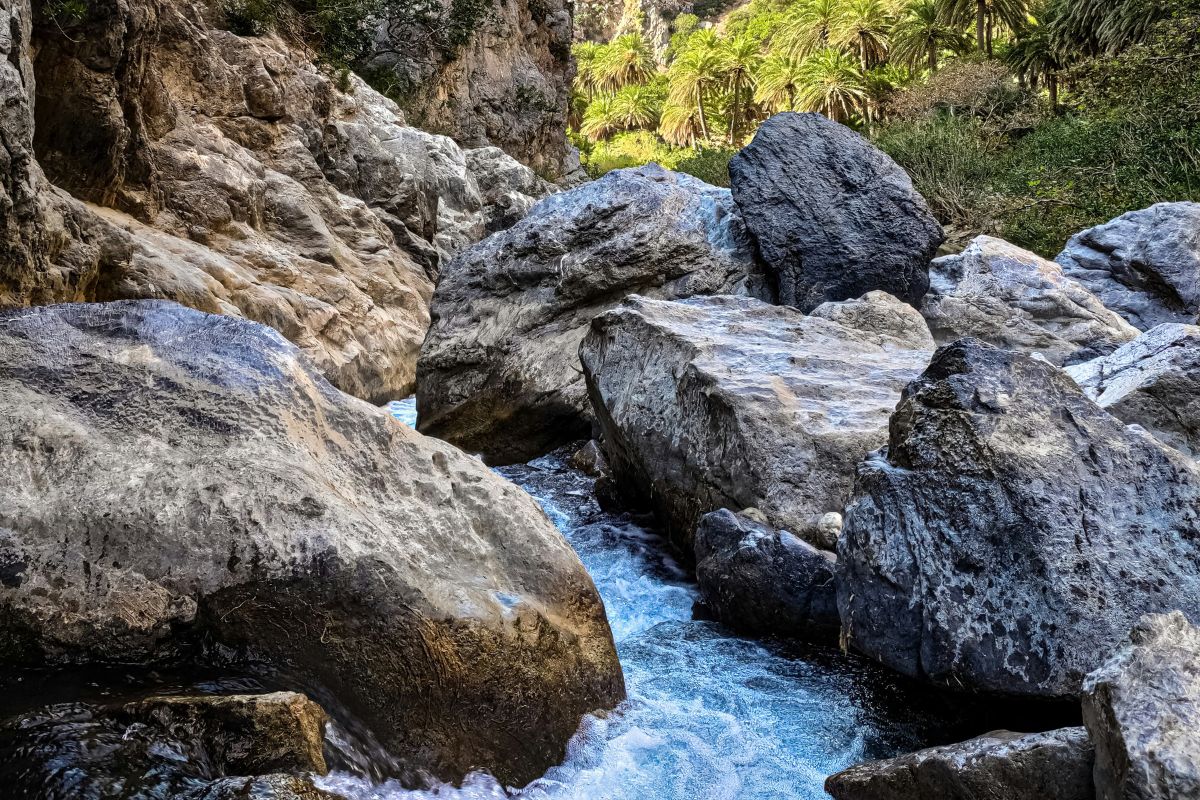
Photo by Joshua Kettle on Unsplash
FAQ — Preveli Beach Crete
Where exactly is Preveli Beach in Crete?
Preveli Beach is on the south coast of Crete, in the Rethymno regional unit. It is approximately 35-40 km south of Rethymno town and about 10 km east of the coastal village of Plakias. It sits at the mouth of the Kourtaliotiko Gorge, where the Megalopotamos River meets the Libyan Sea.
Is Preveli Beach worth visiting?
Yes, for most travelers to Crete, Preveli is worth the trip. It is one of the few beaches on the island that combines a freshwater river, a palm forest, and a historically significant monastery in the same visit. The protected status means it has no commercial facilities on the beach itself. This helps to keep the natural character of the site intact.
Can you swim in the river at Preveli Beach?
Yes. The Megalopotamos River forms a shallow lagoon before reaching the sea. The water is clear and cooler than the sea. Making it a popular spot for wading and swimming, particularly in the hottest summer months. The current is gentle near the delta.
Are there facilities at Preveli Beach?
Preveli is a Natura 2000 protected area. There are no sunbeds, umbrellas, or permanent food facilities at the beach itself. A seasonal beach cafe operates near the east entrance from roughly June to September. However, you should not rely on it. Bring water, food, and shade.
What is the best time to visit Preveli Beach?
May, June, September, and October are generally the best months to visit Preveli. The weather is warm enough for swimming, the crowds are significantly smaller than in July and August. Plus, the landscape is at its most accessible. June is particularly good: water temperatures reach 22-24 degrees Celsius, and the gorge road is lush with vegetation.
How do you get to Preveli Beach?
The most common approach is by car from Rethymno (about 50 minutes, 35-40 km). The road passes through the Kourtaliotiko Gorge, which is part of the experience. There is a paid parking area at the top of the cliffs above the beach. Then it’s a 15-20 minute walk (over 400 steps) down to the sand. Seasonal boat trips run from Plakias and Agia Galini. A bus service operates from Rethymno approximately five times daily in summer.
What is the history of Preveli Monastery?
Preveli Monastery dates to the mid-16th century. During the Ottoman occupation, it was a centre of Cretan resistance. In World War II, after the Battle of Crete in 1941, the monks sheltered Allied soldiers. Primarily British, Australian, and New Zealand. They could not evacuate and coordinated their escape by submarine to Egypt. A memorial on the monastery grounds commemorates this history. The small museum inside holds icons, vestments, and historical relics.
Is the Kourtaliotiko Gorge walkable?
Yes, in part. There is a trail along the river in the lower section of the gorge. It is suitable for a shorter walk rather than a full-day hike. The full gorge is several kilometers long. Most visitors drive through on the main road. But stopping to walk the lower section near the river adds depth to the visit. For more comprehensive gorge hiking in the region, the Samaria Gorge and Imbros Gorge offer longer trails.
Experience Preveli With Elissos Travelling Philosophy
Preveli is a place that becomes more meaningful when you understand its layers. The palm forest is beautiful, but it is only one part of the story. The river begins in the gorge. The monastery holds centuries of faith and memory. The south coast opens toward the Libyan Sea. The whole landscape invites a slower way of seeing.
With Elissos Travelling Philosophy, a visit to Preveli can become more than a beach excursion. It can become a guided journey through water, stone, sacred architecture, Cretan history and the quiet presence of the land.
To plan a private experience in Crete, contact Elissos Travelling Philosophy at operation@elissos.com or explore more journeys through www.elissos.com.
Feature Image by: Photo by Joshua Kettle on Unsplash