
Spring Hiking in Crete: Best Trails for April and May
Hiking in Crete is, at any time of year, a serious pleasure.
But in spring, when the gorges are still cool, the mountains have not yet dried out, and the hillsides carry more color than most hikers expect from a Greek island, it becomes something else entirely. April and May are the months when Crete is greenest, quietest, and most generous with what it puts in front of you on a trail. The summer crowds have not arrived. The temperatures are reasonable. And the landscape, briefly, belongs to the walkers.
This guide covers the best hiking trails in Crete for spring, with a focus on what is actually open in April and what is worth waiting for in May. It also includes a short wildflower calendar and a few practical notes to help you plan a walking trip that makes the most of the season.
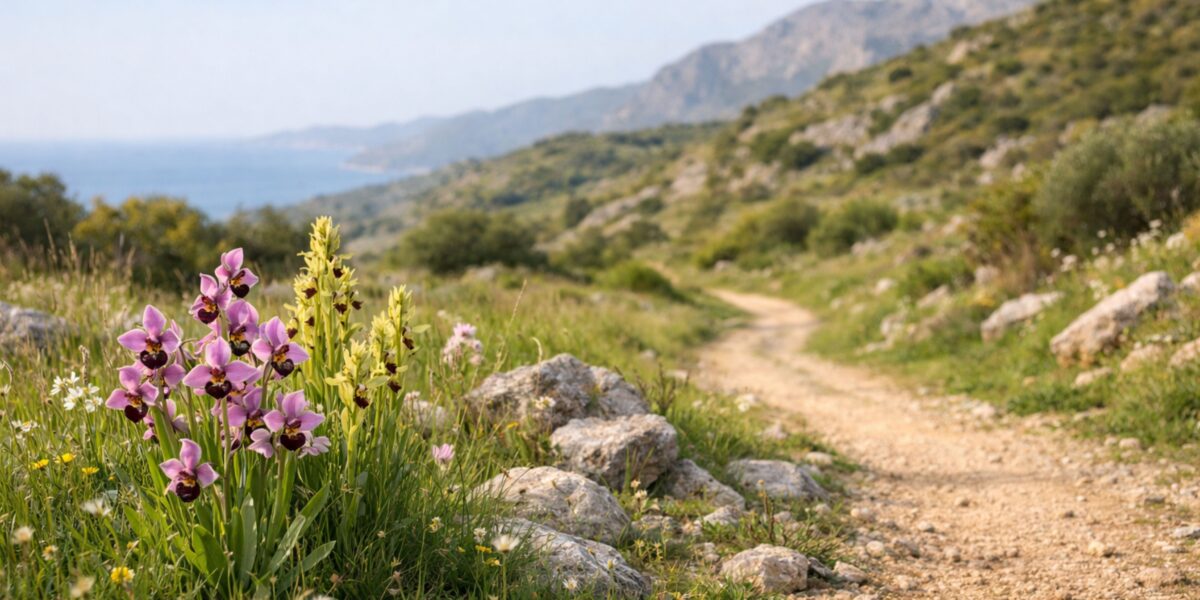
Spring is the best time to hike in Crete. Temperatures between April and mid-June stay between 15°C and 25°C, trails are free of summer heat, and the island is covered in wildflowers. Imbros Gorge is fully open in April and is the most accessible gorge walk on the island for spring visitors. Samaria Gorge typically opens in early May. The Agia Irini Gorge and the Akrotiri coastal paths are also excellent April options. Spring hiking in Crete means walking through orchids, wild iris, red poppies, and endemic tulips, with the mountains still holding their green before the dry summer sets in.
Why Spring Is the Best Time to Hike in Crete
Crete has a Mediterranean climate, which means its hiking season follows a simple logic: avoid the summer heat, and you will have a far better time on the trails. From late June through August, temperatures regularly exceed 30°C in the lowlands, and gorge walks can become taxing even for experienced hikers. By contrast, April and May offer comfortable walking temperatures, reliable sunshine, and long daylight hours.
Spring also brings something that summer cannot offer: water. Many of Crete’s gorges have seasonal streams that flow in April, adding sound and movement to the landscape. The vegetation is dense and alive. The scent of thyme, sage, and oregano rises from the hillsides as you walk, something that any local will tell you belongs entirely to this time of year.
There is also the question of crowds. The island’s most famous hikes, particularly in and around the White Mountains, are significantly quieter in April than they will be from June onward. If you want to walk Crete in the way it deserves to be walked, spring gives you that opportunity.
For a deeper sense of what the White Mountains look like up close, and why they matter to the island’s geography and culture, our guide to the Crete White Mountains is worth reading before you plan your route.
What Blooms When: A Wildflower Calendar for Hikers
Crete has more than 2,000 plant species, and roughly 150 of those are endemic, meaning they do not grow anywhere else on earth. Spring is when most of them are visible from a trail. Knowing the rough timing helps you choose your hiking dates more intentionally.
- February to March: Crown anemones, asphodels, and the earliest orchid species begin to appear in the lowlands and foothills.
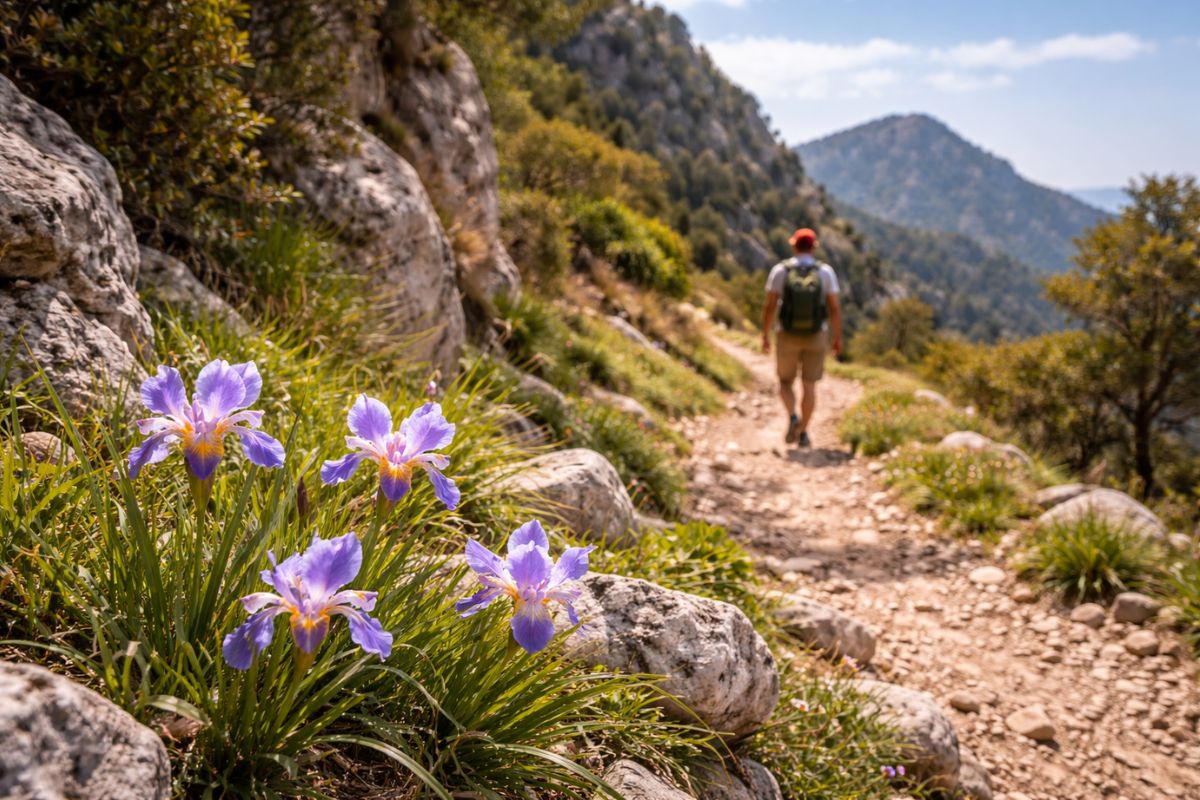
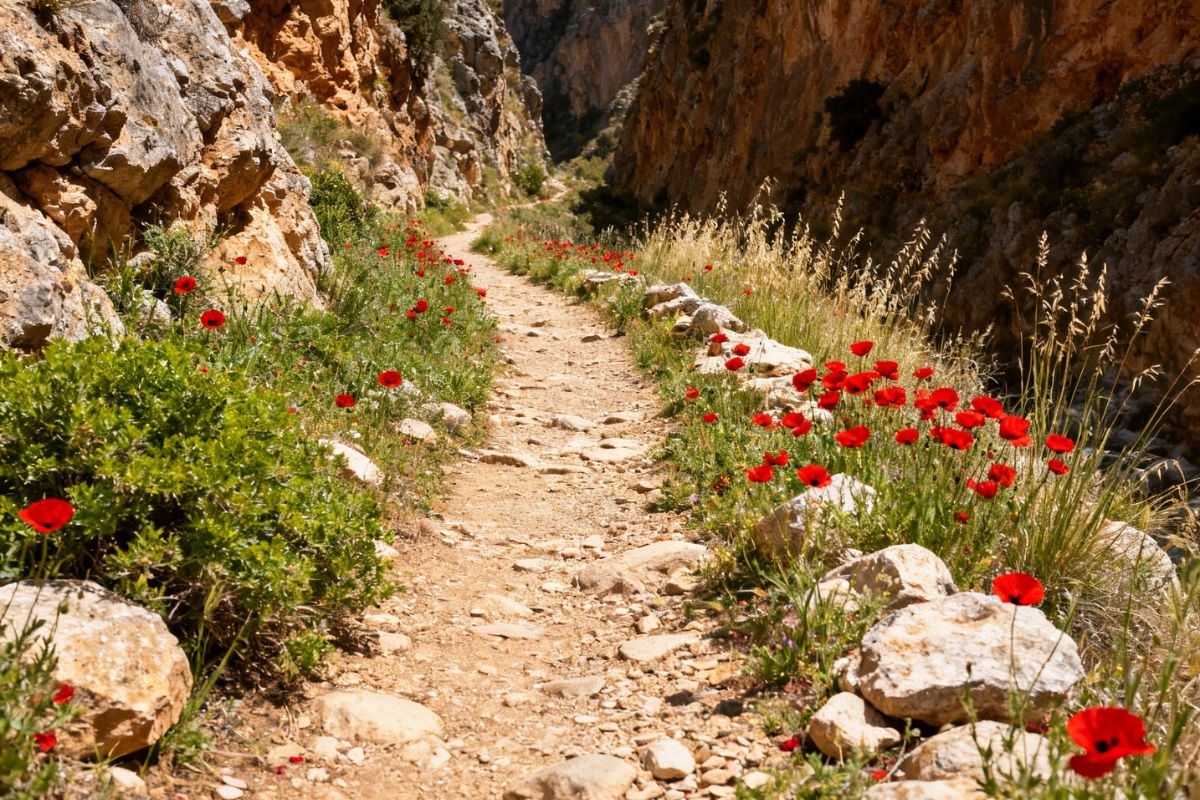
- April: Peak wildflower season. Wild orchids, including the Cretan bee orchid (Ophrys cretica) and several endemic species, are at their best. Iris cretensis, the endemic Cretan iris found only on this island, blooms in rocky and mountainous areas. Red poppies cover fallow fields and olive groves. Endemic tulips appear in the Spili area and the mountains of East Crete. Chamomile, anemones, and field gladiolus complete the picture.
- May: The peak begins to pass in the lowlands but continues at higher elevations. The White Peony (Paeonia clusii), one of the most striking endemic flowers on the island, blooms in the mountain areas of western Crete. Higher gorge paths are still flowering well into mid-May.
- June onward: The landscape begins to dry and the wildflower season winds down at lower elevations, though mountain areas remain green for longer.
For a closer look at which flowers grow where and what to search for on a spring walk, see our dedicated guide to the unique flowers of Crete. You can also read more about the island’s aromatic herbs and their role in Cretan daily life in our article on the herbs found in Crete.
The Best Hiking Trails in Crete for April
April is the sweet spot for hiking in Crete. Most of the main gorge routes are accessible, temperatures are at their most comfortable, and the wildflower bloom is at its peak. Here are the trails that perform best in April.
Imbros Gorge
Imbros Gorge is the most practical gorge walk in Crete for April visitors. While Samaria remains closed until early May, Imbros is open year-round and offers a genuinely rewarding walk without the physical demands of its more famous neighbor.
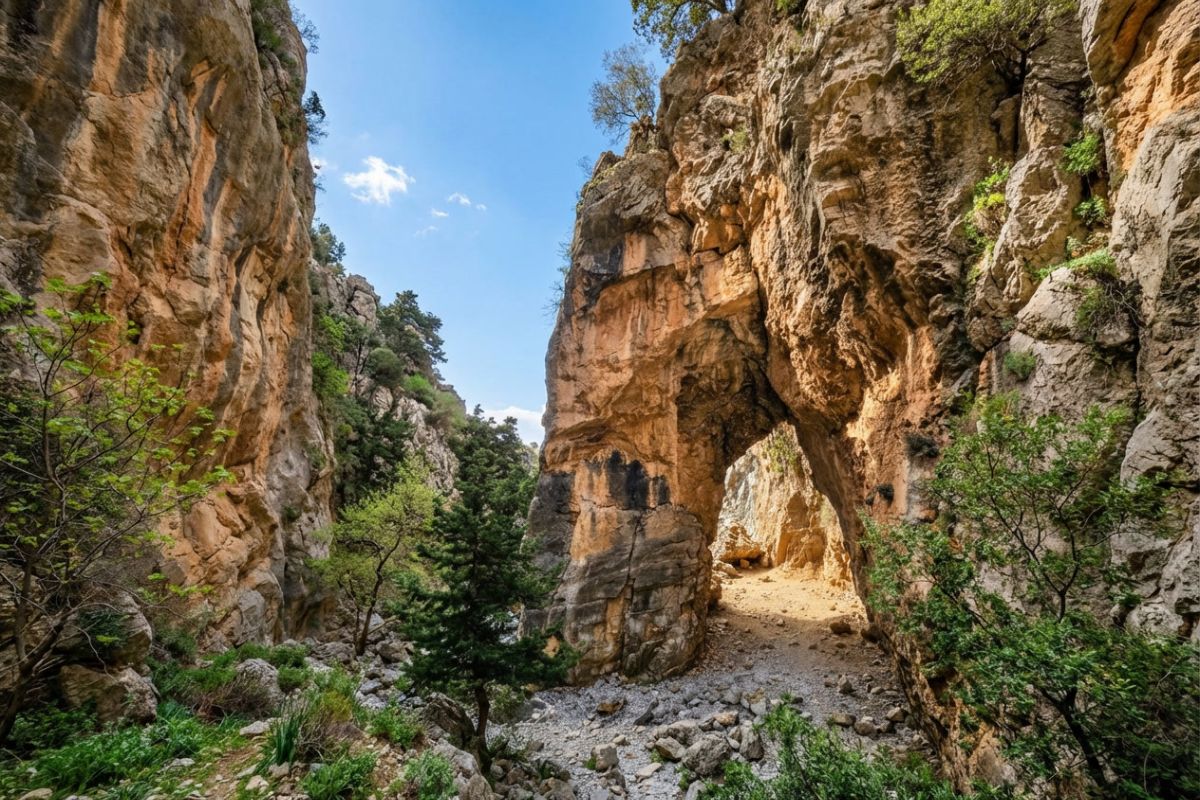
The trail runs 8 kilometers from the village of Imbros (at around 780 meters above sea level) down to Komitades, descending approximately 450 meters in total. The narrowest section, known as the Stenada, squeezes the walls to just 1.6 meters apart while the rock rises 300 meters on either side. It is one of the most visually arresting moments on any walk in the Sfakia region.
The gorge is part of the E4 European long-distance path. In April, the gorge floor carries a seasonal stream, red poppies line the trail at lower elevations, and the limestone walls are damp and moss-green from the winter rains. Allow around three hours at a comfortable pace.
Distance: 8 km | Difficulty: Easy to moderate | Open in April: Yes
For detailed information about this route, including access points and what to expect on the trail, see our dedicated guide to Imbros Gorge in Crete.
Agia Irini Gorge
Located on the western side of the White Mountains in the Chania region, Agia Irini Gorge is one of the quieter alternatives to the better-known gorge routes. It covers around 7.5 kilometers one-way and descends roughly 500 meters to the coastal village of Sougia on the Libyan Sea.
The trail passes through substantial shade for much of its length, with dense vegetation, plane trees, and cliff walls enclosing the path. Small caves appear in the rock face along the way. In spring, the river level can rise enough to require some careful footwork on the lower sections, but the path is generally well-maintained.
April brings wild herbs into the air here in a noticeable way. Walkers regularly note the scent of thyme and sage rising from the slope as they descend. The gorge ends at Sougia, where you can catch a ferry along the coast back toward Chora Sfakion.
Distance: 7.5 km one-way | Difficulty: Moderate | Open in April: Yes
Katoliko Gorge, Akrotiri Peninsula
The Akrotiri Peninsula, just outside Chania, holds one of the most historically layered short walks on the island. The trail begins at Gouverneto Monastery, one of the oldest active monasteries in Crete, and descends past a cave chapel where the seventh-century hermit Agios Ioannis is said to have lived, through the abandoned ruins of Katoliko Monastery, and down into the narrow fjord of Katoliko Bay.
The landscape here is entirely different from the large mountain gorges. The path is shorter, more intimate, and the ruins of the abandoned monastery, framed by sheer cliff walls and wild goats on the ledges above, create an atmosphere that has very little to do with ordinary tourism.
In April, the surrounding hillsides carry flowering herbs and small orchids. This is one of the most rewarding half-day walks available close to Chania, and it is rarely crowded.
Distance: 5 to 6 km round trip | Difficulty: Easy to moderate | Open in April: Yes
What Opens in May: More Trails Worth the Wait
Samaria Gorge
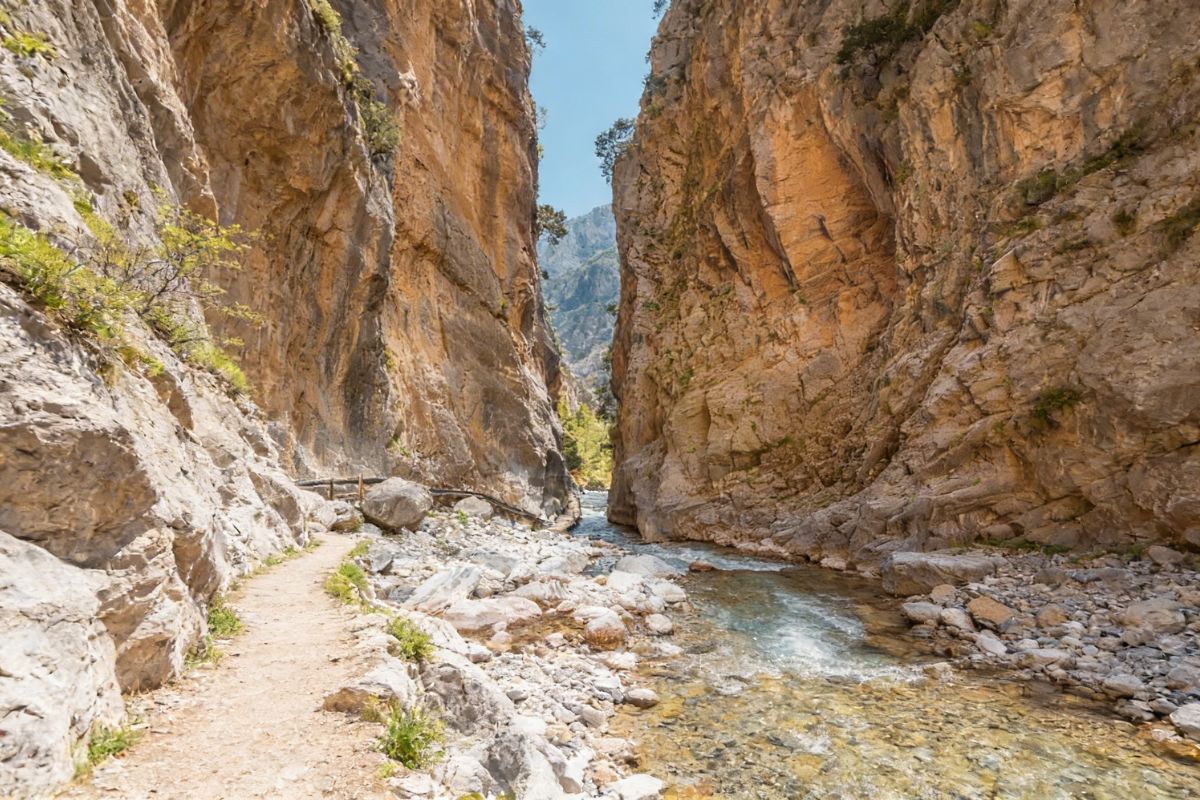
Samaria Gorge is the most famous hike in Crete and one of the most celebrated gorge walks in all of Europe. It runs 18 kilometers from the Omalos plateau, at around 1,200 meters, down through the White Mountains to the village of Agia Roumeli on the Libyan Sea. The trail passes through the Iron Gates, where the walls rise to nearly 300 meters and narrow to just a few meters wide.
The gorge is managed as a national park and typically opens in early May, once the winter snowmelt and spring flooding have subsided enough for the trail to be safe. The exact date varies each year and depends on conditions in the White Mountains.
Walking Samaria in early May, before the high-summer crowds arrive, is genuinely worth timing a trip around. The flowering vegetation at the upper elevations near Omalos is still at its best in the first weeks the gorge is open, and the temperatures at altitude remain manageable.
Distance: 18 km one-way | Difficulty: Moderate to strenuous | Open in April: No, usually opens early May
Coastal and Mountain Paths
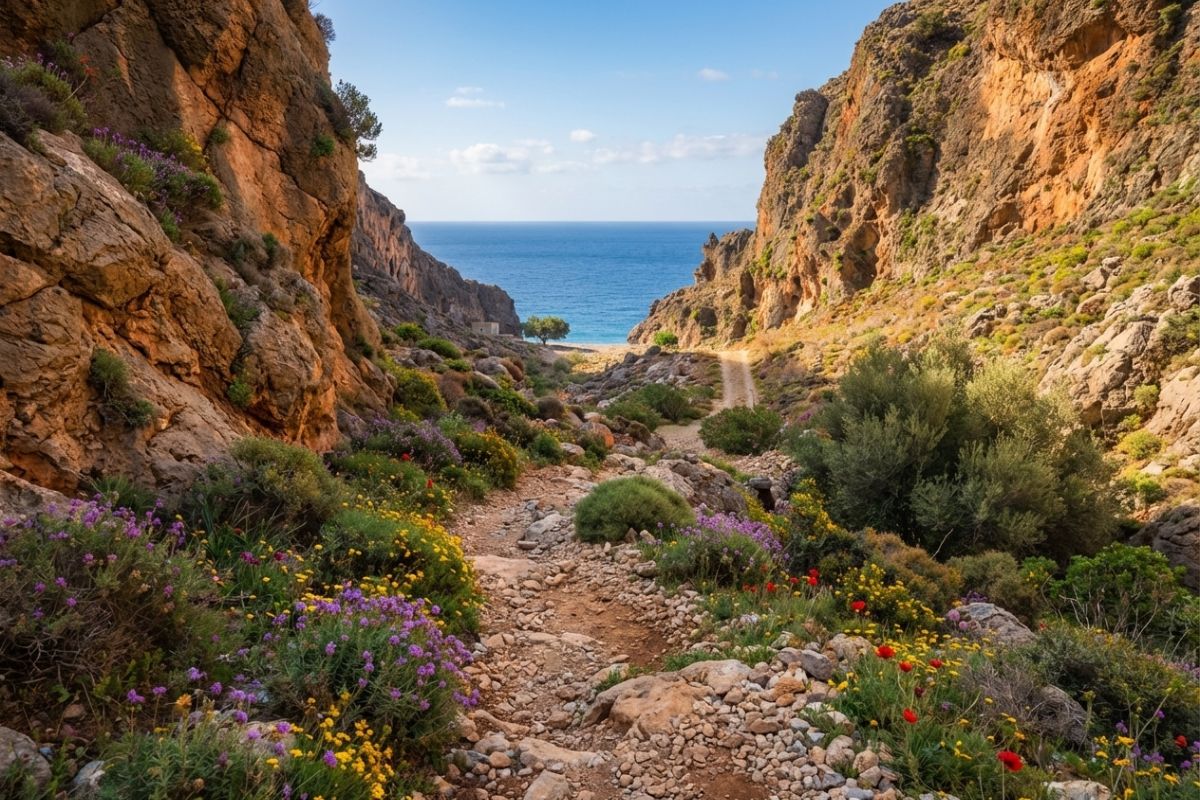
By May, the full range of Cretan hiking opens up. The coastal path between Loutro and Chora Sfakion, following the E4 along the southwest coast, rewards walkers with continuous sea views and access to small, otherwise unreachable beaches. The Aradena Gorge, which drops from the sun-bleached slopes of the White Mountains to Marmara Beach on the Libyan Sea, is particularly dramatic and is worth combining with the coastal trail for a longer circuit.
For those drawn to the mountains themselves, the area around Psiloritis, at 2,456 meters the highest peak on the island, offers walking that is genuinely alpine in character. The upper elevations here bloom later than the lowlands, making May a good month to find orchids and endemic plants that have already finished lower down.
For an overview of the mountain landscape and the character of each range, see our guides to the mountains of Crete and to Psiloritis. And for a broader look at the gorges of the island beyond the ones covered here, our guide to the gorges of Crete provides a useful starting point.
Practical Tips for Hiking in Crete in Spring
A few things are worth knowing before you set out on any trail in spring:
- Footwear matters. Gorge floors in spring are often wet, uneven, and covered in loose rock. Proper hiking boots with ankle support are worth bringing. Sandals and light trainers create problems that good boots would avoid entirely.
- Check gorge conditions before you go. High winds and heavy rainfall can create rockfall risk and flash flood conditions in gorge trails. The national park administrations publish seasonal closure notices, and local guesthouses are usually well-informed.
- Carry more water than you think you need. April temperatures are mild, but gorge walks are physically demanding. Two liters per person is a reasonable minimum for any route over six kilometers.
- Most gorge hikes are point-to-point. You will need transport arranged at the end point, either a taxi, a bus connection, or a ferry along the coast. Plan this before you start walking.
- Start early. Even in April, midday sun in the gorges can be warm. Starting at 8am gives you the best of the light and the coolest part of the day.
- A guided walk adds depth. Local guides bring ecological and historical knowledge to trails that maps alone cannot provide. The plants you walk past have names and stories. The ruins you pass have histories. That context changes the experience.
If you want a more grounded experience of Crete beyond the trails, including its village traditions and the rhythms of rural life that still shape the island, our guide to the traditional Crete experience offers a useful companion perspective.
Conclusion
Spring hiking in Crete works because the island earns it. The trails here are old, in the truest sense: paths worn into limestone by shepherds, monks, and villagers long before anyone called them hiking routes. Walking them in April means walking them when they look most like themselves, before the dust of summer settles and the gorges go quiet.
Whether you choose Imbros for its practical accessibility, Agia Irini for its shade and silence, or wait for Samaria to open in May and walk the long route to the Libyan Sea, the decision is less important than making one. Spring in the mountains and gorges of Crete is a window that opens for a few months each year and closes quickly. April, above almost any other month, is when it is widest.
Frequently Asked Questions
When is the best time to hike in Crete?
The best time to hike in Crete is from April to mid-June and again from September to October. Spring offers the most rewarding conditions: comfortable temperatures, flowering landscapes, and quieter trails. April in particular combines open gorge routes with peak wildflower season.
Is Imbros Gorge open in April?
Yes. Imbros Gorge is open year-round and is the best gorge walk available to hikers visiting Crete in April. It covers 8 kilometers, is classified as easy to moderate, and takes around three hours at a comfortable pace.
When does Samaria Gorge open?
Samaria Gorge usually opens in early May, once conditions in the White Mountains are safe enough for public access. The exact date varies each year depending on weather and snowmelt. It is not open in April.
What wildflowers can I see while hiking in Crete in spring?
April and May are the peak months for wildflowers in Crete. On spring hiking trails you can expect to find wild orchids (including endemic species like Ophrys cretica), the endemic Iris cretensis, red poppies, crown anemones, field gladiolus, chamomile, and endemic tulips in mountainous areas. Around 150 of Crete’s plant species are found nowhere else in the world.
Do I need a guide to hike in Crete?
Many of Crete’s main gorge trails can be done independently with proper preparation, water, and footwear. However, a local guide adds significant value, particularly on mountain routes and lesser-known paths. Guides bring knowledge of the flora, history, and terrain that maps alone cannot provide, and they make the experience considerably richer.
What should I wear for hiking in Crete in spring?
Ankle-high hiking boots with a non-slip sole are the most important item. Gorge floors are uneven and often wet in spring. Add lightweight layers for the morning start, sun protection, and a hat for the midday sections. A small daypack with at least two liters of water per person, high-energy snacks, and a basic first aid kit covers the essentials.