
Kato Zakros Palace: A Visitor’s Guide to Crete’s Fourth Minoan Palace
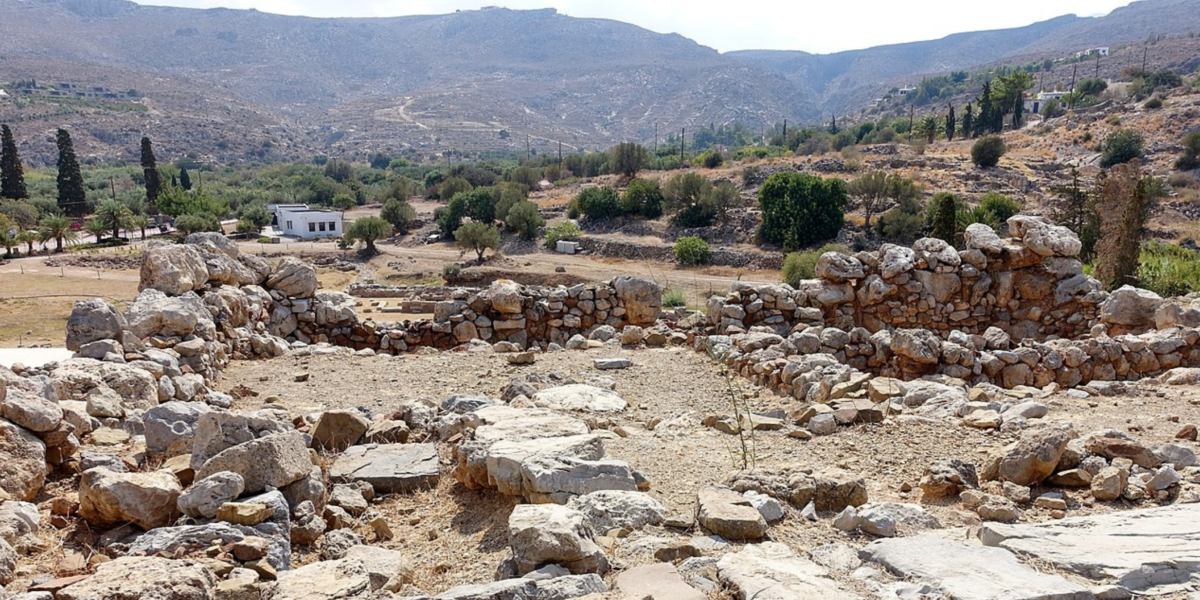
Kato Zakros Palace is the fourth and smallest of Crete’s four Minoan palaces, set on the island’s remote east coast where the road finally runs out at a quiet bay.
Discovered largely intact in 1962 by archaeologist Nikolaos Platon, it once operated as a working Minoan port, trading with Egypt, Cyprus, and the Levant. Today it is the palace almost no one gets around to seeing, and that is exactly its appeal.
Quick answer: Kato Zakros Palace is a Minoan Bronze Age site on Crete’s east coast, about an hour’s drive from Sitia. It is one of four known Minoan palaces (alongside Knossos, Phaistos, and Malia), the only one found unlooted, and the least visited of the four, with no coach tours and no ticket lines.
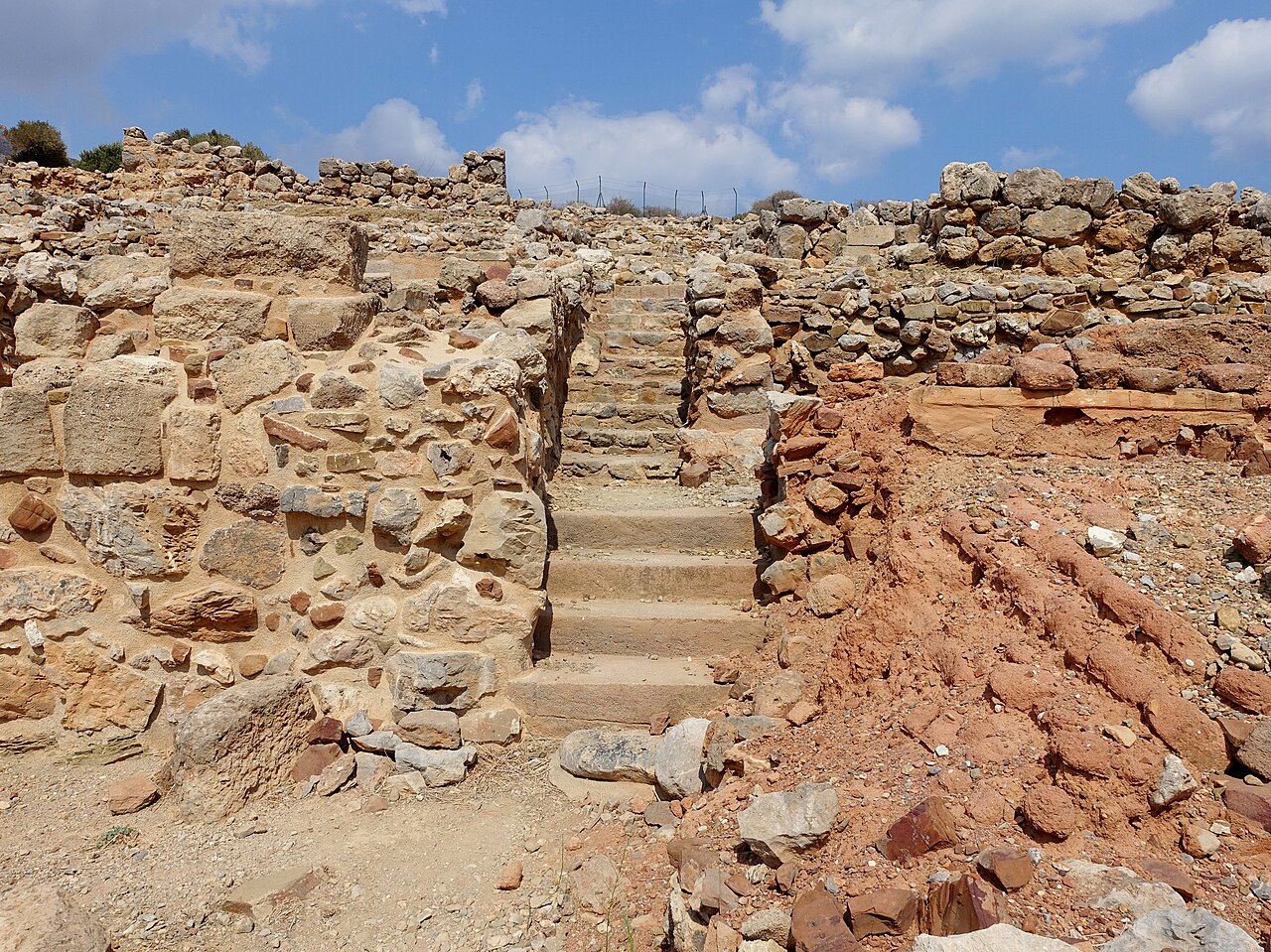
Minoan Palace of Kato Zakros by Olaf Tausch, licensed under CC BY 3.0.
What Is Kato Zakros Palace?
Kato Zakros Palace is a Bronze Age Minoan complex covering roughly 8,000 square meters, built around a central court with four wings for royal quarters, religious ceremony, storage, and craft workshops. It sits about 350 meters from the modern seaside village of Kato Zakros, in the Lasithi region of east Crete. Unlike Knossos, nothing here has been reconstructed. What you see is what survived: low stone foundations, paved courtyards, and the outline of a town that once served as a working harbor for Minoan trade with the eastern Mediterranean.
The Zakros Minoan palace Crete site is often described in guidebooks as the „fourth palace,“ a label that undersells it. It was excavated using far more careful methods than Knossos or Phaistos had been decades earlier, and because it was never looted, it produced one of the largest and best-preserved caches of Minoan finds ever excavated, from bronze double axes to a rock crystal vase now on display in Heraklion.
Where Kato Zakros Sits Among East Crete’s Minoan Sites
Zakros is the outlier among east Crete Minoan sites. Knossos sits just outside Heraklion, Phaistos overlooks the Messara plain in the south, and Malia lies on the north coast near the resort strip. Zakros, by contrast, occupies the island’s easternmost edge, past Sitia, past Palekastro, at the end of a road that winds through olive groves and finally drops toward the sea.
That distance is precisely why the site still feels the way it does. There is no parking lot crowded with tour buses, no queue at the ticket booth, no group leader holding up a flag. You arrive, you buy a ticket from a small booth, and you walk into the ruins more or less alone, with the sound of the sea somewhere close by.
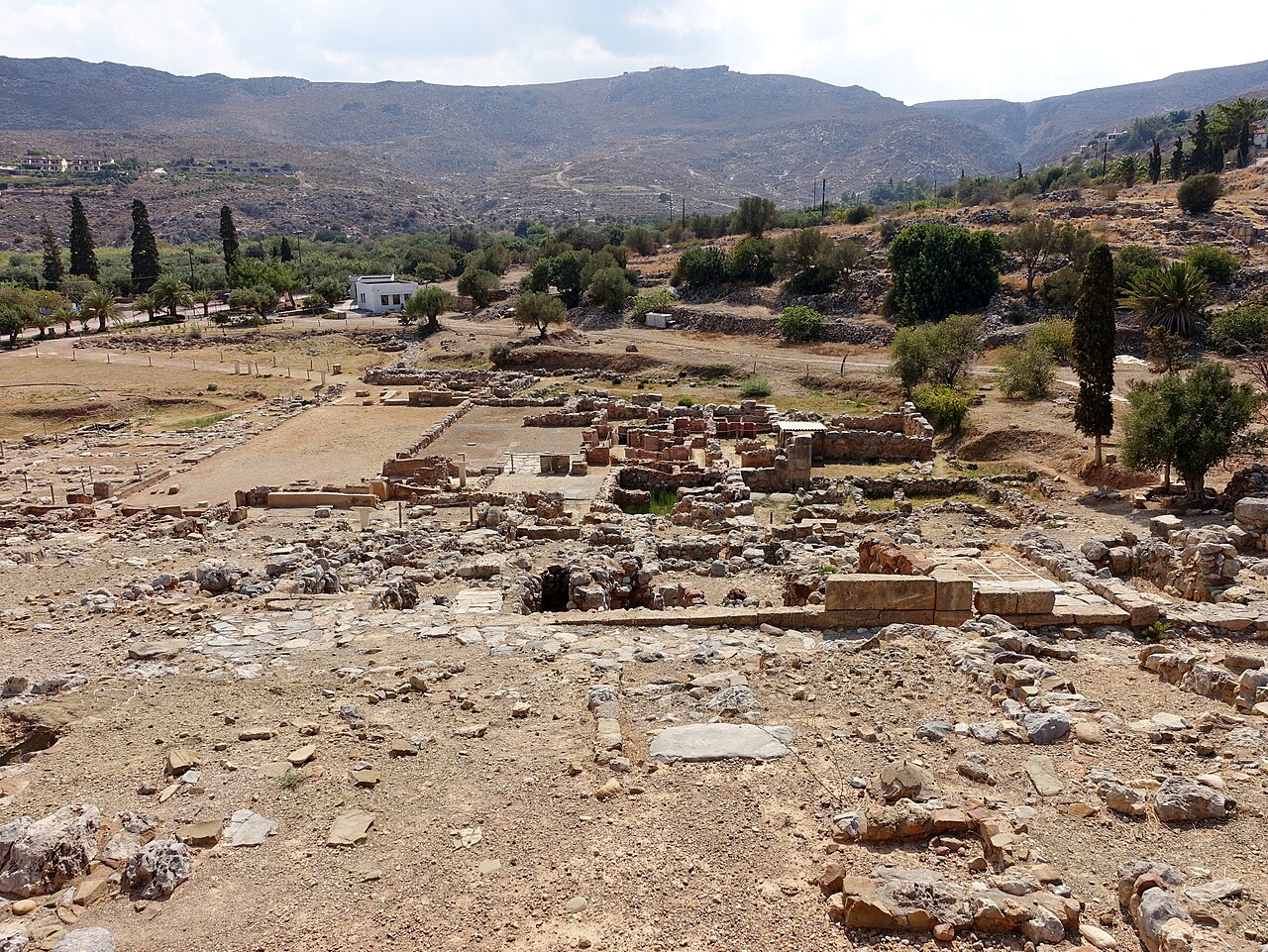
Minoan Palace of Kato Zakros by Olaf Tausch, licensed under CC BY 3.0.
The Story Behind Crete’s Fourth Minoan Palace
The first Minoan palace at Zakros was built around 1900 BC. Like the other Minoan centers, it was damaged and rebuilt, with the second, larger palace rising around 1600 BC. That structure lasted only until roughly 1450 BC, when it was destroyed along with the other major Minoan palaces. Archaeologists still debate the exact cause, pointing to earthquakes, invasion, or the delayed effects of the Thera eruption, but the outcome at Zakros was the same: the site’s active life came to an end.
Why the Fourth Palace Went Undiscovered So Long
British archaeologist David Hogarth dug briefly near Zakros in 1901 but missed the palace itself, finding only part of the surrounding town. The site’s genuine remoteness, still real today, kept it hidden for another six decades. It was not until 1962 that Nikolaos Platon, working on the slope of the hill of Agios Antonios, uncovered the palace in full: courtyards, storerooms, workshops, and a religious wing, largely as the Minoans had left them.
What the 1962 Excavation Found
Because Zakros lay so far from the island’s main population centers, it was abandoned in a hurry and never plundered afterward. Platon’s team found storerooms still stacked with pottery, workshops with half-finished stone vessels, and an archive of Linear A tablets, the undeciphered script used for palace record-keeping. Ivory, elephant tusks, and Cypriot copper ingots turned up in the west wing, evidence of a palace that traded further east than any of its Cretan counterparts. Much of this material now sits in the Heraklion Archaeological Museum, alongside pieces central to the story of ancient Crete.
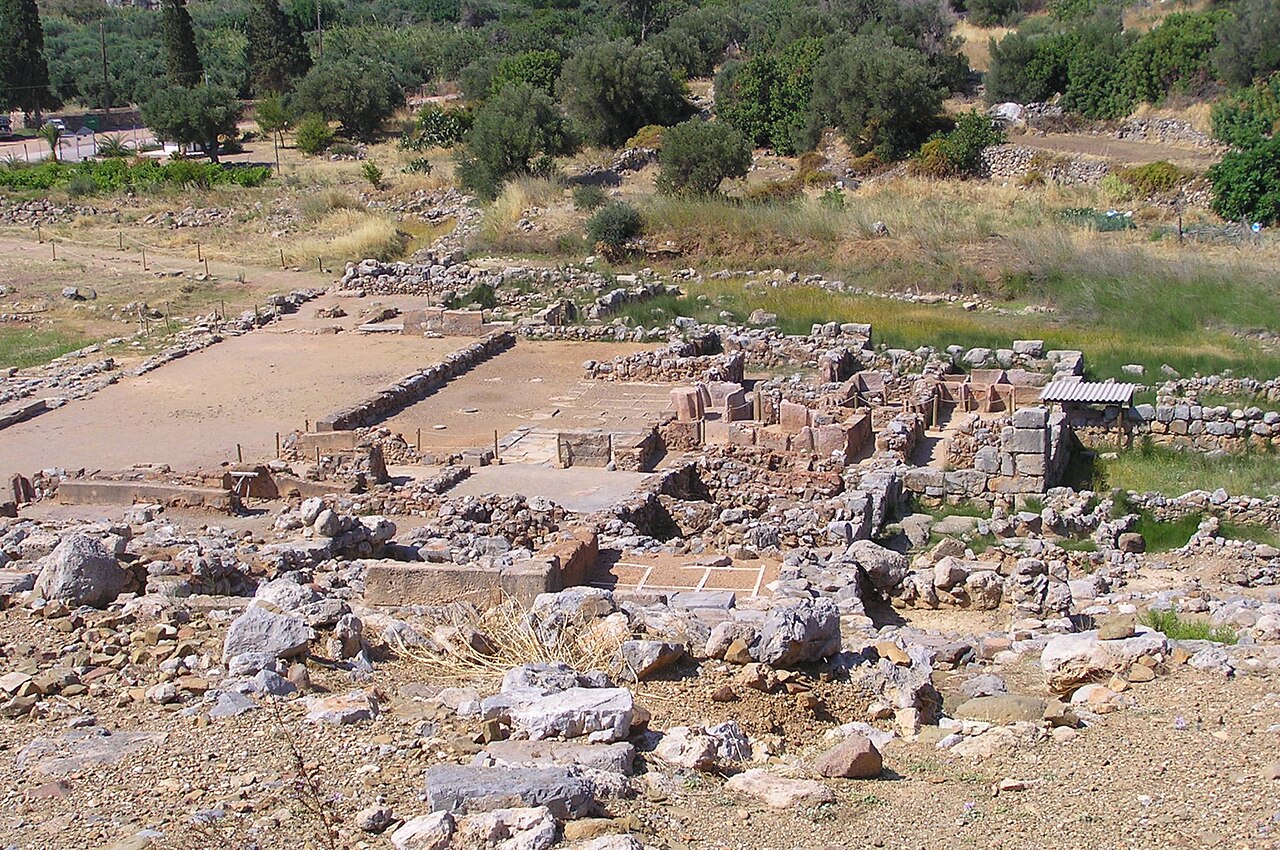
Minoan Palace of Zakros ruins, public domain via Wikimedia Commons.
Walking the Ruins: The Layout of the Palace
A visit takes about an hour to ninety minutes if you want to see the site properly rather than rush it. There is no shade anywhere on the grounds, so a hat and water matter more here than at almost any other Cretan ruin.
Central Court and the Four Wings
As with every Minoan palace, a rectangular central court anchors the site, smaller here than at Knossos but laid out on the same basic plan. The west wing held the palace’s religious center, including a shrine, a ceremonial hall, and rooms used for archive storage. The south wing housed workshops where craftsmen worked semi-precious stone, ivory, and bronze. The north wing contained the kitchen and supply rooms. The east wing is where most visitors linger, since it held the royal apartments and the palace’s most distinctive feature.
The Basin Hall and Its Resident Turtles
In the east wing sits the Basin Hall, an open rectangular space built around a spring-fed well that once supplied the palace with fresh water. It is one of the few Minoan structures of its kind found on Crete, and part of a wider element of Minoan religious life built around ritual purification, pools, and springs, practices generally associated with sacred, feminine-coded aspects of Minoan worship. What makes it memorable for most visitors, though, is far simpler: the well has held water for over three thousand years, and it is now home to a small population of freshwater turtles. Children especially tend to remember the turtles longer than any Linear A tablet.
The Minoan Town and the Old Port Road
Beyond the palace core, a stone-paved road, once the route connecting the harbor to the central court, leads through the remains of the Minoan town. Multi-story houses lined these streets, most entered not through a ground-floor door but through a hatch on the upper level, an arrangement still not fully explained. Walking this section gives a better sense of Zakros as a functioning port town, not just a palace, which is part of what made it such a significant hub for Minoan trade with the east.
Why Kato Zakros Feels Different From Knossos or Phaistos
Knossos draws crowds because of Arthur Evans’s reconstructions and its proximity to Heraklion. The Palace of Phaistos, though quieter, still sees a steady flow of coach traffic in high season. Zakros gets neither. The distance filters out all but genuinely interested visitors, so what remains is a site where you can stand in the central court, hear the waves, and not have to wait for a tour group to move along before taking a photograph.
This is not a manufactured version of solitude. It is a direct result of geography: Zakros is roughly three hours from Heraklion by car, and most itineraries built around a single week in Crete simply do not reach this far east. Travelers who make the trip experience the Minoan palace much as the first archaeologists may have encountered it. The ruins stand beside a working bay, and visitors can often see the modern village’s fishing boats from the site.
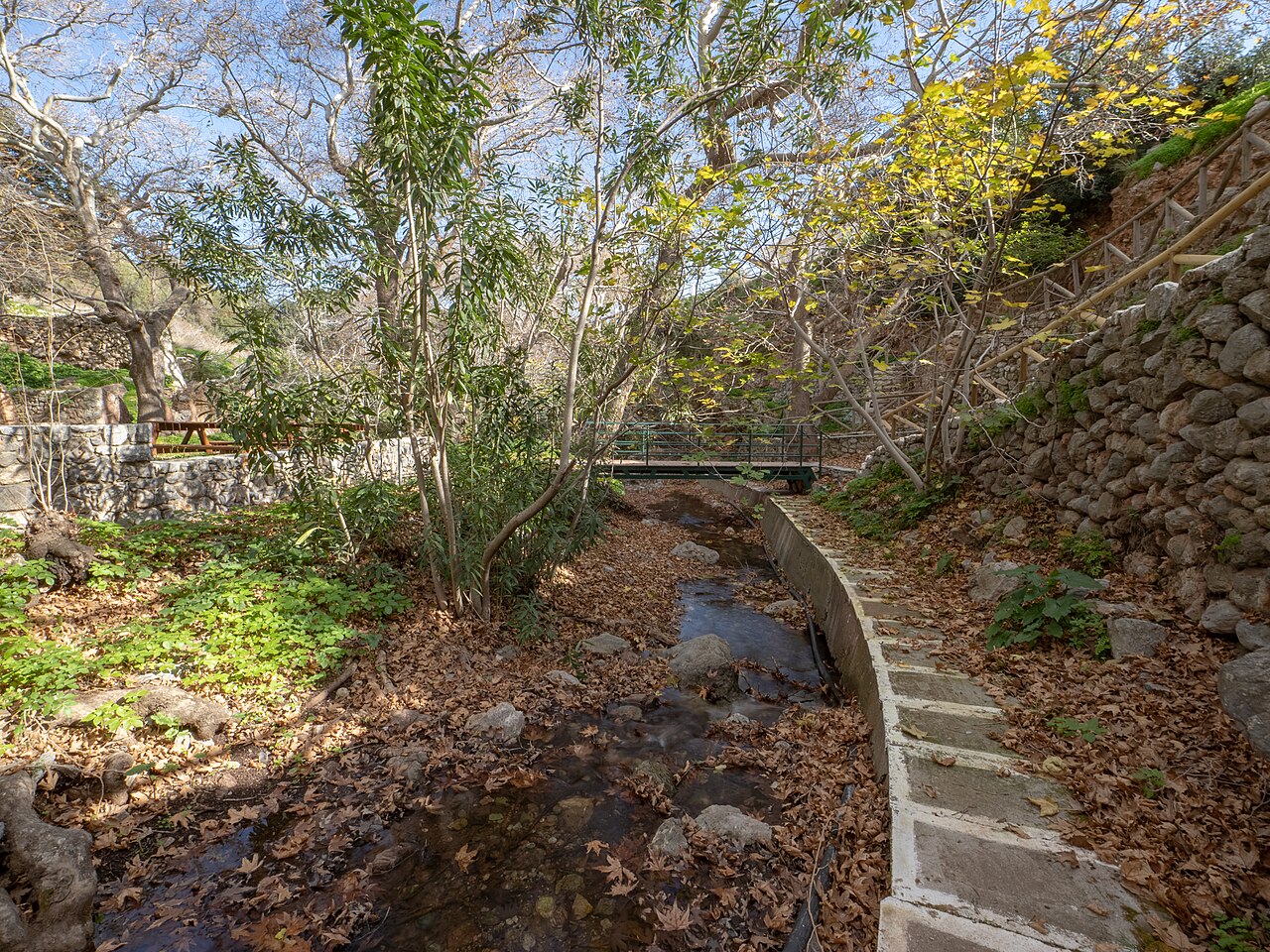
Zakros Springs, Crete | Photo: Wikimedia Commons / CC BY-SA 4.0
Beyond the Palace: Gorge of the Dead and Kato Zakros Village
Hiking the Zakros Gorge
The Zakros gorge, better known as the Gorge of the Dead, takes its name from Minoan and later burial chambers carved into the cliffs along its route. The full trail runs about 4.5 kilometers from the upper village of Ano Zakros down to the coast near the palace, with a second, shorter entrance partway along the route for those who want a lighter walk. Expect roughly an hour of walking through a narrow limestone canyon lined with oleander, with a steep initial descent followed by easier, mostly flat terrain. Combining the gorge walk with the palace visit is the single most common and most worthwhile pairing in this part of the island.
Kato Zakros Village and Beach
Kato Zakros village itself is small: a pebble beach, a handful of tavernas serving fresh fish, and a few small studios and apartments for those who want to stay overnight rather than day-trip from Sitia. The sea here is part of the Libyan Sea, and while the beach is not the island’s best for swimming (the seabed is rocky in places), it is a genuinely good place to eat lunch after a morning spent walking through Minoan ruins. Seven kilometers inland, the separate village of Ano Zakros has its own tavernas and a natural spring worth a short stop on the way in or out.
How to Get to Kato Zakros Palace
This is the part most articles gloss over, and it is worth being direct about: getting to Zakros takes real time, and that time is the point, not an obstacle to plan around.
Driving From Sitia
Sitia is the natural base for a visit, and our Sitia Crete Complete Guide covers the town in full if you are building a longer stay around it. From Sitia, the drive south through Palekastro and Zakros village takes about an hour, roughly 45 kilometers, on a road that is well paved but narrow and winding in its final stretch. Fill your fuel tank in Sitia; there is nowhere reliable to do so past Zakros village.
Driving From Ierapetra or Agios Nikolaos
From Ierapetra, expect a similar drive time via the south coast road, closer to an hour and a quarter depending on conditions. From Agios Nikolaos, plan on roughly two hours each way. Public buses run the Sitia to Kato Zakros route, but only in summer and on a limited schedule, so a rental car is the only realistic option for most visitors, especially if you want to combine the palace with the gorge walk on the same day.
Visiting Hours and What to Bring
The site operates on seasonal hours, generally longer in summer and shorter from November through March, with reduced hours around some public holidays. Hours and any closure dates can shift, so it is worth a quick check with your accommodation or the official Greek culture ministry site before setting out, since Zakros is remote enough that a wasted trip really does cost you the day. Bring water, sun protection, and sturdy shoes; almost none of the site is shaded, and the ground is uneven underfoot.
Planning Your Time in East Crete
Zakros rewards travelers who give it a full day rather than a rushed stop. A workable plan pairs the morning at the palace with the Gorge of the Dead hike, then lunch in Kato Zakros village, followed by the drive back toward Sitia in the late afternoon light. If you have more time in the region, our Lasithi Top 10 Stops guide covers the wider area, and our Archaeological Sites in Crete overview places Zakros alongside the island’s other major ruins for anyone building a multi-day itinerary through Lasithi and Sitia.
Conclusion
Kato Zakros Palace is Crete’s fourth and quietest Minoan palace, a working Bronze Age port uncovered almost whole in 1962 and still, decades later, one of the few major archaeological sites on the island where you can walk through a Minoan wing without another visitor in sight. Pair it with the Gorge of the Dead and an afternoon in Kato Zakros village, and it becomes less a detour and more the most memorable day of an east Crete trip. If you would rather explore Zakros and the surrounding Sitia region with a private guide who knows the roads, the timing, and the history in depth, Elissos Travelling Philosophy builds custom itineraries through this side of the island. Get in touch to start planning your route east.
Frequently Asked Questions
Is Kato Zakros Palace worth visiting?
Yes, particularly for travelers who have already seen Knossos or Phaistos and want a Minoan site without crowds. Zakros is smaller in scale, but its unlooted finds, its port setting, and the near-total absence of other visitors make it a distinct experience from the island’s better-known palaces.
How long does it take to visit Kato Zakros Palace?
Most visitors need about one to one and a half hours to walk the full site, including the central court, the four wings, and the edge of the Minoan town. Add another hour if you plan to walk part of the nearby Gorge of the Dead.
How far is Kato Zakros Palace from Sitia?
Kato Zakros Palace is about 45 kilometers from Sitia, roughly an hour’s drive south through Palekastro and Zakros village on a narrow but paved road.
Is Kato Zakros Palace the fourth Minoan palace of Crete?
Yes. Along with Knossos, Phaistos, and Malia, Zakros is one of the four palatial centers of Minoan Crete confirmed by archaeological excavation, and the only one of the four discovered unlooted.
Can you combine Kato Zakros Palace with the Gorge of the Dead in one visit?
Yes, and most visitors do. The gorge trail ends near the palace and the village, so a single day can cover the hike, the ruins, and lunch by the beach without needing to backtrack.
Is there public transport to Kato Zakros Palace?
A limited seasonal bus runs from Sitia to Kato Zakros in summer, but schedules are infrequent. A rental car is the practical option for most visitors, especially those coming from Ierapetra or Agios Nikolaos.
Featured Image by: Olaf Tausch via Wikimedia Commons / CC BY 3.0 (unmodified)