
Rhea, the Mother Goddess of Crete: Myth, Caves, and Sacred Motherhood
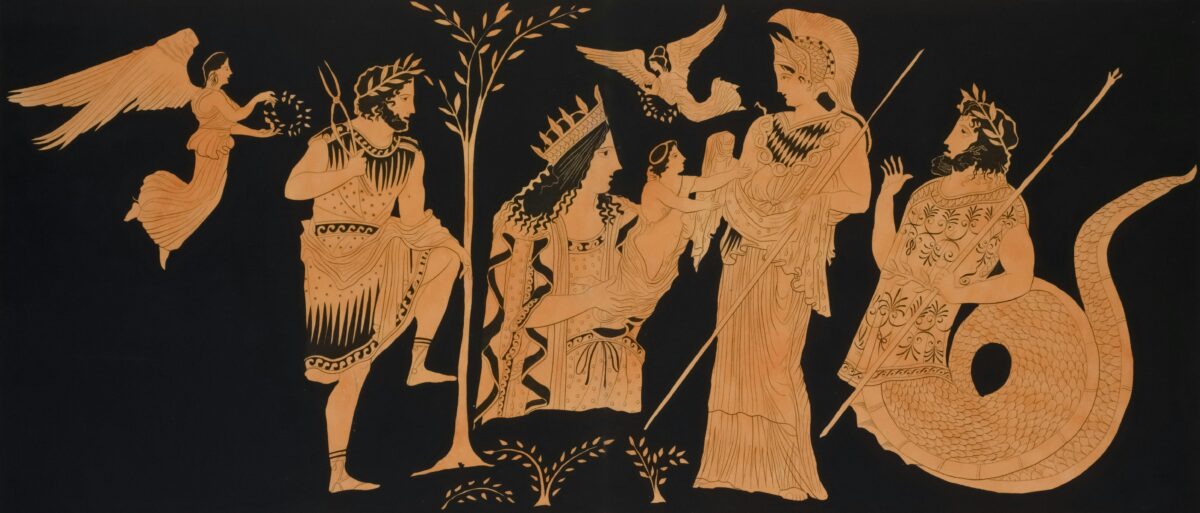
Rhea is the Titan goddess who gave birth to Zeus on Crete, according to Greek myth.
She hid him from his own father to keep him alive. The island already honored a mother goddess tied to its mountains and caves. This was long before her name appeared in Hesiod’s Theogony. Greek mythology likely placed Rhea’s story over that older Cretan reverence. Her myth forms one of the clearest threads connecting Crete’s Bronze Age religion to the gods of classical Greece. You can still visit two mountain caves that carry this story today.
Quick answer: Greek mythology honors Rhea as the Titan goddess who mothered Zeus and several other Olympian gods. Cretan tradition says she gave birth to Zeus in a mountain cave on the island. She hid him there from his father Cronus. Cronus had swallowed each of their previous children to stop a prophecy that one of them would overthrow him. Two caves carry this tradition: the Idaean Cave on Mount Ida and the Diktaean Cave on the Lasithi Plateau. The ancient world worshipped Rhea as the Mountain Mother. Historians widely believe her cult on Crete grew out of an earlier Minoan tradition of mother goddess worship on the island.
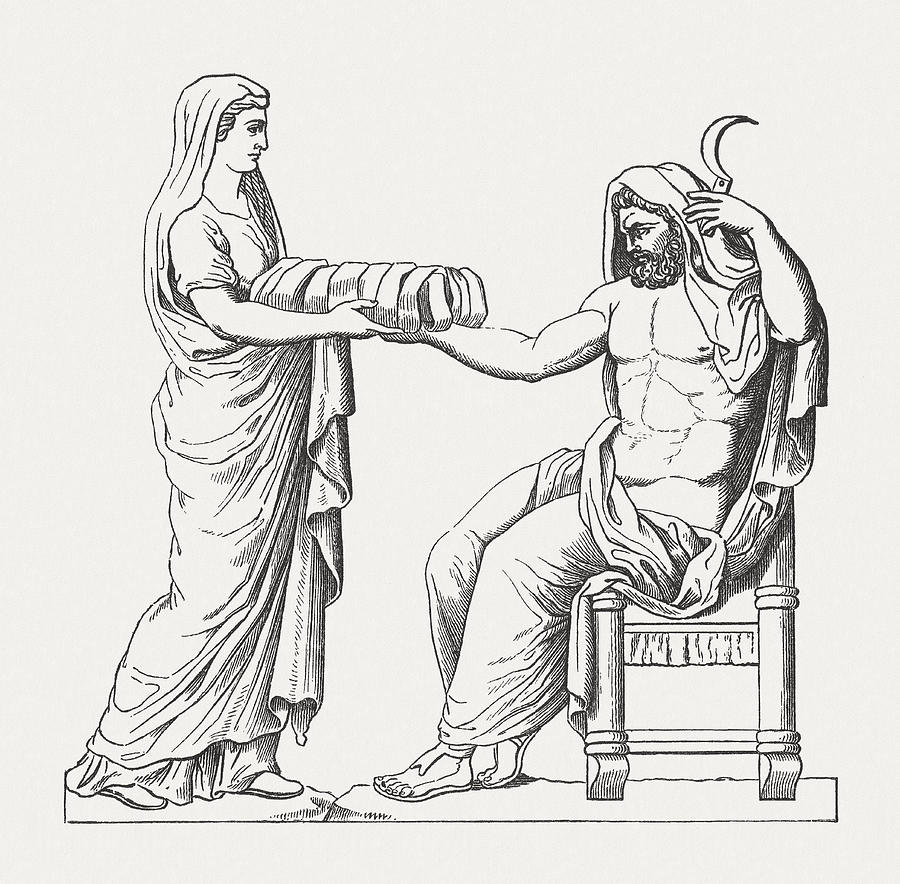
Rhea presenting Cronus with a stone wrapped in cloth, 1878 woodcut engraving from Der Olymp oder die Mythologie der Griechen und Römer. Image via Wikimedia Commons. Public Domain. No changes were made.
Who Is Rhea in Greek and Cretan Mythology?
Rhea was a Titan, one of the twelve children of Uranus (Sky) and Gaia (Earth). She was also the sister and wife of Cronus, ruler of the Titans. Ancient writers counted her among the most important deities of the older generation. They called her Meter Theon, Mother of the Gods. They credited her with six children: Hestia, Demeter, Hera, Hades, Poseidon, and Zeus. Rhea Cretan mythology remembers her for one defining act above all else. She protected her youngest son from Cronus, and later sources often call her simply Rhea, Mother of Zeus, for this reason. Hesiod’s Theogony, written around the eighth century BCE, is the earliest surviving source to set that act on Crete. Ancient authors disagree on exactly where on the island it happened.
Rhea and the Prophecy That Threatened Zeus
Cronus had learned from his parents, Uranus and Gaia, that one of his own children would overthrow him. This was the same fate he had dealt his own father. To stop it, he swallowed each child Rhea bore as soon as it was born. Hestia, Demeter, Hera, Hades, and Poseidon disappeared into him one after another. Hesiod says grief over each loss overwhelmed Rhea. She became pregnant with her sixth child soon after. She turned to her parents, Uranus and Gaia, for a plan that would let this one survive.
That plan sent her to Crete. Tradition says Rhea gave birth to Zeus there in secret. She handed Cronus a stone wrapped in swaddling clothes instead of the baby. Cronus swallowed the stone without noticing the switch. He believed his line of succession was secure. Zeus grew up hidden on the island. Years later, he forced Cronus to bring up the stone along with Rhea’s other five children. That act triggered the war between the Titans and the Olympians, a war Zeus and his siblings eventually won.
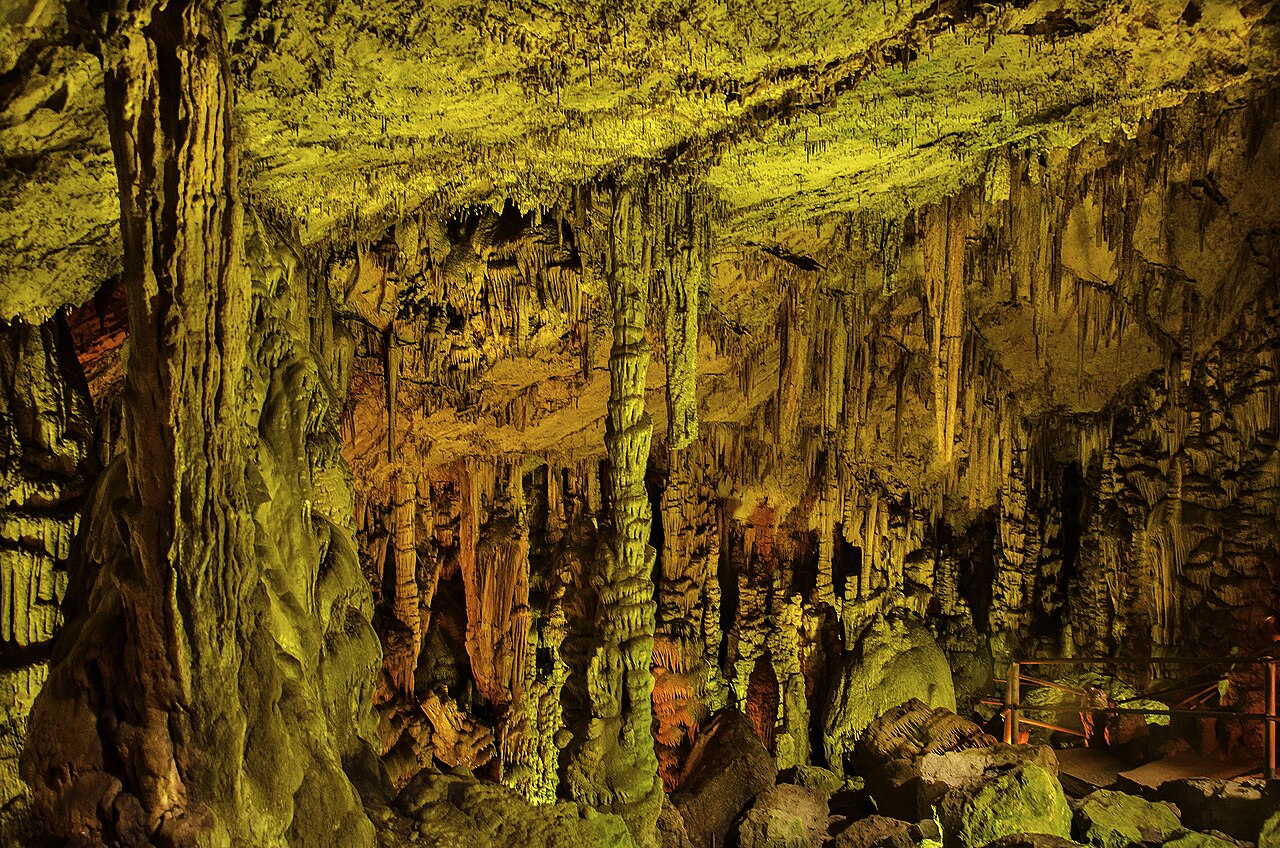
Dikteon Andron (Psychro Cave), Crete. Photo by Andloukakis via Wikimedia Commons, licensed under CC BY-SA 4.0. No changes were made.
The Birth of Zeus in a Cretan Cave
The birth of Zeus in a Crete cave grounds Rhea’s myth in a physical place. It is also where ancient sources start to disagree. Two mountain caves, on opposite sides of the island, both carry the tradition of hiding Rhea’s infant son.
The Idaean Cave on Mount Ida
Locals call the Idaean Cave Ideon Andron. It sits high on Mount Ida, also called Psiloritis, Crete’s tallest mountain, at roughly 1,500 meters. Ancient authors, including Apollodorus, place Zeus’s birth here. Archaeological excavation confirms the cave saw continuous ritual use from the Bronze Age into the Roman period. That makes it one of the longest-running cult sites on the island. Our guide to Mount Ida, Crete’s highest peak covers the mountain and the cave’s setting for anyone planning to see it in person.
The Diktaean Cave on the Lasithi Plateau
The Diktaean Cave, known today as the Psychro Cave, lies on the Lasithi Plateau in eastern Crete. Other ancient writers, including the geographer Strabo, name this cave as Zeus’s birthplace. Writers most often link it to Mount Dikte specifically. Its lower chamber holds a natural pool and a striking field of stalactites and stalagmites. Archaeologists have recovered votive figurines, bronze objects, and double axes there. These finds are evidence of centuries of ritual offerings, left by ancient visitors who believed the story too.
Neither tradition corrects the other. Both caves have carried the status of sacred sites tied to Rhea and Zeus for roughly three thousand years. Modern scholars generally read this as two regional versions of one core myth, not a contradiction to resolve. A supporting cast appears in most versions of the story, regardless of which cave is named. The Kouretes, armed attendants, danced and clashed their bronze shields together. This drowned out the infant’s cries so Cronus would not hear them. Amalthea, a goat or a goat nymph depending on the source, fed Zeus with her milk while he was hidden. Our guide to Zeus’s mythology across Crete traces the fuller story, from his birth through his rise to power.
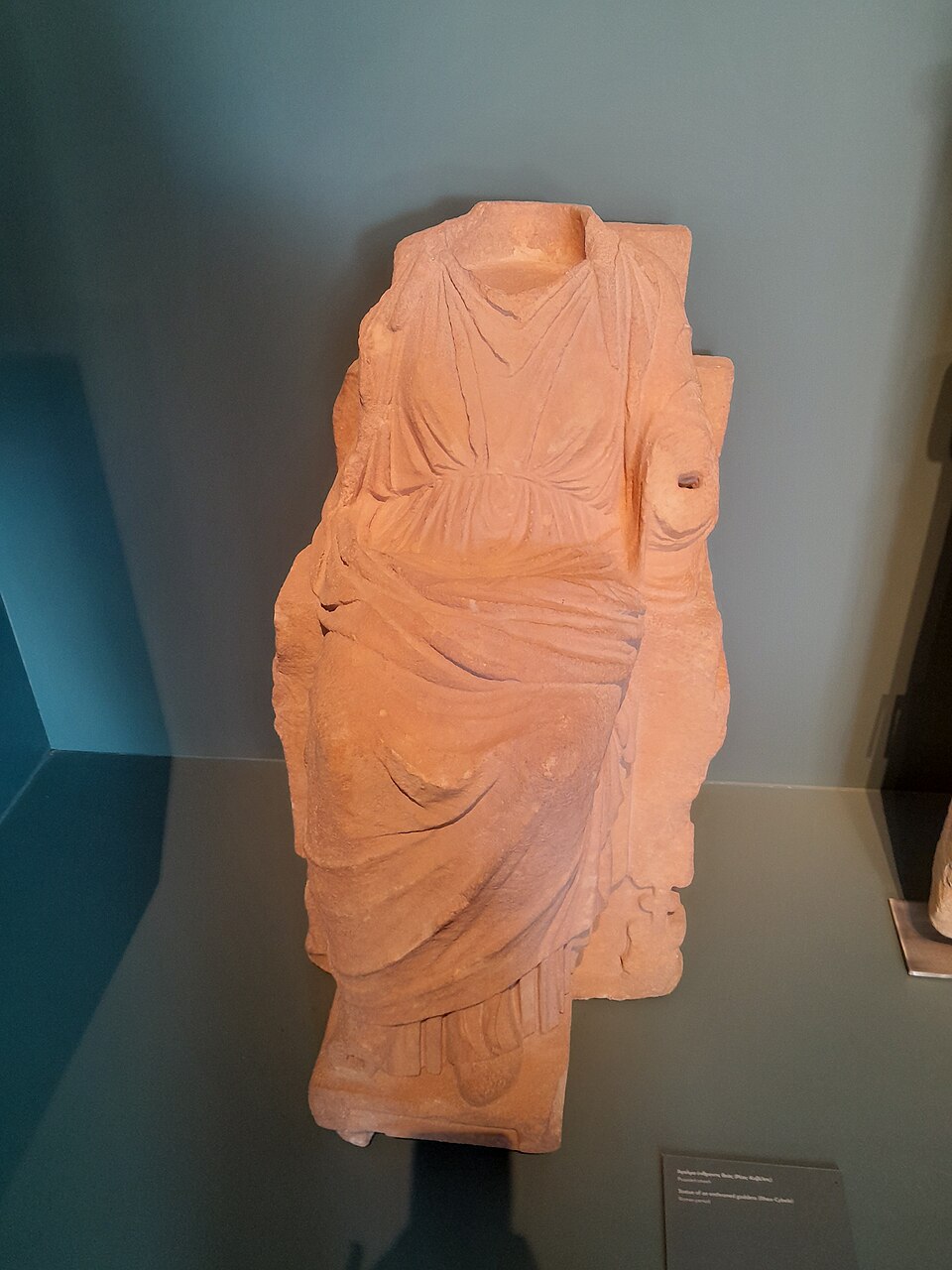
Marble statue of the seated Rhea-Cybele from Eleusis, Greece. Photo by Deiadameian via Wikimedia Commons, licensed under CC BY-SA 4.0. No changes were made.
Rhea as the Mountain Mother of Crete
Ancient sources most often call Rhea Meter Oreia, the Mountain Mother. The title reflects something more specific than a poetic flourish. Mountains, and particularly the caves within them, formed the primary setting for her cult. The ancient geographer Diodorus Siculus recorded that a temple to Rhea once stood near Knossos. That temple sat in the same region as the island’s largest Bronze Age palace. Her worship on Crete involved loud, rhythmic ritual: drums, cymbals, and dancing. The sound echoed the noise the Kouretes reportedly made at her son’s birth.
By the classical period, people closely identified Rhea with Cybele. Cybele was the Phrygian mother goddess whose cult had spread from Asia Minor into the Greek world. Ancient writers increasingly used the two names interchangeably. Both goddesses shared iconography: a crown shaped like a mountain or city wall, lions as sacred animals, and the same title, Mother of the Gods. Some ancient accounts went further. They claimed that Cybele was simply Rhea under a different name, having left her original home on Mount Ida for Phrygia. The overlap says less about one goddess replacing another. It says more about how persistent the idea of a mountain-dwelling mother goddess was across the eastern Mediterranean, with Crete as one of its oldest points of origin.
Rhea and the Minoan Mother Goddess Tradition
Rhea’s connection to Crete did not begin with Hesiod. Minoan Crete already held an established tradition of a female deity linked to mountains, caves, and the renewal of the land. This tradition existed long before Greek-speaking settlers arrived on the island. Shrine figurines and cave offerings document it. Most historians of religion treat Rhea as the Greek name later attached to a figure already central to Cretan worship. The etymology of Rhea’s own name is a subject of debate. Some linguists trace it to a pre-Greek, likely Minoan, source rather than to Greek roots. That theory supports the idea that the Greeks adopted an existing Cretan goddess, rather than importing one from outside the island.
The physical evidence backs this up. The same caves later associated with Rhea and Zeus, Idaean and Diktaean alike, show continuous ritual deposits. These reach back to the Minoan Bronze Age, long before any Greek myth attached itself to them. Minoan peak sanctuaries and cave shrines across Crete produced clay and bronze votive figures, many of them female. These finds point to a religious life centered on a goddess connected to nature, fertility, and protection. That religious life predates Rhea’s name in the historical record. Our articles on the Minoan women who shaped Crete’s early society and the island’s Minoan snake goddess figures explore this earlier layer of Cretan religion. It is the same layer that most historians see reflected, and eventually renamed, in the figure of Rhea.
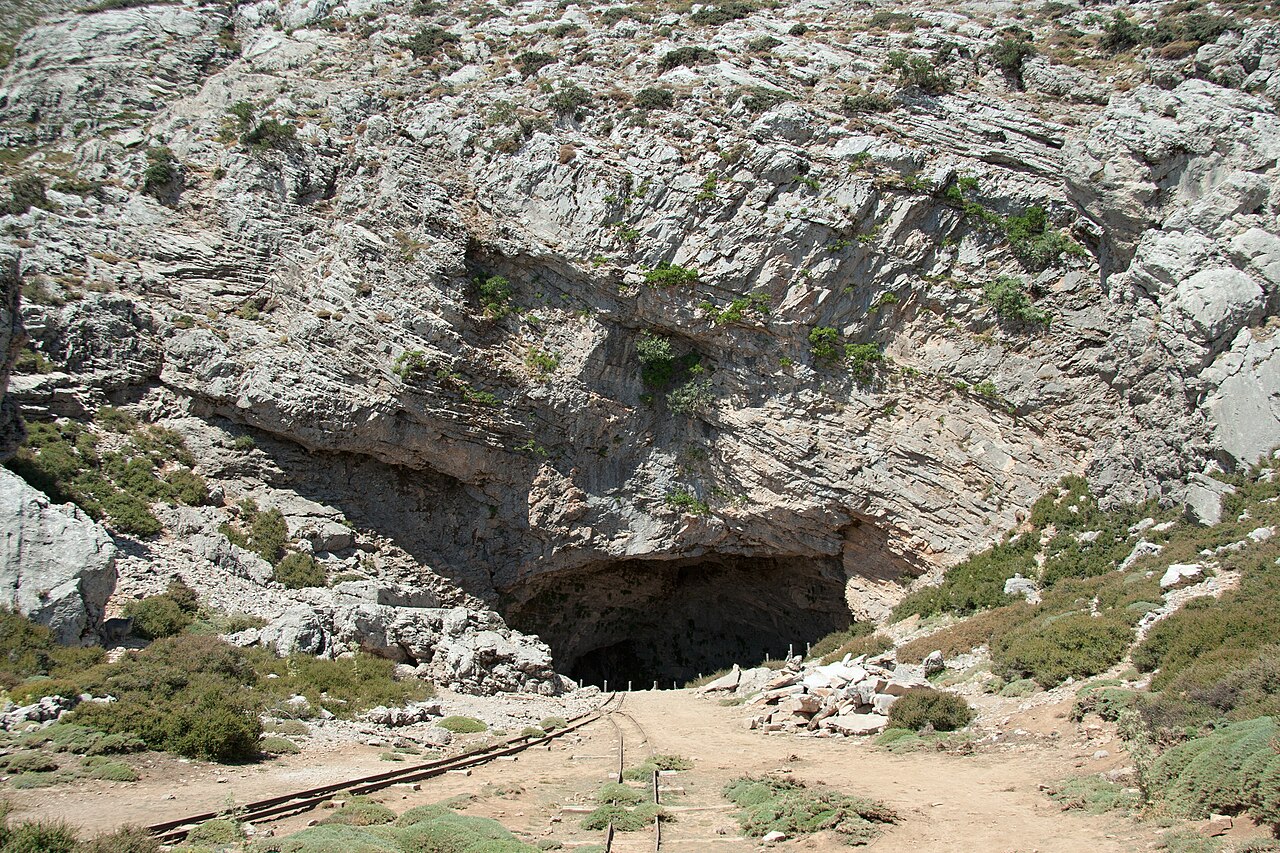
Entrance to the Cave of Zeus on Mount Ida, Crete. Photo by Zde via Wikimedia Commons, licensed under CC BY-SA 4.0. No changes were made.
Visiting the Caves of Rhea’s Myth Today
Both caves tied to Rhea’s myth welcome visitors today. Each offers a genuinely different experience of the same story.
The Idaean Cave (Ideon Andron)
To reach the Idaean Cave, you drive up the Nida Plateau on Mount Ida’s slopes. From there, you continue on foot for a short, well-marked stretch to the cave entrance. The setting sits high, quiet, and exposed to the mountain weather. The cave itself opens broad and relatively flat rather than deep or winding. That shape makes the scale of its ancient use easier to picture. The altitude and the drive suit travelers who want to pair the myth with a wider look at Crete’s mountain landscape. Local guidance for the roads and the walk helps here.
The Diktaean Cave (Psychro Cave)
The Diktaean Cave sits above the village of Psychro on the Lasithi Plateau. A steeper, more defined path with stone steps leads part of the way up. Inside, the cave descends into a cooler, more enclosed chamber, marked by stalactite formations and an underground pool. Signage inside references the archaeological finds recovered there. The Lasithi Plateau itself adds a further layer to the visit. Mountains ring this working agricultural landscape, and traditional windmills dot it, a scene that has surrounded this cave for as long as people have climbed to it. Our guide to Crete’s sacred caves covers both sites alongside the island’s other significant caves for anyone mapping out a broader route.
Neither cave demands technical gear. Sturdy footwear is enough for both, though each involves some walking on uneven ground. A private guide who knows the mythology and the terrain tends to make the connection between story and place much clearer than a self-directed stop would.
Rhea, the Equinox, and the Turning of the Mountains
Rhea’s myth is fundamentally one of protection and renewal. A mother secures the survival of a child who goes on to reorder the world. Readers have long linked that theme to the turning of the seasons. The autumn equinox briefly balances day and night before the island moves toward its cooler, wetter months. It sits naturally alongside a goddess whose title tied her permanently to the mountains and their cycles. Crete’s peaks change character sharply after the equinox. A myth rooted so specifically in mountain caves becomes, in its own way, a story about the land itself shifting and enduring at once.
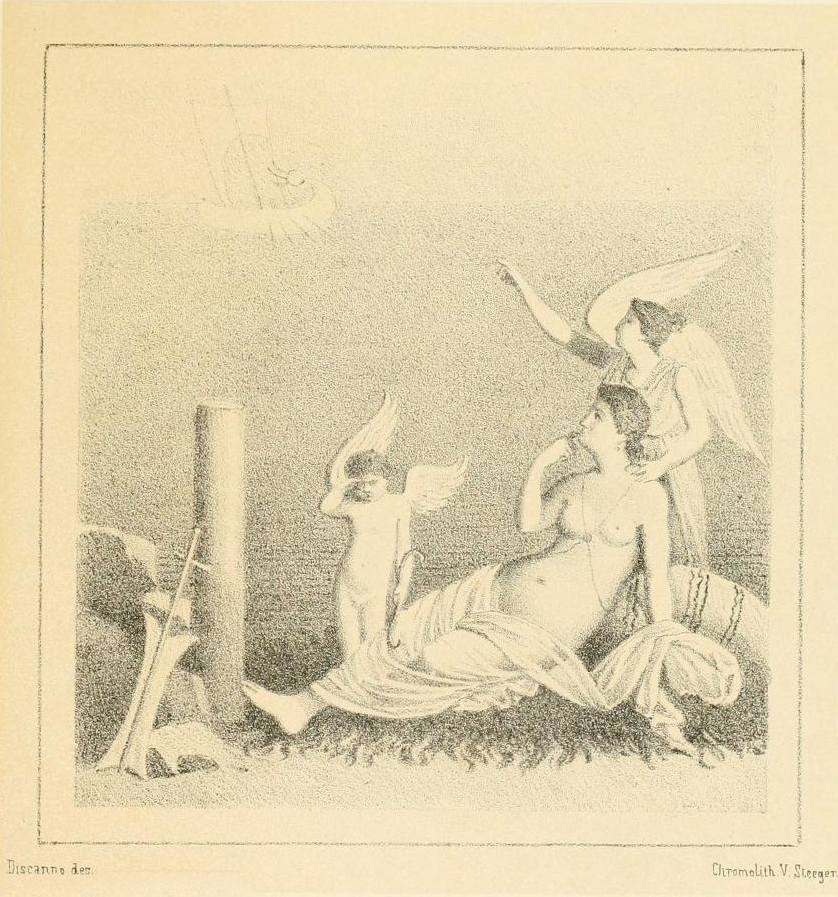
Ariadne abandoned on Naxos, from the House of the Greek Epigrams in Pompeii, by Geremia Discanno, 1882. Image via Wikimedia Commons. Public Domain. No changes were made.
Why Rhea Still Matters for Travelers Exploring Crete’s Sacred Sites
A list of ruins or a museum case of figurines cannot fully convey what Rhea’s myth offers on its own. Her story provides a throughline between Crete’s Bronze Age religious life and the mythology the rest of the ancient world eventually came to know. Standing inside either cave means standing in a place that mattered to people on this island for roughly three thousand years. Different names and religious systems came and went, but the reason stayed much the same.
Rhea sits alongside figures like Ariadne as one of the clearest examples of a specific goddess tied to a specific landscape. You can trace her through myth, archaeology, and a place you can actually walk into today. That makes her a natural focus for travelers drawn to Crete’s Divine Feminine mythology. Our broader look at Crete’s Divine Feminine mythology and our article on Ariadne, whose own myth is rooted in Crete, are both useful next stops for anyone following this same thread across the island.
Conclusion
Rhea, the mother goddess of Crete, sits at the point where Greek myth and Cretan history meet. The ancient world honored her as a Titan and as the Mountain Mother. Above all, it remembered her for hiding her infant son from a father determined to destroy him. Ancient sources name different caves, the Idaean Cave on Mount Ida or the Diktaean Cave on the Lasithi Plateau. Both sites carry a religious history that reaches back past Rhea’s own name, into Crete’s earlier Minoan reverence for a goddess of the mountains.
These caves offer a rare, direct link between a story told for thousands of years and a place that still holds it. Anyone building a trip around Crete’s mythology and sacred sites can walk into that story directly. Elissos can help build a private itinerary around Crete’s mythological caves and Divine Feminine sites for travelers who want to see where these stories actually happened.
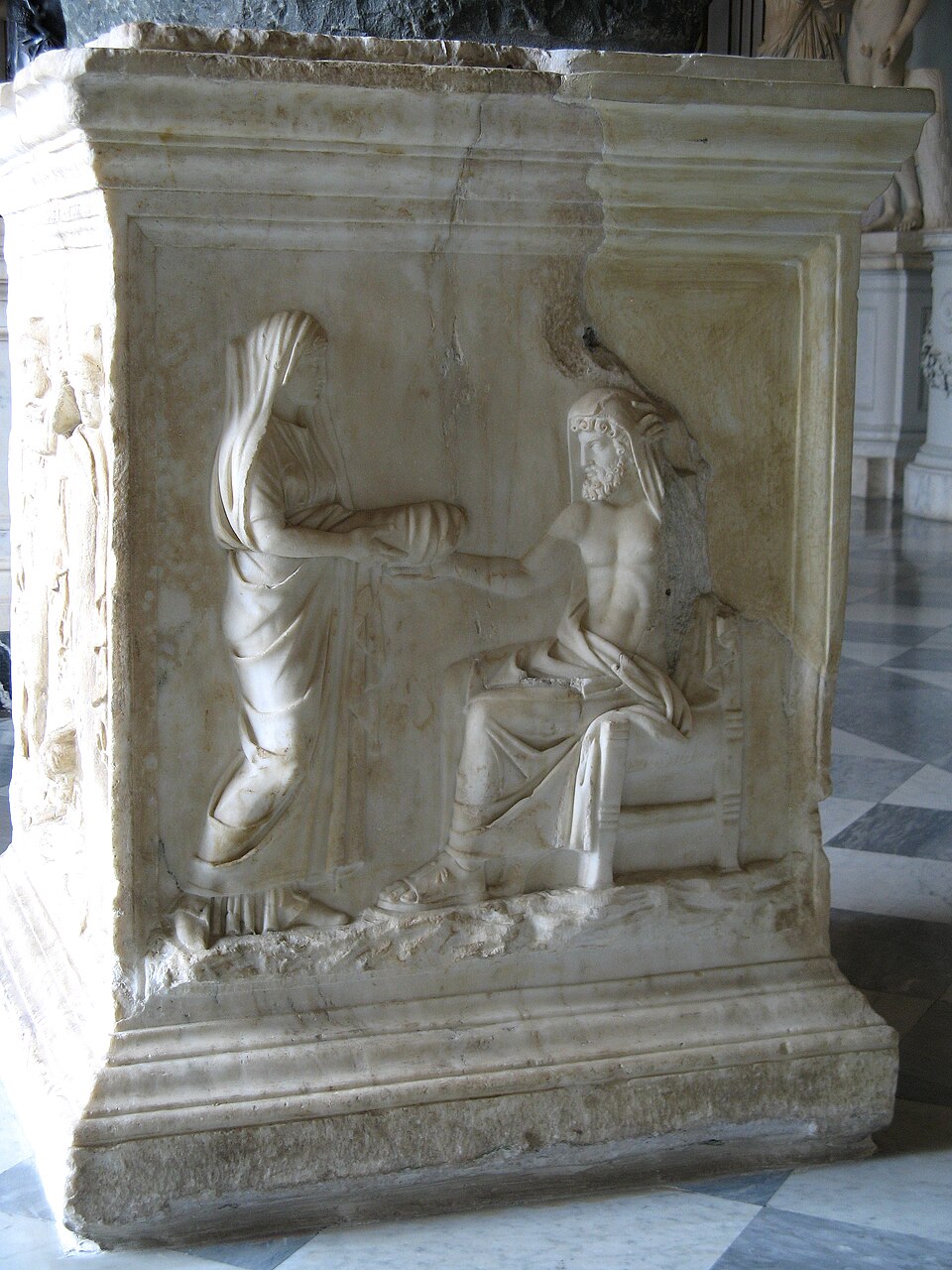
Roman marble relief of the birth of Zeus, showing Rhea giving the swaddled stone to Kronos, 2nd century CE. Photo by Mark Landon via Wikimedia Commons, licensed under CC BY 4.0. No changes were made.
Frequently Asked Questions
Who is Rhea in Greek mythology?
Rhea is a Titan goddess, the daughter of Uranus and Gaia, and the sister and wife of Cronus. Ancient writers honor her as the mother of six Olympian gods, including Zeus, Hera, Demeter, Hades, Poseidon, and Hestia. Her best-known myth tells how she saved the infant Zeus from being swallowed by his father.
Why is Rhea connected to Crete?
Ancient tradition holds that Rhea traveled to Crete to give birth to Zeus in secret. She hid him in a mountain cave there to protect him from Cronus. Crete was also home to an earlier Minoan tradition of mother goddess worship. Most historians view Rhea as the Greek name later given to a goddess figure already central to the island’s religious life.
Where was Zeus born according to Cretan mythology?
Ancient sources differ. Some, including Apollodorus, place Zeus’s birth in the Idaean Cave on Mount Ida. Others, including Strabo, name the Diktaean Cave on the Lasithi Plateau. Both caves have carried the status of sacred sites connected to the myth for roughly three thousand years.
What is the difference between the Idaean Cave and the Diktaean Cave?
The Idaean Cave sits high on Mount Ida, Crete’s tallest mountain. You reach it by a drive up the Nida Plateau followed by a short walk. The Diktaean Cave, also called Psychro Cave, sits on the Lasithi Plateau in eastern Crete. A steeper path with stone steps leads up to it, opening into a chamber with stalactites and an underground pool.
Is Rhea the same as Cybele?
Rhea and Cybele, a Phrygian mother goddess, became closely identified with each other by the classical period. They shared the title Mother of the Gods, along with similar iconography: a mountain-shaped crown and lions as sacred animals. Some ancient writers treated them as the same goddess under two names, rather than as separate deities.
Can you visit the caves associated with Rhea’s myth today?
Yes. Both the Idaean Cave on Mount Ida and the Diktaean Cave on the Lasithi Plateau welcome visitors. Both involve some walking on uneven terrain. Neither demands technical gear beyond sturdy footwear. Visiting with a local guide generally makes the mythology and the archaeology easier to follow.
What does „Mountain Mother“ mean as a title for Rhea?
Mountain Mother, or Meter Oreia in Greek, was Rhea’s most consistent ancient epithet. It reflects her strong association with mountain sanctuaries and cave shrines, particularly on Crete. The title also connects her to related mother goddess figures across the ancient Mediterranean, most notably Cybele.