
Caves in Crete, Greece: The Most Remarkable Ones to Visit
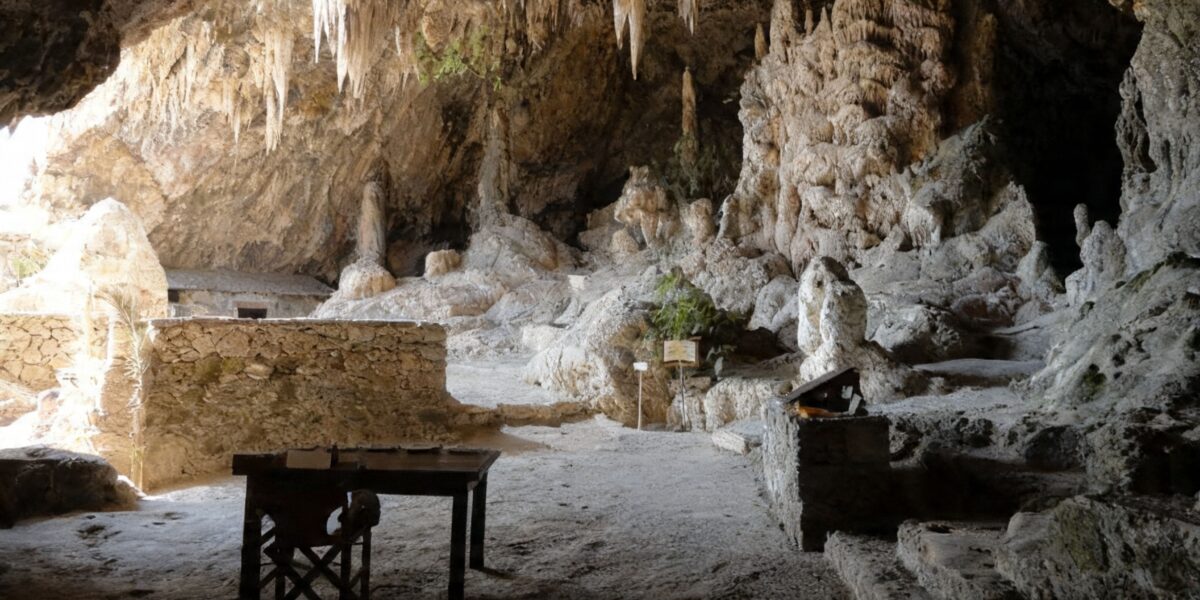
Crete’s caves are not a side note to its history. They are at the heart of it.
The best caves to visit in Crete include the Diktaean Cave (Psychro Cave) on the Lasithi Plateau, the Idaean Cave on Mount Ida, Sfentoni Cave near Zoniana, Melidoni Cave near Rethymno, and the Matala Caves in the south. The island has more than 4,500 mapped caves in total, including several that served as Minoan goddess sanctuaries and sacred sites of worship dating back to at least 2800 BC.
Crete has over 4,500 mapped caves, making it one of the most cave-rich islands in Europe. The most visited caves in Crete include the Diktaean Cave (Psychro Cave) on the Lasithi Plateau, the Idaean Cave on Mount Ida, the Sfentoni Cave near Zoniana, the Melidoni Cave near Rethymno, and the Matala Caves in southern Crete. Many served as Minoan religious sites and goddess sanctuaries thousands of years ago, while others are celebrated for their dramatic stalactite and stalagmite formations. The best time to visit is spring or autumn, when temperatures are mild and crowds are manageable.
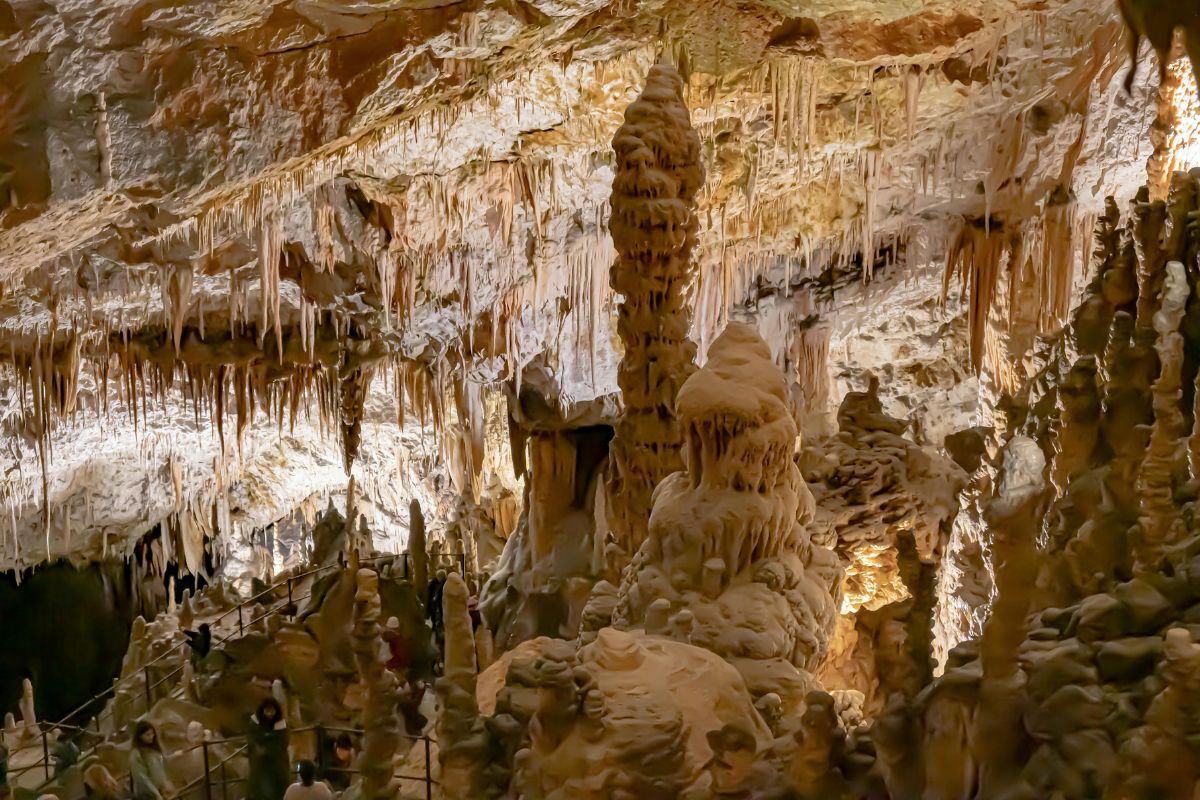
Why Crete Has So Many Caves
The geology of Crete is the starting point. The island’s rugged interior, carved over millions of years by limestone and water, has produced one of the most extensive cave systems in Greece. In fact, the three deepest explored sinkholes in Greece are all found here. The mountain ranges, including the White Mountains, Psiloritis, and the Dikti Range, are riddled with caverns at every elevation.
This was not lost on the people who lived here first. For the Minoans, caves were not merely shelters or geological curiosities. They were thresholds between the human world and something older and deeper. Caves became the preferred sites for religious ritual, particularly goddess worship and the veneration of earth and fertility deities. Many were used continuously from the Neolithic era through the Roman period, a span of thousands of years.
To understand the caves of Crete is to understand something essential about how the island’s ancient inhabitants related to the sacred, to the earth, and to the divine. For those interested in exploring the broader context of that spiritual world, the Elissos blog’s coverage of Minoan civilization in Crete and ancient Crete’s myths and legends provides useful depth.
The Sacred Caves: Where Myth and Archaeology Meet
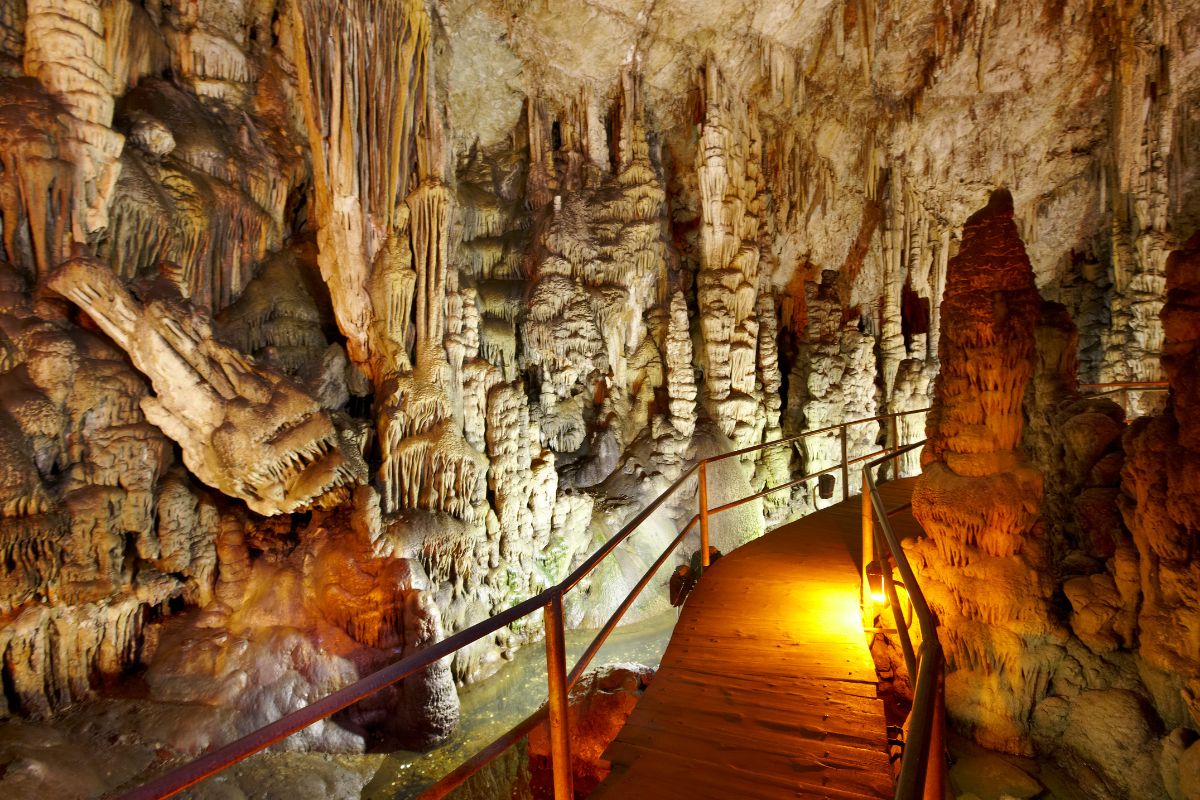
Several of Crete’s caves are extraordinary not just as natural formations but as ancient sanctuaries. These are the sites where the line between geology and religion dissolves, where archaeologists have unearthed thousands of votive offerings left by Minoan worshippers, and where myth has been inscribed into the landscape itself.
Diktaean Cave (Psychro Cave): Birthplace of Zeus
The Diktaean Cave, also called Psychro Cave after the village below it, is the most significant of Crete’s sacred caves and arguably the most important mythological site on the island. It sits at an altitude of 1,025 meters on the northern slopes of Mount Dikti, overlooking the Lasithi Plateau.
According to the myth, this is where the Titaness Rhea came to give birth to Zeus in secret, hiding him from his father Cronus, who had been devouring their children to prevent a prophecy from coming true. While the infant god cried in the cave below, a group of young warriors called the Kouretes danced and clashed their weapons at the entrance to drown out the sound. Amalthea, either a goat or a nymph depending on the version, nursed the child with her milk.
The archaeology supports a long and intense sacred use. The cave shows evidence of human habitation and ritual activity from around 2800 BC, and it functioned as a major cult center from approximately 2000 BC until around 700 BC, when the focus of worship shifted to the Idaean Cave on Psiloritis. What was found inside tells a significant story about who was being worshipped here.
The finds from Diktaean Cave include bronze double axes, figurines of women with bare and prominent breasts, needles, hair pins, necklaces, and dozens of objects associated with feminine devotion. Archaeologists have noted that the majority of votive offerings are more consistent with goddess worship than with the Zeus mythology layered on top in later periods. Some scholars believe a Minoan goddess, possibly an earth or fertility deity, was the original occupant of this sanctuary long before the cave became associated with the father of the Olympian gods.
This dual identity, as both the birthplace of Zeus and a probable goddess sanctuary, gives the Diktaean Cave an unusual depth. For those drawn to the Divine Feminine and its expression in Minoan Crete, Psychro Cave offers one of the most tangible archaeological connections on the island.
The cave covers an area of around 2,200 square meters, with a 250-meter walking route through its two main chambers. The upper chamber held the sanctuary and altar area. The lower chamber descends steeply to a still pool, where stalactites rise from the water and the darkness is complete. The atmosphere is genuinely arresting.
Getting there: The cave is above the village of Psychro on the Lasithi Plateau, approximately 60 km from both Heraklion and Agios Nikolaos. Two footpaths lead from the parking area to the entrance. The left path is easier; the right path, though older, has worn stones. Donkeys are available for those who prefer not to walk. The cave is open daily in summer from 8 am to 6 pm and in winter from 8 am to 3 pm.
Idaean Cave: The Cave on Mount Ida
The Idaean Cave, known in Greek as Idaion Antron, sits on the slopes of Mount Ida, called Psiloritis, the highest mountain in Crete at 2,456 meters. Like the Diktaean Cave, ancient tradition links it with the birth or nurturing of Zeus, and the two sites share a long, overlapping mythological history.
Excavations have produced remarkable material: bronze shields, lyres, tympani, and carved ivories of extraordinary quality, including objects with Near Eastern motifs that suggest the cave attracted pilgrims from far beyond Crete. The cave is also believed to have functioned as an oracle site, suggested by the frequent depiction of a tripod on coins of nearby Axos.
The landscape around the Idaean Cave is part of what makes it so powerful. The drive up through the Nida Plateau, with its wide grasslands and mountain air, prepares you for the altitude and the isolation of the site. For more on this landscape, the Elissos blog’s guide to Mount Ida (Psiloritis) and the broader mountains of Crete is a useful companion.
Getting there: The cave is accessible from the Nida Plateau, reached via Anogia in the Rethymno regional unit. The road is scenic but winding. The cave is not organized for tourism in the same way as Psychro Cave, so check local conditions before visiting, particularly outside of peak season.
Skotino Cave: A Minoan Sanctuary Near Heraklion
Located about 20 km east of Heraklion near the village of Skotino, the Skotino Cave, also known as the Cave of Agia Paraskevi, is one of the largest cave sanctuaries in Crete. It sits at 225 meters above sea level and was used as a place of worship continuously from the third millennium BC through the Roman era, a period of over 3,000 years.
This is not a tourist cave with lighting and guided routes. Skotino is largely unorganized, which means a visit requires preparation: a torch, good footwear, and ideally knowledge of the site. What you find inside, however, is genuinely impressive. Four large chambers descend from the entrance, each with its own formations and atmosphere. Animal bones, pottery, and ritual objects found here confirm its long use as a place of sacred offering.
The feast day of Saint Paraskevi on July 26 draws local visitors to this day.
Eileithyia Cave: Goddess of Childbirth
Among the most historically significant of Crete’s sacred caves is the Cave of Eileithyia, located near the coast east of Heraklion, close to the town of Amnisos. This cave was a place of worship dedicated to Eileithyia, the Minoan and later Greek goddess of childbirth, from at least the Neolithic period through the Roman era.
Homer mentions the cave in the Odyssey, and four Linear B tablets from Knossos, dating to the 14th century BC, record offerings made to Eileithyia at this site. The finds here include clay and copper figurines of pregnant women, erotic sculptures, model boats, jewelry, and Egyptian faience objects, a collection that speaks to the cave’s international significance and the intensity of devotion it inspired.
The cave carries a particular resonance for those interested in the sacred feminine in Minoan Crete. Eileithyia was one of the oldest divine figures on the island, predating the Olympian pantheon, and worshippers used her cave sanctuary at Amnisos as one of the longest-running religious sites in the Aegean world.
The Best Tourist Caves in Crete to Visit Today
Not every remarkable cave in Crete is a Minoan sanctuary. The island also has several superbly organized tourist caves with impressive geological formations, lighting, and guided tours. These are the caves most accessible for families, first-time visitors, and anyone who wants the spectacle of ancient stone without needing a torch and hiking boots.
Sfentoni Cave (Zoniana): The Geological Showcase
The temperature inside stays between 19 and 20 degrees Celsius year-round, making it a natural escape from summer heat. Guided tours last around 25 to 30 minutes and cover roughly two-thirds of the cave.
Visiting: Open daily from April 15 to October 30, 10 am to 5 pm. On Sundays only in winter, 10 am to 2 pm. Tickets are available at the entrance.
Melidoni Cave: Beauty and a Dark History
Melidoni Cave is also known as Gerontospilos, meaning “old cave.” It sits about 30 km east of Rethymno, near the village of the same name. Travelers visit it often, making it one of the most popular caves in the Rethymno region. Its history spans thousands of years, from ancient cult worship to a devastating episode in the 19th century.
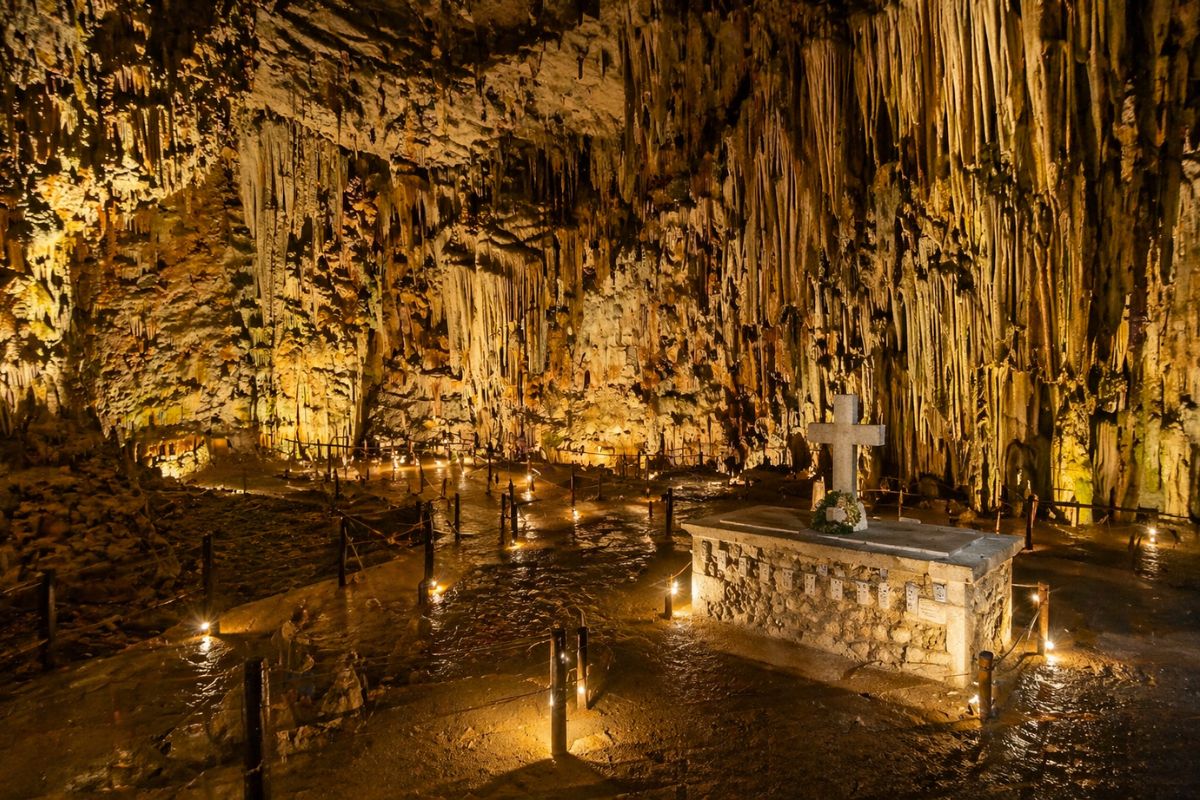
In antiquity the cave was sacred to Hermes and the Talos, the mythical bronze giant of Crete. Votive offerings found here date to the Minoan and later periods. Impressive stalactites and stalagmites decorate the cave, and a large central chamber gives it a cathedral-like scale.
In 1824, during the Greek War of Independence, several hundred Cretan villagers took refuge in the cave from Ottoman forces. When negotiations broke down, the Ottomans lit fires at the entrance, killing everyone inside by asphyxiation. A memorial and small chapel inside the cave commemorate those who died. This layer of more recent history makes Melidoni a place of genuine gravity, not merely a geological attraction.
Getting there: The cave is clearly signposted from the main road near Melidoni village. It is open to visitors throughout the year, with regular opening hours in peak season.
Agia Sofia Cave (Topolia): Church in the Rock
Agia Sofia Cave sits within Topolia Gorge in the Chania regional unit. It serves as both a geological site and a place of active religious life. The cave ranks as the second largest in Crete. A small Byzantine church stands directly inside the rock. A minaret from the Ottoman period also still stands inside the cave. Archaeologists have found Neolithic tools and pottery here, confirming human use for more than 10,000 years.It sits inside the gorge, close to the village of Topolia. This setting makes it a natural stop on any visit to the western part of the island.
Practical note: The cave is accessible from the main Chania to Paleochora road through Topolia. A guide is available at the site during opening hours.
Matala Caves: Where History Meets the Sea
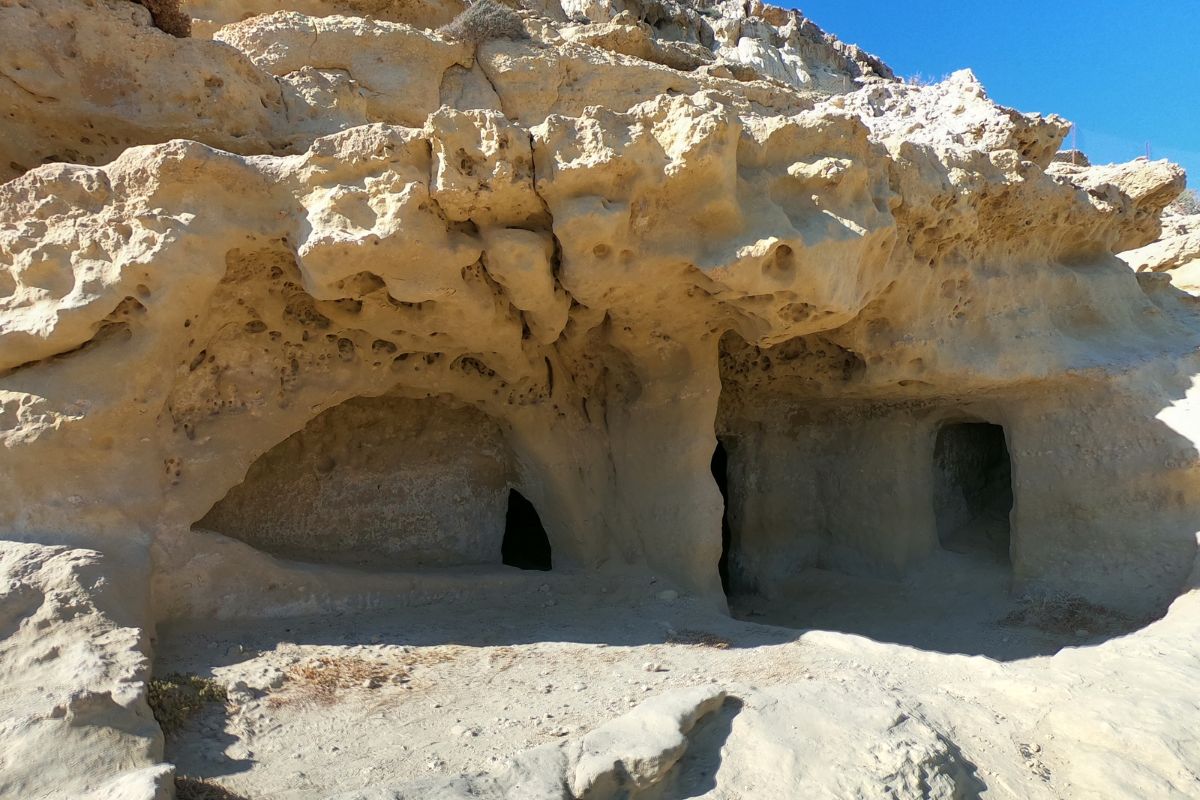
The Matala Caves are unlike any other cave site in Crete. People cut these artificial caves into the sandstone cliffs above a beautiful bay in southern Crete, about 65 km southwest of Heraklion, during the Neolithic era and later used them as tombs. They are not geological formations but human-made chambers carved directly into the soft rock.
In the late 1960s and early 1970s, Matala became famous when a community of international travelers and countercultural figures took up residence in the empty tombs. The story of the Matala hippies has become part of the cave’s mythology, and the village has leaned into it.
Today the caves are fenced and protected by the Greek Archaeological Service. Visitors can explore them during daylight hours for a small entrance fee. The bay below and the cliffs above make this one of the most visually distinctive archaeological sites in Crete. Its proximity to the Minoan palace at Phaistos also makes a combined visit a natural choice.
The Minoan connection at Phaistos, along with the broader significance of the Mesara Plain, is covered in the Elissos blog’s guide to archaeological sites in Crete.
Other Caves Worth Knowing in Crete
Beyond the major sites, Crete has dozens of additional caves that reward those willing to explore beyond the main circuit.
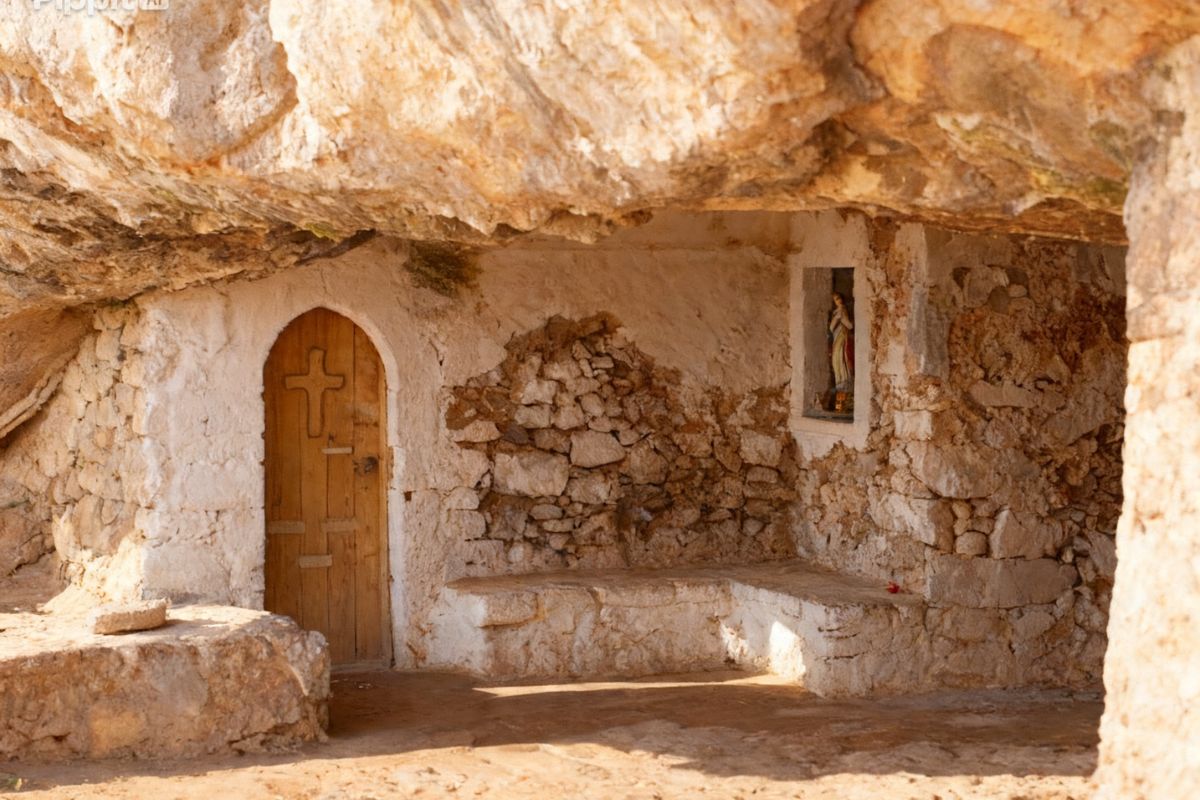
- Bear Cave (Arkoudospilios): Located on the Akrotiri Peninsula near Chania, this cave takes its name from a bear-shaped rock formation inside. It also houses a small chapel dedicated to the Virgin Mary and offers sea views from the surrounding area.
- Elephant Cave (Chania): A rare underwater cave accessible by diving, it contains fossilized remains of prehistoric dwarf elephants, an extinct species that once inhabited Crete. For qualified divers, it is one of the more unusual experiences the island offers.
- Milatos Cave: This cave lies near the village of Milatos in the Lasithi regional unit, and local history associates it with another tragedy. During the Greek War of Independence, local residents sheltered here before Ottoman forces captured or killed them. A small chapel inside marks the memorial. The cave is accessible but requires a torch.
- Kamares Cave: High on the southern slopes of Mount Ida at around 1,525 meters, Kamares Cave is where the distinctive Minoan Kamares Ware pottery was first discovered. It was a Minoan peak sanctuary. The hike to reach it is demanding but the site has real archaeological importance.
- Arkalochori Cave: Known mainly to specialists, this cave in the Heraklion regional unit produced one of the most significant Bronze Age finds in the Aegean: the Arkalochori Axe, a bronze double axe bearing what may be an inscription in an early script. The cave yielded hundreds of weapons from the Late Bronze Age.
Practical Tips for Visiting Caves in Crete
A few things are worth knowing before you visit, regardless of which caves you choose.
- Best time of year: Spring (April to May) and autumn (September to October) offer the most comfortable conditions for cave visits, with mild temperatures outside and manageable crowds. Organized tourist caves are also pleasant in summer, since their internal temperatures stay cool. Avoid the heat of August for any cave that requires outdoor hiking to reach.
- What to wear: Inside any cave, temperatures drop noticeably. Even in July, bring a light layer. For unorganized caves such as Skotino or Milatos, wear sturdy footwear with good grip, as rock surfaces can be uneven and damp.
- Lighting: Organized caves (Psychro, Sfentoni, Melidoni) are well lit. Unorganized caves require your own torch. A headlamp is better than a handheld torch, since it keeps your hands free.
- Getting around: Most of Crete’s caves are spread across the island and not easily combined without a car. Renting a vehicle gives you the flexibility to build a meaningful route, especially if you want to pair the Diktaean Cave with the Lasithi Plateau windmills, or the Idaean Cave with a visit to Anogia or Psiloritis.
- Photography: All of the organized tourist caves allow photography. Some chambers may restrict flash photography to protect the formations. Check at the entrance.
For a broader picture of what to do in the region around these sites, the Elissos guide to things to do in Crete and the overview of Minoan art are good companions to any cave visit.
Conclusion
The caves in Crete, Greece are among the most layered places you can visit on the island. The Diktaean Cave and the Idaean Cave connect directly to the oldest strands of Aegean mythology. They also reveal a religious tradition that predates classical Greece by millennia. The organized tourist caves like Sfentoni and Melidoni offer geological spectacle alongside real historical depth.
For those drawn to the sacred, mythological, and spiritually resonant side of the island, exploring Minoan Crete’s ancient sites alongside the caves creates a genuinely coherent picture of how this civilization understood its world. The caves were the beginning of that story.
Caves in Crete: Frequently Asked Questions
What is the most famous cave in Crete?
The Diktaean Cave, also known as Psychro Cave, is the most famous cave in Crete. The cave sits above the village of Psychro on the Lasithi Plateau. It stands at 1,025 meters. Greek mythology associates the cave with the birth of Zeus. Archaeological evidence shows that worshippers used it as a sacred site from around 2800 BC. This makes it one of the most significant cult caves in the Aegean.
How many caves does Crete have?
Crete has more than 4,500 mapped caves and sinkholes, making it one of the most cave-rich places in Europe. The three deepest explored sinkholes in Greece are all located on the island. Most caves are accessible only to experienced speleologists; a smaller number are open to general visitors.
Are the caves in Crete open to tourists?
What is the best cave to visit in Crete for families?
Sfentoni Cave near Zoniana is the most family-friendly cave in Crete. It has organized lighting, a paved walking route, and guided tours that last around 25 to 30 minutes. The route accommodates children, older visitors, and people with limited mobility. The Diktaean Cave (Psychro) is also popular with families, though the uphill path to the entrance requires some effort.
Were caves in Crete used for religious purposes?
Yes, extensively. The Minoans used caves as primary religious sites. They worshipped goddesses, made sacrifices, and left ritual offerings there from at least the third millennium BC. The Diktaean Cave, Idaean Cave, Skotino Cave, and Eileithyia Cave hold major archaeological importance. These sacred caves remain among the most significant on the island. Many later became Christian chapels during the Byzantine period, continuing the tradition of sacred use in the same physical space.
When is the best time to visit caves in Crete?
Spring (April and May) and autumn (September and October) are the best times to visit caves in Crete. The weather outside is mild for any walking involved, and crowds are more manageable than in peak summer. Organized tourist caves keep a stable temperature of around 19 to 20 degrees Celsius throughout the year. Visitors can explore them in any season.
What was found inside the Diktaean Cave?
Archaeologists found objects inside the Diktaean Cave from the Neolithic through the Roman era. These objects included bronze double axes, ceramic cups, human and animal figurines, needles, hair pins, necklaces, weapons, and gemstones. Most votive objects point to feminine devotion.Because of this, some scholars make a different argument. They believe worshippers honored a Minoan goddess here before later tradition linked the site with the Zeus mythology.