
Discover the Best Archaeological Sites in Crete Today
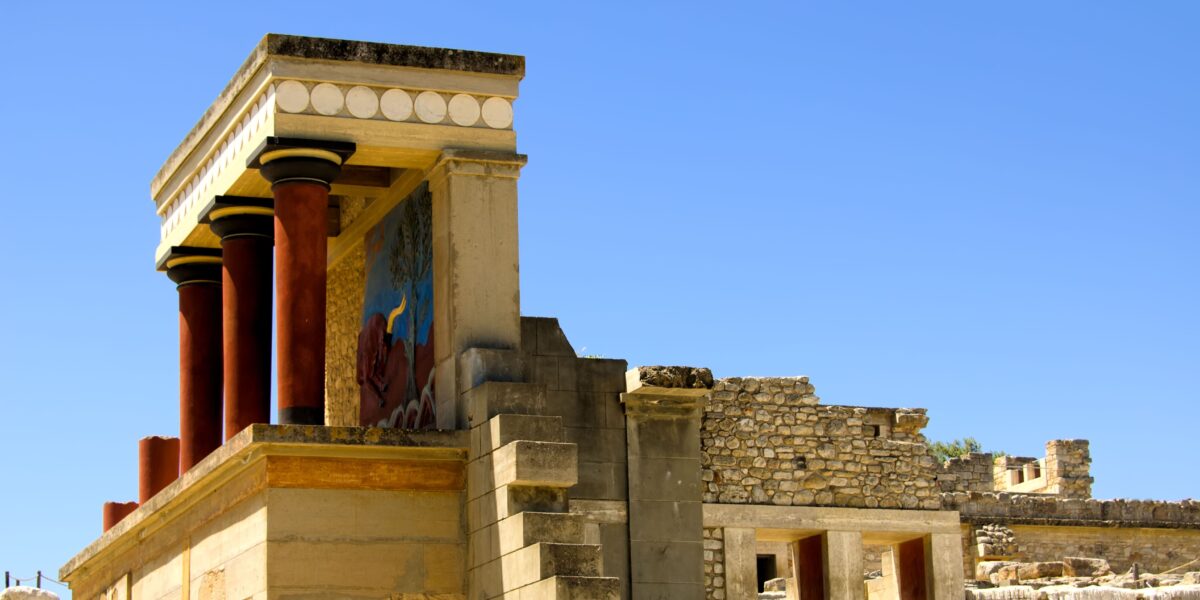
Discover the most fascinating archaeological sites in Crete as we guide you through ancient palaces, lost cities, and the heart of Minoan civilization.
Welcome to the island of Crete, a place full of stories and old history. You will find many archaeological sites here that bring you close to the past. The Minoan civilization, known as the first advanced group in Europe, lived on this island. As you visit these places, you get to walk through old cities and huge palaces. Are you ready to discover the amazing history on Crete? This guide will show you the top spots to see.
Top Archaeological Sites in Crete
There are some amazing archaeological sites in Crete that show its long history. The Palace of Knossos is a place you have to visit. It stands out because it is a part of the Minoan civilization. You can find the throne room, which belonged to King Minos, at this palace. Not far from there, the site of Malia has a layout that is really like other Minoan palaces. It has its own style that you may find interesting. In Heraklion, there is an archaeological museum that has many important things from this area. Here you will see the famous Phaistos Disc. There are also other places, like the archaeological site of Zominthos. The archaeological site of Zominthos gives us important things from both the Minoan Civilization and the Roman period. The finds at these places help us know more about how people used to live on this island.
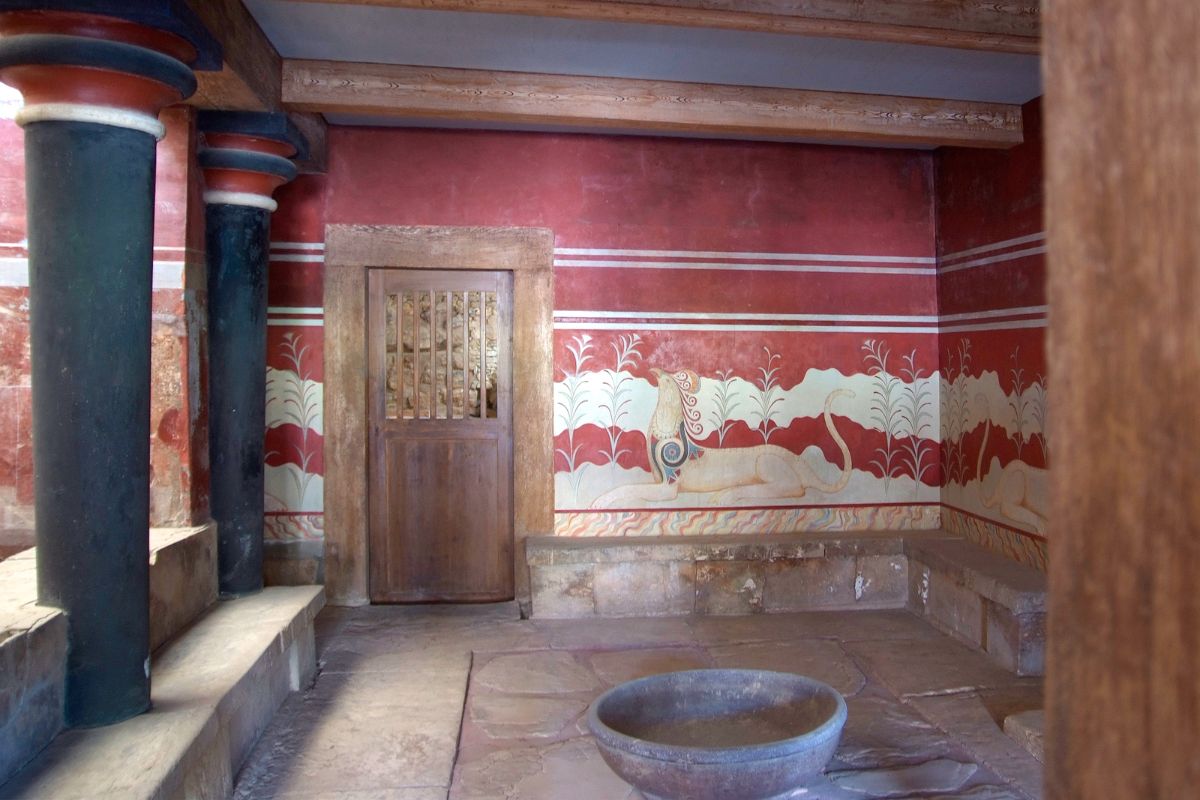
Palace of Knossos
The Palace of Knossos is the most well-known place out of all the archaeological sites in Crete. People say it is Europe’s oldest city and that it was at the center of the Minoan civilization, for both their politics and ceremonies. When you go to the Palace of Knossos, you step into the heart of life from more than 4,000 years ago. Its link to the stories about King Minos and the Minotaur makes it a place full of legend. Sir Arthur Evans, an archaeologist, dug up Knossos in the early 1900s. He rebuilt some areas of the palace, and not everyone agrees with what he did. Yet, this work does let you see just how big the site must have been. Visitors can still see the colorful wall paintings, the advanced plumbing that Minoan civilization used, and the famous throne room, with what people think is Europe’s oldest throne.
The mythology draws in many visitors. Legend says King Minos had a maze here to keep the Minotaur inside. People believe the palace’s twisty layout gave rise to this story. When you walk through these ruins, you get to meet these ancient tales in person and learn about the center of the Minoan civilization.
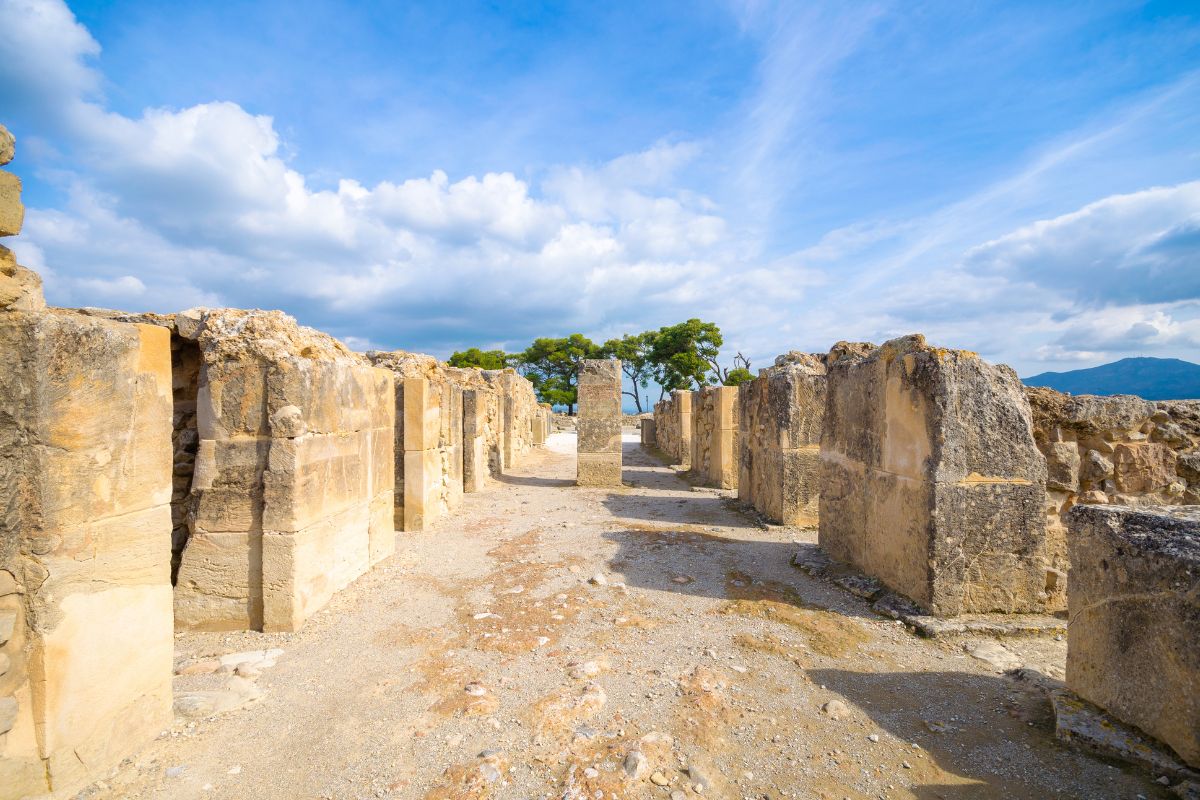
Phaistos Palace
Phaistos Palace is the second-largest of the Minoan palaces. It sits on a hill that looks over the fertile Messara plain. The spot gives you beautiful views of the land nearby. The palace of Phaistos was an important place for things like running affairs and religious events during the Minoan period. This site is kept well and it is a good place for people to explore. Italian archaeologists started digging at the site in the early 1900s. They found a well-planned group of buildings with a big central court, places to store food and goods, and royal rooms. The way the Phaistos Palace is built and set up shows what Minoan architecture is all about. The place is mostly less busy than Knossos, so you can visit and take your time.
The famous Phaistos Disc is the most interesting piece found in the museum. That clay disc has a line of odd symbols going around in a spiral. No one has worked out what these signs mean even today. You can see the real disc at the Heraklion archaeological museum. The finding of this disc at Phaistos helps you get more into your visit.
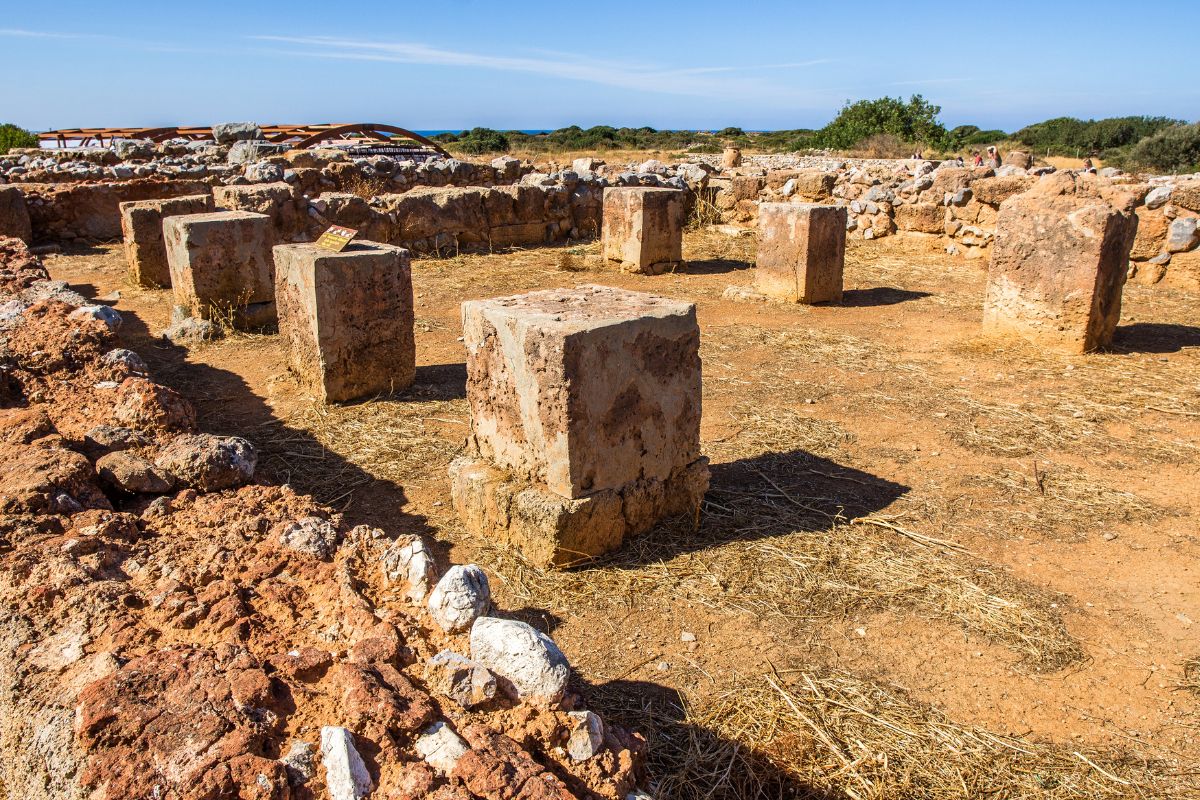
Malia Palace
On the north coast of Crete, you will find Malia Palace. This place is the third-largest of all Minoan palaces on the island. The archaeological site of Malia is an important center of the Minoan civilization. You get a unique experience here because some walls are still high, so it is easier to see the layout of the rooms and buildings. Like other Minoan palaces, Malia was a center for both management and religion. French archaeologists found a big central court, storerooms, workshops, and places to live. The site is easy for people to walk around. There are wide paths, so you can go to all the different parts of the old town that stood around the palace.
One of the most important findings from near Malia is a beautiful gold bee pendant. It was found in a grave near the site. This piece of jewelry shows the great skill of Minoan workers. Now, it is on show at the Heraklion Archaeological Museum. Many travel experts say people should visit Malia, because the site is easy to get to and has a layout that stands out from other Minoan places.
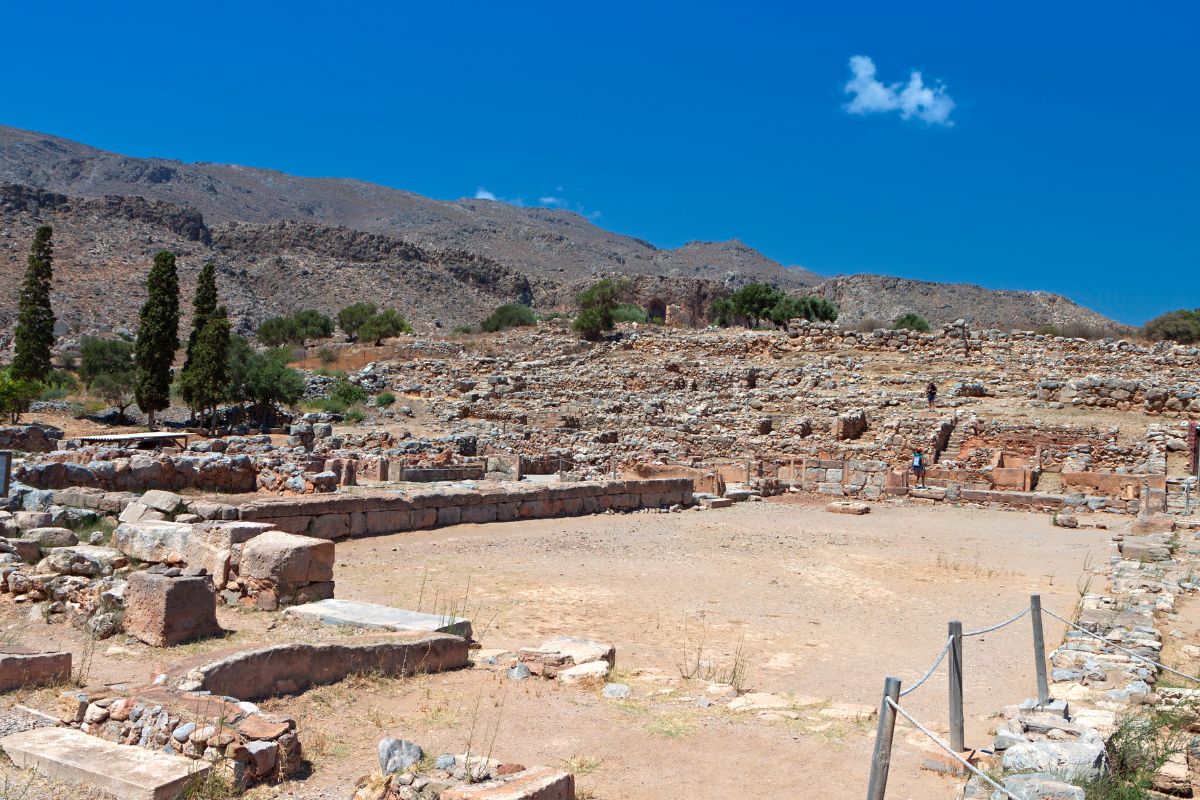
Zakros Palace
Zakros Palace sits on the quiet and distant east coast of Crete. It is an important archaeological site from the Minoan civilization, but not many people go there. The palace was once a busy trading place with other countries from the East since it had a safe harbor. If you visit, you get to see the ruins in peace. There are no big crowds, so you can take your time. This place was the last main Minoan palace to be found. Nikolaos Platon, a Greek archaeologist, started digging it up in the 1960s. Inside the palace, there is a central court, and you will also see royal rooms, work areas, and places where things were stored.
What makes Zakros Palace special is that it was not robbed in old times, so many things are still where the people of the time left them. This gives us good clues about life in ancient Crete. There is a lustral basin in the Queen’s apartments that many find interesting. Zakros Palace stands alone in a wild, dry land at the end of the „Gorge of the Dead,“ so it feels special there. The wider area nearby is also very lovely, and you get to see a new side of ancient Crete and the world of the Minoan palaces.
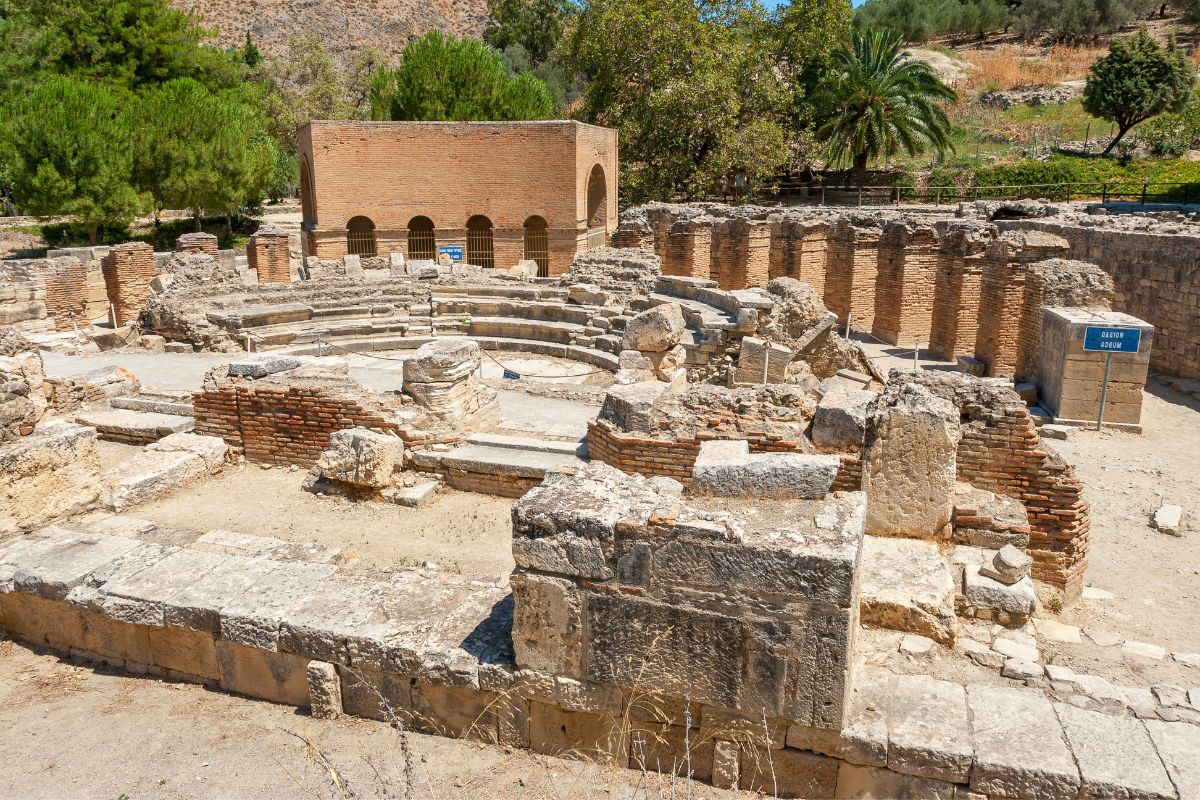
Ancient City of Gortyna
The ancient city of Gortyna gives you a new view of Crete’s past. This important city began during Minoan times. It grew and became more well-known in Roman periods and the Hellenistic time. Later, it was the capital of the Roman province called Creta et Cyrenaica. Its old ruins are spread out on the Messara Plain. One of the best finds at Gortyna is the Gortyn Code. This long set of laws from the 5th century BC is carved into stone walls of an old public building. It tells us a lot about old Cretan laws, like rules for property and marriage. You can look at these words on the wall, and they stay safe behind a wire mesh.
Gortyna is also known for its early Christian days. You can find the remains of an early Christian basilica, called the Basilica of Saint Titus. This church was named for the first bishop in Crete. There is also a Roman Odeon, which is a small theater. You will also see the Praetorium, where the Roman governor once lived.
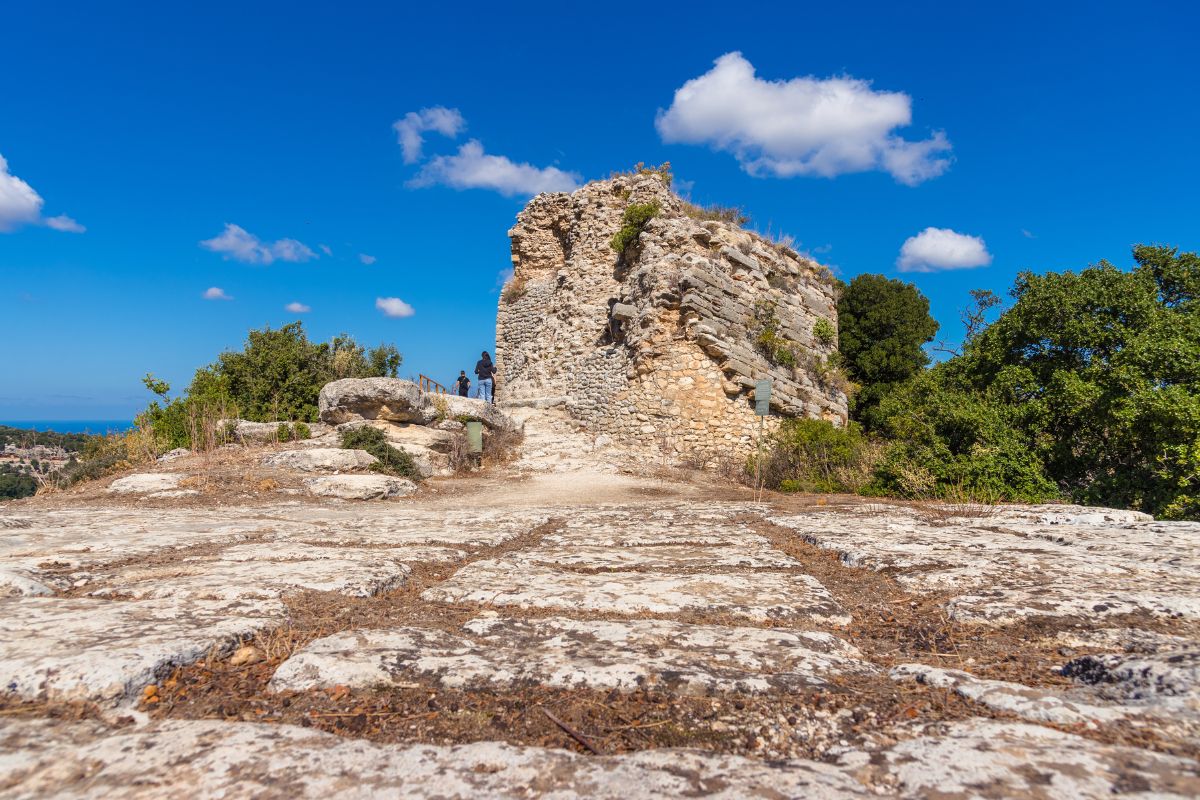
Ancient Eleftherna
Ancient Eleftherna is an archaeological site in the foothills of Mount Psiloritis. You will find it about 30 kilometers south of Rethymnon. The site is full of ancient ruins that tell the story of life here from the Geometric up to the early Byzantine periods. Archaeological evidence shows that people lived in this place for a long time. Excavations started in 1985 and have uncovered many important findings. The site covers two hills. When you look around, you get to see how the city looked through different times. You can spot Hellenistic walls, Roman buildings, and an early Christian basilica.
The team also found a post-Geometric and Archaic cemetery. This gives us more details about the people who lived in this city. Ongoing research continues at this archaeological site. It has become a key project in the Aegean because the findings help people learn how things changed from ancient Greece to the early Byzantine time. It takes some time to drive there from the city of Chania. But the trip is good for those who want to see these ancient ruins and learn more about history.

Ancient Lato
Ancient Lato is an important archaeological site near the town of Kritsa. This place was different from the famous Minoan palaces, as Lato was a powerful Dorian city-state during the Hellenistic period. The city sits between two hills, which gives people great views of the area and Mirabello Bay. The ruins in Lato are well-kept. When you walk around this archaeological site, you can see houses, workshops, and big public buildings. These are all built on hillside terraces. The main public spot, called the agora, sits between the two hilltops.
Lato was an important city. The people there even made their own coins. The city is not closely tied to the Minoan civilization, but its history adds to Crete’s long story. Not as many people visit Lato as they do the Minoan palaces, so you can take your time walking on the ancient streets and seeing the old buildings.
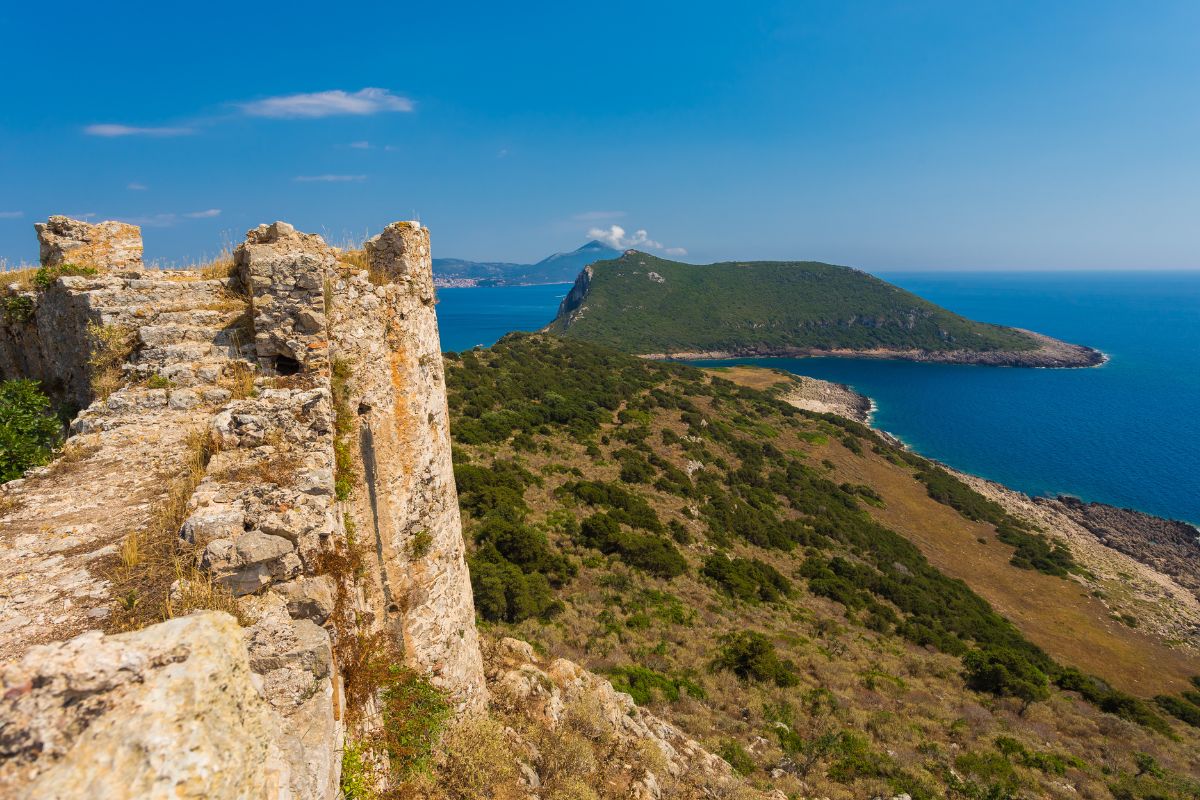
Palekastro
In the eastern part of Crete, you will find the archaeological site called Palekastro. This place was a rich town during the Minoan period. Excavations there have given us good archaeological evidence about life in ancient Crete. The settlement was one of the biggest of its time and could compete with other large Minoan sites. The town sits on a flat coastal plain close to sea level. This spot helped it become a busy port. Archaeologists have found a well-planned town. They have seen streets, big houses, and public shrines.
All these finds show that Palekastro was important for trade and faith. The town had links to others in the Aegean. Unlike palaces controlled by one ruler, Palekastro looked like it belonged to a few key families. This gives us another view of the social life in the Minoan period. If you want to learn about more than just the large palaces, Palekastro shows you details of a full Minoan town.
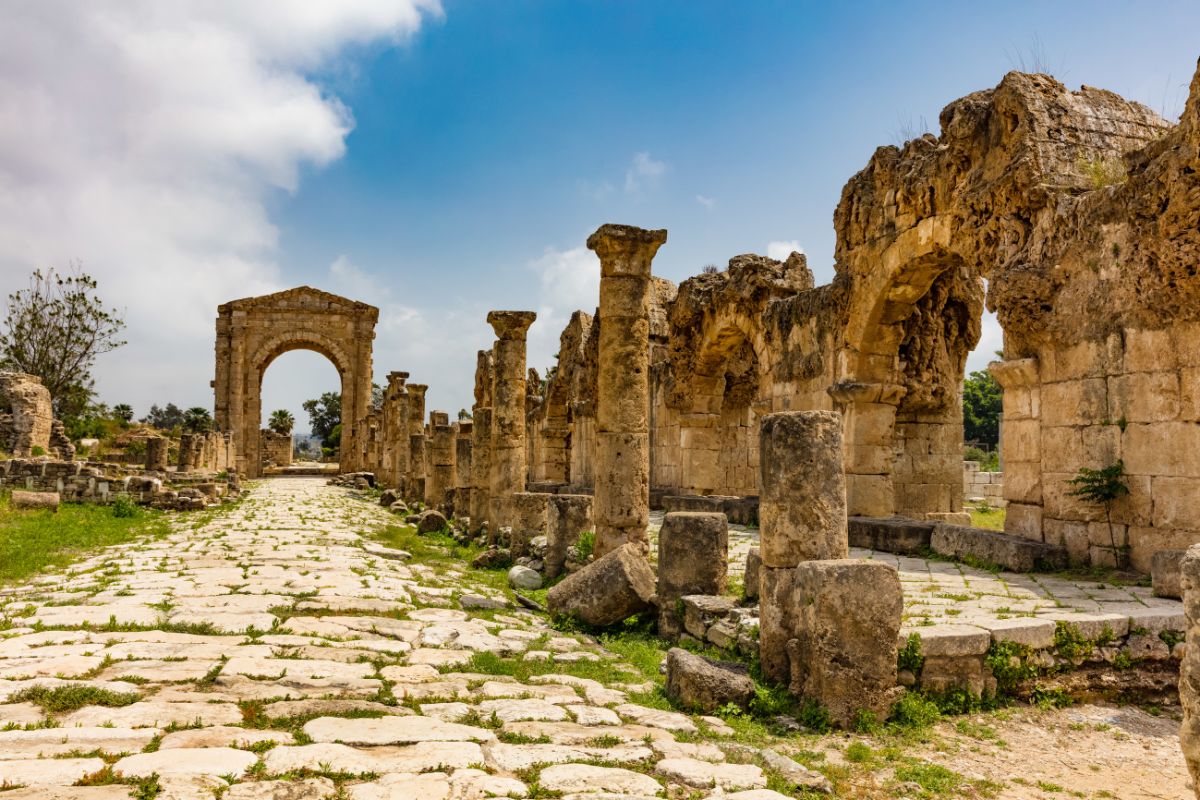
Kastelli Archaeological Site
The Kastelli archaeological site is in the town of Chania. It sits on a hill where the old city started. People have lived in this area for many years. There are ruins from the Minoan period all the way through Venetian times. Digging at this place can be hard because the modern city was built on top of it. Even with these problems, people who study the past found some great things. They found pieces of Minoan houses, old paved streets, and a ceramics workshop. They also found Linear B tablets at this archaeological site.
These tablets show that the place was used for important work by leaders in the post-palatial period, in the same way that other sites gave us written scripts. What they found at Kastelli shows it is connected to other Minoan places, like the site of Zominthos. This helps us know that people in these places were linked across the island. If you stay in Chania, this archaeological site is a good place to see Minoan history without leaving the city.
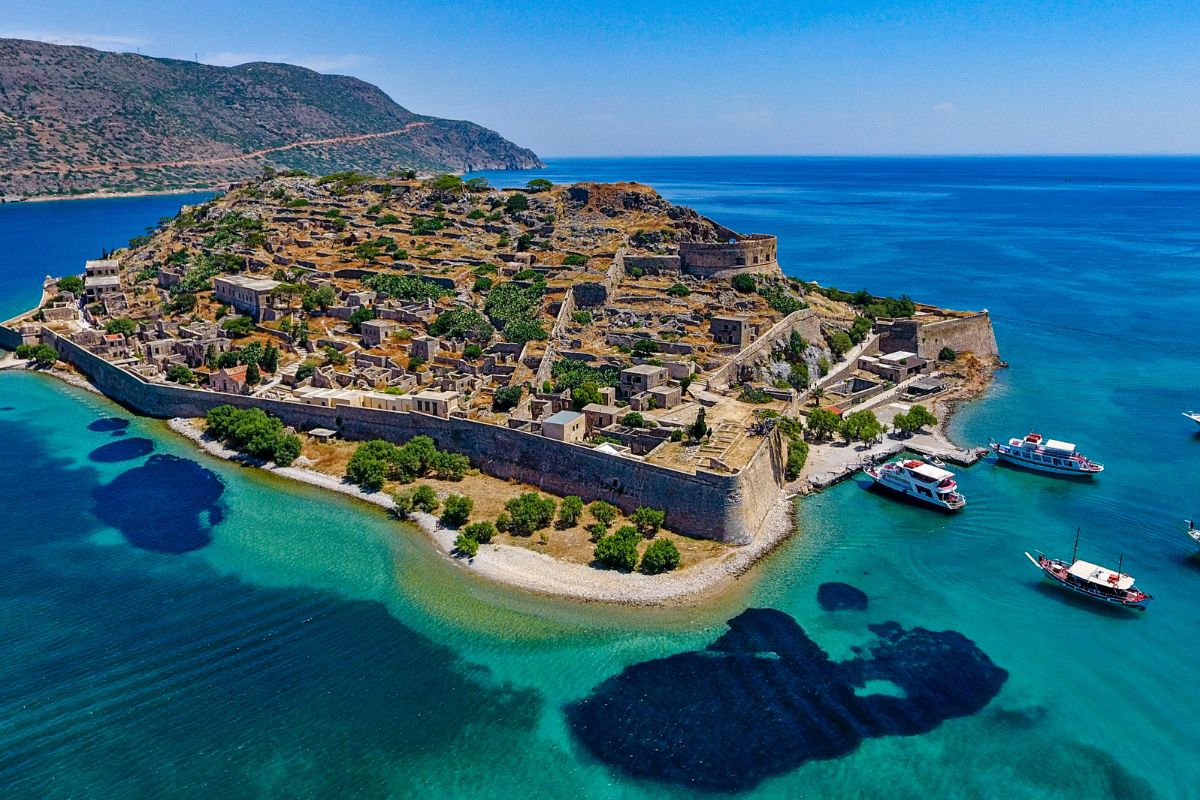
Spinalonga Island
Spinalonga is a small island in the Gulf of Elounda, near the island of Crete. Many people know it as a place where a leper colony once existed, but its story goes back even further. In the 1500s, the Venetians built a large fortress here to guard the bay. Now, these old walls are one of the main archaeological sites on the island. You can get to Spinalonga by taking a short boat ride from the towns of Plaka or Elounda. When you arrive, you can walk around the strong fort walls and see the quiet town left behind. The mix of old Venetian style, Ottoman houses, and leper colony buildings gives this island a special feeling.
Archaeological evidence found here shows us how people once tried to defend the area, lived apart from others, and kept going through hard times on the island of Crete. Spinalonga is one of the most visited archaeological sites in this part of Crete, since the trip there is simple and the buildings stand in good shape. When you go on a tour of Spinalonga, you learn about its history and also get a great view of the water.
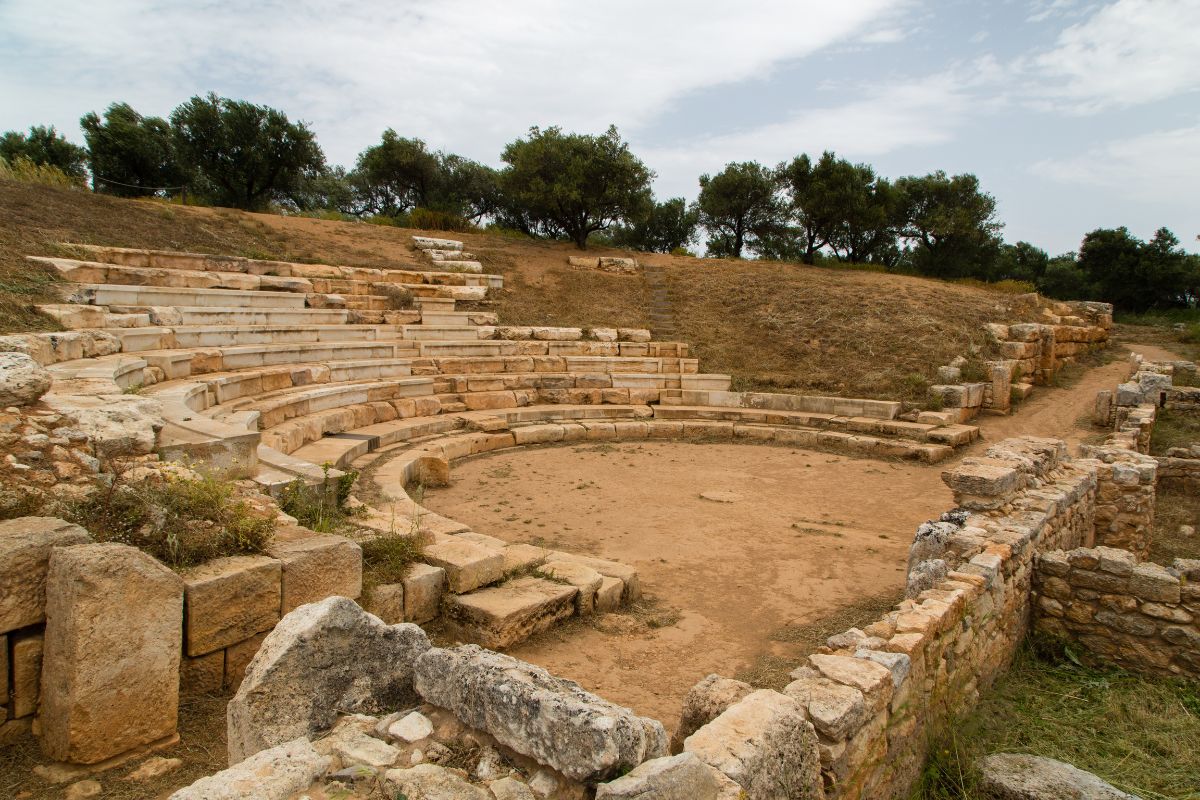
Archaeological Site of Aptera
The archaeological site of Aptera is perched on a hill with commanding views over Souda Bay, not far from the city of Chania. This was one of the most powerful city-states in ancient Crete, with a history that began before the Minoan civilization and continued through the Roman and Byzantine eras. The ruins here are extensive and well-preserved. You can see remains from various periods, including massive city walls, Roman cisterns, and a Roman-era theater. There is also an Ottoman-era fortress, known as the Aptera Fortress, which stands guard over the site. The findings from Aptera are displayed in the Archaeological Museum of Chania.
Many local companies offer a guided tour to the archaeological site of Aptera, which can help you better understand its long history. Its panoramic views and impressive structures make it a rewarding visit.
| Feature | Description |
|---|---|
| Period | Hellenistic, Roman, Ottoman |
| Key Structures | Roman Theater, Roman Cisterns, City Walls, Aptera Fortress |
| Location | Overlooking Souda Bay, near the city of Chania |
| Significance | One of the most powerful city-states in western Crete |
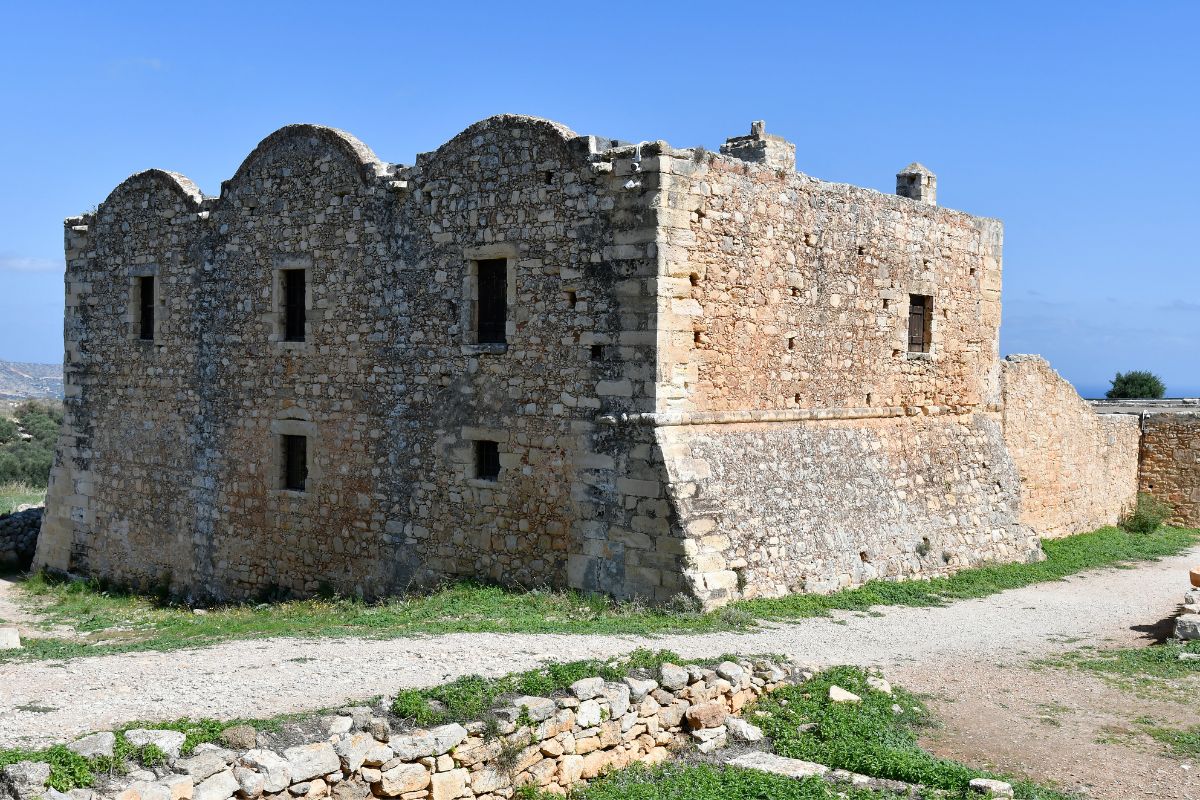
Aptera Fortress
At the archaeological site of ancient Aptera, you can see the Aptera Fortress standing tall. This fortress is not as old as the city it looks over. The Ottomans built it in the late 19th century because they wanted to stop Cretan rebellions. People also know this fortress as Koules. It shows a different time in the island’s history, one full of conflict and defense. The fortress is now seen as an important archaeological site for people and shows what military buildings looked like back then. From this spot, you can get some of the best views of the valley and Souda Bay out at the Aptera archaeological site.
If you walk along its walls, you will see why it was so important for watching over the area. When you visit the bigger Aptera archaeological site, you should make time to stop at the fortress. Many tour operators will add the fortress to their guided tour of Aptera. The fortress is a strong reminder of Crete’s long past, from the old days of Greece right up to more recent fights to be free.
Matala Caves
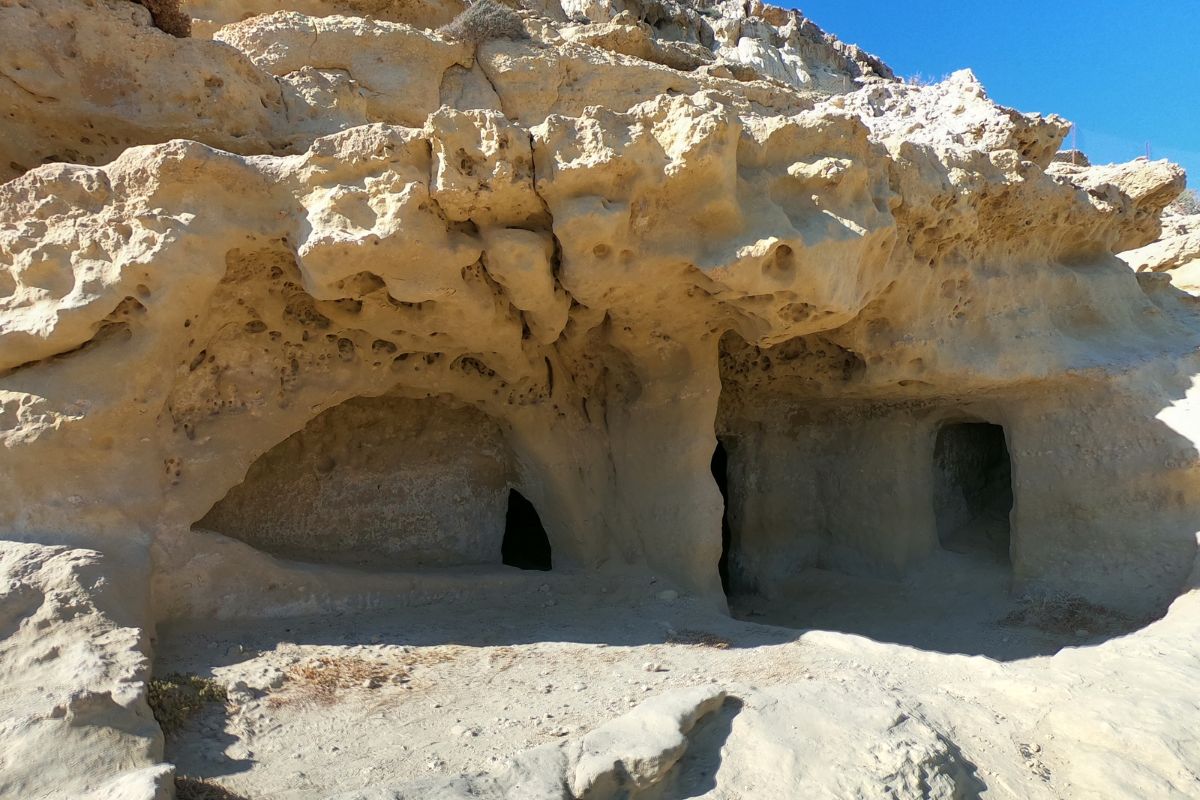
The Matala Caves sit right on the coast of Messara Bay. These caves are carved into soft limestone cliffs at sea level, and they look out over the busy Matala beach. People talk about how old the caves are and how they started, but most say they were likely used as tombs back when the Romans or early Christians lived there. This spot is one of the easiest archaeological sites to reach along the south coast. You, or really anyone, can climb into some caves to see inside. Sometimes you will find benches cut into the walls or special spaces where bodies were once kept. The site got real attention in the 1960s when hippies from different parts of the world moved in and stayed there.
Today, you will see the Matala Caves as a protected archaeological site. They make a good stop for people who want to explore in the area, even if you just want something simple and fun to do.
- The caves were likely used as tombs during the Roman period.
- They are carved directly into the cliff face next to the beach.
- The site is easy to explore and offers a glimpse into a different kind of ancient structure.
Archaeological Town of Gournia
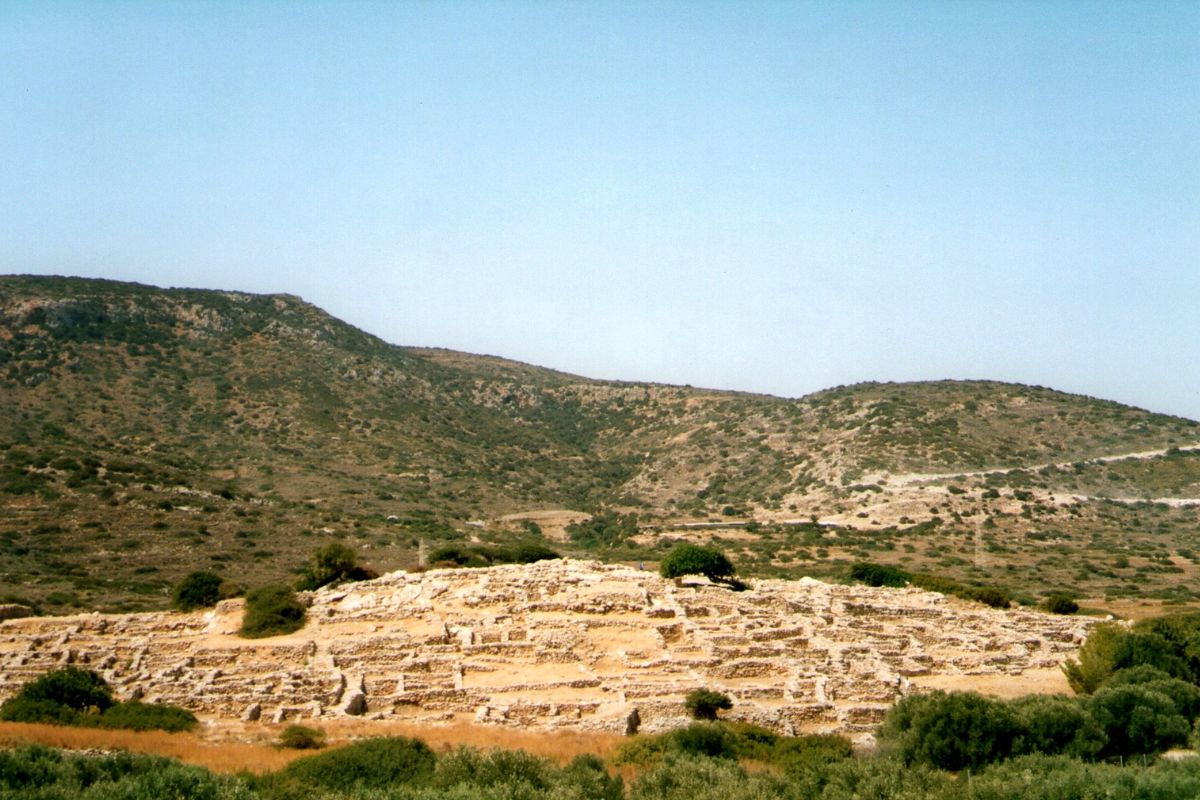
The archaeological site of Gournia is special because you can see a full Minoan town instead of just the usual palace. It is on the north coast near the Isthmus of Ierapetra. People often call it the „Pompeii of Minoan Crete“ as it is kept so well. It may be smaller than other Minoan palaces, but it gives a lot of information. Gournia is different from the typical Minoan palace. It was a place where everyday people lived. There is a small palace or ruler’s house in the middle. While you walk at the archaeological site, you can follow its paved streets and look at the remains of houses, shops, and workshops. This layout lets you know how daily Minoan life used to be.
Gournia is a great spot for learning about the Minoan civilization besides just the royal part. The setup, including the public court and small central palace, helps you see how people were ordered in the town. Its spot lined by the sea also shows that with its work in trading and fishing, it was much a part of its time.
Conclusion
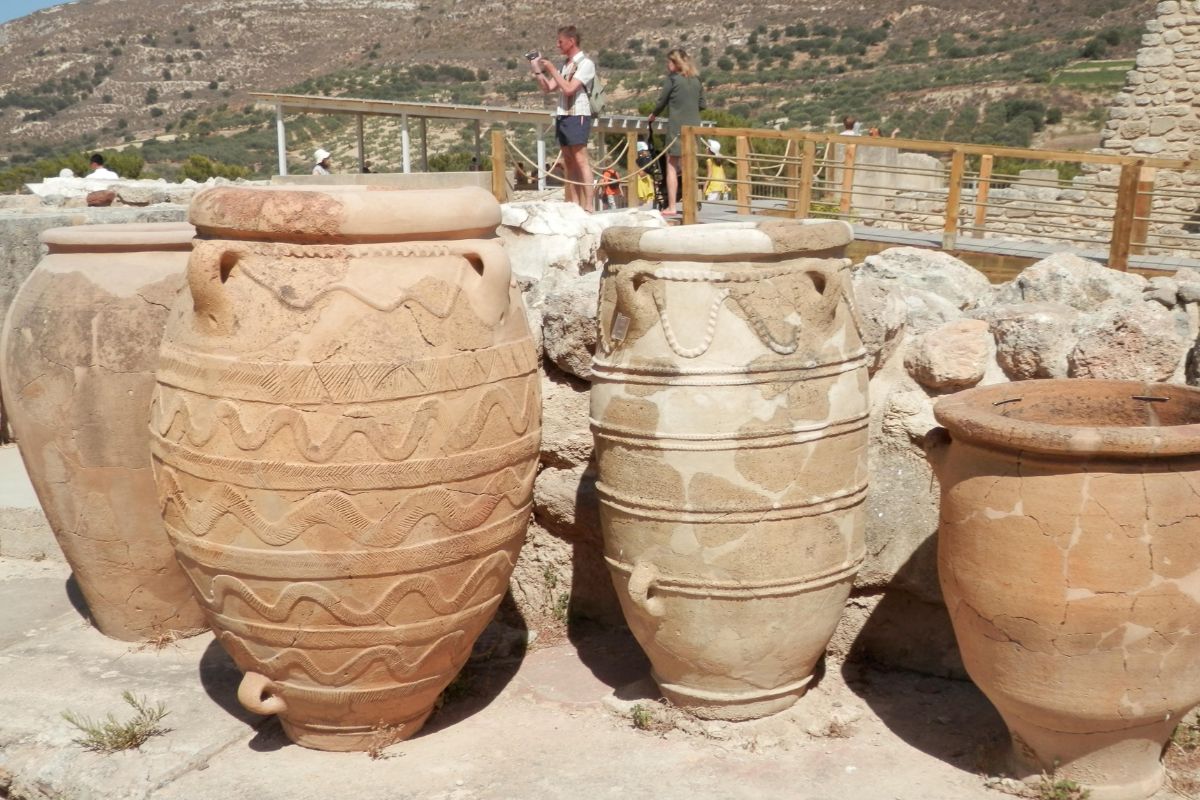
Exploring archaeological sites in Crete helps you see the rich history and culture of this island. Every archaeological site, like the Palace of Knossos or the quiet Matala Caves, has its own story. The Palace of Knossos shows how people lived long ago. Matala Caves sit in a beautiful and calm spot. When you plan your trip, think about how these places are more than just old ruins. They are places that let you feel close to history. These archaeological sites bring you right to the heart of the past. It does not matter if you love history or if you are just curious and want to learn something new. Each archaeological site gives you a good chance to see how people used to live and work a long time ago. Crete is full of these wonderful locations. So, make your travel plans soon.
Frequently Asked Questions
Are there any ongoing archaeological digs in Crete open to tourists?
Most ongoing archaeological digs are places where people are doing active research. These places are not open to the public. This is to keep the archaeological evidence safe. But, there are some places, like the one at Eleftherna, that have museums and areas where you can watch the site from nearby. Sometimes, you may find a special guided tour that lets you see the work at an archaeological site. Check with local tour providers for these.
Which archaeological sites in Crete are best for first-time visitors?
The best place to begin is the Palace of Knossos. When you visit, you can see parts of Minoan palaces that have been rebuilt. This helps you picture how big the old buildings were. You should also go to the Heraklion Archaeological Museum. It has all the things found at the Knossos Palace and other archaeological sites.
What are the best-preserved ancient ruins in Crete?
The Palace of Knossos is in good condition because people have rebuilt some parts of it. If you want to see an archaeological site with ancient ruins that are mostly natural, check out Gortyna. It has some big Roman buildings. Ancient Phalassarna is another place you can go. There you will get a close look at a harbor that now sits on dry land. Gournia is very well kept too and gives you the full feel of a whole town.