
Exploring the Wonders of Spring in Crete
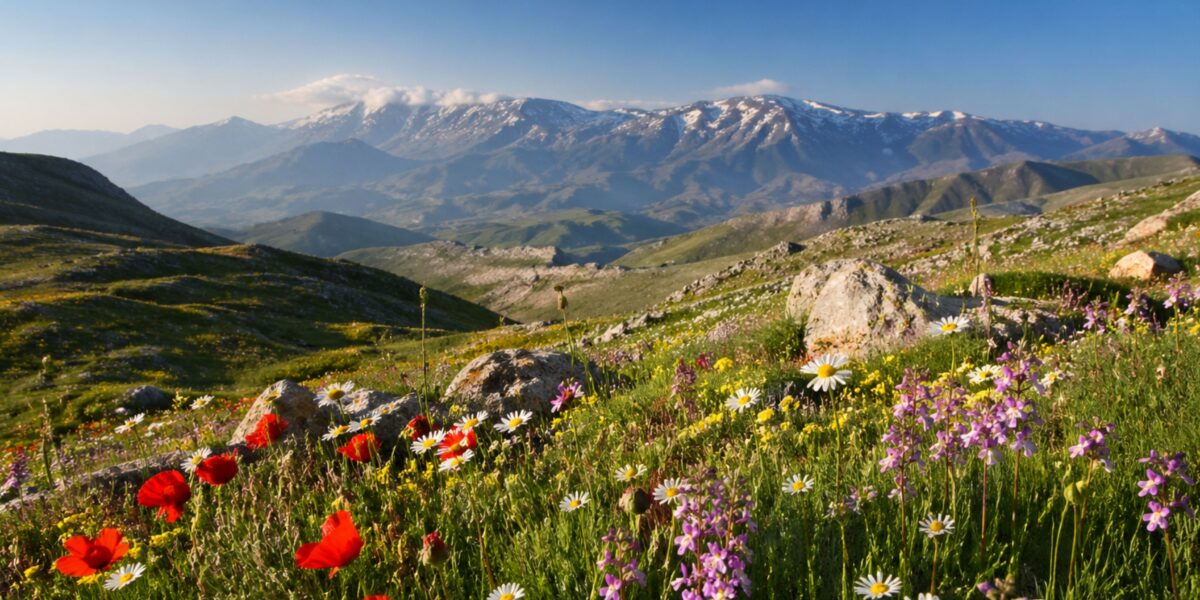
Crete in spring is a different island from the one most travelers picture.
The beaches are quieter. The light is softer. The hillsides are covered in wildflowers that will be gone by June. If you have been wondering whether April is a good time to go to Crete, the short answer is yes, and for many travelers, it is the best answer of all.
Between March and May, the island shifts into a pace that feels closer to what it actually is: a place with deep roots, long memory, and a landscape that has been sacred to its people for thousands of years. Spring is when you see that version of Crete most clearly.
Spring in Crete (March through May) offers mild temperatures between 59°F and 77°F (15°C and 25°C), a landscape covered in wildflowers including endemic orchids and Cretan tulips, and far fewer visitors than the summer months. Orthodox Easter, which in 2026 falls on April 12, brings some of the island’s most meaningful cultural celebrations to villages across Crete. The spring season is widely considered the best time for hiking, visiting archaeological sites, and experiencing authentic local life on the island.
What Spring in Crete Actually Feels Like
There is no single dramatic moment when Crete turns from winter to spring. It is gradual. By early March, the almond trees are already flowering in the foothills. The countryside goes from the muted tones of late winter to a green that feels almost excessive, almost too much for an island that will be dry and golden by August.
The mornings are cool, sometimes brisk in the mountains, but the afternoons settle into a warmth that makes outdoor movement feel easy rather than urgent. Tavernas begin setting tables outside again. Archaeological sites breathe without the press of summer tour groups. Locals are present and unhurried in a way that changes the quality of every interaction.
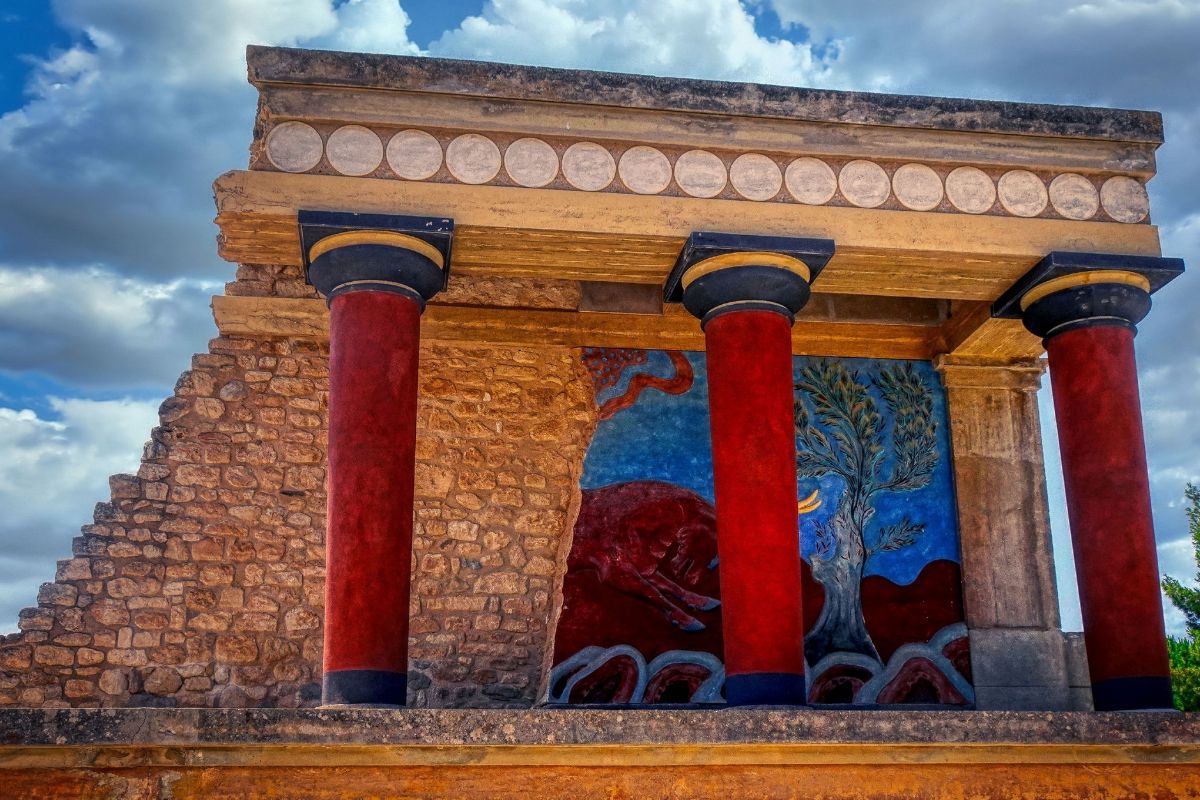
This is the season when Crete offers something that pure sun-and-beach tourism rarely does: space to actually pay attention. Space to sit at the ruins of Knossos and hear something beyond the sound of your own footsteps.
Crete Weather in Spring: What to Expect Month by Month
March in Crete
March is technically still winter by Cretan standards, though the difference from February is clear. Daytime temperatures average around 61°F to 64°F (16°C to 18°C), with cooler evenings that require a jacket. Rain is still possible, particularly earlier in the month. The landscape is at its greenest, and wildflowers begin appearing in the lowlands. Some tourist businesses are still closed, but the main cities (Heraklion, Chania, Rethymno) function fully. This is the month for travelers who want Crete almost entirely to themselves.
April in Crete
April is the peak of the spring season. Temperatures climb into the low to mid-70s°F (around 22°C to 24°C) on warmer days, with evenings staying pleasant. Rainfall drops significantly, averaging about 21mm over roughly six days in the month. The wildflower display reaches its height in April, and Orthodox Easter (April 12 in 2026) brings the island’s most important cultural celebration to every village and town.
The sea in April sits at around 63°F to 66°F (17°C to 19°C). That is cool by summer standards but manageable for a dip on a warm afternoon, particularly in sheltered southern-coast bays that warm faster than the north. Most tourist infrastructure is open or opening. This is the month that offers the best combination of good weather, open sites, wildflowers, and cultural depth.
May in Crete
May moves the island closer to early summer. Temperatures regularly reach 77°F (25°C) or above, the sea warms toward swimming comfort at around 68°F (20°C), and the famous Samaria Gorge opens for the season, typically on May 1. Wildflowers are fading in the lowlands but persist at higher elevations. Crowds begin building but have not yet reached summer density. May is the warm shoulder month: excellent for hiking, coastal exploration, and anyone who wants swimming weather without peak-season prices or congestion.
The Wildflowers of Crete: A Living Landscape
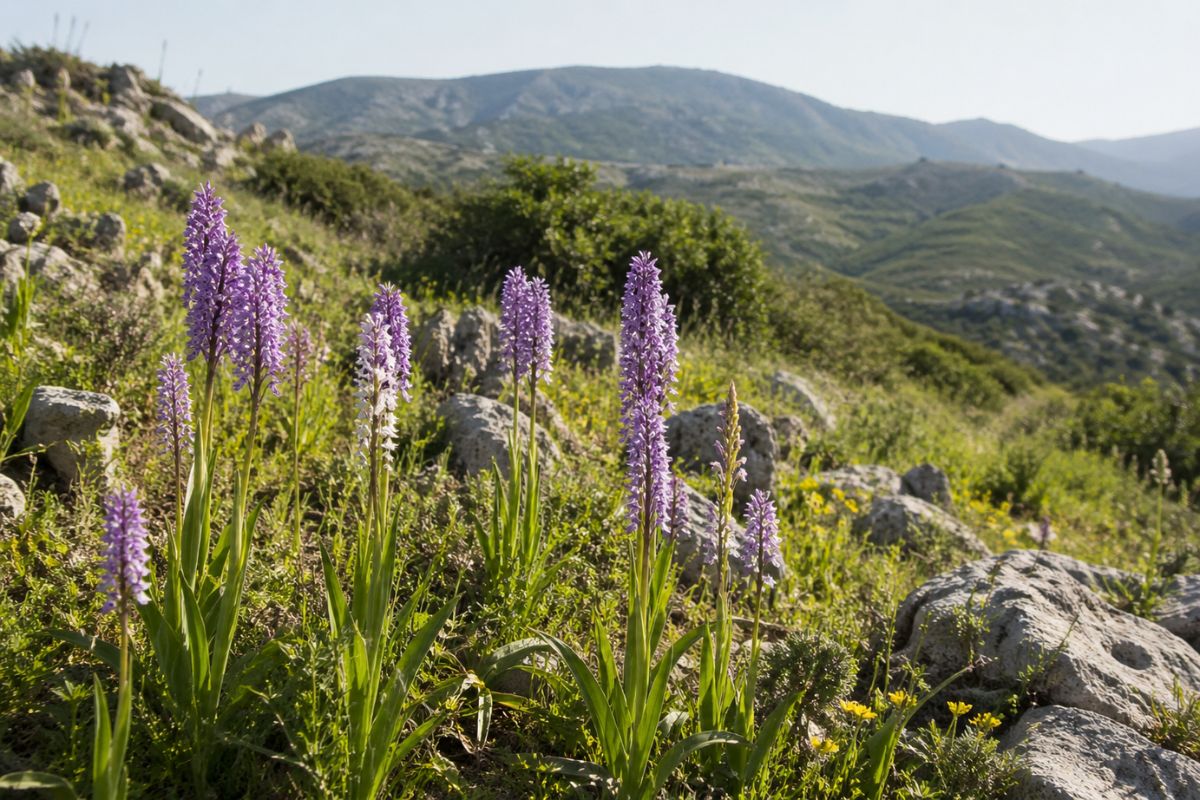
Crete’s plant life is extraordinary by any measure. The island’s geographic isolation, varied terrain, and Mediterranean climate have produced around 2,000 plant species, approximately 200 of which are native only to Crete. Spring is when this flora makes itself most visible.
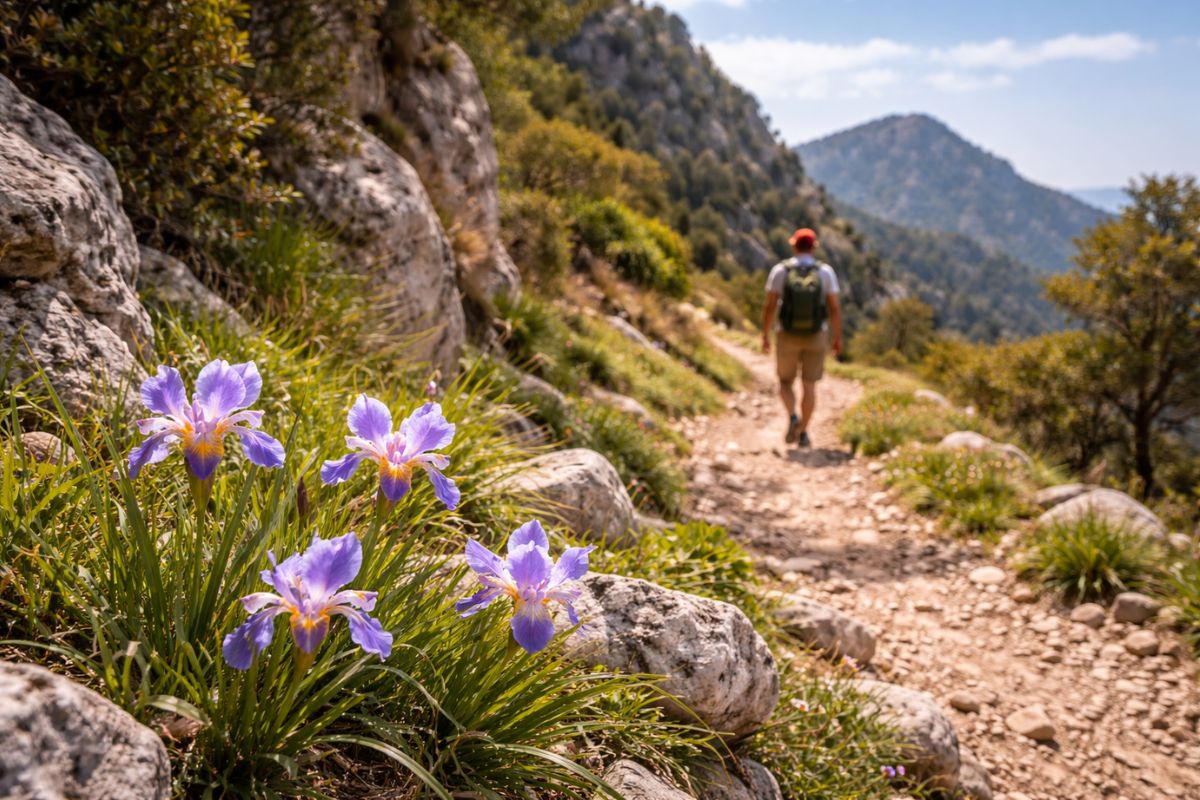
In April, the hillsides fill with wild orchids (more than 30 native varieties), Cretan tulips, crown daisies, purple anemones, and yellow poppies. The mountain gorges carry the scent of sage, thyme, rosemary, and oregano. The Amari Valley in the southwest of the island is particularly striking during wildflower season, its fields and olive groves forming a landscape that looks painted rather than real.
This botanical abundance has always carried meaning on Crete. The island’s ancient Minoan culture placed flowers and plants at the center of its sacred imagery. Lilies, crocuses, and papyrus appear repeatedly in Minoan frescoes and ritual objects, suggesting that the spring flowering of the land was understood as something more than seasonal. It was a return. A renewal.
For travelers interested in the island’s deeper layers, spring is when that ancient relationship between the land and human ritual is most tangible.
Orthodox Easter in Crete: The Heart of the Spring Season
In 2026, Orthodox Easter falls on April 12, and in Crete it is the most significant event of the cultural calendar. For Greeks, Easter is larger than Christmas, and on an island where identity and tradition run this deep, that is saying something real.
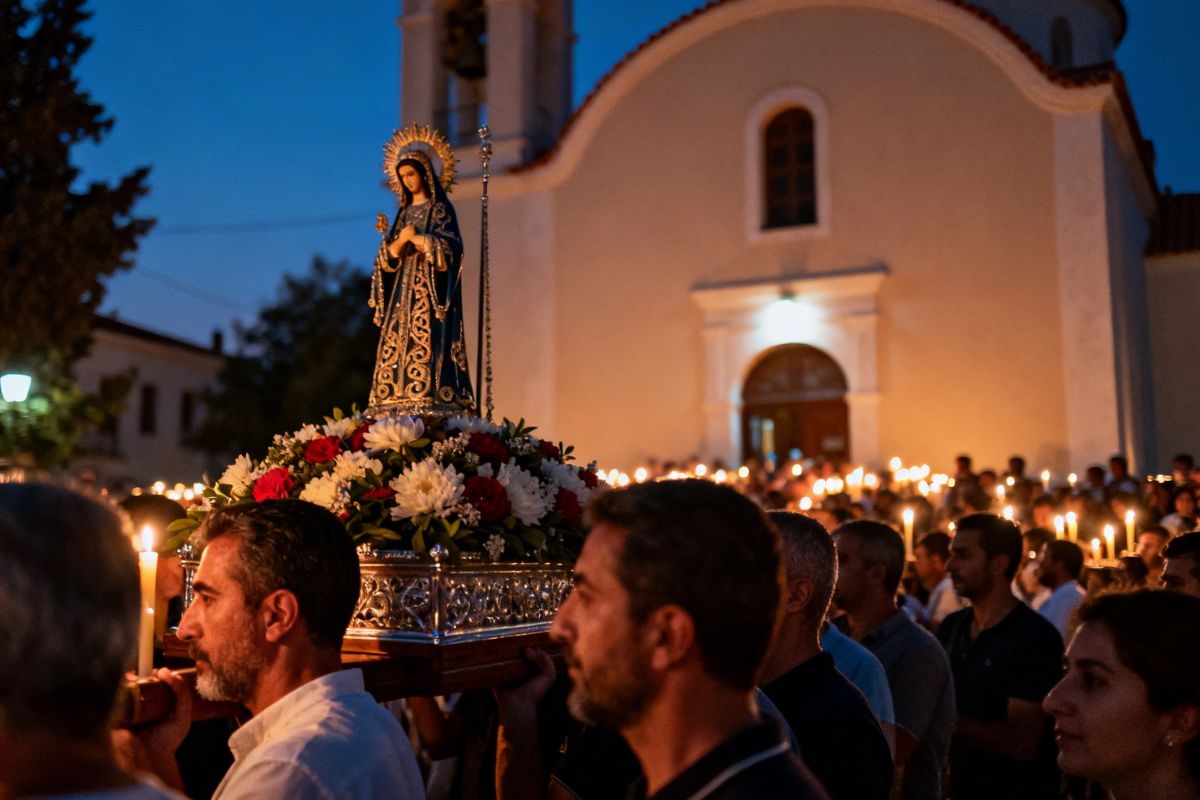
Holy Week (the week before Easter Sunday) is when the island’s spiritual life becomes visible to anyone who is paying attention. Good Friday brings the Epitaphios procession through the streets of every town and village: a flower-covered bier carried by candlelight, accompanied by Byzantine chant and the smell of incense. It is a genuinely moving event, and in smaller Cretan villages it feels intimate in a way that larger city celebrations cannot replicate.
The midnight Anastasi service on Holy Saturday is the emotional center of Easter in Crete. When the priest announces Christos Anesti (Christ is Risen) and the lights return, fireworks explode over every village square simultaneously. Families gather for the traditional lamb feast that follows, along with traditional Cretan foods like kalitsounia (cheese and herb pastries) and magiritsa (Easter soup). You will likely be invited to join.
Travelers visiting Crete for Orthodox Easter in Crete should plan accommodations well in advance. The island fills up, particularly in smaller villages where the celebrations are most authentic. Booking by January or February for an April Easter visit is strongly advisable.
What to Do in Crete in Spring: Experiences Worth Planning Around
Explore Ancient Sites Without the Crowds
Spring is the best season to visit Crete’s archaeological sites. The Palace of Knossos, Europe’s oldest urban center and the heart of Minoan civilization, is a different place in April than in August. The site is manageable. The light is good for long, unhurried observation. The heat is not yet a factor.
The same applies to the lesser-visited Minoan sites across the island: the palace of Phaistos in the south, the Minoan town of Gournia in the east, and the ancient harbor of Kommos. These are places that reward attention, and spring gives you the conditions to actually pay it.
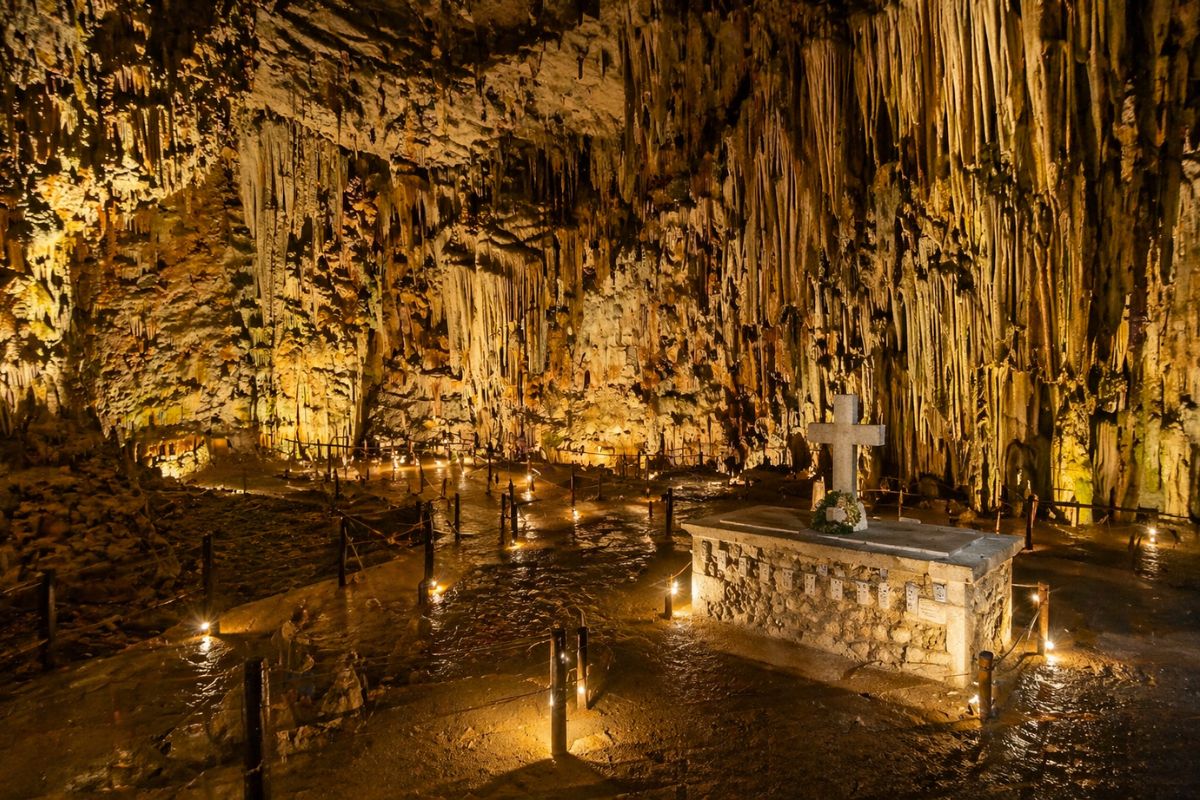
For those drawn to Crete’s sacred feminine history, the sacred cave sites of Minoan Crete are particularly resonant in spring. Caves like the Diktaean Cave on the Lasithi Plateau and the Idaean Cave on Mount Ida were important Minoan worship sites, connected to goddess veneration and the chthonic feminine divine. Spring, as the season of return and renewal, was likely central to the ritual calendar observed at these places. You can read more about the Minoan sacred calendar and what it reveals about how the ancient Cretans understood the turning of the year.
Spring Hiking in Crete: Gorges, Mountains, and Coastal Trails
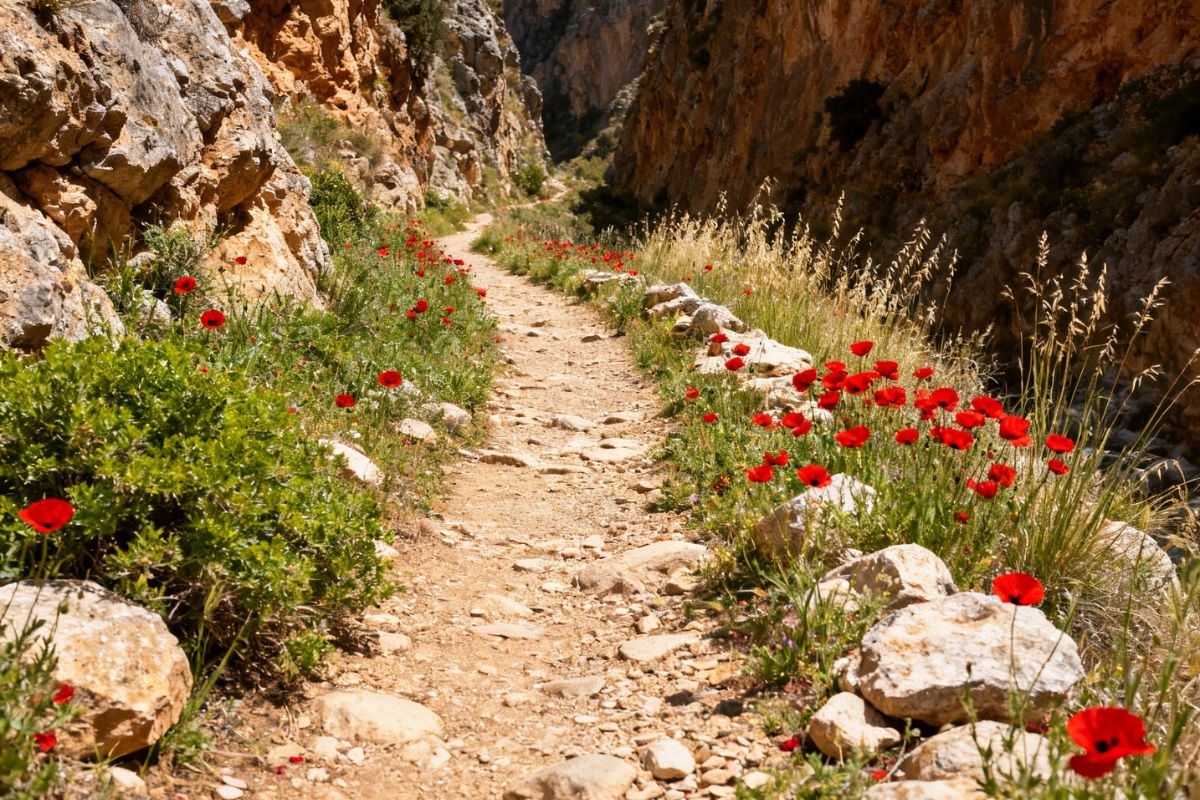
Spring is the optimal hiking season on Crete. Temperatures are comfortable for sustained walking, the terrain is green, and the trails are far less crowded than in summer. For a detailed guide to the best routes, see the full spring hiking in Crete guide.
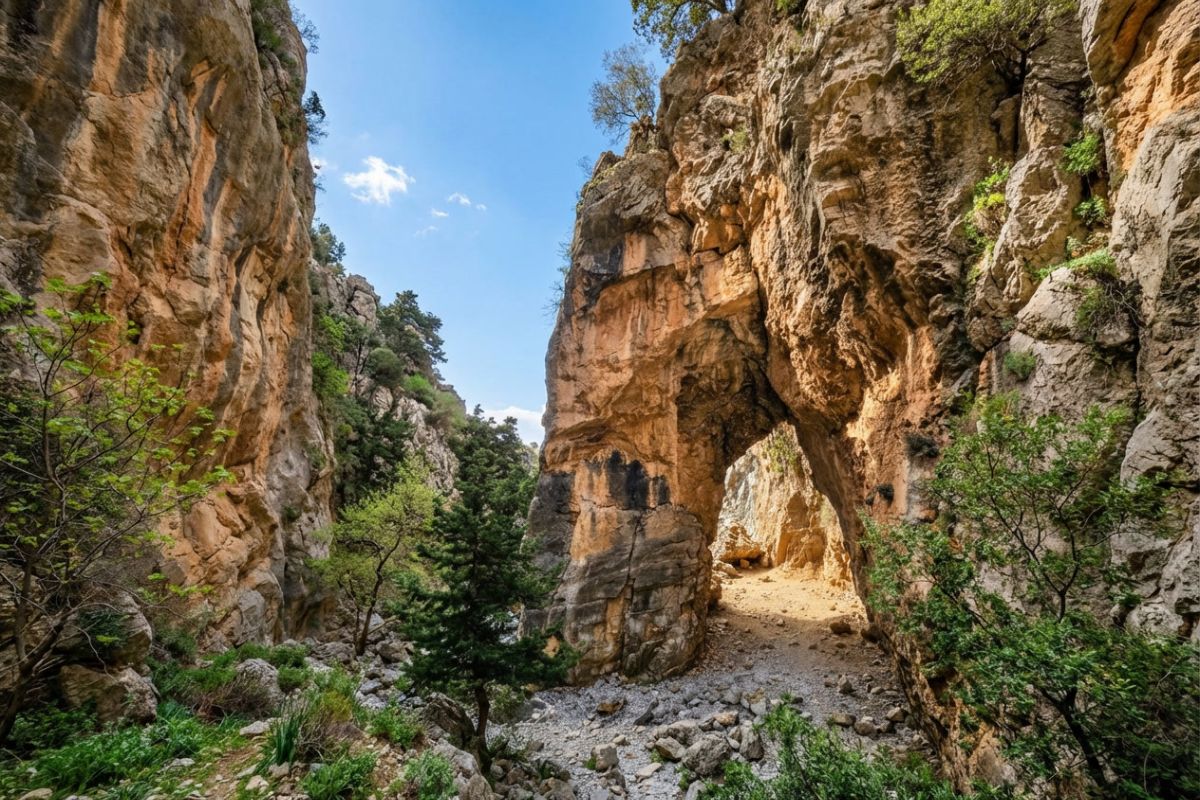
A few key points for planning: Imbros Gorge, in the southwest near Sfakia, is open year-round and offers one of the most accessible gorge walks on the island, with dramatic limestone walls and a trail that suits a wide range of fitness levels. Samaria Gorge, Europe’s longest canyon at 10 miles (16 km), opens on May 1 and is the classic Cretan hike, descending through the White Mountains to the Libyan Sea. The Amari Valley and the Lasithi Plateau offer gentler, inland alternatives with excellent wildflower viewing and traditional village stops along the way.
Sacred Places and the Feminine Landscape of Spring
Crete has always been a place where the sacred and the geographical are inseparable. The ancient Minoans built peak sanctuaries on mountaintops, used caves as goddess worship sites, and oriented their palaces to the surrounding landscape. Spring, the season of the earth’s renewal, was embedded in that sacred understanding.
The Minoan goddess culture expressed a worldview in which the feminine divine was not separate from nature but continuous with it. Walking the island in spring, when the land is at its most alive, makes that worldview feel less like history and more like a perspective that the landscape itself still holds.
This is the thread that connects Crete’s ancient past to its present: a sense that the island is not just a destination but a place that has been considered sacred for a very long time, and that spring is the season when that quality is most available to whoever is paying attention.
Traditional Villages and Cretan Food in Spring
Spring is a good season to visit the mountain villages of the interior. Places like Anogia in the White Mountains foothills and the villages of the Amari Valley operate at their own rhythm, largely unchanged by tourist seasons. In spring, local produce includes fresh artichokes, wild greens (horta), and the first honey of the year. The wild herbs of Crete are at peak freshness: sage, thyme, dittany (dictamo), and oregano grow across the hillsides in quantities that make the air fragrant after rain.
Easter itself brings a specific food culture worth experiencing. Kalitsounia, small pastries filled with fresh Cretan cheese and herbs, are made in almost every household during Holy Week. The lamb roasted on Easter Sunday is a ritual as much as a meal. Sharing this kind of food with the people who made it is one of those experiences that makes Crete different from a place you visit and closer to a place you understand.
What Is Open in Crete in Spring?
By April, the island is largely operational. The main cities (Heraklion, Chania, Rethymno) are fully functioning year-round. Most museums, archaeological sites, and churches are open with standard hours. Many restaurants, hotels, and tour operators reopen in late March or early April, with full operation by mid-April in most tourist areas.
Some considerations: smaller beach resort areas and remote village accommodations may have limited availability in March, opening more fully in April and May. A few beach facilities (sunbed rental, beach bars) do not set up until closer to May. Samaria Gorge opens May 1. Imbros Gorge is available throughout the spring.
If you are planning around things to do in Crete specifically during Easter week, note that some shops and services close on Good Friday and Easter Sunday, following the religious calendar. Most restaurants, however, stay open or even extend their hours for the celebrations.
Practical Tips for Visiting Crete in Spring
- Book accommodation early for Easter week. The island fills up significantly in April 2026 around April 12.
- A rental car is recommended, especially if you want to reach mountain villages, gorge trailheads, or lesser-visited archaeological sites. Public transport connects the main cities but does not reach most rural areas.
- Pack in layers. Morning temperatures in March and April can be cool, particularly in the mountains or near the sea in the evenings. Afternoons are warm enough for light clothing.
- Sunscreen matters from April onward. The UV index increases noticeably, even when the air temperature feels mild.
- Sea temperatures in April are around 63°F to 66°F (17°C to 19°C). The south coast (facing the Libyan Sea) warms faster and is better for early-season swimming.
- Wildflower season peaks in mid-April in the lowlands and continues into May at higher elevations. The Amari Valley, the Lasithi Plateau, and the Omalos Plateau are outstanding for wildflower viewing.
- If you are attending Easter services, dress modestly for church. The celebrations themselves are open and welcoming to visitors.
Conclusion: Spring Is Crete Without the Filter
Crete in spring is not Crete at its most convenient. Not every taverna is open on every corner. The sea requires some bravery before May. The weather can still surprise you with a late-afternoon shower.
But it is Crete at its most honest. The wildflowers are real. The Easter celebrations are not staged for visitors. The archaeological sites are quiet enough to actually consider what you are looking at. The people have time for a proper conversation.
If you have been wondering whether spring is the right season for a first or a return visit, the answer is that spring in Crete offers a version of the island that summer, with all its undeniable appeal, simply cannot. It is slower, greener, and considerably more itself.
Whether you are drawn by the wildflowers, the Easter rituals, the hiking trails, or the ancient sacred landscape of the Minoan world, April gives you access to all of it, without a crowd in the way.
Frequently Asked Questions About Crete in Spring
Is spring a good time to visit Crete?
Yes. Spring, particularly April and May, is considered one of the best times to visit Crete. Temperatures are mild (59°F to 77°F / 15°C to 25°C), wildflowers cover the landscape, archaeological sites are uncrowded, and prices are lower than in peak summer. Orthodox Easter (April 12 in 2026) adds a significant cultural dimension to a spring visit.
What is the weather like in Crete in April?
April in Crete brings daytime temperatures averaging around 68°F to 72°F (20°C to 22°C), with cooler evenings. Rainfall is low, averaging around 21mm over approximately six days in the month. The island has plenty of sunshine and conditions are ideal for outdoor activities, hiking, and sightseeing.
Can you swim in Crete in April?
The sea in Crete in April sits at around 63°F to 66°F (17°C to 19°C). This is cool for sustained swimming but manageable for a short dip, especially in sheltered south-coast bays that warm faster. Most visitors wait until May or June for comfortable swimming. That said, some travelers, particularly those from colder climates, swim happily in April conditions.
When does the Samaria Gorge open for spring?
Samaria Gorge typically opens on May 1 each year. It remains open through mid-October, weather permitting. Imbros Gorge, another excellent gorge walk in southern Crete, is open year-round, including throughout the spring season.
What are the wildflowers of Crete in spring?
Crete has around 2,000 plant species, roughly 200 of which are found only on the island. Spring wildflowers include more than 30 varieties of wild orchid, Cretan tulips, crown daisies, purple anemones, yellow poppies, and wild iris. The Amari Valley, the Lasithi Plateau, and the gorge trails of the White Mountains are among the best places to see them. Peak bloom in the lowlands is mid-April; higher elevations stay in flower into May.
What happens during Orthodox Easter in Crete?
Orthodox Easter in Crete involves Holy Week processions (particularly the solemn Epitaphios procession on Good Friday), the midnight Anastasi service on Holy Saturday (marked by fireworks and candlelight), and Easter Sunday family feasts centered on roast lamb and traditional foods like kalitsounia and tsoureki. In 2026, Orthodox Easter falls on April 12. Celebrations are particularly atmospheric in smaller Cretan villages.
Is Crete crowded in spring?
No. Spring is a shoulder season on Crete. Visitor numbers are well below summer levels, meaning archaeological sites, hiking trails, restaurants, and beaches are all significantly more accessible. The main cities function normally, and the island’s services are largely available, without the congestion of July and August. Easter week is the one period when some areas, particularly popular villages, see a temporary increase in visitors.
Is April or May better for visiting Crete?
Both are excellent, with different strengths. April offers the peak wildflower display, Orthodox Easter celebrations, and the quietest conditions before the season builds. May offers warmer sea temperatures, the opening of Samaria Gorge, and slightly more reliable heat for those who want beach days alongside cultural activities. If wildflowers and Easter are priorities, April is the better choice. If hiking Samaria and swimming are the focus, May works better.
Crete in spring is incredible! So much to see and do, it can be a bit much to plan. No worries, we can help! Reach out for personalized trip planning or browse this blog for more inspiration. Trust us, spring in Crete is an experience you won’t forget!