
August Full Moon in Crete 2026: What to Know Before You Go
The August full moon in Crete is one of the only nights each year when some of the island’s ancient ruins stay open after dark, lit mostly by moonlight, with no admission fee.
It is part of a national full moon night program covering archaeological sites across Greece, run by the Greek Ministry of Culture, and in 2026 the main night falls on Friday, August 28. Sites and museums across the island open after sunset, several add live music or guided tours, and for a few hours the usual routine of tickets and opening hours disappears. This guide covers the confirmed 2026 details, which Cretan sites tend to take part, and what the evening is actually like once you are standing among the ruins.
Quick answer: The August full moon in Crete 2026 takes place on Friday, August 28, as part of the Greek Ministry of Culture’s countrywide Avgoustiatiki Panselinos program. Archaeological sites and museums across Greece, including a number in Crete, open with free admission from roughly 7:30 or 8:00 p.m. until 11:00 p.m. or midnight, and some locations add concerts, dance or theater. The wider program runs from August 26 to 30, 2026, with most organized events concentrated on the night of the full moon itself.
What is the August full moon night in Greece? The Ministry of Culture organizes the annual event known in Greek as Avgoustiatiko or Avgoustiatiki Panselinos. This celebration highlights the August full moon, widely recognized as the year’s brightest lunar display. Each August, roughly 126 archaeological sites, monuments, and museums across Greece open their doors after sunset. Visitors receive completely free entry, transforming this evening into one of the country’s most anticipated cultural events. About 61 of these locations host organized programs, including live concerts, theatrical performances, and guided tours. The remaining participating sites simply extend their operating hours into the night at no cost. This tradition offers travelers a unique opportunity to explore ancient ruins well away from the intense midsummer heat and thick daytime crowds. Ultimately, guests experience these iconic historical settings bathed in natural moonlight rather than the harsh midday sun.
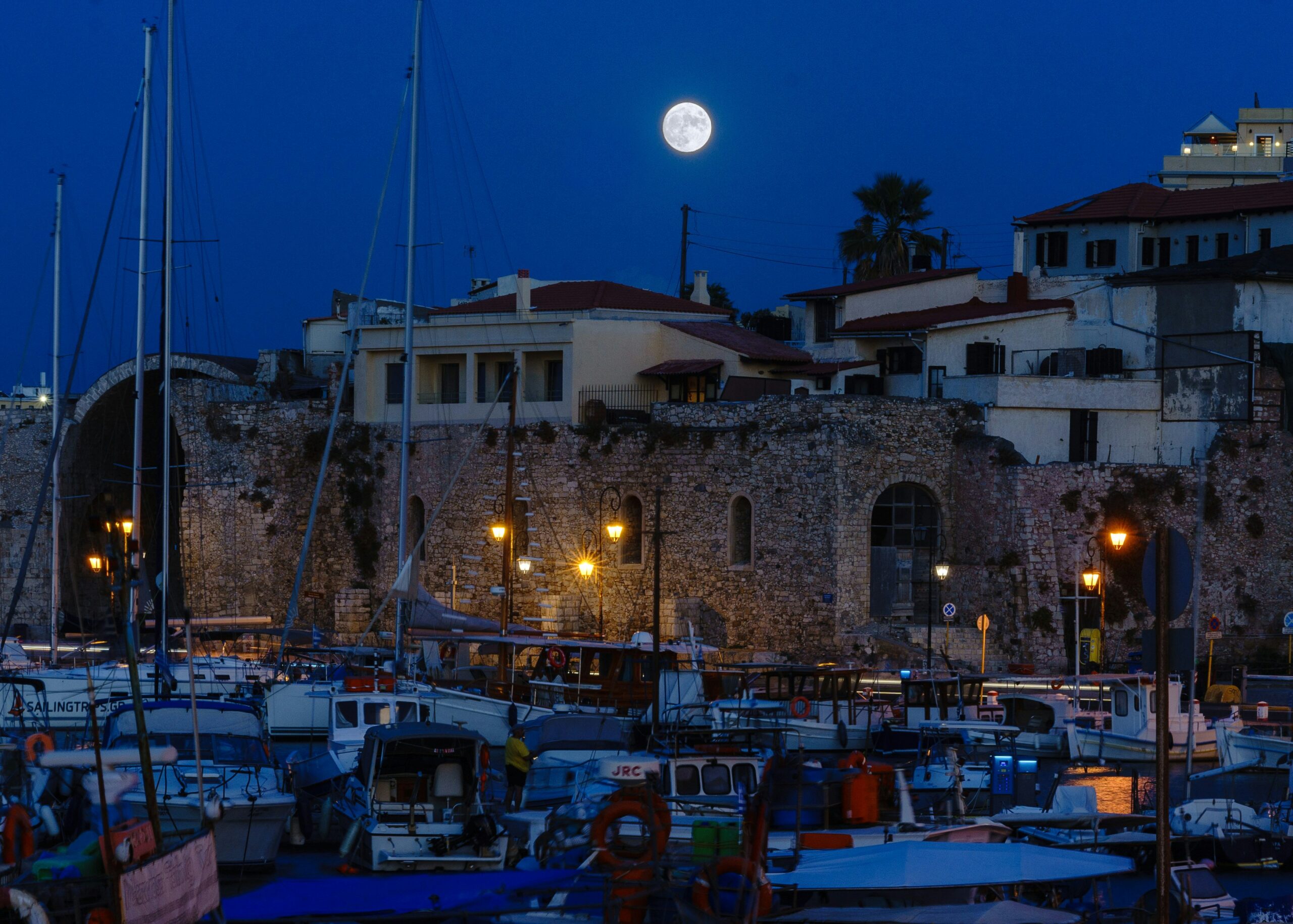
Photo by Eugene Chystiakov on Unsplash
What Avgoustiatiko in Crete Means, and Why the Island Takes Part
The Greek term Avgoustiatiko, or Avgoustiatiki Panselinos, describes the August full moon. Long before archaeological sites joined the picture, this unique lunar phase held immense weight in traditional Greek culture. Ancient farming and fishing communities routinely timed their hard work around its bright glow. Ultimately, this deep folk association with the „brightest moon of the year“ inspired the Ministry of Culture to build its free-entry program around a changing lunar date rather than a fixed calendar day.
Crete takes part because of the sheer density of Minoan and later Greco-Roman remains on the island. Few regions in Greece have this concentration of palaces, cemeteries and sanctuaries within a short drive of each other, which makes it possible to build a full evening program out of Cretan sites alone. For anyone who has already read about the Archaeological Sites in Crete on Elissos, this event is essentially a chance to see a handful of those same places after dark.
When Is the August Full Moon in Crete in 2026
The 2026 full moon reaches its peak at 04:18 UTC on Friday, August 28, which is 7:18 a.m. in Crete. The moon looks essentially full for a night on either side of its peak. Because of this, the Ministry of Culture schedules its primary celebration for Friday, August 28, 2026. Organizers also host an extended program of additional events from August 26 through August 30. Most Cretan sites stage their concerts and performances on the 28th itself. However, a few locations hold events on the surrounding nights, making it wise to check your specific destination before setting out.
Opening hours naturally vary depending on the location. Nevertheless, most participating sites offer free entry from around 7:30 or 8:00 p.m. until midnight.
Full Moon Events in Crete: Which Archaeological Sites Take Part
Knossos and the Heraklion Archaeological Museum
Searches for “Knossos full moon night” are common every August, and for good reason. As the most visited archaeological site in Greece, Knossos consistently features in full moon programs. The Heraklion Archaeological Museum also opens its garden for full moon concerts, having hosted a special tribute performance in 2025. Consequently, travelers can consider both locations reasonable candidates for the 2026 program. However, the Ministry of Culture usually confirms the exact list of participating Cretan sites only two or three weeks before the event. Officials publish these announcements directly through their official website and downloadable program. If you plan a moonlit visit to Knossos itself, monitor culture.gov.gr closely as August 28 approaches. You should never assume the ministry automatically includes any specific site in the lineup.
Gortyna and Malia: Confirmed for 2026
Officials confirmed Gortyna and the Minoan palace complex at Malia for the 2026 evening programs. Both ancient locations will feature live music performances under the night sky. Gortyna famously houses the Gortyn Code, one of the oldest surviving bodies of Greek stone-carved law. This historic setting naturally draws a steadier, less rushed crowd than the island’s larger, busier palaces. Malia’s program has in the past included full choir performances in the open air of the palace grounds.
Beyond Heraklion: Rethymno, Chania and Lasithi
In recent years, the program expanded to smaller sites across the entire island. These locations include Ancient Zominthos and Melidoni Cave in Rethymno, Rokka in Chania, and the Archaeological Museum of Agios Nikolaos in Lasithi. While these spots lack the big-name reputation of headline destinations, this dynamic works directly to your advantage. Choosing these quieter locations guarantees fewer crowds throughout the evening. Ultimately, you gain far more room to actually appreciate the historic surroundings in front of you.
Crete’s other major Minoan palaces, the Palace of Phaistos in the south and the more remote Kato Zakros Palace near the eastern coast, are not always part of the free moonlit program, since the Ministry rotates which locations host organized events from year to year. Both are worth a daytime visit on their own terms, full moon program or not, and Phaistos in particular offers wide views across the Messara plain that do not need an evening ticket at all.
What the Evening Actually Feels Like
The honest version: at the larger, more central sites like Knossos, expect real crowds. Free admission and rare after-dark access draw a vibrant mix of locals, families, and visitors. These enthusiastic crowds quickly fill nearby parking areas and transform quiet paths into bustling squares. However, the unique evening setting offers incredible rewards for attendees. Ancient stones reveal striking new textures under the moonlight, while live music drifts beautifully across 3,500-year-old courtyards.
At the smaller sites, the experience shifts completely. Gortyna’s olive grove and Roman ruins, or a village-adjacent site like Melidoni Cave, tend to stay walkable even at peak hours, and the atmosphere leans closer to a local community event than a tourist draw. Bring proper shoes regardless of which site you choose. Ancient paths were not built with nighttime foot traffic in mind, and lighting is typically limited to what the event itself provides.
Where to Go for a Calmer Version of the Night
If crowds are the main concern, a few strategies help. Plan your visit to Knossos or the Heraklion Archaeological Museum well before the official opening time instead of arriving during peak hours after sunset. Alternatively, choose one of the smaller confirmed sites like Gortyna, Rokka, or the Agios Nikolaos museum over the busiest headline locations. These quieter options offer a much more peaceful experience under the night sky. If you simply want to see a Minoan site by moonlight without the structure of an official program, several sites in Crete allow visitors to walk the grounds at dusk on regular evenings. Be sure to ask locally about these evening access hours during your stay.
The Moon in Minoan Crete
There is a layer to this night that goes beyond opening hours and free tickets. Archaeologists studying Minoan religious practice have uncovered clear evidence of a lunar-based calendar on Bronze Age Crete. They discovered that ancient builders designed specific structures to track the moon’s monthly cycle alongside the sun. Furthermore, these precise site orientations demonstrate how deeply the lunar rhythm influenced early Cretan culture. Minoan religious imagery, from double axes to the coiled forms of the famous snake goddess figurines found near Knossos, is closely tied to female deity figures whose worship shaped daily and seasonal life on the island long before the Greek pantheon took hold.
Standing at Knossos or Gortyna under a full moon feels noticeably different from a midday visit. A traveler experiences this stark contrast even without holding any deep belief in Minoan religion. For travelers seeking Crete’s quieter spiritual side, the August full moon creates an atmosphere unlike any other time of year. On this night, the ancient setting itself does the heavy lifting for you. It effortlessly connects visitors to the island’s timeless history and magic.
Practical Tips for Visiting the August Full Moon in Crete
- No tickets are required in advance. Entry is free and generally first come, first served, so arriving close to the opening time matters more at popular sites than at smaller ones.
- Wear closed shoes with real grip. Site paths are uneven stone and gravel, and evening lighting rarely covers every step.
- Bring a light layer. Even in late August, Crete’s evening breeze can be cooler than the daytime heat suggests, especially near the coast or at higher elevation sites.
- Check culture.gov.gr in the days before August 28 for the confirmed list of participating Crete locations, since it can change slightly from year to year.
- If photography matters to you, expect restrictions on flash and tripods at the busier sites, and plan for low light regardless.
- Parking at Knossos fills quickly on full moon night specifically, so a taxi or an early arrival by car is worth planning around.
Conclusion
The August full moon event in Crete 2026 operates as a loosely coordinated evening across dozens of sites, ranging from Knossos to Gortyna. Visitors experience this celebration as a widespread cultural initiative rather than a single ticketed event. Consequently, your choice of location determines your experience far more than the date itself. Travelers should plan their schedules around the main night of Friday, August 28, 2026. The broader program runs from August 26 to 30, offering free entry from early evening until midnight. Elissos hosts private, guide-led visits to Knossos and Crete’s other Minoan palaces year-round. These specialized tours offer visitors a deeper, more immersive experience beyond this single evening. These specialized tours offer immersive explorations of the island’s rich ancient history during any season. These curated tours explore the exact same history and mythology that give the full moon celebration its magic.
Photo by Leonhard Niederwimmer on Unsplash
FAQ Section
What is Avgoustiatiko in Crete?
The Greek term Avgoustiatiko, or Avgoustiatiki Panselinos, describes the August full moon. Greeks also use this name for the Ministry of Culture’s annual event. During this special evening, participating archaeological sites and museums across the country open their doors to the public for free after sunset. Visitors freely explore these historic venues under the moonlight. Several historic locations throughout Crete actively participate in these rare after-dark openings.
Is Knossos open for the August full moon night in 2026?
Knossos featured in past full moon programs and remains a reasonable candidate for 2026. However, the Ministry of Culture usually confirms the exact list of participating Cretan sites only a few weeks before the event. Check culture.gov.gr close to August 28, 2026 to confirm before planning a visit around it.
Do I need a ticket for the full moon night at archaeological sites in Crete?
Participating sites offer free entry during official full moon hours, so visitors do not need an advance ticket. However, popular locations like Knossos often reach capacity quickly. Staff strongly recommend an early arrival to secure your spot.
What time does free entry start for the August full moon in Crete?
Most participating sites offer free entry from around 7:30 or 8:00 p.m. until 11:00 p.m. or midnight. However, exact operating hours still vary depending on the specific location.
Which archaeological sites and museums in Crete usually take part?
Officials have confirmed Gortyna and Malia for the 2026 program. In recent years, prominent locations like Knossos and the Heraklion Archaeological Museum participated in the program. Other notable sites, including Rokka, Ancient Zominthos, Melidoni Cave, and the Agios Nikolaos museum, also took part. Organizers publish the official list closer to the event each year, ensuring key heritage locations regularly join the lineup.
When exactly is the August full moon in 2026?
The full moon reaches its peak at 04:18 UTC on Friday, August 28, 2026, which is 7:18 a.m. local time in Crete. The Ministry of Culture’s main event is scheduled for that evening, Friday, August 28.
Feature image by Patou Ricard from Pixabay