
Panigyria in Crete: Inside the September Village Festivals
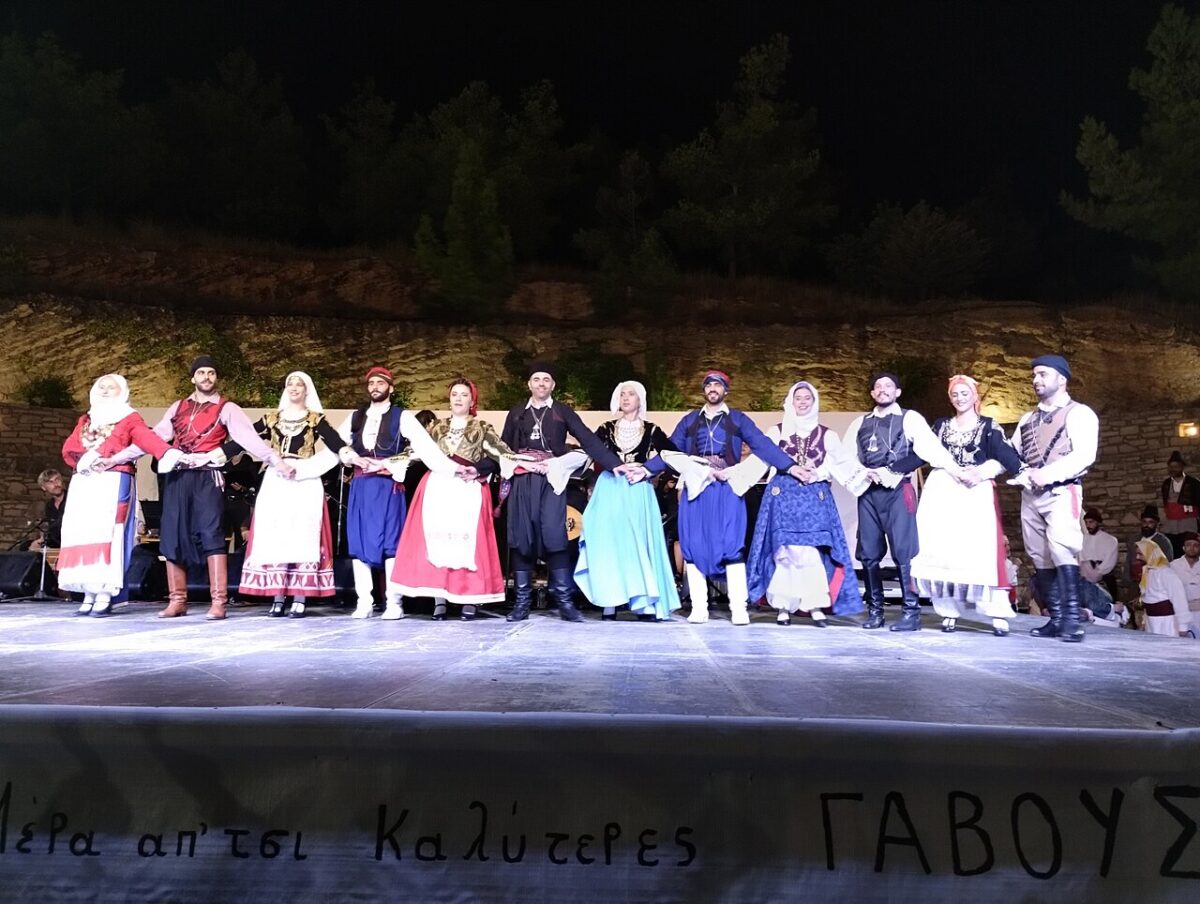
Panigyria in Crete are the open-air village celebrations that pair a church feast day with a communal meal, live Cretan music, and dancing that often runs past midnight.
September brings one of the busiest stretches on the island’s festival calendar, opening with the Nativity of the Virgin Mary on September 8 and continuing through the Elevation of the Holy Cross on September 14 and a long list of local patron saint days scattered across villages through the rest of the month. For anyone who wants to understand Crete beyond its coastline, a panigyri is one of the clearest windows into how the island actually lives with its traditions.
Quick answer: A panigyri is a saint’s day celebration held by a village or a single church, combining an evening or morning church service with an outdoor feast, live lyra and laouto music, and circle dancing that continues for hours. It is organized by the community itself rather than by a tour company, and in September it happens in villages all over Crete tied to specific feast days on the Orthodox calendar.
What Is a Panigyri, Exactly?
The word panigyri (πανηγύρι) comes from the ancient Greek term for a public gathering or assembly. In Crete, it still carries that original meaning: the whole community comes together rather than attending a private party or paid performance. Every Orthodox church celebrates a name day for the saint to whom it is dedicated. Communities mark that name day with a panigyri. Small chapels may gather only a handful of neighbors, while larger parish churches or well-known monasteries can attract several hundred people from nearby villages and towns.
From Church Bells to the Village Square
The sequence matters, because it explains why a panigyri feels different from a concert or a festival with a printed program. The religious part comes first and sets the tone for everything after it. A priest and the church committee organize the liturgy, and the same committee, often working with the village cultural association, arranges the food and the musicians. Any money collected at the door or over the tables usually goes back into maintaining the church rather than into a business’s revenue. By the time the lyra starts, the formal part of the evening has already happened, and what follows is simply a village enjoying itself.
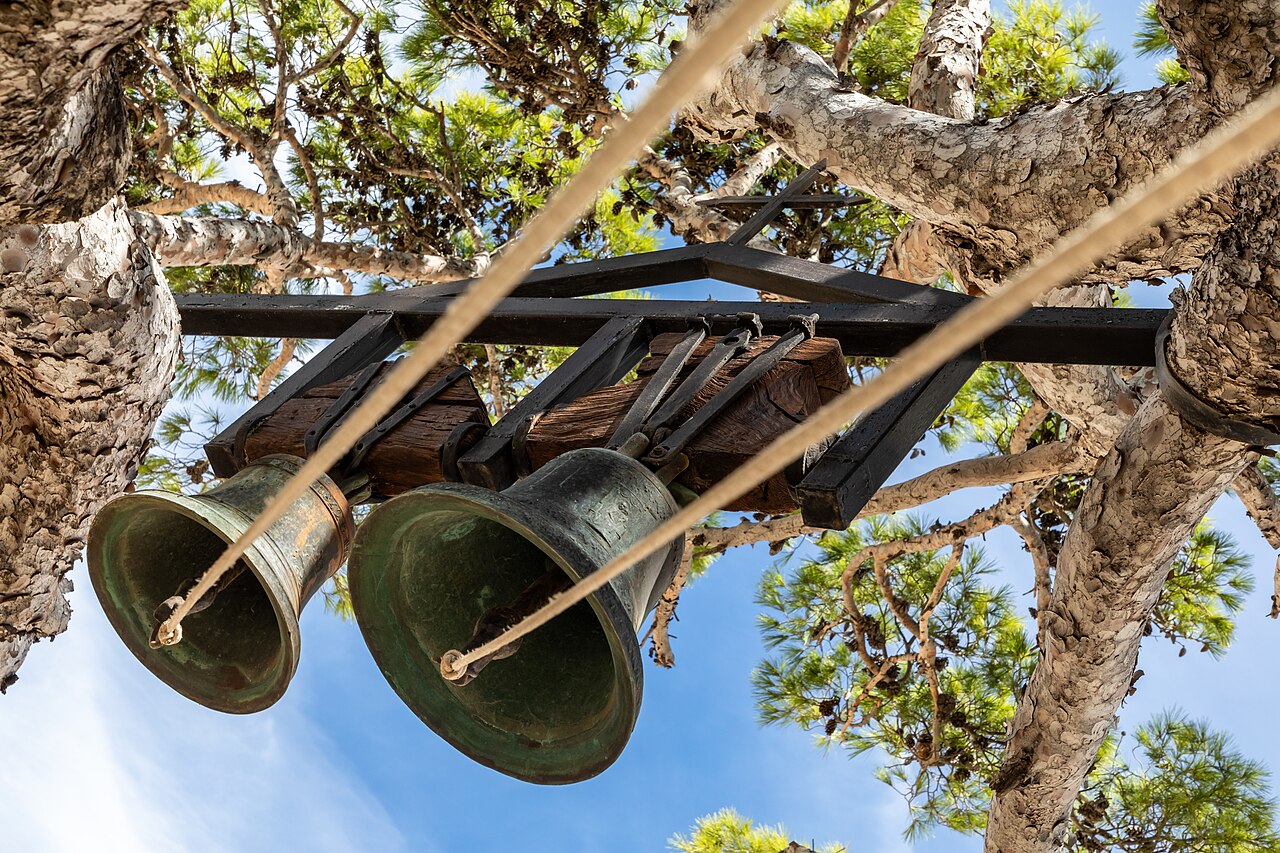
Photo by Dietmar Rabich, via Wikimedia Commons, licensed under CC BY-SA 4.0. No changes made.
Why September Is One of Crete’s Busiest Panigyri Months
August, with the Assumption of the Virgin Mary on August 15, is the single largest panigyri date on the island, and our guide to the Assumption of Mary in Crete covers that feast on its own. September does not have one equivalent peak day, but it more than makes up for that in volume: two major feast dates anchor the month, and dozens of village churches hold their own name day celebrations around them.
September 8: The Nativity of the Virgin Mary
The 8th of September marks the Nativity of the Virgin Mary, known in Greek as Genesis tis Theotokou. Older Cretans sometimes call it Mikri Panagia, the “Little Panagia,” to distinguish it from the Megali Panagia of August 15. Churches and chapels dedicated to the Panagia under this particular feast celebrate their panigyri on this date. Dedications to the Virgin Mary appear throughout Crete. As a result, travelers in almost any region of the island have a reasonable chance of finding a nearby celebration.
September 14: The Elevation of the Holy Cross
Six days later, on September 14, the Orthodox Church marks the Elevation of the Holy Cross, Ypsosi tou Timiou Stavrou. Villages across Crete have chapels named Timios Stavros. Communities often built them on hilltops or ridges overlooking the surrounding land because they traditionally raised crosses in visible, elevated places. These panigyria usually feel smaller and more local than the Marian feasts of August and early September. That makes them a genuinely low-key way to see a Cretan village mark its own calendar.
Local Patron Saints Throughout the Month
Beyond these two dates, September saints’ days fill much of Crete’s festival calendar, since every parish church, monastery chapel, and roadside shrine keeps to its own feast date regardless of the wider calendar. A village might celebrate its patron saint on a date that means little outside that community and everything within it. Our guide to Crete in September and Crete’s most traditional villages are both useful starting points for narrowing down where a particular trip might land near one of these celebrations.
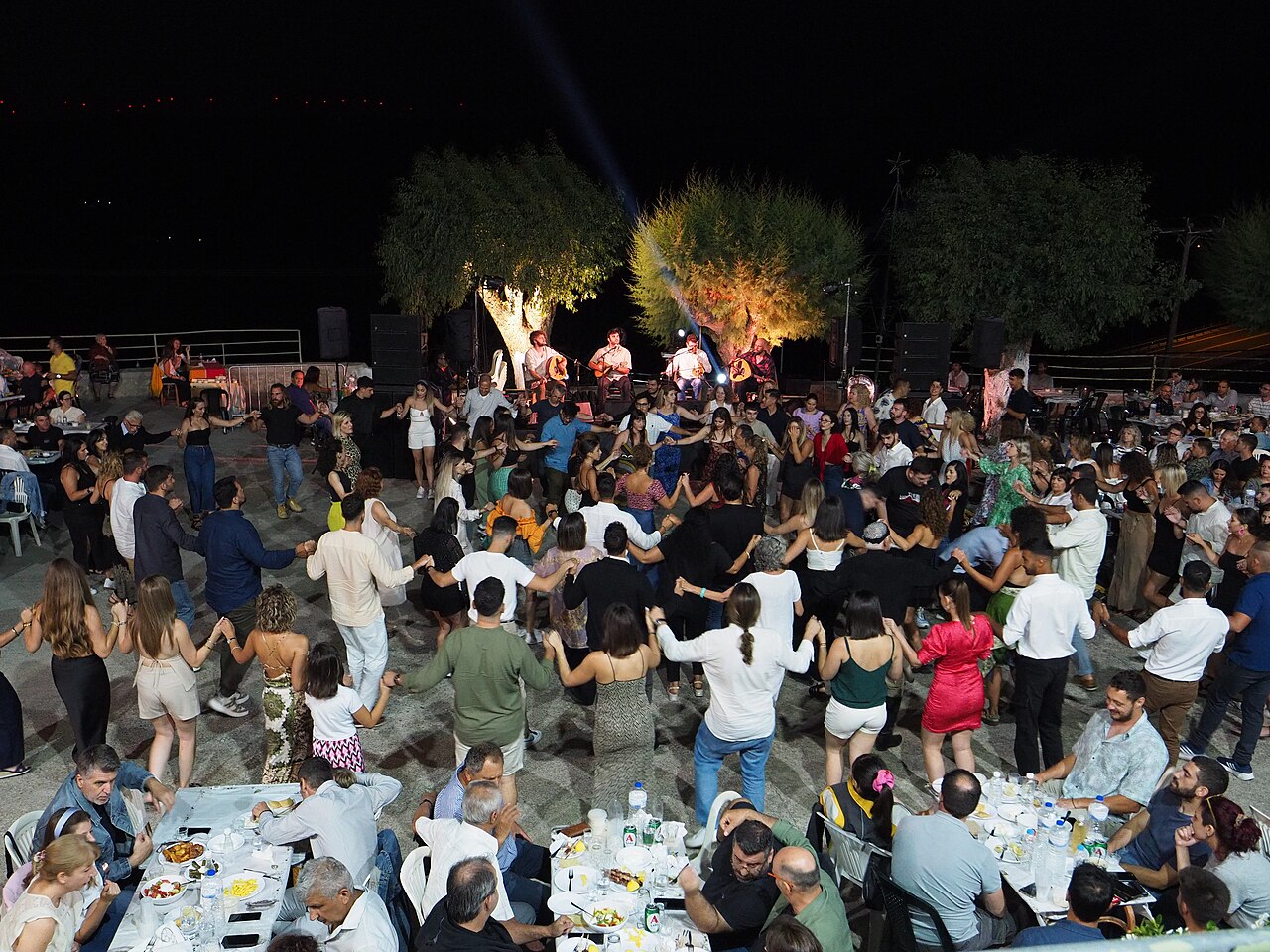
Photo by C messier, via Wikimedia Commons, licensed under CC BY-SA 4.0. No changes made.
What Actually Happens at a Panigyri
A typical evening unfolds in a predictable order, even though the details change from village to village. The church service, held either the evening before or the morning of the feast, draws the older generation and anyone attending for religious reasons. Once it ends, the courtyard or square fills in gradually. Tables get set with plates, bread, and pitchers of wine before the food itself arrives, usually carried out in large trays by whoever has been cooking since early that day.
Conversation builds steadily rather than all at once. Musicians set up to one side of the celebration. They sometimes use a small raised platform, but more often they play at floor level with the crowd around them. Once the meal gets underway, the music begins in earnest. The first dancers, often older men who know every step and teenagers who grew up watching them, form the opening circle. The night then moves in cycles. People dance to a few songs, pause to eat or refill their glasses, and then return for another set of dances. The musicians and the crowd repeat this pattern for as long as they have the energy.
The Food and Wine at a Cretan Panigyri
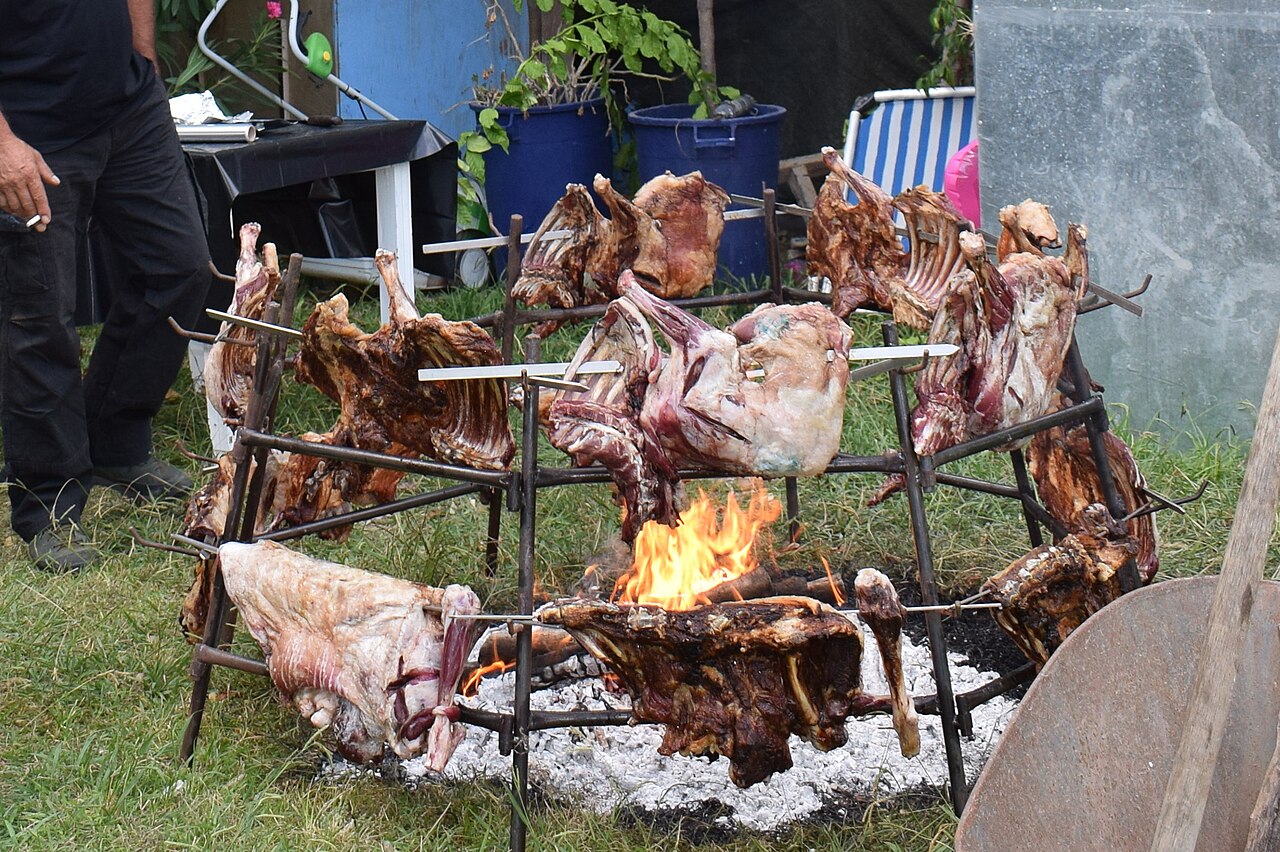
The food at a village celebration in Crete feeds a crowd rather than trying to impress a table for two. That purpose shapes almost everything about the meal. Cooks prepare antikristo by setting lamb or goat upright around an open fire and letting it cook slowly for hours. A single fire can cook enough meat for dozens of people, which makes antikristo especially well suited to larger festivals. Dakos, the barley rusk topped with tomato, soft mizithra cheese, and olive oil, appears constantly because it needs no cooking at all once the rusks are ready. Kalitsounia, small cheese or herb pastries, and platters of local greens and salad round out most tables.
Wine is poured freely, and tsikoudia, Crete’s grape spirit also known as raki, tends to appear once the meal is finishing, offered in small glasses that get refilled without much ceremony. Our guide to traditional Cretan food covers most of these dishes in more depth for anyone planning to eat their way across the island beyond festival season. A small entrance fee or a modest per-plate charge is common at larger panigyria, mainly to cover the cost of the food and musicians rather than to generate a profit, and plenty of smaller village celebrations remain free altogether.
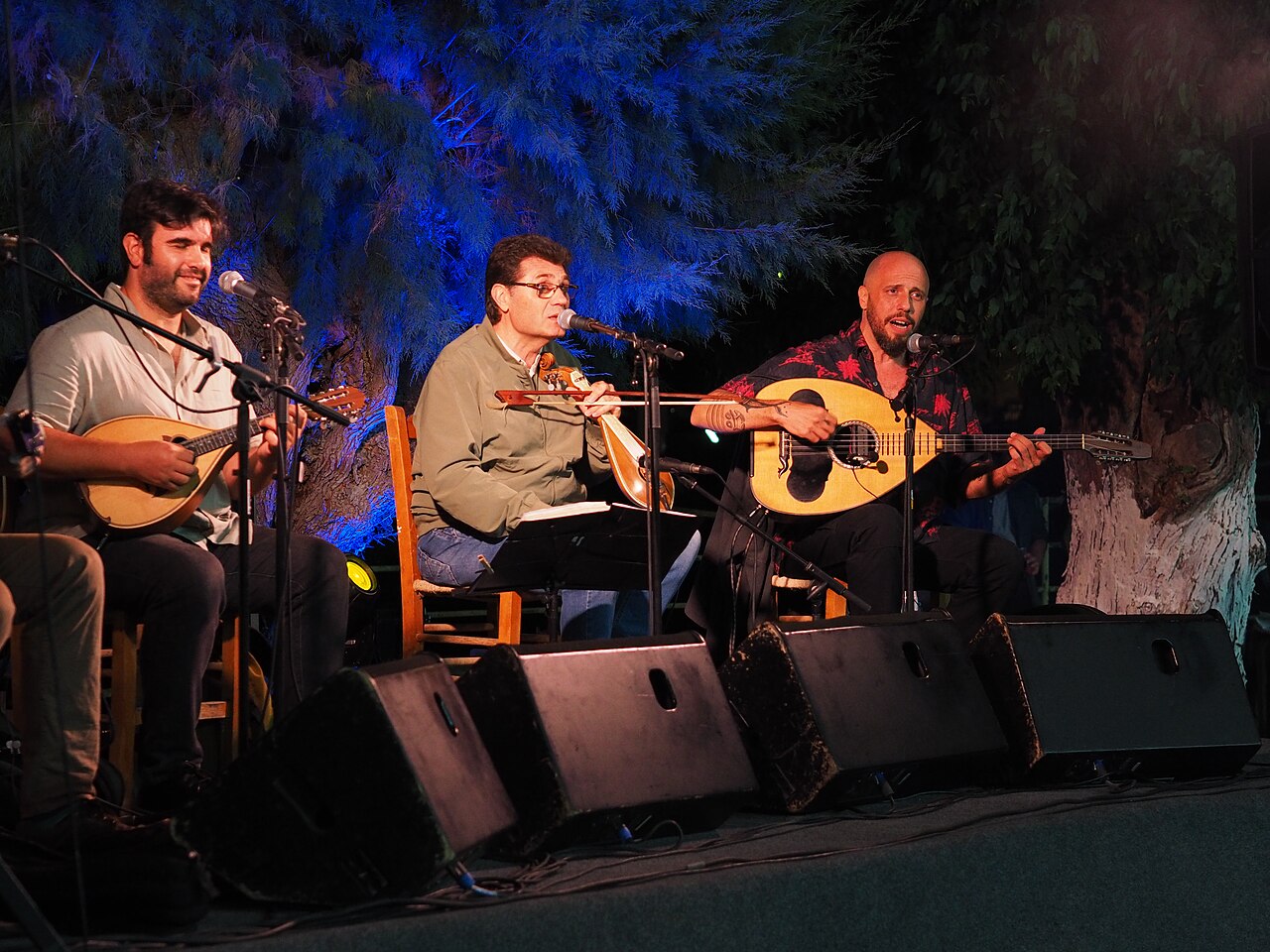
Photo by C messier, via Wikimedia Commons, licensed under CC BY-SA 4.0. No changes made.
Cretan Panigyri Music and Dance
Music sits at the center of every panigyri, and in Crete that almost always means the lyra, a small three-stringed bowed instrument held upright on the knee, backed by the laouto, a long-necked lute that carries the rhythm. A good lyra player can keep a crowd dancing for six or seven hours without repeating much material. The musician draws on mantinades, fifteen-syllable rhyming couplets. Performers often improvise them on the spot to comment on the evening, the village, or specific people in the crowd.
The dancing itself follows a handful of set patterns that most Cretans learn as children. Pentozali is the fast, sharp-footed line dance that many people associate with Cretan dancing. The dancer at the front leads the line and often adds high kicks and quick turns. Syrtos and its slower relatives move at an easier pace. These dances are also the most likely to welcome a newcomer into the circle. Our overview of a day in a traditional Cretan village and our guide to Greek instruments go further into how these traditions fit into daily Cretan life beyond festival nights specifically. Visitors are almost always welcome to join a dance circle, and the simplest way in is to stand near the end of the line during a slower dance; someone will usually reach out a hand rather than leave a newcomer standing alone.
How a Real Panigyri Differs From a Tourist Event
A village panigyri has no schedule beyond the feast date itself. The parish organizes it, not a business. Neighbors cook, serve, and dance instead of hired staff. The musicians keep playing for as long as the crowd wants, while the committee decides what food to prepare each year. The dancing takes place in the same space as the tables, so there is no stage in the theatrical sense. Anyone who attends is there because the village is celebrating something it actually marks every year, with or without visitors present.
How to Find and Attend a Panigyri in Crete
Respectful Etiquette for Travelers
A panigyri serves the local community first. A few respectful habits can help visitors feel welcome rather than like observers standing at the edge.
- Carry cash. Card machines are rare at village festivals, and small notes make it easier to pay for a plate, a drink, or a church donation without holding up the line.
- Dress modestly for the church portion. Covered shoulders and knees are appropriate if attending the liturgy or vespers itself; the dress code relaxes considerably once the meal and dancing begin.
- Accept what is offered. Food, wine, and raki are often shared generously with anyone at the table, including visitors, and turning down a plate or a glass can read as distant rather than polite.
- Ask before close-up photography. A wide shot of the square is one thing; a close portrait of a musician or an older dancer is another, and a quick nod or word of permission is appreciated.
- Join the dancing if invited. Nobody expects a visitor to know the steps. Standing near the end of a slower circle and following the person beside you is enough.
- Keep the volume down after the crowd thins. Panigyria run late in residential village centers, and neighbors who are not attending still have to sleep.
Conclusion
,_Asomatos,_Kloster_Preveli,_Glocken_--_2023_--_8468.jpg)
Frequently Asked Questions
What is a panigyri in Crete?
A village or parish celebrates a panigyri on a church’s feast day. The celebration combines a religious service with a communal meal, live Cretan music, and circle dancing that often continues past midnight. The local community organizes the event rather than a business. Communities hold panigyria throughout the year on specific saints’ days.
What happens at a Cretan panigyri?
A panigyri usually begins with a church service, either on the evening before the feast or on the morning of it. The community then gathers for a shared meal in the church courtyard or village square. Live lyra and laouto music and circle dancing follow the meal and can run for several hours, often past midnight.
Are panigyria in Crete free to attend?
Many village panigyria charge no admission. Larger celebrations sometimes charge a small entrance fee or a modest per-plate cost to cover the food and musicians. Any money collected typically goes toward the church or the community rather than a private business.
What should I wear to a panigyri in Crete?
Modest dress with covered shoulders and knees is appropriate for the church portion of the celebration. Once the meal and dancing begin, everyone keeps the atmosphere casual. Most panigyria take place outdoors on uneven ground, so comfortable shoes matter more than formal clothing.
How is a September panigyri different from one in summer?
September panigyria follow the same format as those earlier in the year. September is unusually busy with feast-day celebrations. The Nativity of the Virgin Mary falls on September 8, and the Elevation of the Holy Cross follows on September 14. Numerous villages and chapels also celebrate their own local patron saints throughout the month.
How do I find a panigyri near me in Crete?
Village kafeneia, church noticeboards, and municipal or village association social media pages often list upcoming feast day celebrations. Travelers can ask at a guesthouse, taverna, or car rental office about local panigyria. Local people often provide the most reliable information about celebrations happening during a specific stay.
Feature Image by: Pavlos1988 / Wikimedia Commons / CC BY-SA 4.0. No changes made.