
Quiet Beaches in Crete for August (No Big Crowds)
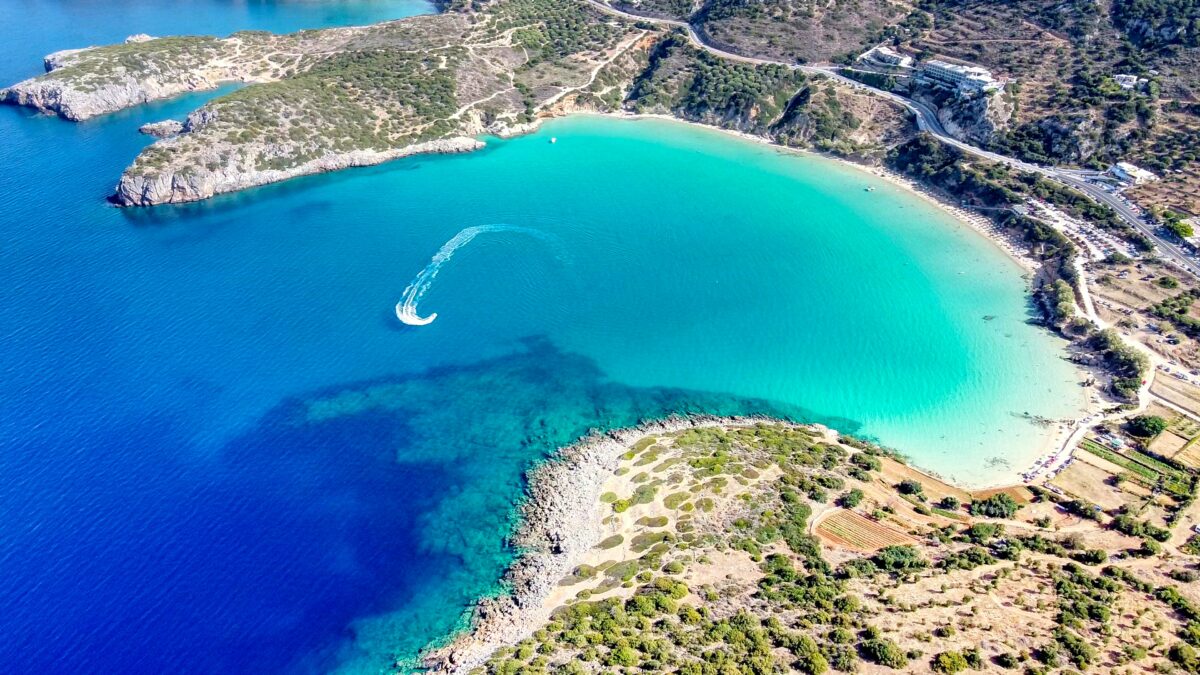
Quick answer: The quietest beaches in Crete in August are the ones that take some effort to reach: a hike down a dirt track, a scramble along a coastal path, or a drive well past the resort towns.
Orthi Ammos near Frangokastello, Achlia near Ierapetra, Kedrodasos beside Elafonisi, Glyka Nera between Chora Sfakion and Loutro, and Karoumes near Kato Zakros are five real options. None of them are secret, and all of them fill in by mid-morning, but they hold their calm far longer than the island’s well-known beaches.
Finding a quiet beach in Crete in August is less about luck and more about knowing which stretches of coastline the coach tours skip. Crete has more than 400 named beaches, yet a small handful absorb most of the island’s peak-season visitors while dozens of others, some only a short walk from a parking area, stay genuinely manageable. This guide covers five of them, organized by region, with the specific reason each one stays quieter and honest advice on timing, because even the calmest beach in August rewards an early start.
At a glance:
- Orthi Ammos (south coast, near Frangokastello): quiet because it sits nearly two hours from Chania, past the Sfakia mountain passes.
- Achlia (south coast, near Ierapetra): quiet because a rocky shoreline limits development between two low-key towns.
- Glyka Nera (south coast, between Chora Sfakion and Loutro): quiet because there is no road at all, only a boat or a coastal footpath.
- Kedrodasos (west coast, beside Elafonisi): quiet because it takes a 15-minute walk through a juniper forest that most day-trippers skip.
- Karoumes (far east, beyond Kato Zakros): quiet because the only way in is a 4-kilometer gorge hiking trail.
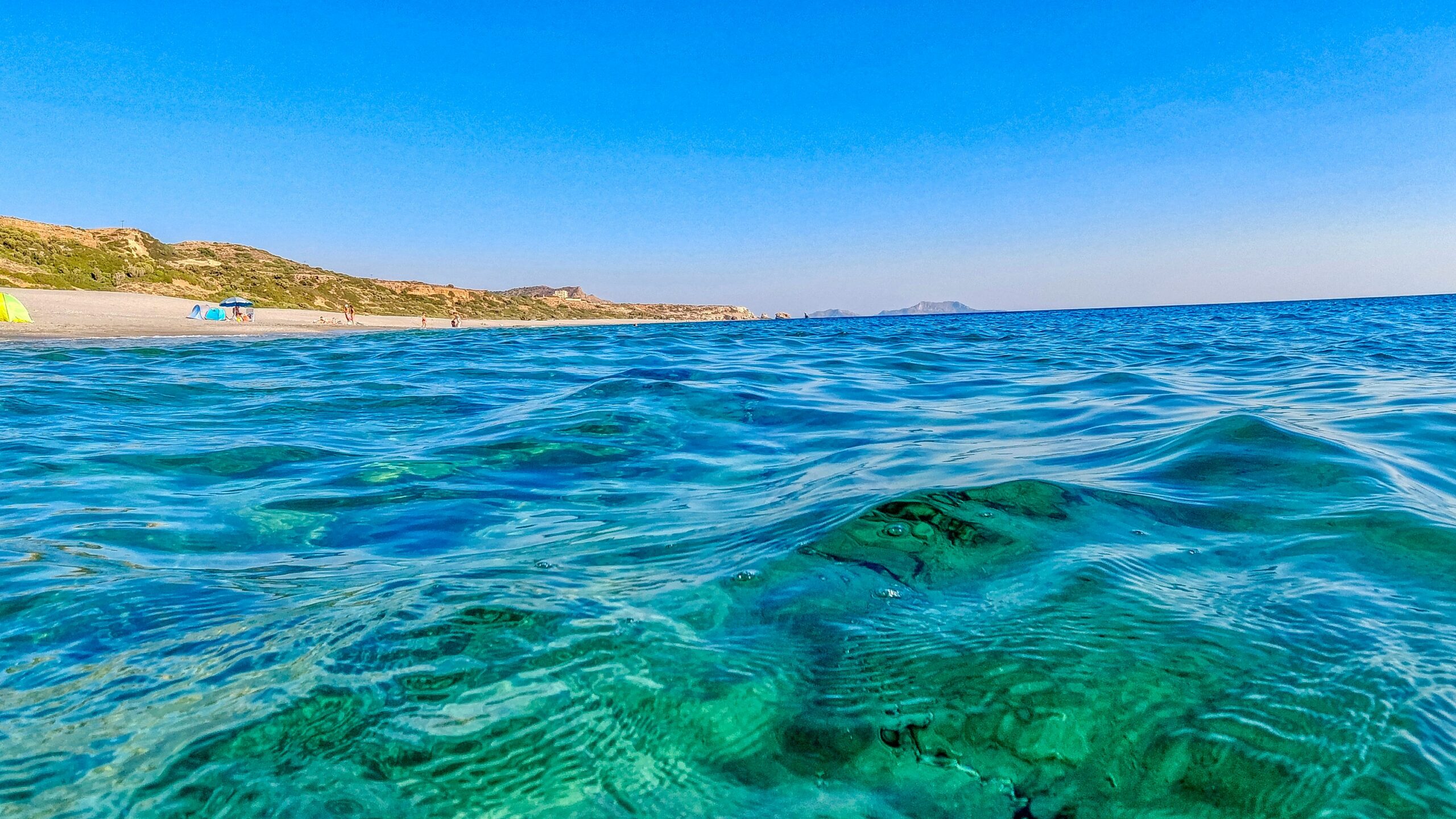
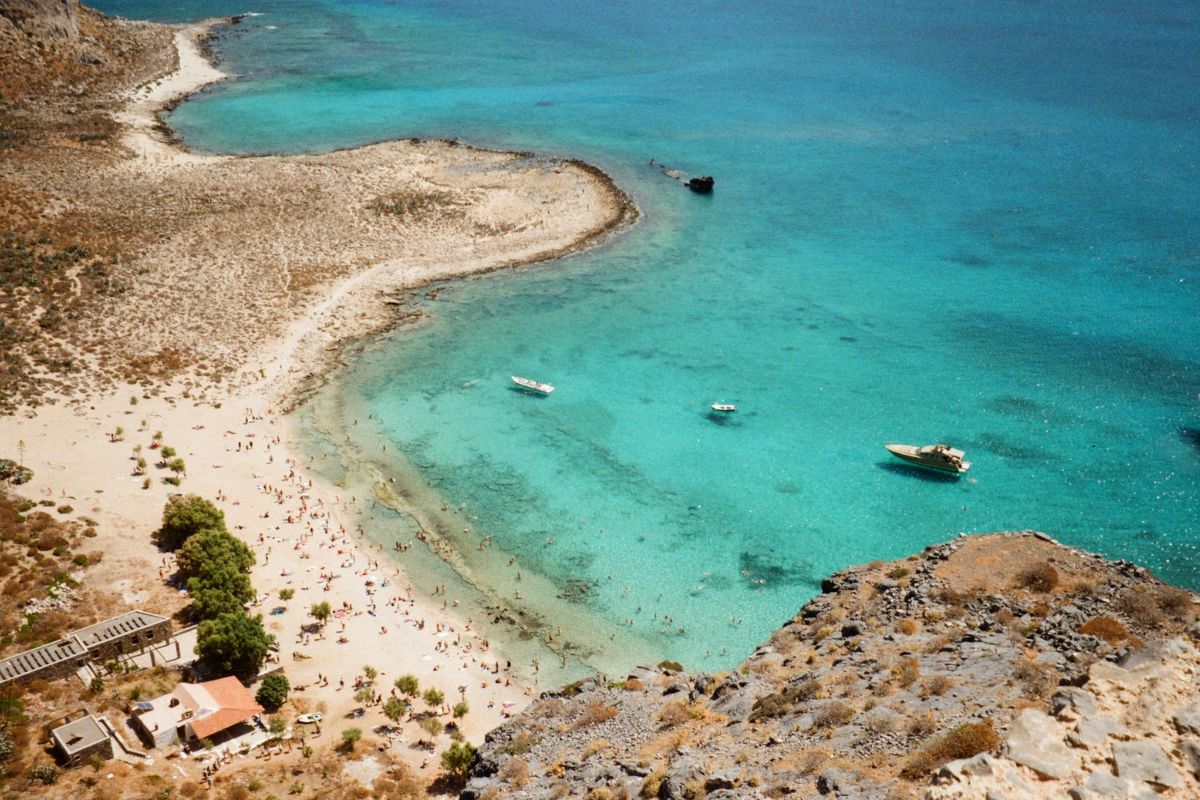
Photo by Evangelos Mpikakis on Unsplash
Why Some Crete Beaches Stay Quiet Even in August
Three things separate a quiet Cretan beach from a crowded one, and it rarely comes down to beauty. Many of the calmest coves on the island are just as striking as the famous ones.
Road access. A beach reachable only on foot, by dirt track, or by boat naturally limits how many people show up. Tour buses cannot follow a coastal footpath, and most rental cars will not attempt an unpaved final stretch.
Wind exposure. The Meltemi, the seasonal north wind that strengthens through July and August, hits the north coast hardest. Some south-facing coves sit in its shadow, which keeps the water calm; others catch enough of it to discourage sunbathers who prefer stillness, which paradoxically keeps them emptier.
Distance from the resort towns. Chania, Rethymno, Heraklion, and Agios Nikolaos anchor most of the island’s accommodation and day-trip traffic. A beach an hour or more past any of them, especially one that is not a straight coastal drive, simply sees fewer people, even in August.
Understanding which factor applies to a given beach is more useful than any list of names, because it tells you what to expect when you arrive: a walk, a bit of wind, or just a longer drive.
August compounds all three factors at once. The island is at its busiest, rental cars are fully booked weeks in advance, and the Meltemi is at its strongest, which pushes a large share of visitors toward the calmer south coast and away from the more exposed north. That shift alone explains why some of the beaches below, particularly on the Libyan Sea, still hold up reasonably well even in the last two weeks of the month.
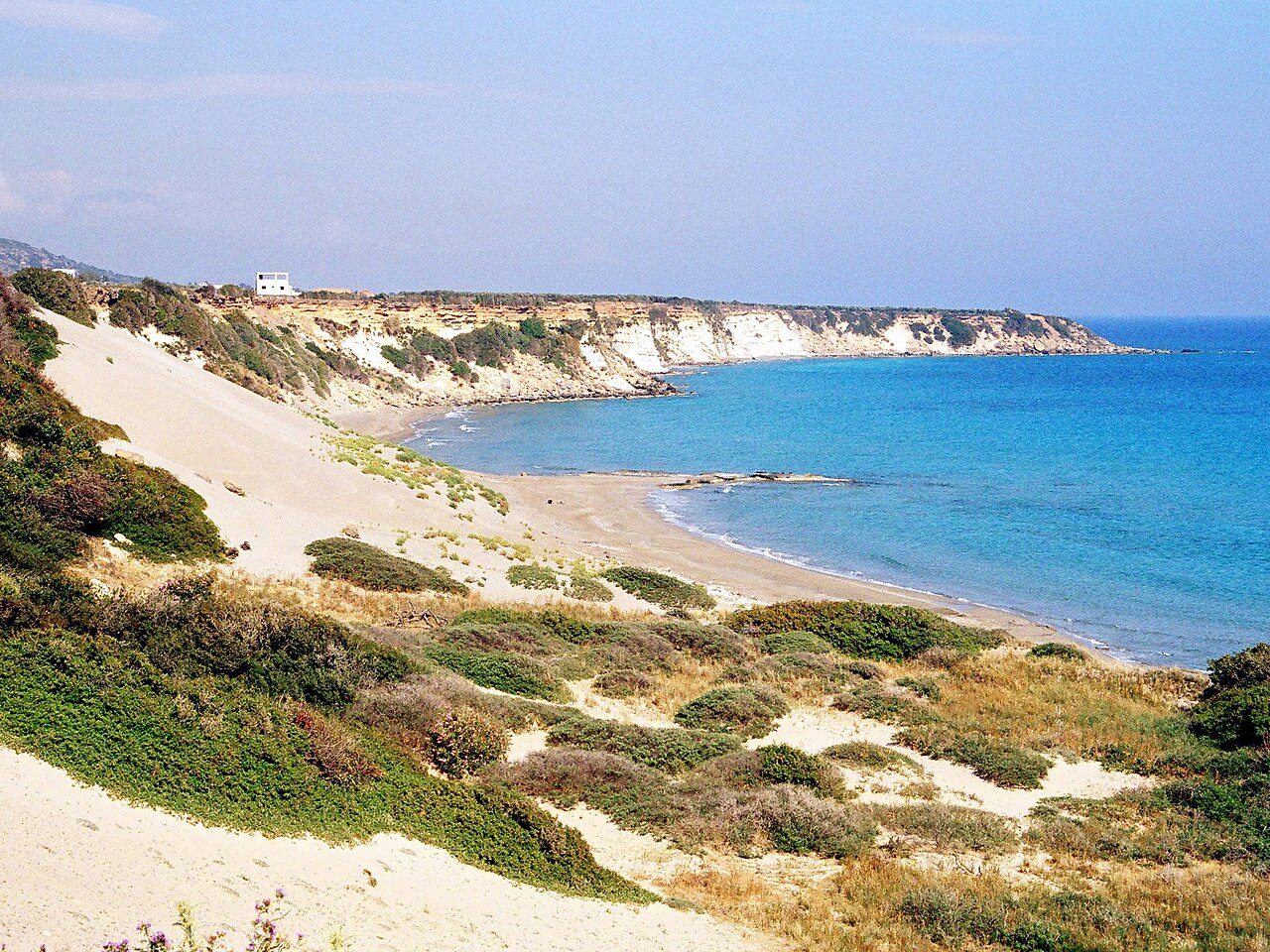
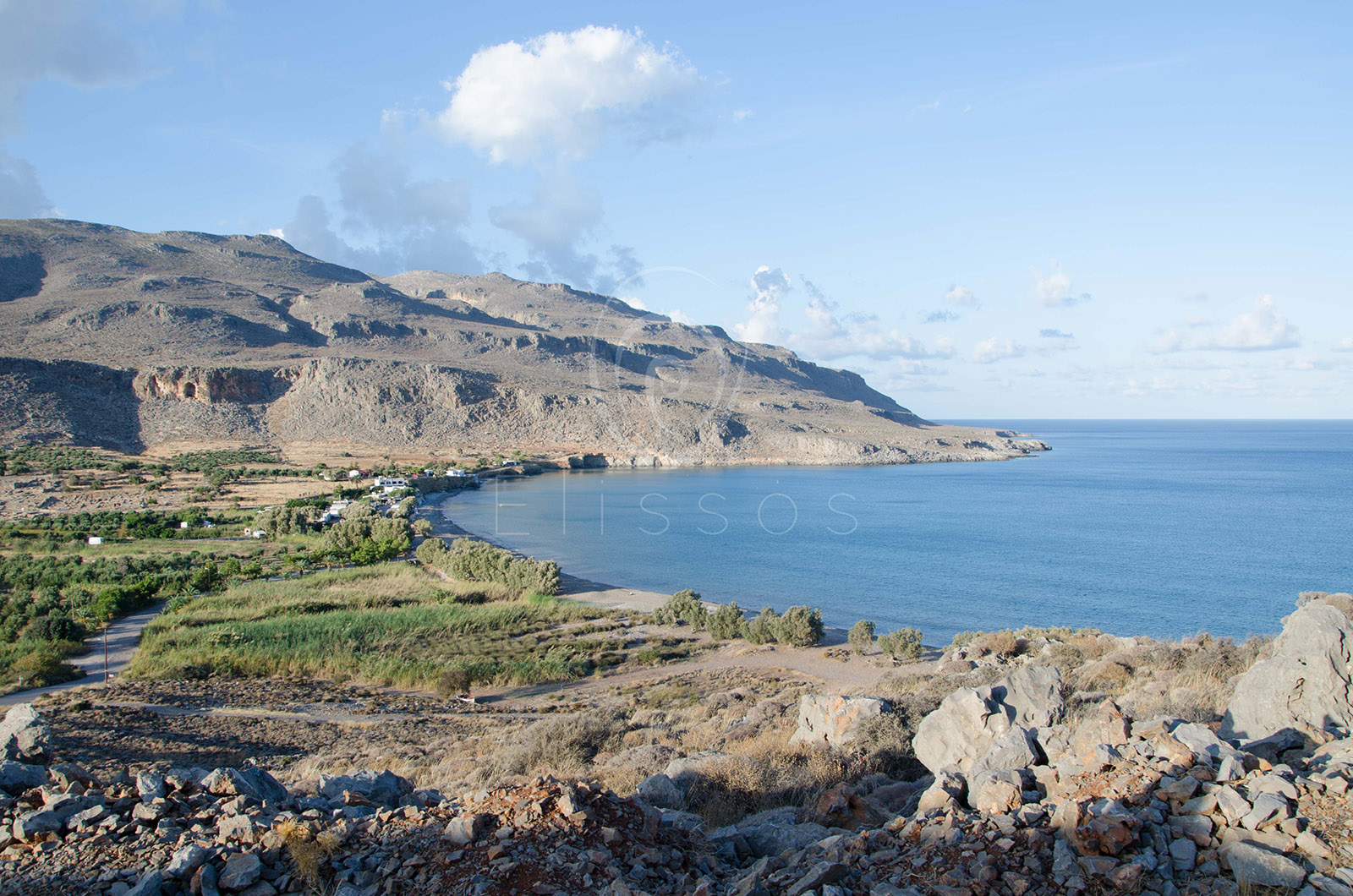
Photo: Olaf Tausch, “Orthi Ammos”, via Wikimedia Commons, licensed under CC BY-SA 3.0. No changes made.
South Coast: Sfakia to Ierapetra
The Libyan Sea coastline, covered in more depth in our south coast of Crete travel guide, holds some of the island’s most consistently overlooked beaches simply because reaching it takes longer than a straight run from Chania or Heraklion. Three coves along this stretch are worth the detour.
Orthi Ammos, Frangokastello
Orthi Ammos sits just east of the Frangokastello fortress, backed by dunes tall enough to block the view of the shoreline from the road. The water is shallow and clear for a long stretch out, which makes it comfortable for slow, easy swimming rather than a beach built for deep water straight off the sand.
It stays calmer than the beaches around Chania and Rethymno mainly because of distance: Frangokastello sits close to two hours from Chania by road, past Sfakia’s mountain passes, and it draws far fewer day-trip buses as a result. The handful of tavernas near the dunes serve the people who are already staying nearby rather than a steady flow of coach traffic. Arrive before 9am for the widest stretch of empty sand; by late morning, the section nearest the parking area fills with locals and nearby guesthouse guests.
Achlia, Near Ierapetra
Achlia lies on the Libyan coast between Makrigialos and Agia Fotia, on Crete’s southeastern shoulder, roughly 21 kilometers from Ierapetra. The coastline here is largely rocky, with only pockets of sand and fine pebble, and that terrain is doing most of the work: a rugged shore simply cannot support the same density of sunbeds and umbrellas as a long, flat beach can.
Achlia holds Blue Flag status and has a paved road right to it, so it is not remote in the way a hike-in beach is. What keeps it quiet is that it sits between two low-key towns rather than inside one, away from the concentration of hotels that pulls crowds to Ierapetra’s own beachfront. A bus stop sits about 100 meters from the beach, and a few small tavernas and rooms line the road behind it, but nothing on the scale of a resort strip. Midweek mornings here are close to empty even in August.
Glyka Nera, Between Chora Sfakion and Loutro
Glyka Nera is known locally as Sweetwater Beach because freshwater springs flow beneath its pebbles. No road leads directly to the beach. Visitors can take a boat from Chora Sfakion or Loutro. They can also follow a coastal footpath, which takes about 30 to 40 minutes from Chora Sfakion on a steep, rocky trail or closer to an hour from Loutro on gentler ground.
That lack of road access is the entire reason it stays quiet. Day-boats from both harbor villages do stop here, so the beach is never fully empty, but the crowd thins noticeably outside the late-morning boat window. Hikers who arrive on foot before 9am, ahead of the first boats, tend to have the freshwater springs and the clear water almost to themselves.
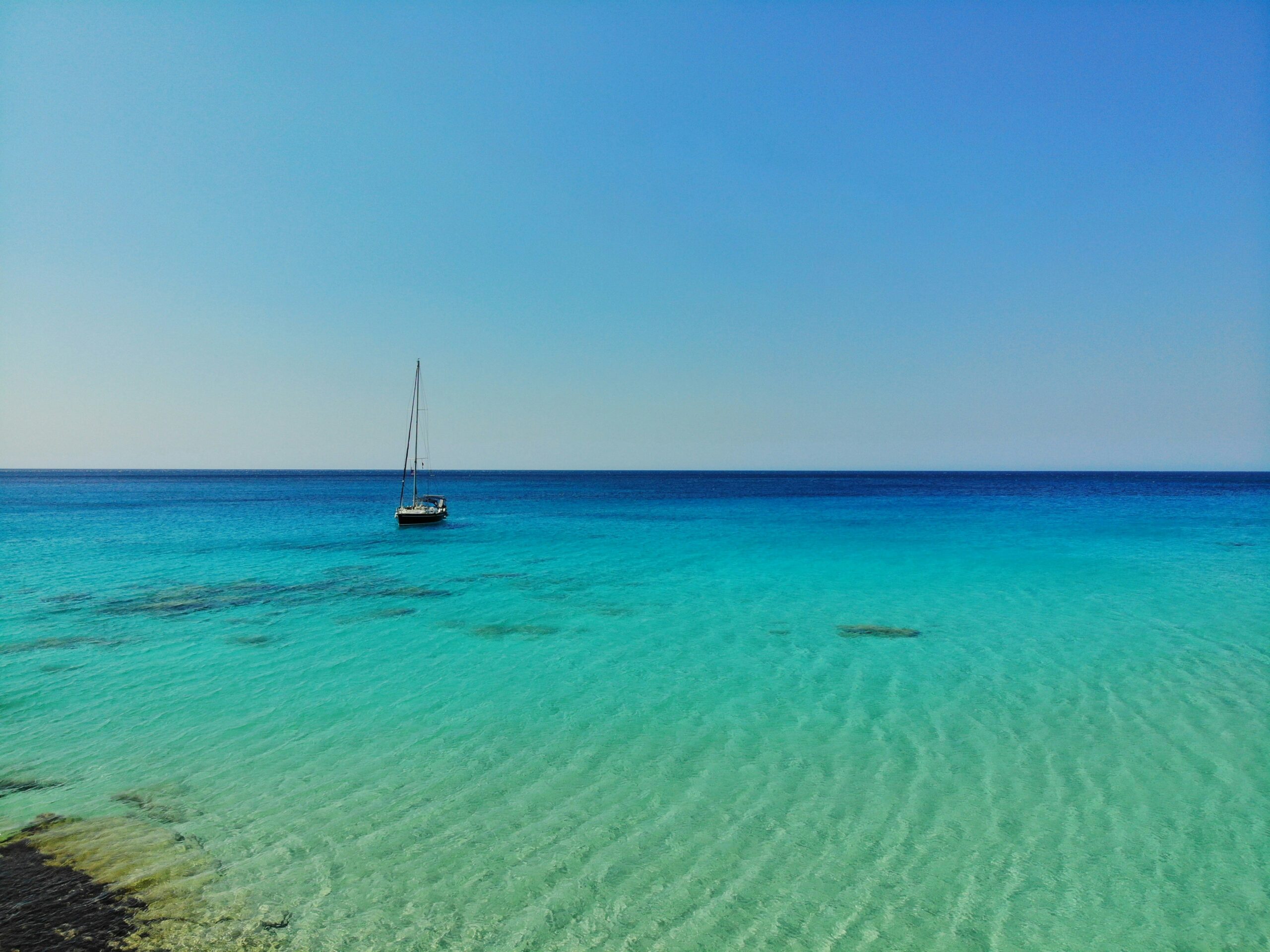
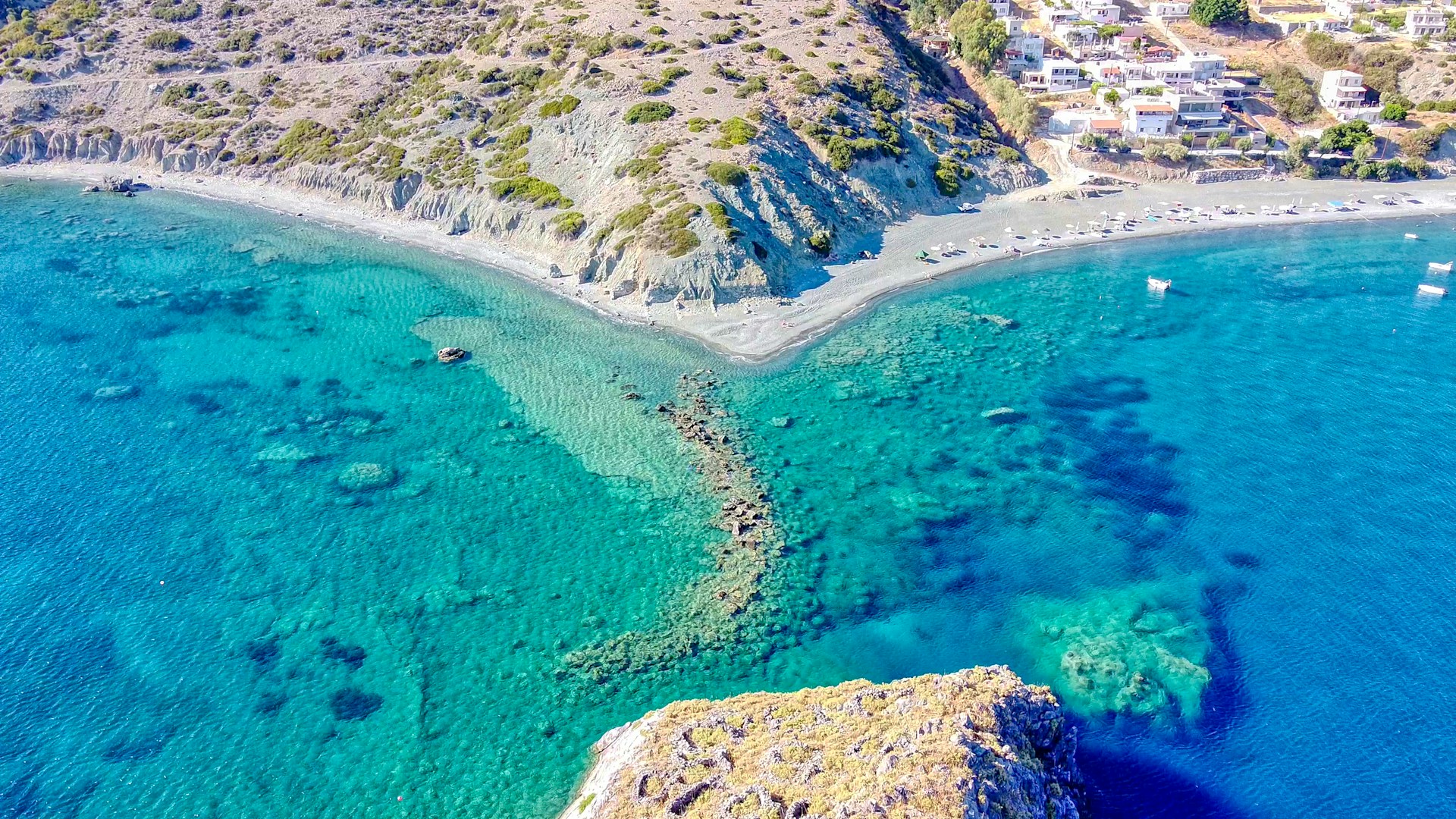
Photo by Dimitris Kiriakakis on Unsplash
West Coast: Kedrodasos, Next to Elafonisi
Elafonisi’s pink-tinged sand is one of the most photographed stretches of coastline in Crete, and by mid-morning in August it is also one of the busiest. Kedrodasos sits barely a kilometer east of it, across a headland, and feels like a different beach entirely.
There is no direct road to Kedrodasos. Visitors park near Elafonisi and either walk an unmarked dirt track through an eleven-hectare juniper woodland (part of the E4 European long-distance path) for about 15 minutes, or come by boat. That short walk, combined with the complete lack of facilities, is what keeps the numbers down. The juniper grove also gives the beach more shelter from onshore wind than the open sand at Elafonisi, so the water tends to sit calmer here on breezy afternoons.
Because it borders Crete’s most visited beach, Kedrodasos never feels fully isolated in August. But arriving in the first hour after sunrise, before the Elafonisi crowd has finished parking, is usually enough to have a genuinely quiet stretch of sand under the junipers.
Far East: Karoumes, Beyond Kato Zakros
Karoumes is, by most local accounts, the most remote beach on Crete’s eastern coast. There is no road to it at all. The only approach is a roughly 4-kilometer hiking trail through a gorge, starting at the small village of Chochlakies south of Palekastro, or a longer coastal path that connects from Kato Zakros past a string of sea caves.
This is not a beach for a spontaneous afternoon stop. Once visitors leave the village, they will not find tavernas, shade structures, or drinking water. Anyone making the walk needs to carry everything required for the day. The beach has pebbles rather than sand. Limestone outcrops, tamarisk trees, and small sea caves frame the shoreline. That effort helps Karoumes stay quiet even in the height of summer. Visitors who come here usually commit to a half-day plan rather than a quick swim between other stops. Travelers exploring Minoan sites in eastern Crete can combine Karoumes with the nearby fourth palace complex. This archaeological site also remains one of the least visited on the island for much the same reason.
When to Arrive: Realistic Timing for August
For the beaches in this guide, a realistic timing window looks like this:
Before 9am: the quietest window across all five beaches, and often the only time a hike-in cove like Kedrodasos or Glyka Nera feels genuinely empty.
9am to 11am: still workable, particularly at beaches that require a walk, since the effort itself filters out casual visitors.
11am to 4pm: the busiest stretch everywhere on the island in August, including these beaches, and also the hottest part of the day for any hike in.
After 5pm: a good second window as day visitors head back for dinner, with several hours of comfortable light and temperature left before sunset.
What These Beaches Do Not Have
Every beach in this guide shares one trait beyond its quiet: minimal to no infrastructure. Plan accordingly.
Water and food. Carry more than you think you need, particularly for Karoumes and Glyka Nera, where nothing is sold nearby.
Shade. Dunes, junipers, and cliffs provide some natural cover, but none of these beaches has organized umbrellas or sunbeds. A sun hat and a light cover-up matter more here than at a resort beach.
Sturdy footwear. Kedrodasos, Glyka Nera, and Karoumes have walking sections that cross loose stone and uneven ground. Wearing only sandals can make the descent uncomfortable.
Facilities. No changing rooms, no lifeguards, and no first aid station at any of the five. Swim within your ability, especially at hike-in coves where help is not close by.
A gentle footprint. The juniper grove at Kedrodasos and the dunes at Orthi Ammos are fragile. Staying on marked paths keeps them intact for the next visitor.
Cash. The few tavernas near beaches like Orthi Ammos and Achlia are small, family-run operations. Their card machines are not always reliable this far from town.
Conclusion

Frequently Asked Questions
What is the quietest beach in Crete in August?
Karoumes lies on Crete’s eastern coast beyond Kato Zakros. Visitors can reach it only by hiking a roughly 4-kilometer gorge trail because no road leads to the beach. This limited access generally makes Karoumes the quietest of these beaches. Glyka Nera, accessible only by boat or footpath between Chora Sfakion and Loutro, is a close second.
Are there beaches in Crete without crowds in August?
Yes. Orthi Ammos and Achlia require a long drive beyond the main resort towns. Kedrodasos and Karoumes require a hike. Glyka Nera requires either a hike or a boat ride. These access barriers keep them noticeably calmer. Beaches with direct road access near Chania, Rethymno, Heraklion, or Agios Nikolaos tend to attract more visitors. None are fully empty in peak season, but all hold their calm longer.
Do I need a car to reach the quiet beaches in Crete?
For most of them, yes. Orthi Ammos and Achlia both have road access and are reachable by rental car. Kedrodasos, Glyka Nera, and Karoumes require a car to reach the trailhead or parking area. You then need to walk or take a boat because no road leads directly to any of these beaches.
Is Elafonisi crowded in August, and is there a quieter alternative nearby?
Elafonisi is one of the busiest beaches on Crete by mid-morning in August. Kedrodasos lies about a 15-minute walk east through a juniper forest. It offers a quieter alternative with a similar coastline and no facilities.
What time should I arrive at a quiet beach in Crete during August?
Before 9am is the most reliable window across all five beaches in this guide. Arrive around sunrise, between 6:15 and 6:30am in August. This timing gives you the best chance of having a hike-in beach like Kedrodasos or Karoumes largely to yourself.
Are these quiet beaches safe for swimming and suitable for families?
Orthi Ammos and Achlia both have shallow entry points that work well for families, and Achlia holds Blue Flag status. Kedrodasos, Glyka Nera, and Karoumes do not have lifeguards or facilities. They suit confident swimmers and families who are comfortable supervising children without on-site support.
Feature Image by Evangelos Mpikakis on Unsplash