
Ariadne, Goddess of Crete: The Sacred Feminine Behind the Labyrinth
Most people meet Ariadne at the entrance to a maze. She is introduced as the daughter of King Minos, the young woman who gives Theseus a thread, and the figure left behind once the hero has escaped.
In that familiar version, her intelligence moves the story forward, but the story does not belong to her.
Crete preserves another way of reading Ariadne. Long before the classical myth took its best-known form, the island had a religious world in which female divinities, priestesses, sacred animals, caves, trees, processions, and ritual movement held visible importance. Within that setting, some scholars have understood Ariadne not simply as a princess, but as the later memory of a powerful Cretan goddess.
Quick answer: Ariadne was not named as a goddess in surviving Minoan inscriptions. However, a Linear B tablet from Knossos records an offering of honey to the “Mistress of the Labyrinth,” and influential scholars have connected this title with Ariadne. Her Cretan name, association with Knossos, sacred dance, the Labyrinth, and cycles of loss and renewal support the view that the later princess may preserve elements of an older divine figure.
Ariadne may preserve the memory of an older Cretan goddess associated with Knossos, sacred dance, fertility, and the Labyrinth. A Linear B tablet from Knossos records honey offered to the “Mistress of the Labyrinth,” but it does not name Ariadne directly. Scholars such as Karl Kerényi later identified this divine title with Ariadne, whose name was traditionally understood as “most holy.” The connection is influential and meaningful, although it remains an interpretation rather than a proven archaeological fact.
![Ariadne Sleeping Collector: Catsimpoolas, Nicholas Photographer: Anderson, James, 1813-1877 Date: [ca. 1853–1877]](https://www.elissos.com/wp-content/uploads/2022/08/ariadne-sleeping.jpg)
Photo by Boston Public Library on Unsplash
Was Ariadne Originally a Minoan Goddess?
The honest answer is that we cannot prove it. Scholars have not yet deciphered the Minoans’ Linear A script, so the names and stories of their deities remain largely unknown. Our understanding of Minoan religion comes mainly from images, ritual objects, architecture, offerings, and later texts written after Mycenaean Greek speakers established themselves on Crete.
Even with those limits, Ariadne stands out. Her identity is inseparable from Crete. She belongs to the house of Knossos, is linked with the Labyrinth, and is repeatedly associated with dance, thread, vegetation, death, and return. These features are larger than the role of a helpful princess.
Karl Kerényi argued that Ariadne was the first divine personage of Greek mythology to become recognizable when the religious world of ancient Crete emerged through archaeology. His interpretation was not a direct translation of a Minoan text. It was a reconstruction based on Ariadne’s name, her Cretan setting, the evidence for a female divine presence at Knossos, and the title “Mistress of the Labyrinth.”
This reading belongs within the wider discussion of Minoan religion in ancient Crete, where female figures and priestly imagery appear with unusual prominence.
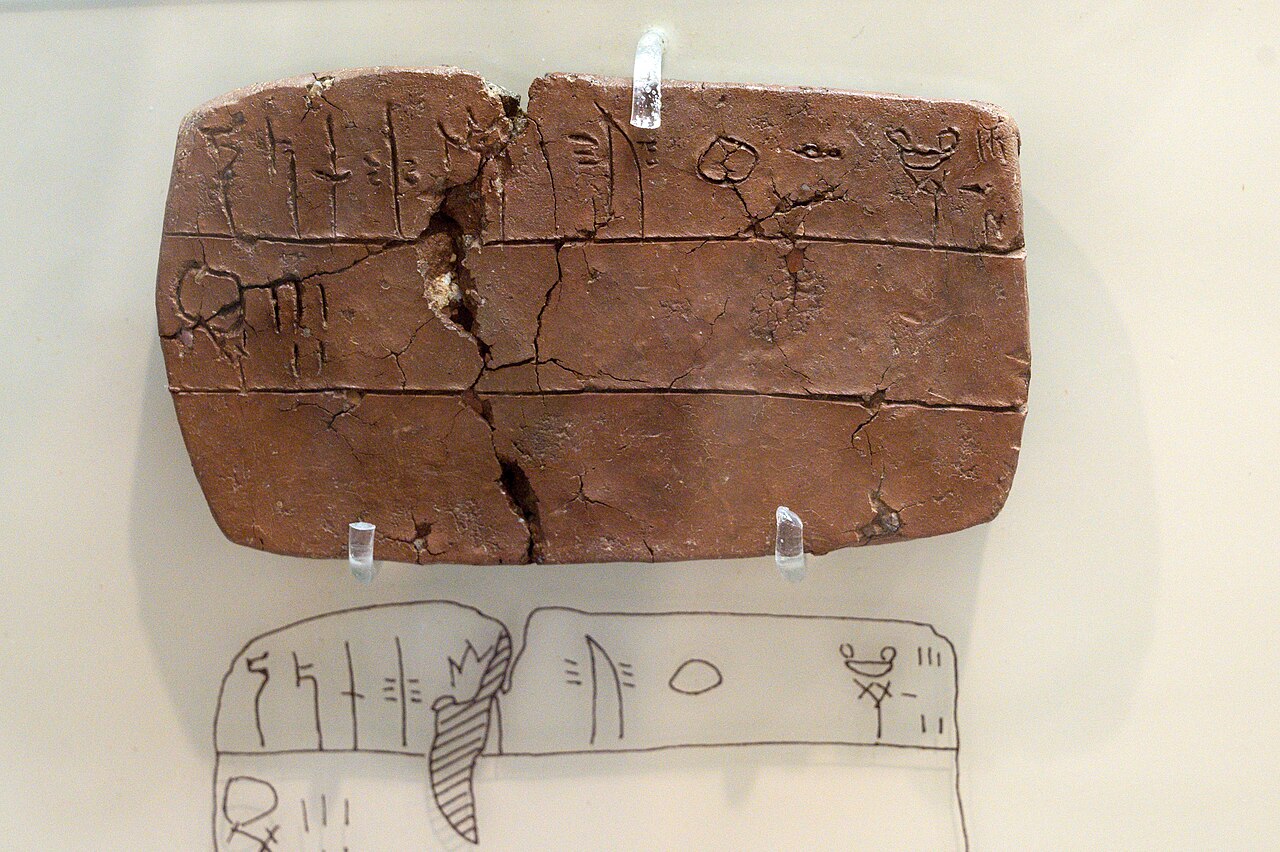
Linear B tablet with a food inscription, Archaeological Museum of Mycenae. Photo by Zde, via Wikimedia Commons, licensed under CC BY-SA 4.0. No changes were made.
The Mistress of the Labyrinth at Knossos
What the Linear B tablet actually records
One of the most important pieces of evidence is a clay tablet found at Knossos and cataloged as KN Gg 702. Written in Linear B, the script used for Mycenaean Greek, it lists religious offerings. One line records a jar of honey for “all the gods.” Another records a jar of honey for a figure translated as the “Mistress,” “Lady,” or “Potnia of the Labyrinth.”
The equal measure is striking. It shows that the Mistress of the Labyrinth received a formal offering within the religious administration of Knossos. It also confirms that a divine female title and the word interpreted as “Labyrinth” were connected at the site during the Late Bronze Age.
The tablet does not contain the name Ariadne. That distinction matters. The archaeological evidence establishes a Mistress of the Labyrinth, but the step from that title to Ariadne is a scholarly interpretation.
Why scholars connected the title with Ariadne
The association becomes understandable when the later tradition is placed beside the tablet. Ariadne is the woman of Knossos who knows the Labyrinth, controls access to it, and provides the means of return. In some ancient accounts she is also divine, particularly through her union with Dionysus and her connection with ritual celebrations beyond Crete.
Kerényi treated “Ariadne” as an epithet rather than an ordinary personal name and connected her with the Lady of the Labyrinth. Other scholars have been more cautious.
The title could refer to a deity whose original name no longer survives, to a major Cretan goddess who appeared in several forms, or to a sacred office that later traditions preserved through Ariadne.
Ariadne’s Name and Her Cretan Identity
Ancient Greek lexicographers interpreted Ariadne’s name through Cretan elements meaning “most holy” or “utterly pure.” Modern linguists do not agree on every detail of its origin, and the name may be pre-Greek. Still, the traditional meaning is important because it suggests that “Ariadne” could have carried the force of a sacred title.
Her mythology also keeps returning to a Cretan center. She is not merely born on the island. She belongs to the palace of Knossos, understands its hidden order, and stands between the human world and the dangerous interior of the Labyrinth.
This is one reason the phrase Ariadne sacred feminine Crete carries more depth than a modern spiritual label. It points toward a Bronze Age religious landscape in which female divinity may have been understood through place, movement, animals, fertility, and the repeated renewal of life.
The wider archaeological context can also be explored through the legacy of Minoan women and female religious authority, while keeping in mind that visible female prominence does not by itself prove a matriarchal political system.
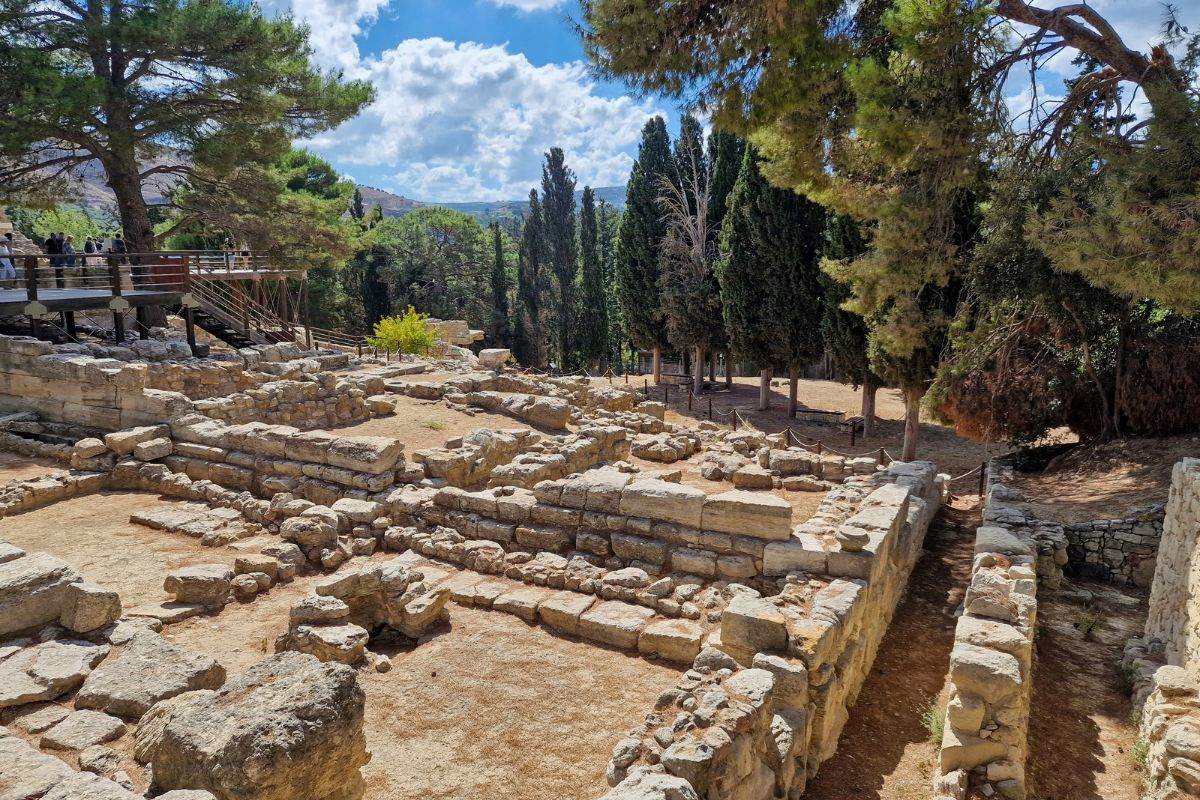
Photo by Martijn Vonk on Unsplash
The Labyrinth as Sacred Space, Not Only a Prison
Later Greek myth presents the Labyrinth as a place of terror built to confine the Minotaur. That image has shaped modern imagination, but the older meaning may have been more complex.
The Greek word labyrinthos is pre-Greek in origin. It has often been connected with the labrys, the double axe found throughout Minoan religious imagery, although the exact etymology is disputed. At Knossos, the many corridors, stairways, courts, storerooms, light wells, and ritual areas also encouraged the idea that the palace itself lay behind the memory of the Labyrinth.
A place of movement, ritual, and possible initiation
A labyrinth is not the same as a maze. A maze is designed around choices and dead ends. A classical labyrinth has a single path that turns inward and then returns outward. This difference has made the labyrinth a lasting image of ritual passage: entry, disorientation, encounter, and return.
Some scholars and modern interpreters have described the Cretan Labyrinth as a place of initiation. Archaeology cannot confirm a specific initiation ceremony connected with Ariadne, but the interpretation fits several recurring elements of the tradition: descent into danger, confrontation at the center, guidance through a thread, and emergence into life.
The important point is not to turn Knossos into a fantasy temple. It is to recognize that the Labyrinth may have carried religious meaning before it became a monster’s prison in Athenian storytelling.
The sacred feminine at the center
Ariadne’s position changes when the Labyrinth is read as sacred space. She is no longer waiting outside a male adventure. She is the one who understands the path, holds its continuity, and makes return possible.
This is the heart of the Minoan labyrinth divine feminine connection. The feminine figure is not placed at the edge of knowledge. She governs the relationship between outer and inner worlds. Her authority lies in orientation, memory, and the ability to move through change without losing the way back.
Ariadne, Dance, and the Ritual Floor of Knossos
Ariadne’s bond with the Labyrinth is also a bond with dance. In the Iliad, Homer describes a dancing place made by Daedalus at broad Knossos for Ariadne of the beautiful hair. Young men and women move in circles and lines, holding one another by the wrist. The scene appears on the shield of Achilles as an image of ordered communal life.
This passage matters because it connects Ariadne, Knossos, Daedalus, and patterned movement without mentioning a prison or a Minotaur. The setting is a chorus, a dance floor, and a social ritual.
Ancient traditions also remembered a winding dance associated with Theseus after his escape. Whether or not that dance preserves a Bronze Age ceremony, it shows how closely the Labyrinth was linked with movement. A path can be walked, but it can also be danced. The body learns its turns through rhythm and repetition.
In Minoan art, processions and ritual gestures appear repeatedly. We cannot label every image as a dance or identify every female figure as a goddess. Yet the visual culture confirms that movement, display, and ceremonial gathering were central to life at the palaces.
A closer look at these visual forms is available in the Elissos guide to Minoan art and its sacred imagery.
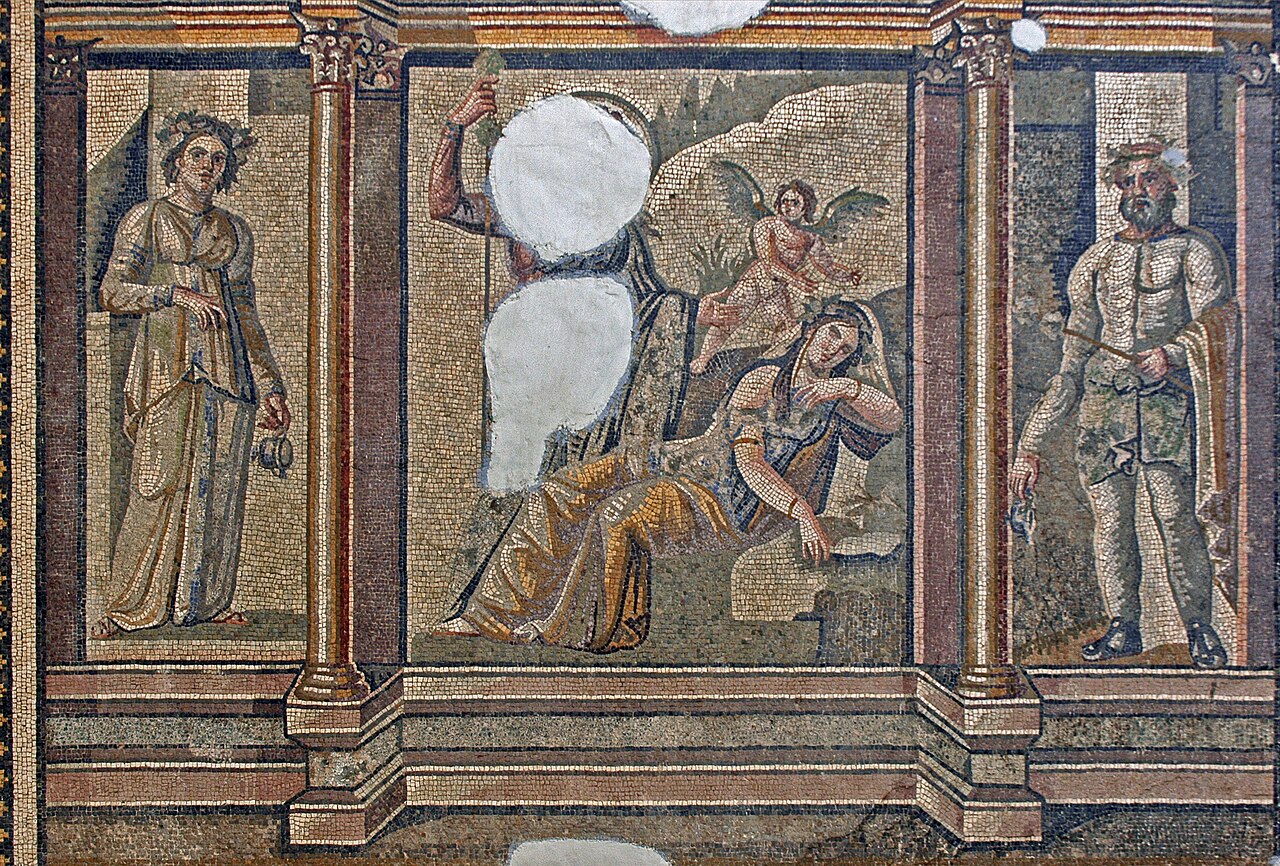
Dionysus and Ariadne mosaic, 2nd to 3rd century AD, from Samandağı. Photo by Dosseman, via Wikimedia Commons, licensed under CC BY-SA 4.0. No changes were made.
The Meaning of Ariadne’s Thread
In the best-known myth, Ariadne gives Theseus a ball of thread so that he can retrace his steps after killing the Minotaur. The practical meaning is clear: the thread is a tool of orientation.
Its deeper meaning comes from Ariadne’s role. The thread remains connected to the person who knows the entrance and the pattern. It represents continuity through confusion, memory during danger, and relationship across distance.
For the Ariadne thread meaning, four ideas are especially useful:
- Guidance: the thread offers a way through complexity without pretending the path is simple.
- Memory: it preserves contact with the point of origin.
- Continuity: it links the outer world, the center, and the return.
- Agency: Ariadne creates the condition for survival and transformation.
These meanings are interpretive, but they arise directly from the structure of the myth. The hero does not simply carry the thread as an accessory. The thread makes Ariadne’s knowledge visible.
Fertility, Death, and Renewal in Ariadne’s Tradition
Ariadne’s later mythology contains several endings. She is abandoned, dies, is killed, or becomes the immortal wife of Dionysus. Different places preserved different rites and stories. The contradictions suggest that her tradition absorbed more than one local form.
Her connection with Dionysus is especially important. He is a god of vegetation, ecstatic ritual, seasonal change, and return. Ariadne’s movement from loss to divine union allows her to participate in the same rhythm of disappearance and renewal.
This is one reason scholars have compared her with other female figures connected with fertility and the underworld. The comparison should not erase the differences between Ariadne, Persephone, and other goddesses. It does show that Ariadne’s story belongs to an ancient Mediterranean pattern in which life is understood through cycles rather than a straight line.
Within Crete, that pattern would have been familiar through agriculture, the seasonal landscape, sacred caves, and the dependence of human life on rain, grain, vines, animals, and the return of growth.
The island’s broader female divine imagery can be considered alongside the Minoan Snake Goddess, another figure whose modern fame exceeds what archaeology can state with certainty.
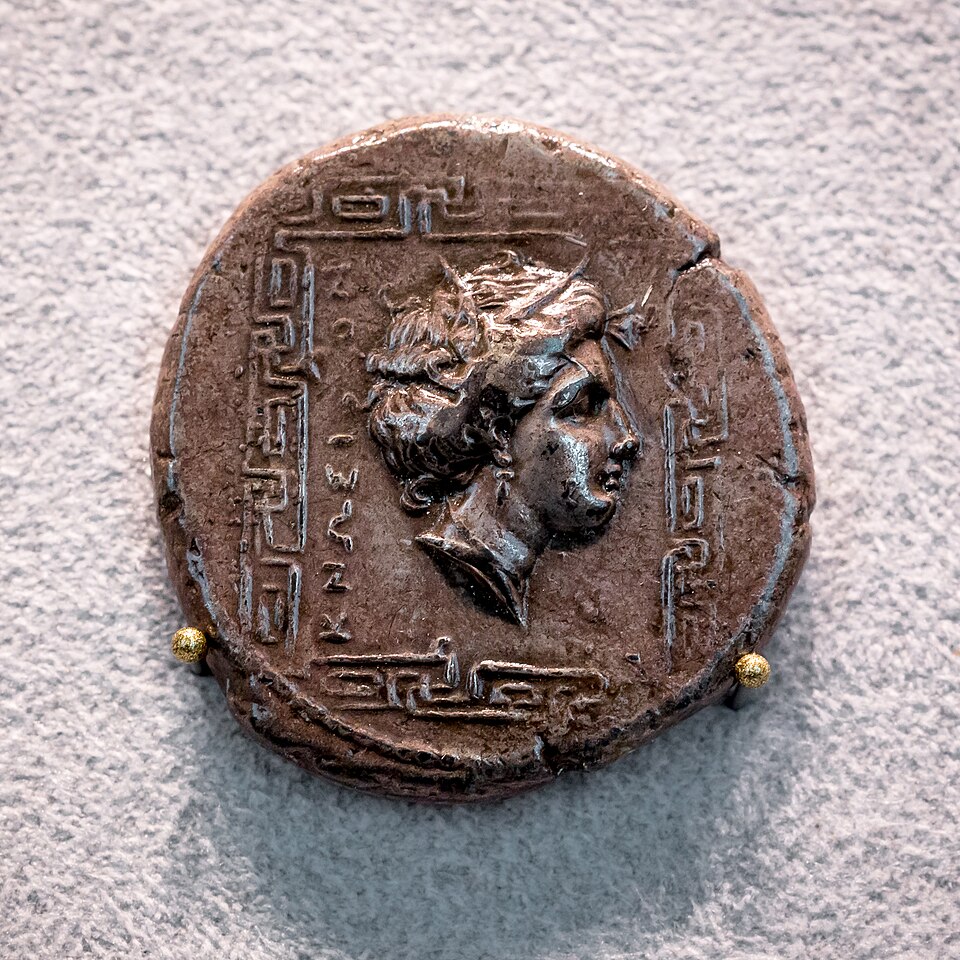
Silver stater from Knossos, circa 400–350 BC, showing a female head possibly representing Ariadne. Photograph by ArchaiOptix, object held by the Münzkabinett der Staatlichen Museen zu Berlin, via Wikimedia Commons, licensed under CC BY-SA 4.0. No changes were made.
How Later Greek Myth Reduced Ariadne’s Role
The surviving story of Theseus was shaped within a Greek world that celebrated the hero, the city, and victory over a dangerous foreign power. From an Athenian perspective, Crete became the place of tribute, confinement, and monstrous violence. Theseus entered that world, defeated it, and returned as a civic hero.
Ariadne’s role was essential, but it was also contained. She betrayed her father, helped the outsider, and left Crete. Her authority over the Labyrinth became romantic assistance and her thread became the hero’s instrument. Her own fate was moved to Naxos and placed within the story of Dionysus.
It is tempting to describe this as a simple replacement of a matriarchal religion by patriarchy. The evidence does not support such certainty. Cultural change in Bronze Age and early Greek Crete was gradual, uneven, and complex. Mycenaean administration, later oral tradition, local cult, and Athenian storytelling all contributed to the Ariadne we now know.
Still, the contrast remains important. In one reading, Ariadne is a supporting character. In another, she is the sacred intelligence of the Labyrinth itself.
Readers who want the full later narrative can continue with the traditional legend of Ariadne, Theseus, and Dionysus. This article takes a different path by focusing on the older Cretan religious background.
Encountering Ariadne at Knossos and the Heraklion Museum
A visitor will not find a room at Knossos labeled “Temple of Ariadne,” and no excavated object can be presented as her confirmed image. The value of visiting lies in seeing the setting from which the tradition grew.
At Knossos, notice the central court, the layered routes through the complex, the relationship between light and enclosed space, the recurring double-axe symbol, the processional architecture, and the importance of controlled movement. These features do not prove the myth, but they help explain why the site could be remembered as a Labyrinth.
The Heraklion Archaeological Museum provides the other half of the experience. Figurines, frescoes, seal stones, ritual vessels, jewelry, and Linear B tablets reveal a culture far more complex than the later tale of Minos and the Minotaur. Female figures appear in commanding poses. Processions and ceremonies suggest structured ritual life. Natural forms and sacred symbols repeat across different media.
A thoughtful visit keeps two ideas together. First, archaeology has limits. We should not assign names to every figure or turn every object into proof of goddess worship. Second, myth can preserve cultural memory even when it changes the people and meanings it remembers.
Ariadne becomes most compelling in the space between those truths. She is not fully recoverable, but neither is she only a literary princess. She remains a Cretan figure whose thread still connects archaeology, sacred place, and later myth.
For practical and historical context, see the Elissos Knossos Palace tour guide and the overview of Crete through its museums.
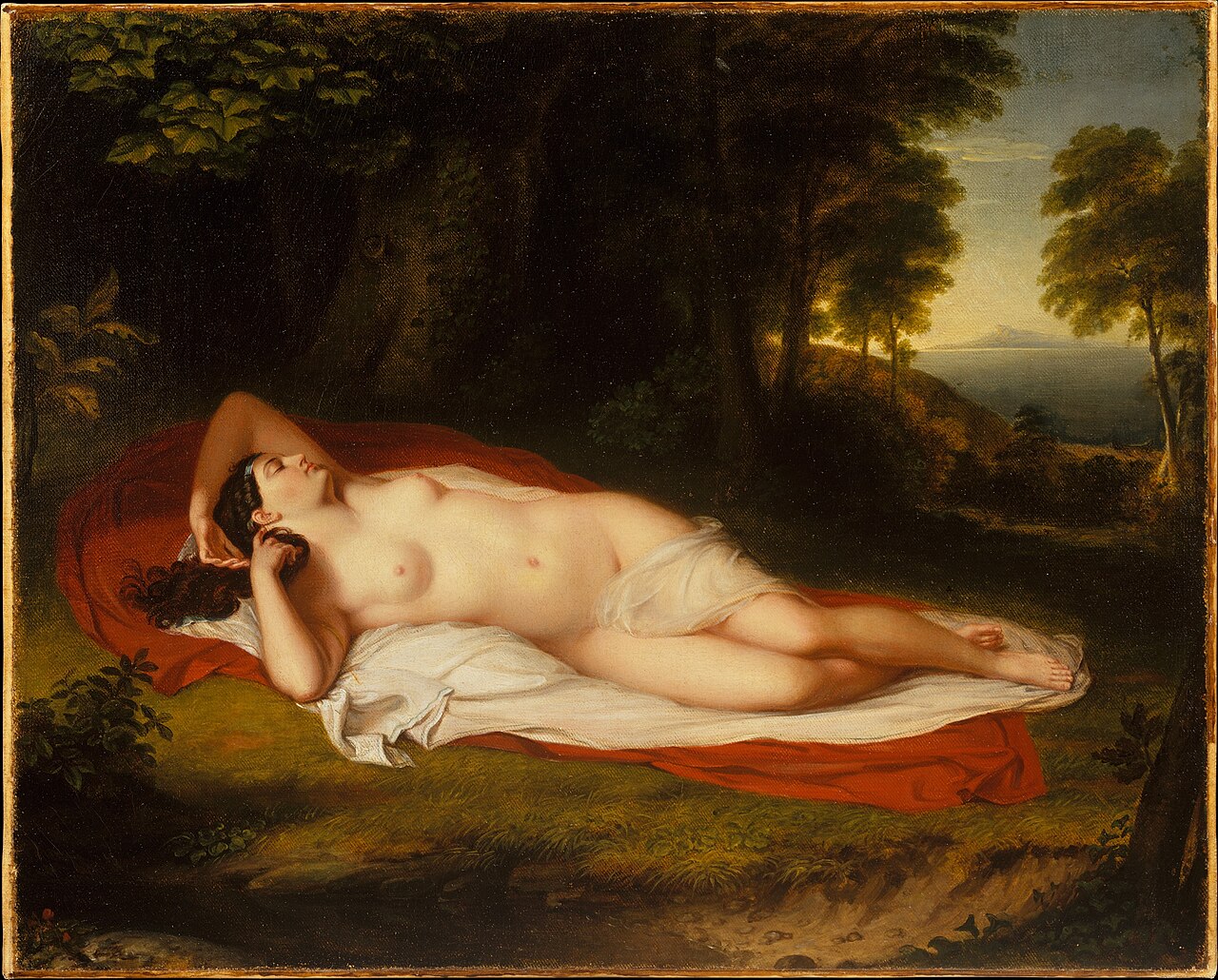
Ariadne, by Asher Brown Durand after John Vanderlyn, circa 1831–1835. Collection of The Metropolitan Museum of Art. Available under CC0 1.0, via Wikimedia Commons.
Conclusion: Following Ariadne Back to Crete
The question “Was Ariadne a Minoan goddess?” has no final archaeological answer. What survives is a compelling pattern: a holy Cretan name, a divine Mistress of the Labyrinth recorded at Knossos, a dancing floor made for Ariadne, a thread that governs passage and return, and a later myth that places her knowledge in the service of a hero.
Read carefully, these elements do not require fantasy. They invite a richer understanding of how religious memory can survive through transformation. Ariadne may be the later face of an older goddess, a mythologized priestly title, or a figure shaped from several Cretan traditions. In every case, her meaning begins in Crete.
At Knossos, the Labyrinth is no longer only a puzzle to solve. It becomes a way of thinking about movement, memory, and renewal. Ariadne’s thread leads not away from the island, but back toward its sacred history.
Frequently Asked Questions
Was Ariadne a Minoan goddess?
Ariadne is not named in surviving Minoan texts, so her status cannot be proven. Some scholars identify her with an older Cretan goddess or with the “Mistress of the Labyrinth” recorded on a Linear B tablet from Knossos. The connection is influential but remains interpretive.
Who was the Mistress of the Labyrinth?
The Mistress of the Labyrinth was a female divine figure who received an offering of honey in a Linear B record from Knossos. Her personal name is not given. Karl Kerényi and other writers connected her with Ariadne, while more cautious interpretations leave her identity open.
What does Ariadne’s name mean?
Ancient lexicographers understood Ariadne as a Cretan name meaning “most holy” or “utterly pure.” Some modern scholars consider the name pre-Greek, so its exact linguistic origin remains debated.
What is the sacred meaning of Ariadne’s thread?
Ariadne’s thread represents guidance, memory, continuity, and the possibility of return. In the myth it helps Theseus leave the Labyrinth, but symbolically it also expresses Ariadne’s knowledge of the path.
Was the Labyrinth really beneath Knossos?
No confirmed underground maze matching the myth has been found beneath Knossos. The palace’s complex architecture, the religious significance of the double axe, caves elsewhere on Crete, and memories of ritual movement may all have contributed to the Labyrinth tradition.
What can visitors see related to Ariadne in Crete today?
Visitors can explore Knossos, where Ariadne’s story is set, and the Heraklion Archaeological Museum, which holds Linear B tablets, Minoan frescoes, ritual objects, and female figurines. None is a confirmed image of Ariadne, but together they reveal the religious culture behind her Cretan tradition.
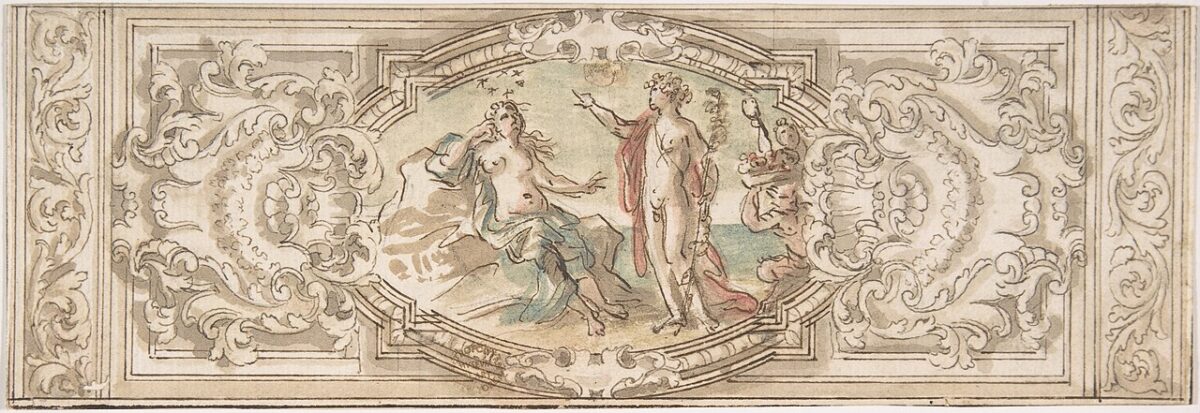
Feature image by: Design for a Panel with a Depiction of Bacchus and Ariadne, anonymous Roman-Bolognese artist, 17th century, from the collection of The Metropolitan Museum of Art. Image available via Wikimedia Commons under the CC0 1.0 Universal Public Domain Dedication.
