
A Goddess Tour of Crete: Where to Meet the Island’s Goddesses, Site by Site
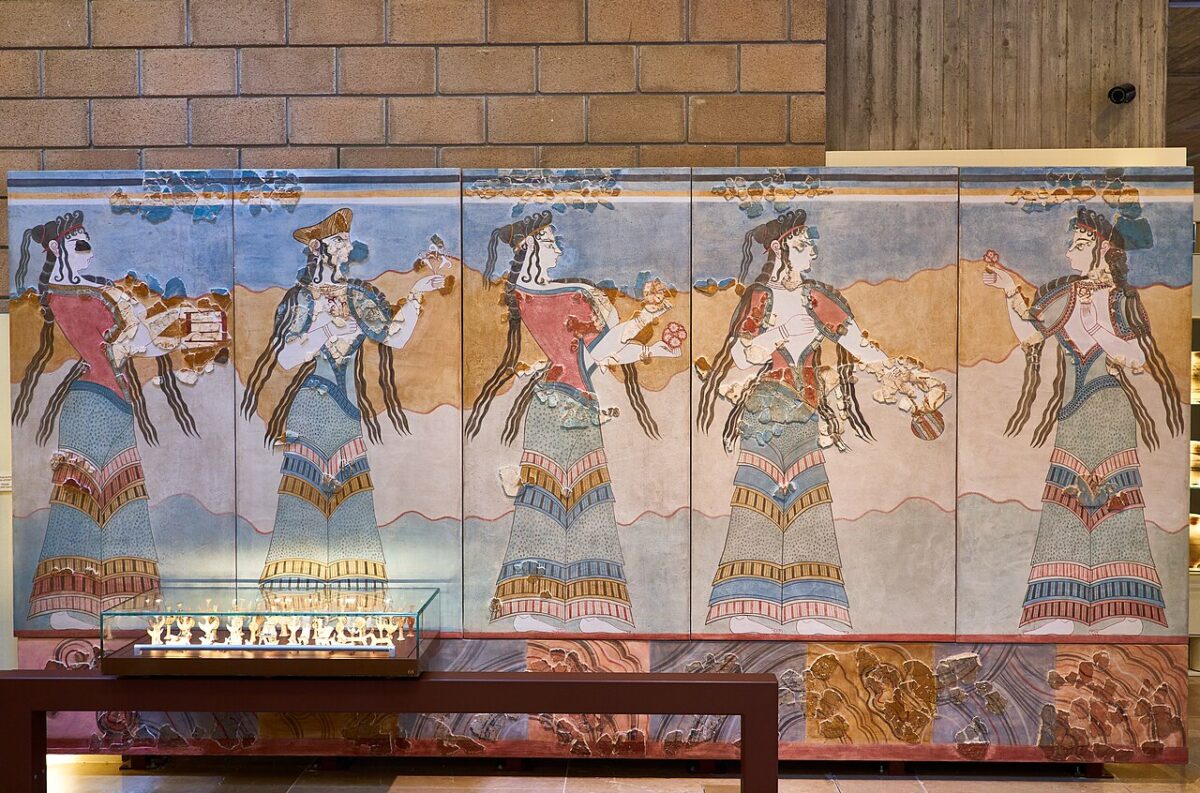
A goddess tour of Crete follows the women of the island’s oldest stories back to the ground they came from.
Rhea gave birth in a mountain cave. Eileithyia received honey offerings near the sea at Amnisos. Ariadne had a dancing floor at Knossos. And the Minoan goddess figures that fill the Heraklion museum once stood in shrines you can still walk through. Many of our earlier articles tell these goddesses’ stories in depth. This one is the map. It pairs each goddess with a place, tells you what you will actually see there, and shows how to link the sites into a calm three to five day route.
Quick answer: The best goddess tour of Crete starts in Heraklion and circles the center of the island. Begin at the Heraklion Archaeological Museum and Knossos. Then add the Eileithyia cave at Amnisos and the Mount Juktas peak sanctuary. Continue to the Dikteon cave at Psychro and the Idaean cave on Mount Ida, and finish at Phaistos. Three days covers the essentials. Five days lets you add the mountains and the south without rushing.
A goddess tour of Crete is a route through the places where the island’s female deities were honored, from the Bronze Age to the Roman era. The core stops are the Heraklion Archaeological Museum and its snake goddess figurines, Knossos, the Eileithyia cave at Amnisos, the Mount Juktas peak sanctuary, the Dikteon cave at Psychro, the Idaean cave on Mount Ida, and Phaistos. Most of these sites sit within a 90-minute drive of Heraklion, so three to five days is enough to cover them at a calm pace.
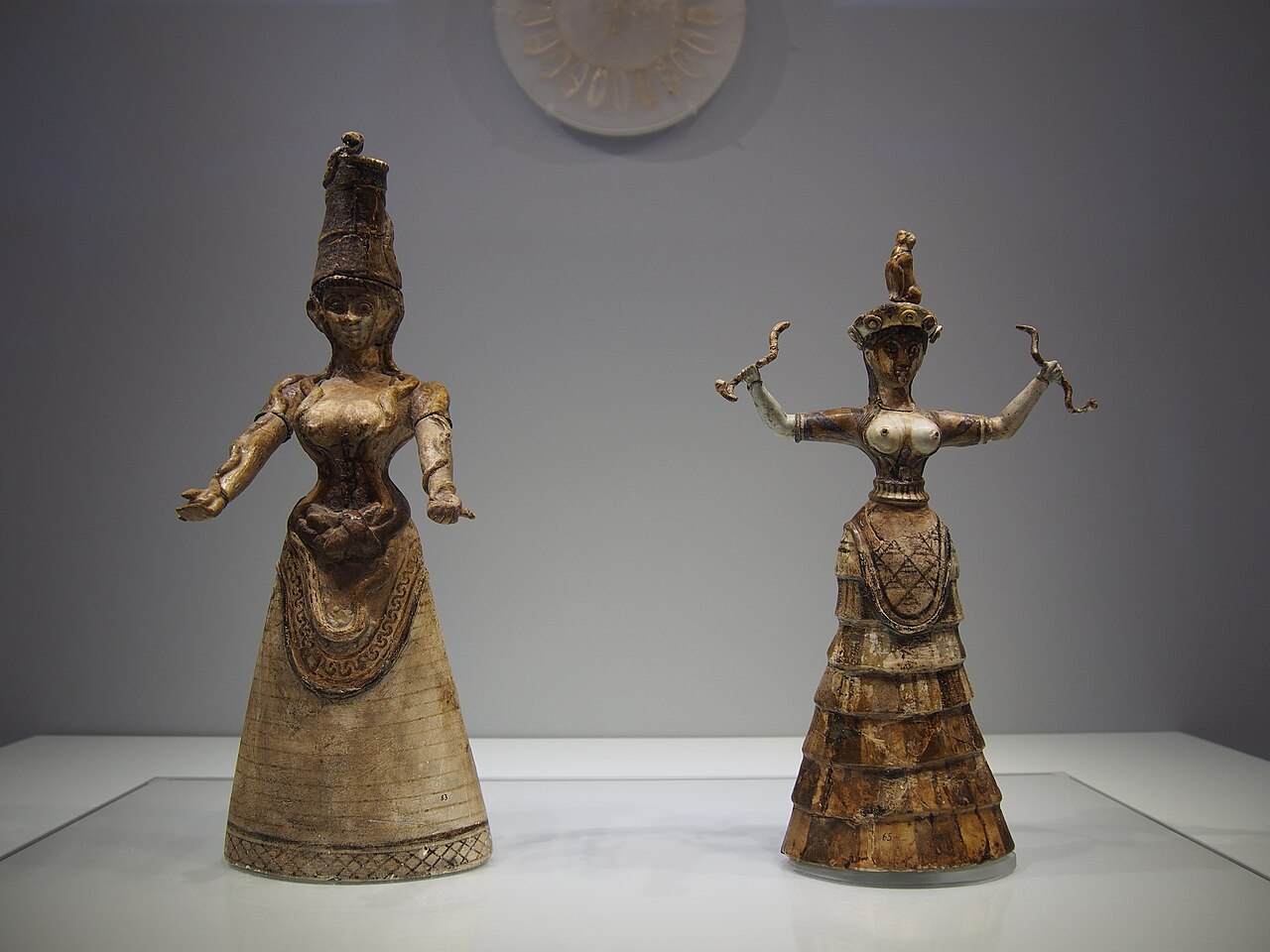
Two Minoan “Snake Goddess” figurines — photo by C messier, via Wikimedia Commons, licensed under CC BY-SA 4.0.
Who You Will Meet on a Goddess Tour of Crete
Crete’s goddesses overlap, borrow from each other, and change names over the centuries. It helps to know the main figures before you set out. Here is a short cast list, with the place where each one feels closest.
- The Minoan Goddess: the unnamed female figure at the center of Bronze Age Cretan religion. She appears in figurines, frescoes, and gold rings. You meet her first at the Heraklion museum and Knossos. Our article on who the Minoan goddess was and how the Divine Feminine runs through Crete explains her in detail.
- Rhea: the Titan mother of Zeus, who hid her newborn son in a Cretan cave. Her places are the Dikteon and Idaean caves. Read more about Rhea, the Mountain Mother.
- Ariadne: the princess of Knossos in Greek myth, and possibly the memory of an older Cretan goddess. Her place is Knossos. You can follow the full legend of Ariadne on our blog.
- Eileithyia: the goddess of childbirth, worshipped in a cave near Amnisos for thousands of years.
- Britomartis: the “sweet maiden” of Crete, a huntress and protector of fishermen, also called Diktynna. She is tied to Mount Dikte in the east and a temple site in the far west.
A Word on the “Minoan Great Goddess”
You will hear the phrase Minoan Great Goddess often on a goddess pilgrimage in Crete. It is worth knowing where it comes from. Sir Arthur Evans, who excavated Knossos in the early 1900s, read the female figures he found as one supreme mother goddess. Many later writers built on that idea. Some went on to describe Minoan Crete as a peaceful, goddess-centered society.
The Great Goddess reading is an interpretation, not a proven fact. The Minoans left no readable religious texts, since Linear A remains undeciphered. Many archaeologists today see several female deities, or one goddess with many aspects, rather than a single Great Mother. Others stress that some “goddess” figures may show priestesses or worshippers. What is certain is that female figures hold the central place in Minoan religious art, and that women appear as leaders in ritual scenes. You can explore that evidence further in our article on the women of Minoan Crete.
This matters on the ground. When you stand in a cave or a shrine room, you are standing where something sacred clearly happened. The exact name and nature of the goddess are open questions. Holding both of those truths makes the visit more honest, and often more moving.
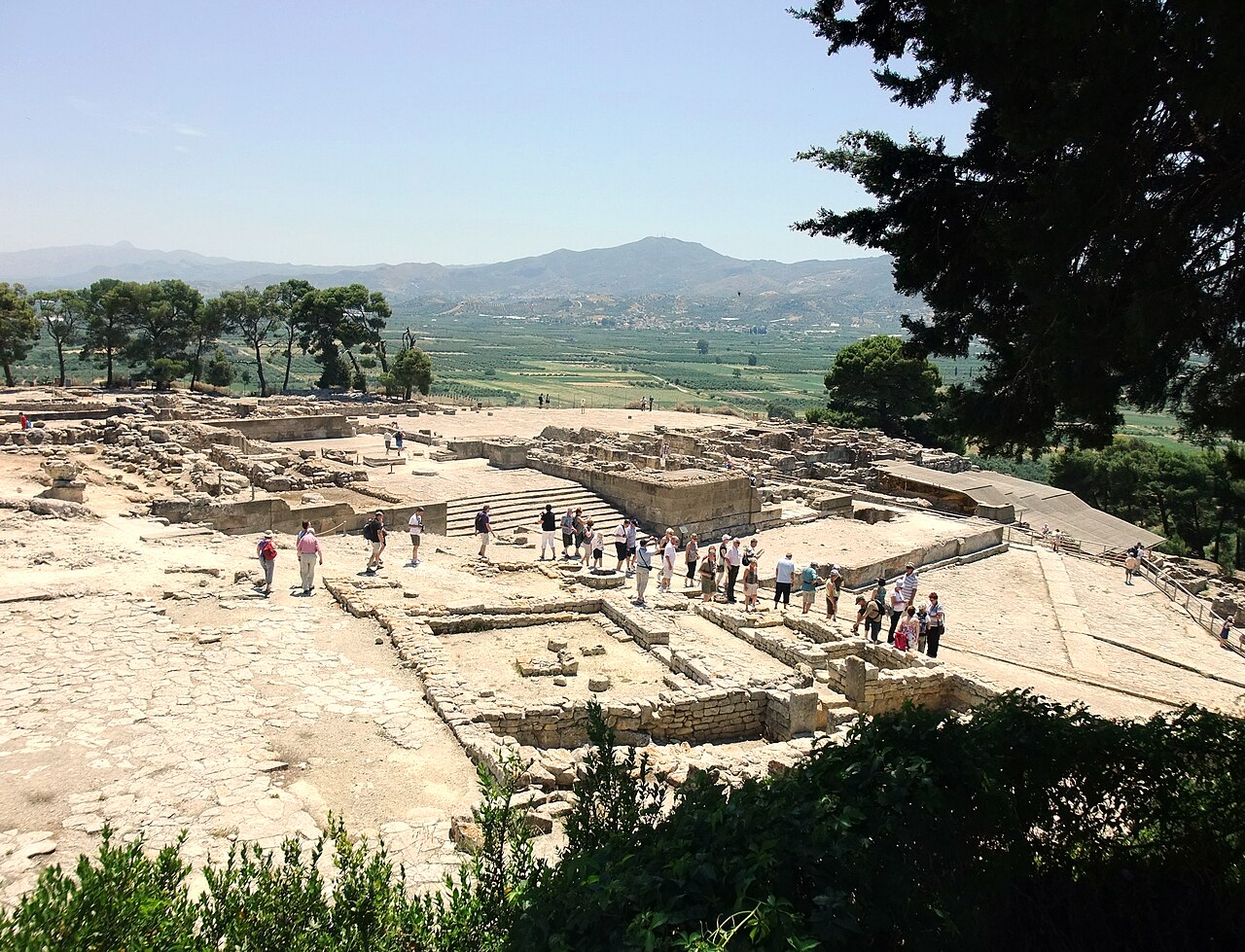
Minoan palace, archaeological site Phaistos, Crete, Greece by Nikater, via Wikimedia Commons, licensed under CC BY-SA 3.0. Image used without edits or changes.
Where to See the Minoan Goddess in Crete: The Stops
Each stop below follows the same pattern: who she is, what you will see, how to get there, and how long to allow. Opening hours change by season, so confirm them close to your travel dates.
Heraklion Archaeological Museum: The Snake Goddess and Her Circle
Who she is: The museum holds the best-known images of the Minoan goddess, including the famous Heraklion Museum snake goddess figurines.
What you will see: Two faience figures from Knossos, made around 1600 BCE, hold snakes in their raised or outstretched hands. Evans found them in 1903 in a stone-lined pit he called the Temple Repositories. Look for the snake goddess figurines in the Neopalatial galleries on the ground floor. Nearby, small gold signet rings show women dancing among lilies or watching a tiny figure descend from the sky, a scene many scholars read as a goddess appearing to her worshippers. Later goddesses with raised arms stand in the Postpalatial rooms, among them the “poppy goddess” from Gazi, with seed heads in her crown. Upstairs, the painted Agia Triada sarcophagus shows women leading offerings and music.
How to get there: The museum sits in central Heraklion, a short walk from the harbor and the main squares.
How long to allow: Two to three hours. Go early in the morning, before tour groups arrive. Our guide to the Heraklion Archaeological Museum covers the layout room by room.
Knossos: Ariadne and the Mistress of the Labyrinth
Who she is: Greek myth makes Ariadne the daughter of King Minos. The Iliad says the craftsman Daedalus built a dancing floor for her at Knossos. A Linear B tablet from the palace records an offering of honey to “the Mistress of the Labyrinth.” Some scholars link that title to an older goddess who later became Ariadne in Greek story.
What you will see: The largest Minoan palace on Crete. Look for the small tripartite shrine facing the Central Court, the Throne Room with its griffin frescoes, and the lustral basins, sunken rooms likely used for purification. The theatral area near the north entrance, with its broad steps, is one of the places people connect with ritual dance.
How to get there: Knossos is about 5 kilometers south of central Heraklion. It takes 15 to 20 minutes by car or local bus.
How long to allow: Two to three hours. Arrive at opening time in summer, since the site has little shade. Our interactive Knossos palace tour helps you read the ruins before you go.
The Eileithyia Cave at Amnisos: The Goddess of Birth
Who she is: Eileithyia protected women in childbirth. Her worship here is one of the longest documented in Europe. A Linear B tablet from Knossos records honey sent to “Eleuthia at Amnisos,” and Homer’s Odyssey mentions “Amnisos, where the cave of Eileithyia is.”
What you will see: The Eileithyia cave at Amnisos is a long, low cave about 60 meters deep. At its center stands a stalagmite surrounded by a low stone wall, which many visitors read as the shape of a woman. Another rounded formation near it resembles a pregnant belly. Pottery and offerings show worship from the Neolithic period into Roman times.
How to get there: The cave lies about 7 kilometers east of Heraklion, roughly 1 kilometer south of the Amnisos coast, beside the old road to Episkopi. Look for the fig tree at the entrance.
How long to allow: About 30 minutes. The cave is usually fenced and locked, and entry needs permission from the local antiquities office. Most visitors stand at the gate, which still gives a clear sense of the place. Combine it with the Juktas stop on the same day.
Mount Juktas: A Peak Sanctuary Above Knossos
Who she is: Mount Juktas held the most important of Crete’s Minoan peak sanctuaries, the mountaintop shrines where people left offerings to the divine. Archaeologists know of roughly two dozen such sites on the island. Juktas faces Knossos directly, and its profile is said to look like the face of sleeping Zeus.
What you will see: The excavated sanctuary near the summit chapel of Aphendis Christos, with the terraces of an open-air altar and a deep natural chasm where offerings were dropped. Finds included clay figurines of people and animals, bronze double axes, and Linear A inscriptions on stone offering tables. The view takes in Knossos, Heraklion, and the sea. Linking this mountain with the seasonal rhythm of the Minoan sacred year gives the site real meaning.
How to get there: Drive about 15 kilometers south of Heraklion to the village of Archanes, then follow the road up to the summit (about 811 meters). The excavated area is fenced, but you can view it from the edge.
How long to allow: One to two hours, including time in Archanes.
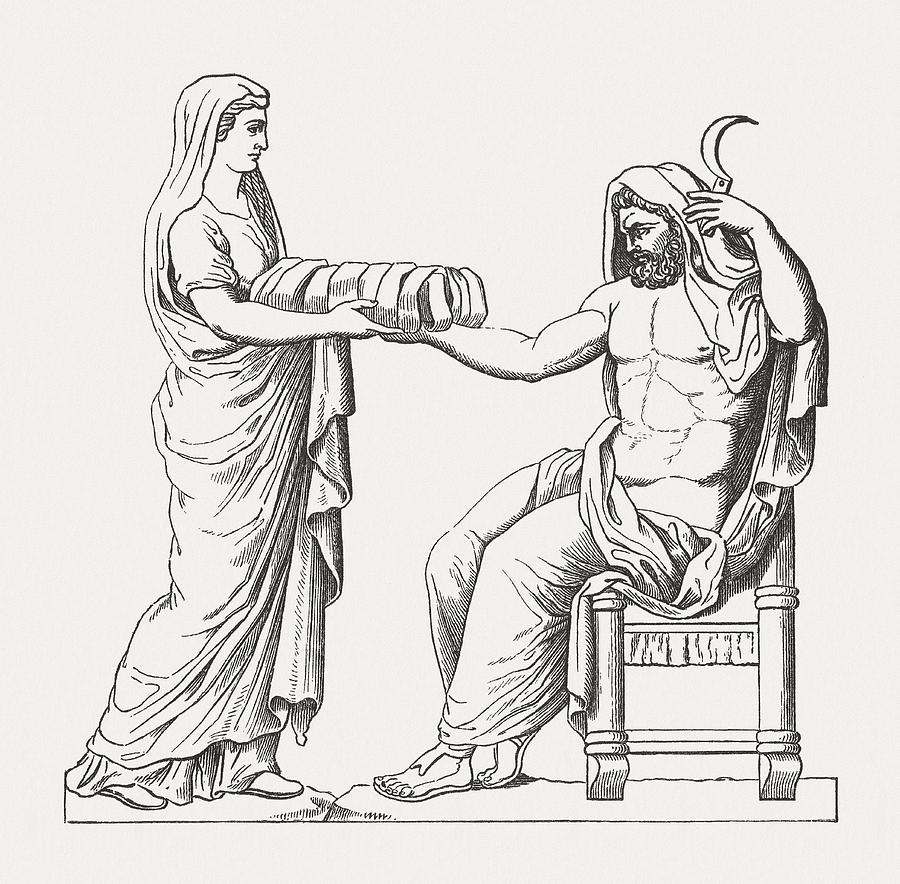
Rhea presenting Cronus with a stone wrapped in cloth, 1878 woodcut engraving from Der Olymp oder die Mythologie der Griechen und Römer. Image via Wikimedia Commons. Public Domain. No changes were made.
The Dikteon Cave at Psychro: Rhea’s Hidden Child and Britomartis’ Mountain
Who she is: Many ancient writers place Rhea’s secret birth of Zeus in this cave on the Lasithi Plateau. The surrounding Dikte range is also linked to Britomartis, whose second name, Diktynna, may echo the mountain.
What you will see: At the Dikteon cave Psychro site, a stone path climbs about 800 meters from the car park. Steps then lead down into a lit cavern of stalactites and stalagmites, with a small pool at the bottom. Excavations found bronze figurines, double axes, and offerings pressed into the cracks of the rock, left across many centuries. The plateau itself, ringed by mountains and dotted with old windmills, is part of the visit.
How to get there: Psychro is on the western edge of the Lasithi Plateau, about 1 hour 30 minutes by car from Heraklion. The road climbs through mountain villages.
How long to allow: About two hours for the walk and the cave, longer with lunch on the plateau. The path is steep and the steps inside can be wet, so wear shoes with grip. Our guide to the sacred caves of Crete covers this cave alongside others on the island.
The Idaean Cave on Mount Ida: The Mountain Mother
Who she is: Other ancient sources name this cave as the place where Rhea hid Zeus. Here the Kouretes clashed their shields to drown out his cries. The cave stands high on Psiloritis, Crete’s tallest mountain, which suits a goddess called the Mountain Mother.
What you will see: A wide cave mouth at about 1,500 meters, facing the high Nida Plateau. Inside, the cave opens into a large chamber. It saw worship from the Minoan period to Roman times, and its famous bronze votive shields are now in the Heraklion museum. On the drive up, you pass Zominthos, a Minoan building complex set high on the mountain. The Idaean cave Mount Ida visit is as much about the landscape as the cave: wide sky, shepherds’ stone huts, and silence. Our guide to Mount Ida and our article on Zeus’s story on Crete add the wider context.
How to get there: Drive to the mountain village of Anogia, about 40 minutes from Heraklion. From there, a paved road climbs roughly 20 kilometers to the Nida Plateau. A signposted walk of 15 to 20 minutes leads up to the cave.
How long to allow: Half a day from Heraklion. The road can close after snow in winter, and the plateau is cold even in spring, so bring a warm layer.
Phaistos and Agia Triada: The Goddess in the Landscape
Who she is: Phaistos has no single goddess story. Instead, it shows how Minoan sacred life was tied to the land around it. From the palace you can see Mount Ida across the valley, and with good eyes, the dark mouth of the Kamares cave on its slope. That cave was a Minoan sanctuary, and it gave its name to the fine pottery found here.
What you will see: At Phaistos Palace, the grand staircase, the central court, and the view toward Ida. Three kilometers away, the smaller site of Agia Triada is where the painted sarcophagus in the Heraklion museum was found. Visiting both helps you link the museum objects to real places.
How to get there: Phaistos is in the Mesara Plain, about 1 hour 15 minutes southwest of Heraklion.
How long to allow: Two hours for Phaistos, three with Agia Triada.
Optional West Crete Stop: Britomartis and Diktynna
Who she is: Myth says Britomartis leaped into the sea to flee King Minos and was caught in fishermen’s nets, which gave her the name Diktynna, from the Greek word for net. Her largest sanctuary, the Diktynnaion, stood in the far west.
What you will see: Scattered remains of the later temple at Menies, on the tip of the Rodopou Peninsula, above a quiet cove.
How to get there: The site is a long drive from Heraklion, followed by a rough track. It fits best as a separate day for travelers based in Chania.
How long to allow: A full day from Chania.
How to Plan a 3 to 5 Day Goddess Pilgrimage in Crete
The sites above fall naturally into a loop around Heraklion, with optional days in the mountains and the south. Staying in or near Heraklion keeps drives short. These routes are a starting point. Adjust them to your pace and the season.
Three Days: The Heraklion Circle
- Day 1: Heraklion Archaeological Museum in the morning, Knossos in the late afternoon light.
- Day 2: The Eileithyia cave at Amnisos, then Archanes and the Mount Juktas peak sanctuary.
- Day 3: The Lasithi Plateau and the Dikteon cave at Psychro, with lunch in a plateau village.
Seeing the museum first means you will recognize the objects when you stand where they were found.
Four Days: Add the Mountain Mother
Follow the three-day plan, then add a fourth day for Anogia, the Nida Plateau, and the Idaean cave. This gives you both of Rhea’s caves, one in the east and one in the center of the island.
Five Days: Add Phaistos and the South
Add a fifth day for Phaistos and Agia Triada, ideally with a night in the Mesara or the village of Zaros so you are not driving back late. If you would rather go east, swap this day for Kato Zakros, the fourth Minoan palace, and the peak sanctuary of Petsofas above Palaikastro. Travelers based in Chania can swap it for the Britomartis day in the west.
Practical Tips for Visiting Sacred Sites in Crete
- Go in spring or autumn. April to June and September to October bring mild weather for caves and mountain roads. Our guide to the best time to visit Crete breaks this down month by month.
- Rent a car or hire a driver. The caves and Juktas are not well served by buses. Our Crete road trip itinerary has useful tips for mountain driving.
- Start early. Knossos, Phaistos, and the Dikteon cave are calmest in the first hour after opening.
- Wear good shoes. Cave steps are often wet, and mountain paths are uneven.
- Leave offerings outside protected areas. Lighting candles or leaving objects inside archaeological sites is not allowed. A quiet moment at the entrance, or a flower left at a village chapel, respects both the place and the people who look after it.
- Check opening hours and access. Hours change between summer and winter, and some sites close for conservation work without much notice.

Traveling the Route With a Local Guide
You can follow this whole route on your own with a car and a good map. Many travelers find the sites open up more with a guide who knows the myths, the archaeology, and the local roads. A private guide can arrange access where it is possible, fit the pace to your group, and leave room for quiet time in the caves and on the peaks.
At Elissos, we build private routes like this one around the traveler. Some guests come for the archaeology. Others come for the Divine Feminine and want time for reflection, or for practices connected to healing the feminine energy. The places stay the same. What changes is how long you stay, and what you carry home with you.
Conclusion
A goddess tour of Crete links the island’s female deities to real places you can visit today. The Heraklion museum shows you the Minoan goddess and her circle. Knossos holds Ariadne and the Mistress of the Labyrinth. The cave at Amnisos keeps Eileithyia’s story, and Mount Juktas shows the peak sanctuaries. Rhea waits in two mountain caves, at Psychro and on Mount Ida, and Phaistos sets the whole picture in its landscape.
Three days is enough for the heart of the route. Five days lets you add the mountains and the south at an easy pace. Go with an open mind about the Great Goddess, since scholars still debate who she was. The places themselves leave little doubt that something sacred was honored there for a very long time.

Frequently Asked Questions
What is a goddess tour of Crete?
A goddess tour of Crete is a trip built around the places where the island’s female deities were worshipped. It usually includes the Heraklion Archaeological Museum, Knossos, sacred caves such as the Dikteon and Idaean caves, peak sanctuaries such as Mount Juktas, and Phaistos. Some tours also include time for ritual, reflection, or women’s circles.
Where can I see the Minoan goddess in Crete?
The best place to see the Minoan goddess in Crete is the Heraklion Archaeological Museum. It holds the faience snake goddess figurines from Knossos, gold rings showing goddess scenes, and later goddesses with raised arms. You can then visit Knossos, where the snake goddess figurines were found.
How many days do I need for a goddess pilgrimage in Crete?
Three days covers the main sites around Heraklion: the museum, Knossos, the Amnisos cave, Mount Juktas, and the Dikteon cave. Four to five days lets you add the Idaean cave on Mount Ida and Phaistos without rushing.
Can you go inside the Eileithyia cave at Amnisos?
The Eileithyia cave at Amnisos is usually fenced and locked. Entry requires permission from the local antiquities office. Most visitors view the cave from the entrance, which is still worth the short trip from Heraklion.
Was there really a Minoan Great Goddess?
The idea of a single Minoan Great Goddess is an interpretation, first developed by Sir Arthur Evans. Because Linear A is still undeciphered, scholars cannot confirm it. Many now think the Minoans honored several female deities. What is clear is that female figures were central to Minoan religion.
Which is better to visit, the Dikteon cave or the Idaean cave?
Both are linked to Rhea and the birth of Zeus. The Dikteon cave at Psychro is easier to reach and full of stalactites, with lighting and steps inside. The Idaean cave on Mount Ida is higher and plainer inside, but its mountain setting is quieter and more open. If you have time, visit both.
Is the snake goddess in the Heraklion Museum a goddess or a priestess?
No one knows for certain. Evans called the figurines goddesses, and many people still do. Some archaeologists think they may show priestesses taking part in a ritual. Either way, they are among the most important images of sacred women from the Bronze Age.
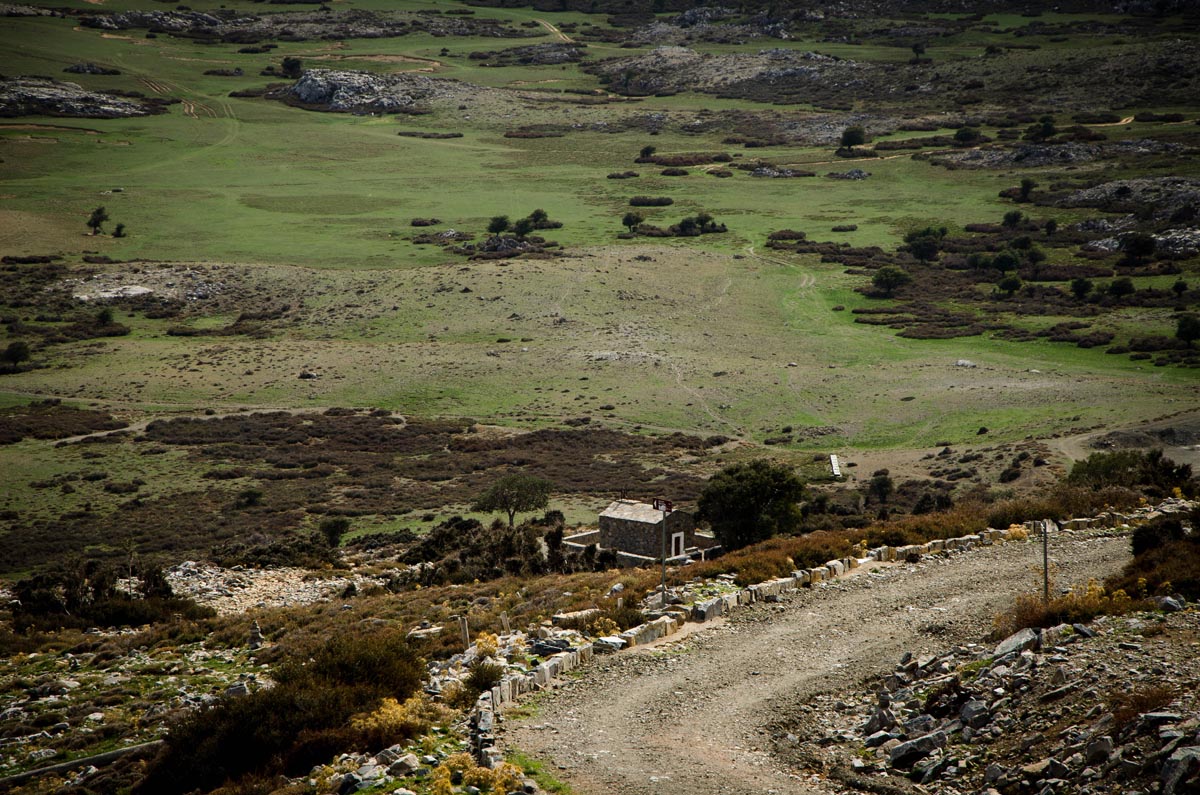
Featured image by George E. Koronaios, via Wikimedia Commons. Licensed under CC BY-SA 4.0. No changes made.
