
The Assumption of Mary in Crete: Fast, Vigil, and Panagia Feast on August 15
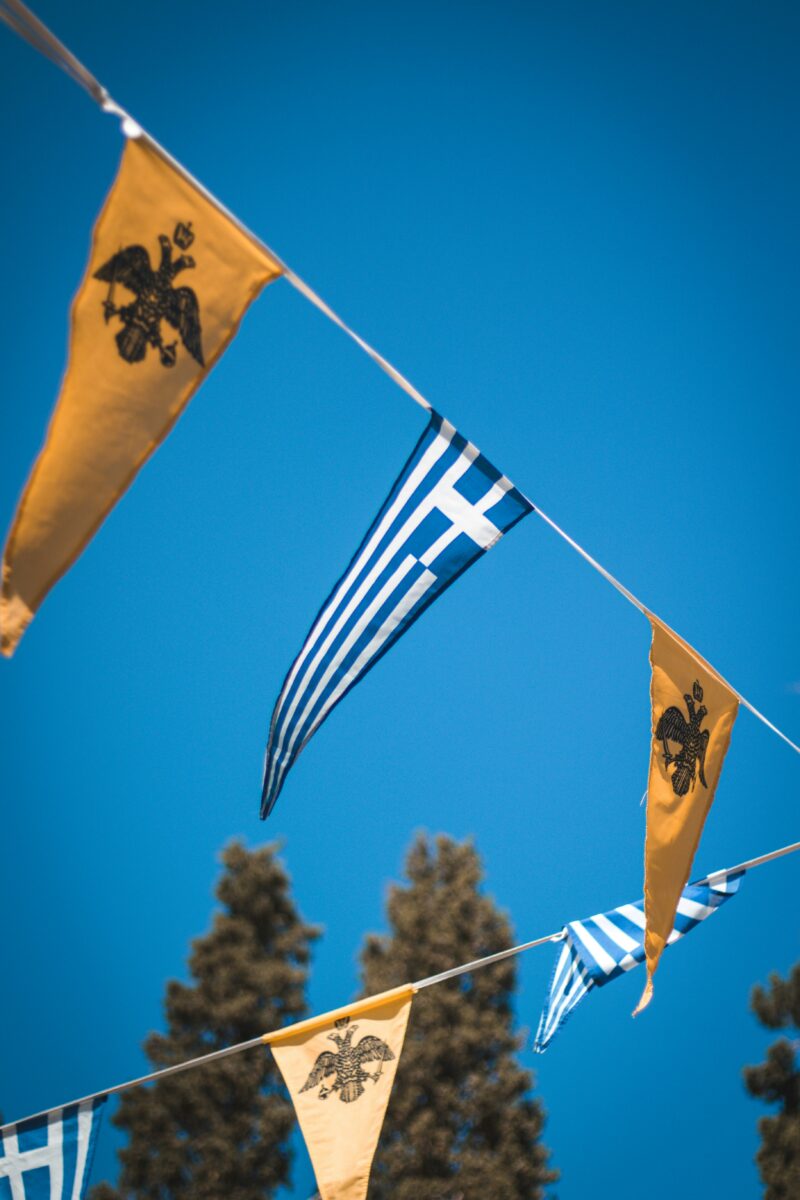
The Assumption of Mary in Crete falls on August 15 each year, closing a two week fast with an overnight vigil, a wave of pilgrims at monasteries across the island, and a village panigyri that runs past midnight.
Known locally as Dekapentavgoustos, it is the second most important date on the Orthodox calendar after Easter, and on Crete it carries a weight that visitors notice the moment they arrive at a monastery courtyard on the afternoon of the 14th and find it already full.
In short: the Assumption of Mary in Crete is the August 15 feast marking the Dormition of the Virgin Mary (Panagia), preceded by a two week fast that begins on August 1. Cretans mark it with overnight church vigils on August 14, pilgrimages to monasteries such as Panagia Kalyviani, and village panigyria with music, dancing, and food that follow the church services into the night.
The Assumption of Mary, also called the Dormition of the Virgin Mary, is marked in Greece on August 15 and commemorates the passing of Panagia (the Virgin Mary) and her assumption into heaven. It is preceded by a period known as Dekapentavgoustos, which includes a two week fast running from August 1 to August 14, a Great Vespers service on the eve of the feast, and an overnight vigil that many Cretans attend in full. In Crete specifically, the day is marked with pilgrimages to Marian monasteries across the island and village panigyria that begin after the church service and often continue until dawn.
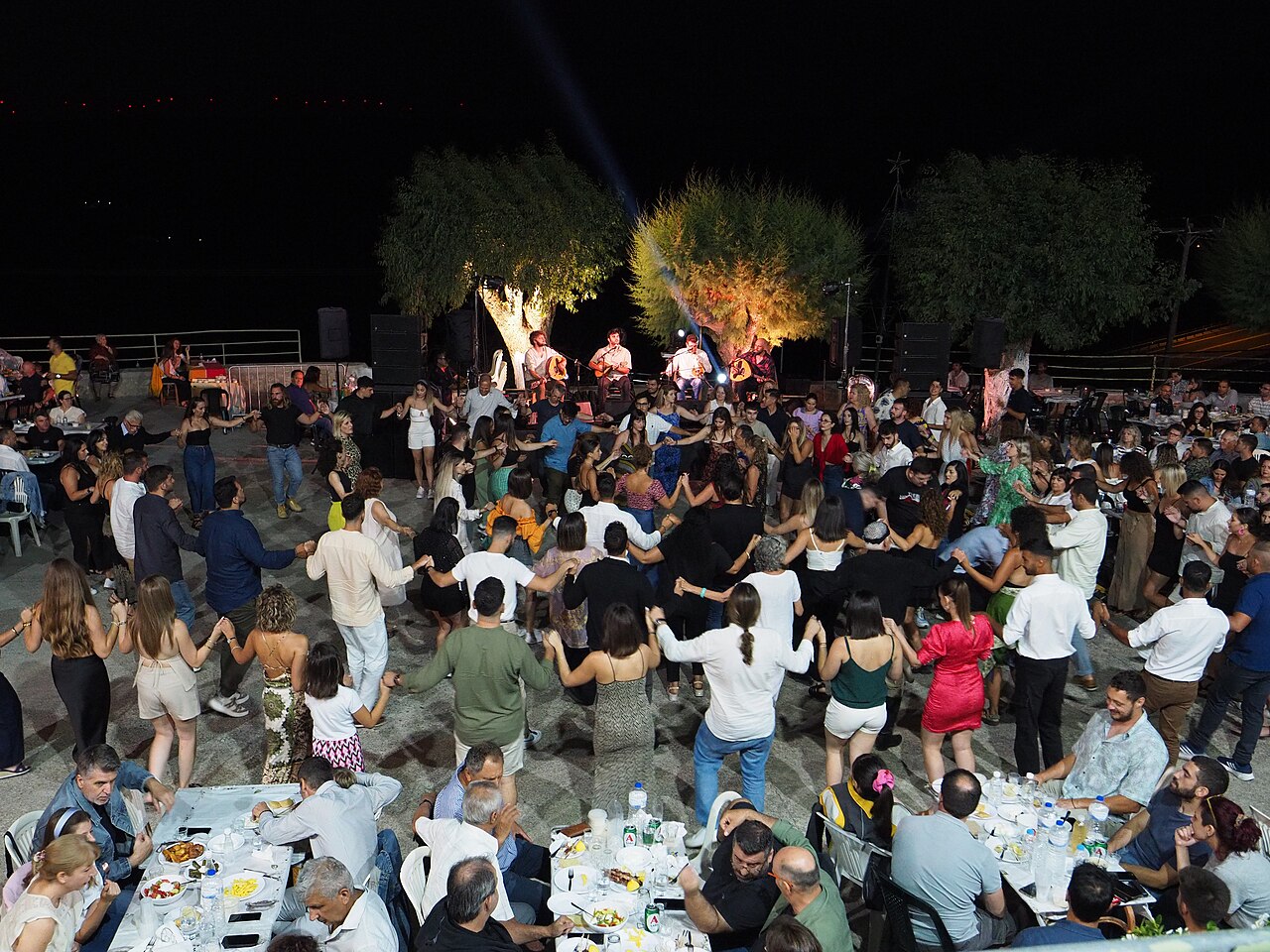
Dancing at the Chamezi festival in Crete. Photo by C messier, via Wikimedia Commons, licensed under CC BY-SA 4.0. No changes were made.
What the Two Week Fast Involves
The lead up to the Assumption of Mary begins on August 1, when the Church opens a fifteen day fasting period that ends on the eve of the feast. For those who keep it, the fast means setting aside meat, dairy, and eggs, with fish permitted on August 6 for the Feast of the Transfiguration, and wine and olive oil allowed on weekends. It is a shorter, quieter counterpart to the Lenten fast before Easter, and Greeks sometimes call this stretch of August the “summer Pascha” for exactly that reason.
For a Cretan household, the fast is less about restriction and more about pacing. Kitchens shift toward vegetables, pulses, and the island’s own olive oil and bread, and church attendance rises through the two weeks, with short Paraklesis services, hymns of supplication addressed to Panagia, held most evenings in village churches. The fast ends with Great Vespers on the evening of August 14, the service that opens directly into the vigil.
The Overnight Vigil on August 14
On the night of August 14, churches and monasteries across Crete stay lit until morning. After Great Vespers, many parishes move into a long vigil service that combines evening and morning prayers into one continuous act of worship, a pattern used on the eve of the Church’s most significant feasts. The icon of Panagia, often decorated with flowers, is venerated by a line of the faithful that can last for hours.
At the island’s larger pilgrimage sites, some visitors arrive on foot from nearby villages and stay through the night rather than return home, treating the vigil the way many Cretans treat the midnight service of Holy Week: as something worth losing sleep for. Readers who want a point of comparison can see how this same pattern of fasting, vigil, and communal celebration plays out at Easter in our guide to Orthodox Easter traditions in Crete.
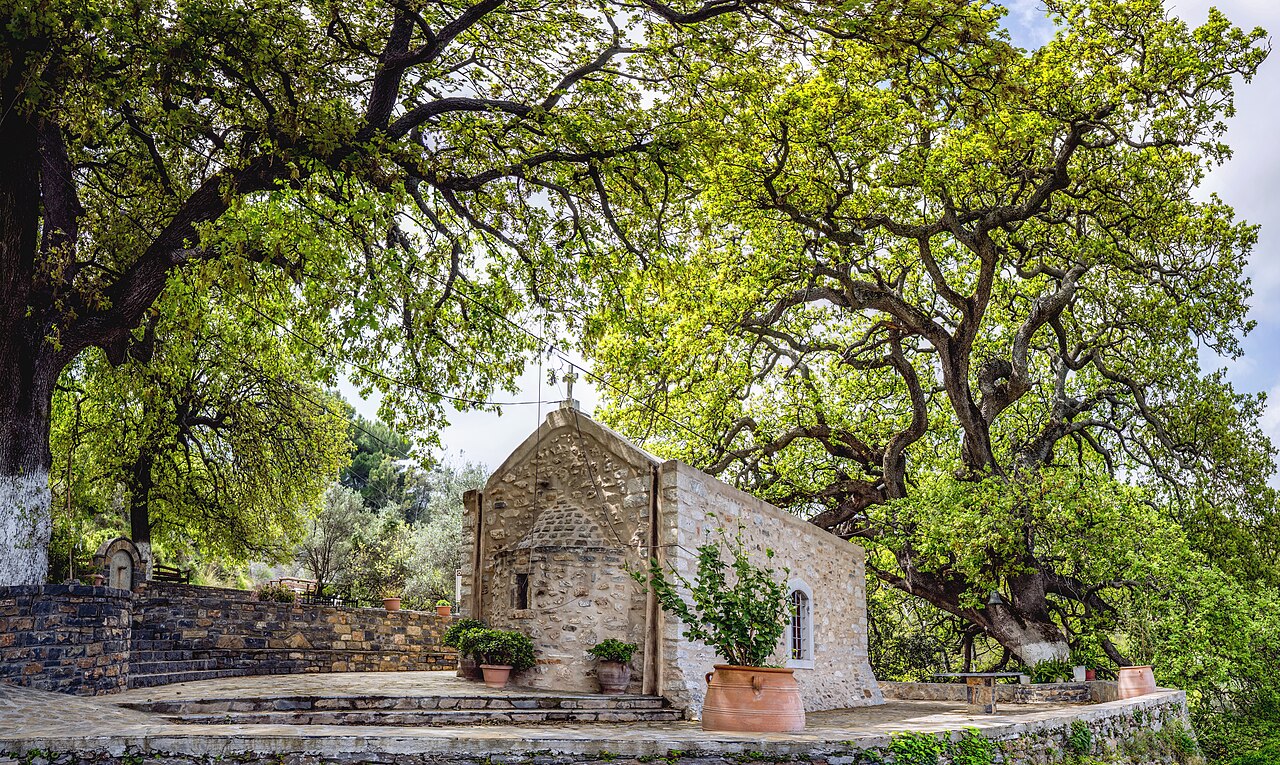
Panagia Keragoniotissa monastery near Latsida, Crete. Photo by Jerzy Strzelecki, via Wikimedia Commons, licensed under CC BY-SA 3.0. No changes were made.
The Island’s Major Pilgrimage Sites
Crete holds a dense cluster of churches and monasteries dedicated to Panagia, and three in particular draw the largest crowds for the Assumption of Mary.
Panagia Kalyviani, Near Mires
South of Heraklion, close to the town of Mires, the monastery of Panagia Kalyviani is one of Crete’s most visited Marian shrines. Its icon of the Virgin was found on the site in 1873, and the present church, built in the 1920s, has three aisles, one of them dedicated to the Assumption itself. Beyond its religious role, Kalyviani has run charitable and social work for decades, sheltering children and supporting families in need, which gives the pilgrimage here a practical, community dimension as well as a spiritual one.
Panagia Chrissoskalitissa, Near Elafonisi
Panagia Faneromeni, in the East
Near Sitia, in the Trachilas area, the monastery of Panagia Faneromeni sits above a small gorge and has served as a place of pilgrimage since before 1455. Its church is dedicated to the Assumption of Mary, and its old frescoes, darkened by fire during periods of occupation, are still visible today. The monastery’s remote position once made it a meeting place for Cretans during years of foreign rule, and that history of shelter still shapes how the site feels on August 15.
These three sites sit alongside many smaller parish churches across the island that carry the same dedication. Travelers who want a broader look at Crete’s religious architecture can browse our roundup of the most impressive churches in Crete for sites worth visiting outside the fifteenth of August as well.
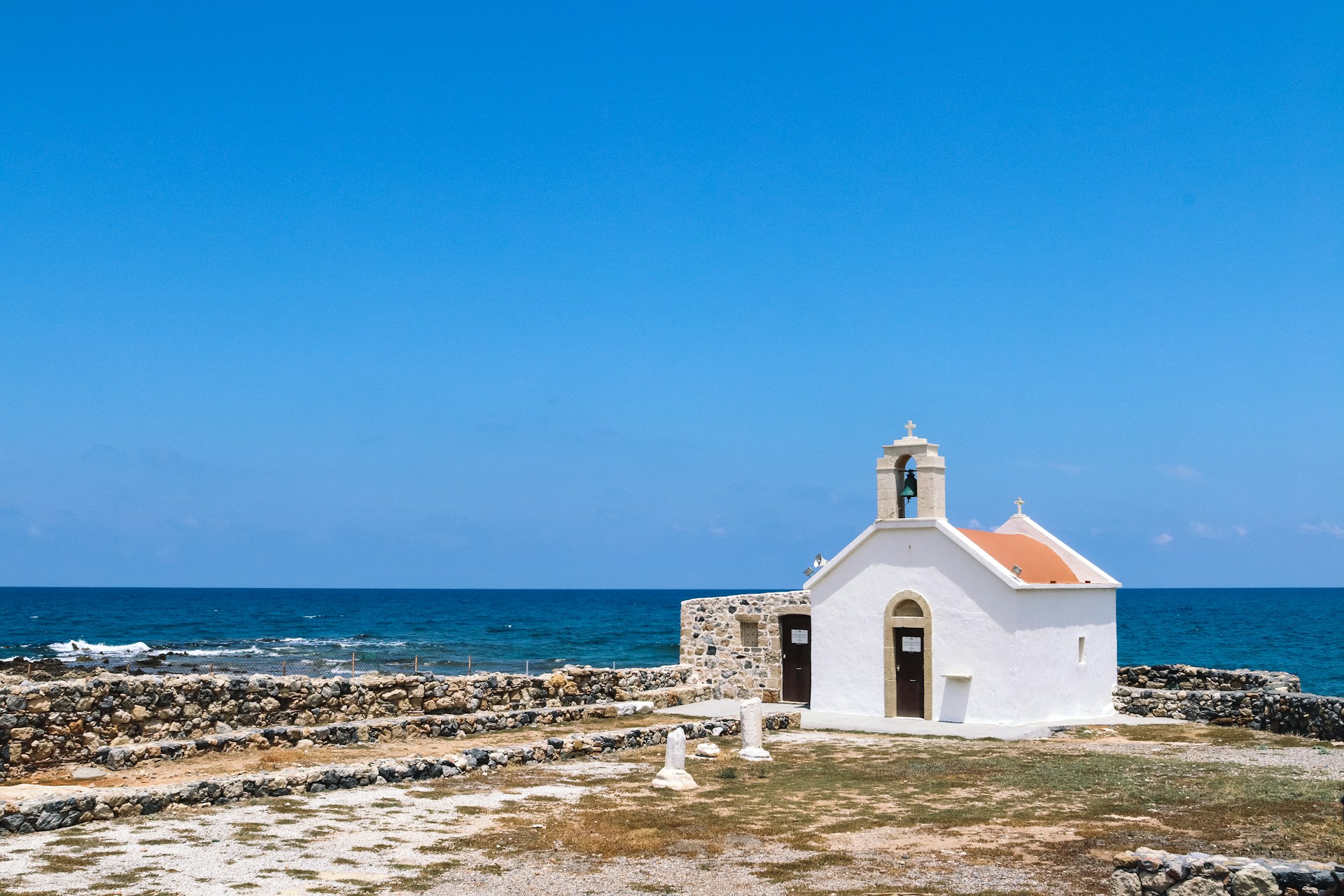
Photo by Alex Mochalov on Unsplash
After the Bells: The Village Panigyri
Once the church service ends, the Assumption of Mary in Crete turns into a panigyri, a village festival that pairs the solemn morning with a loud, warm evening. Long tables fill the square, and the food that follows the two week fast tends to make up for lost time: antikristo (lamb grilled slowly over an open fire), dakos topped with tomato and cheese, kalitsounia pastries, and plenty of local wine and raki.
A Cretan lyre player usually leads the music, and the dancing, pentozali, sousta, and other island steps, can run until sunrise. Villages such as Anogia, Vamos, and Archanes host particularly large panigyria on this date. Nearly every settlement on the island also holds a celebration in some form. For many Cretan families, August 15 is also the day relatives return from Athens or abroad, so the panigyri doubles as a homecoming, with tables set for people who have not shared a meal together since the previous summer.
An Older Thread: Panagia and Crete’s Long Memory of the Feminine Sacred
Historians of religion are careful about drawing a straight line between the veneration of Panagia and the goddess worship of Minoan Crete, since well over a thousand years and a full change of faith separate them. What scholars do point to, more cautiously, is a pattern rather than a direct link: Crete has kept a central place for a feminine sacred figure across an unusually long stretch of its history, first in the form of a mother goddess connected to fertility, protection, and the mountains, and later in the figure of Panagia, honored as protector of villages, sailors, and families.
Nobody needs to accept a theory of unbroken continuity to notice the pattern, and it is worth holding lightly rather than treating as settled fact. But it is one reason the Assumption of Mary in Crete feels, to many visitors, less like a single day of observance and more like a marker in a much longer relationship between the island and a feminine sacred presence. Readers who want to explore that older layer can read our pieces on the Divine Mother as a figure across cultures and mythologies, and on the Divine Feminine Goddess traditions of the wider Mediterranean.
Visiting Respectfully: A Practical Guide for Travelers
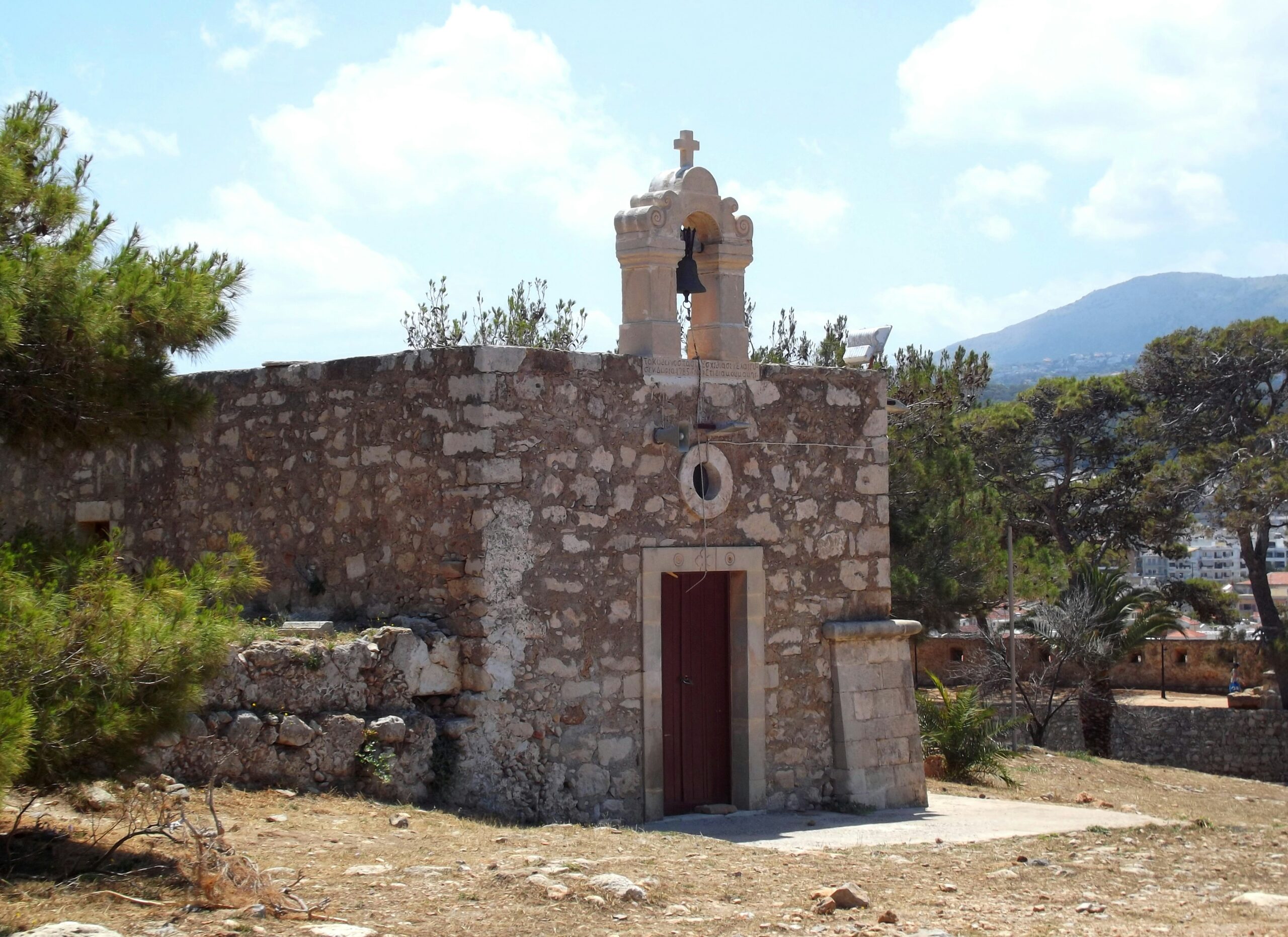
- Choose your site by what you want from the day. A large pilgrimage monastery like Kalyviani offers scale and a strong sense of collective devotion, while a smaller village church gives a quieter, more personal version of the same vigil.
- Plan to arrive early on August 14. Parking and seating fill up fast at the major monasteries, and roads leading to sites like Chrissoskalitissa can be slow closer to evening.
- Dress modestly for the church itself. Shoulders and knees covered is the standard expectation at Cretan monasteries and parish churches alike, for both the vigil and the morning service.
- Stay for the panigyri if you can. The festival welcomes both visitors and locals. People generally welcome visitors to join a table. It is best to let the village set the tone rather than treat the celebration like a performance staged for guests.
- Book transport and rooms ahead of time. August 15 is a national holiday, and Crete is already at its busiest point in the summer, so accommodation near the main pilgrimage sites can fill weeks in advance.
- Give the vigil the same quiet attention you would give a Holy Week service. Phones down, voices low, and a willingness to stand for long stretches will serve any visitor well inside the church itself.
Conclusion
Photo by Tadeusz Zachwieja on Unsplash
FAQ
What is the Assumption of Mary in Crete?
It is the August 15 feast marking the Dormition of the Virgin Mary, when Orthodox Christians commemorate Panagia’s passing and her assumption into heaven. In Crete, it combines a solemn church vigil with pilgrimages to Marian monasteries and village panigyria.
When is the Assumption of Mary celebrated in Crete?
Every year on August 15, following a two week fast that begins on August 1 and a vigil on the night of August 14.
What is Dekapentavgoustos?
Dekapentavgoustos is the Greek name for the fifteen day period leading up to and including August 15, covering the fast, the Paraklesis services, the vigil, and the feast itself.
Do Orthodox Christians fast before August 15?
Yes. Many observe a two week fast from August 1 to August 14, avoiding meat, dairy, and eggs, with an exception for fish on August 6 and for wine and olive oil on weekends.
Which pilgrimage sites in Crete are linked to the Assumption of Mary?
The most visited are Panagia Kalyviani near Mires, Panagia Chrissoskalitissa near Elafonisi, and Panagia Faneromeni in the east near Sitia, alongside many smaller parish churches across the island.
What is a panigyri?
A panigyri celebrates a religious feast in the village. It brings people together for live music, traditional dancing, and shared food. On August 15 in Crete, panigyria typically follow the church service and run late into the night.
What should visitors wear to a vigil or church service in Crete?
You should dress modestly for the overnight vigil. You should also cover your shoulders and knees for the morning liturgy.
Feature Image by Adrien Delforge on Unsplash