The Divine Mother: Nurturer of Our Spiritual Growth
The Divine Mother is one of those phrases that can feel instantly familiar, even if you have never used it before. People meet it through religion, mythology, meditation, art, or a quiet sense that something loving and intelligent is holding life together. Some experience the Divine Mother as a sacred presence they can pray to, while others understand her as an archetype that lives in the human psyche, shaping how we receive care, give love, and heal. Either way, the heart of the idea is simple: the Divine Mother is the nurturing face of the Divine, and her “work” is often the work of spiritual growth, softening what is hardened, strengthening what is fragile, and guiding us toward wholeness.
In this article, we’ll explore the Divine Mother through three complementary lenses. We’ll begin with meaning and why it matters, then we’ll ground the concept historically through the long human relationship with Mother Goddess imagery, and finally we’ll make it practical with approachable ways to connect through devotion, meditation, and embodied expression. If you have been curious about the Divine Mother, longing for a more compassionate spiritual path, or simply trying to understand why this symbol appears across cultures, you’re in the right place.
Divine Mother Meaning And Why It Matters
The Divine Mother is not only a poetic metaphor. For many people, she becomes a real spiritual orientation: a way of relating to life that emphasizes compassion, inner safety, and love as a path to transformation. When spirituality becomes overly mental or achievement-based, the Divine Mother reminds us that growth does not have to be harsh in order to be true.
Divine Mother As The Feminine Aspect Of The Divine
When people describe the Divine Mother as the feminine aspect of the Divine, they are not necessarily talking about gender in a biological sense. They are pointing to a quality of presence, receptive, generative, protective, life-giving, wise in the way nature is wise. In many traditions, God is not seen as limited to a single “personality,” but as a vast reality that can be approached through different faces: loving, fierce, still, creative, merciful, just.
So the Divine Mother can be understood as an aspect, not a separate competing deity. This language matters because it allows room for many experiences. Someone rooted in monotheism may connect with the Divine Mother as God’s compassion and care made intimate and personal. Someone drawn to goddess spirituality may relate to her as a divine being with many names and forms. And someone who prefers psychology may see her as an archetype that reveals how the human heart learns trust, resilience, and spiritual maturity. These are not always contradictions; they can be different doors into the same room.
The Nurturer Archetype: Compassion, Forgiveness, Protection
When we call the Divine Mother the nurturer, we are naming the qualities most people instinctively associate with mothering energy: compassion that makes space for our humanity, forgiveness that helps us begin again, and protection that creates a sense of being held. Those qualities are not “soft” in the shallow sense; they are deeply powerful because they change what we believe is possible.
Compassion is what allows us to look honestly at our patterns without collapsing into shame. Forgiveness is what breaks the loop of self-punishment and creates room for growth. Protection is what helps the nervous system relax enough to learn, to love, and to heal. In this way, the Divine Mother becomes more than a symbol. She becomes a healing environment, an inner climate where spiritual development can actually take root.
Spiritual Growth Through Devotion, Surrender, And Inner Safety
Many people try to grow spiritually by force of will, as if enlightenment were a personal project that can be managed through discipline alone. Discipline is useful, but without inner safety it can become brittle. The Divine Mother introduces another pathway: devotion and surrender, not as passivity, but as trust.
Devotion is not just ritual. It is the act of returning, again and again, to what is sacred. Surrender is not giving up; it is loosening the grip of the part of us that insists everything must be controlled. When people speak of the Divine Mother nurturing spiritual growth, they often mean that her presence makes it easier to stay with the process, especially when growth brings discomfort, grief, or uncertainty. The heart can open more naturally when it feels safe enough to be real.
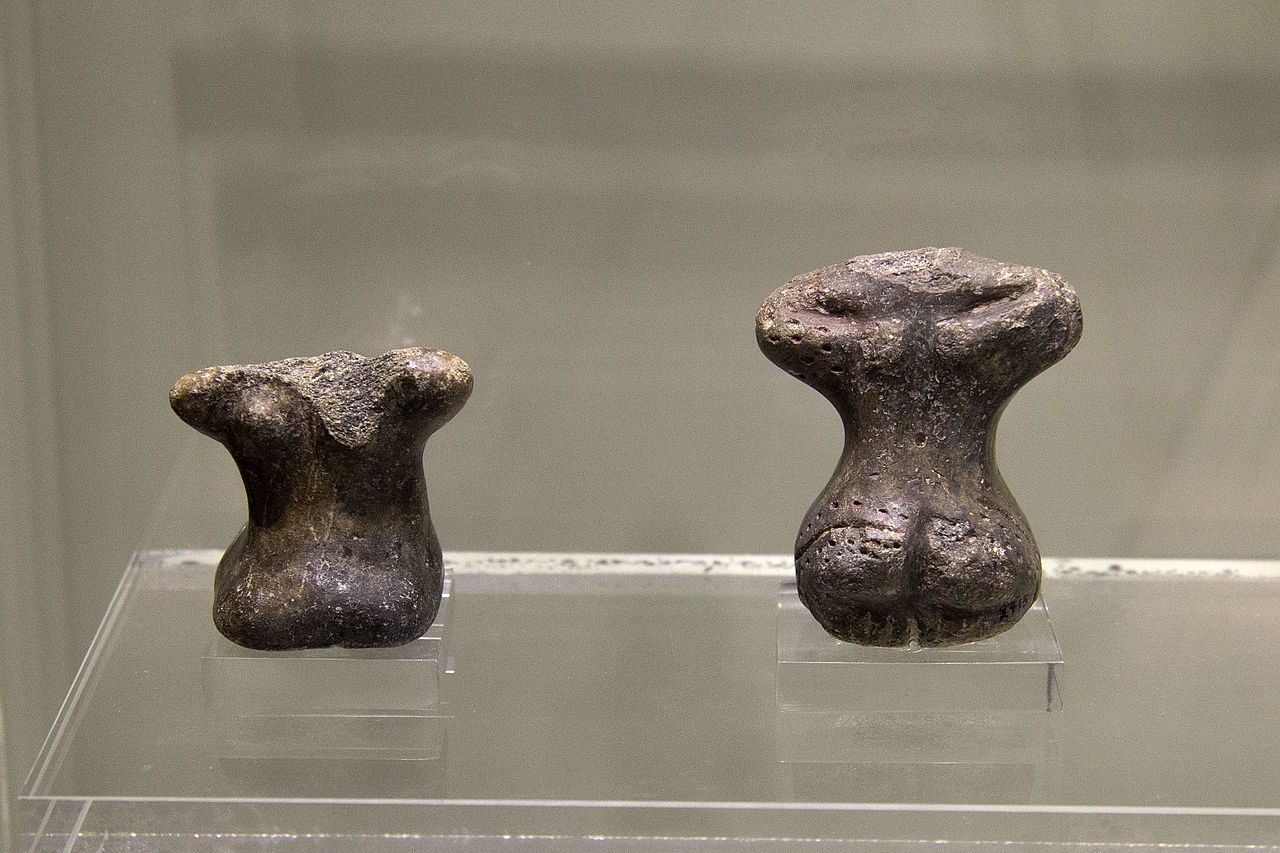
Neolithic female pottery figurines (torsos), 5000–3000 BC, Archaeological Museum of Heraklion — photo by Zde, via Wikimedia Commons, licensed under CC BY-SA 4.0.
Divine Mother Across History: From Prehistory To Temples
The Divine Mother is not a modern invention. Long before people had the language of psychology or the frameworks of contemporary spirituality, they were shaping clay, carving stone, and building temples to express a deep intuition: life is born from a mystery that feels maternal, creative, sustaining, and larger than any one individual.
Venus Figurines And Early Mother Goddess Symbolism
In prehistoric Europe, archaeologists have found small figurines often called Venus figurines, many with emphasized hips, belly, and breasts. Scholars debate their exact meaning, and it is important not to oversimplify them, but they are frequently discussed as early symbols connected to fertility, abundance, and the sacredness of life-making.
What is striking is not only the form, but the impulse behind it. These objects suggest that people were already trying to relate to the power that creates life. Whether these figurines were devotional, protective, educational, or symbolic in ways we can’t fully recover, they point to an enduring human theme: reverence for the source that nourishes and renews.
Mother Earth And Gaia As A Universal Pattern
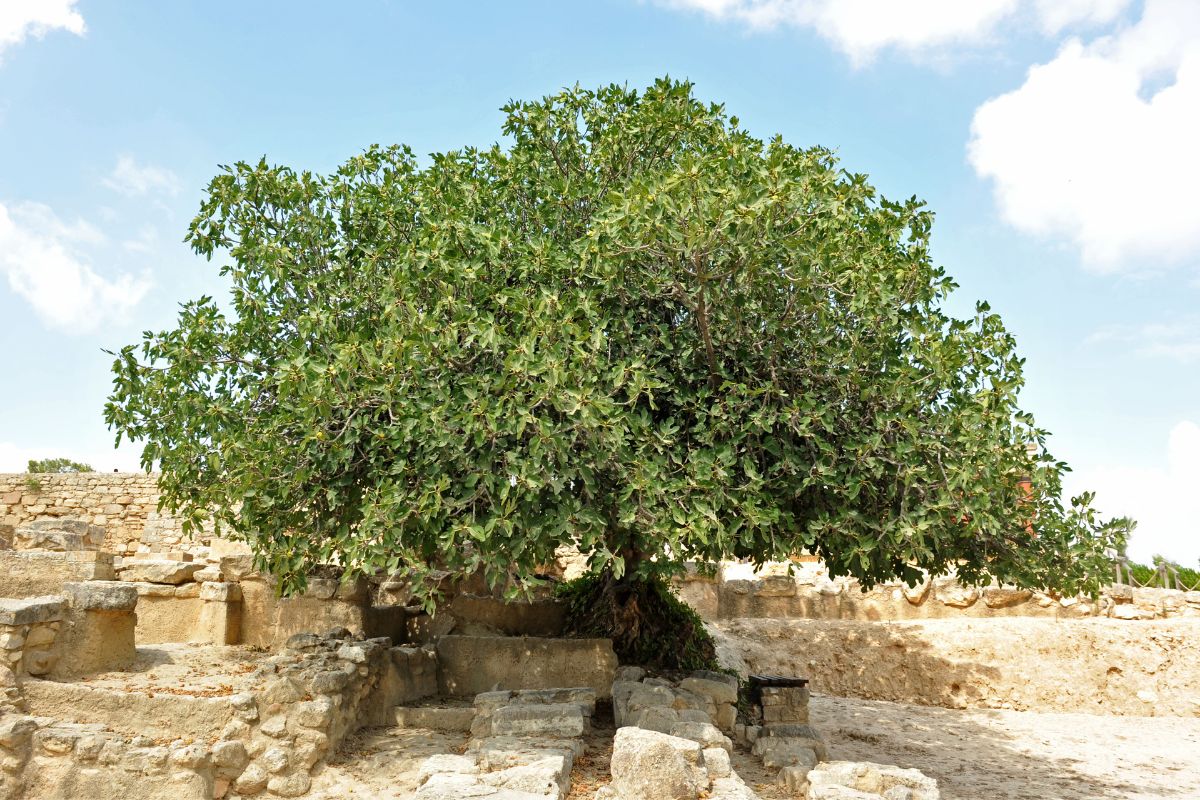
Across cultures, the Earth itself becomes one of the most natural images of the Divine Mother. The ground receives seeds, transforms them, and returns food. The seasons teach cycles of growth and rest. The weather can be gentle or fierce, and life continues to unfold within that vast intelligence.
In Greek tradition, Gaia is a foundational mother figure, embodying the living Earth. Even if you do not take myth literally, the symbolism is clear: the planet is not merely scenery. It is a sustaining presence. For many people, connecting with the Divine Mother begins with reconnecting to the natural world, because nature communicates mothering energy through rhythm, patience, and renewal.
From Goddess Cultures To Patriarchal Shifts: What Changed?
It is common to hear sweeping claims about ancient “goddess cultures” being replaced by patriarchal religions, and there is truth in the fact that religious emphasis shifted over time in many regions. However, history is complex, and simplistic stories rarely do justice to real human societies.
What we can say with more balance is that as civilizations grew, warfare, state power, and hierarchical systems often became more central, and religious imagery and authority structures changed alongside them. In many places, goddess figures did not disappear, but they were reinterpreted, absorbed, or pushed to the edges of official worship. Interestingly, the longing for the Divine Mother tends to persist even when it is not centered, resurfacing through saints, folk practices, mystery traditions, and renewed spiritual movements.
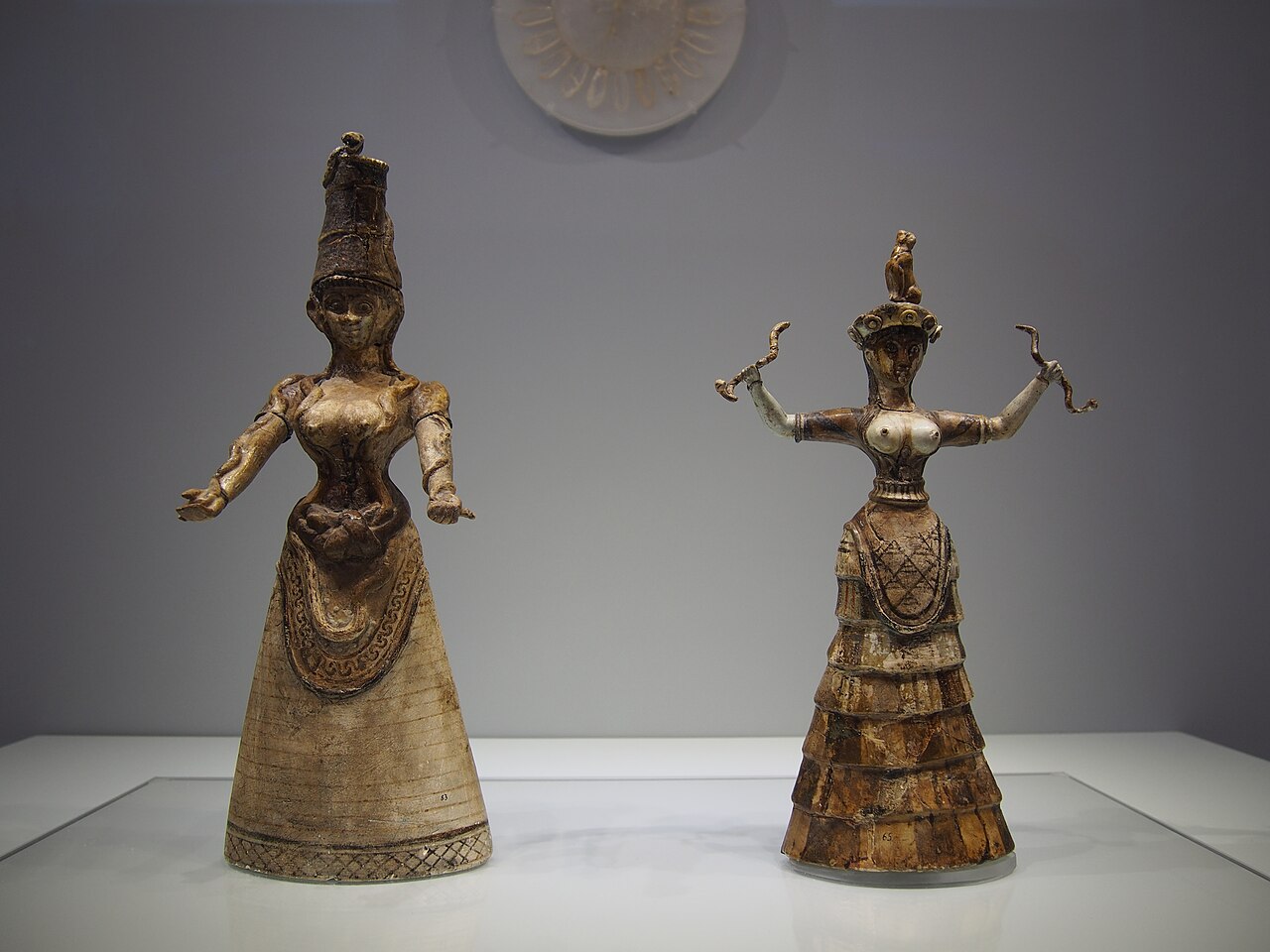
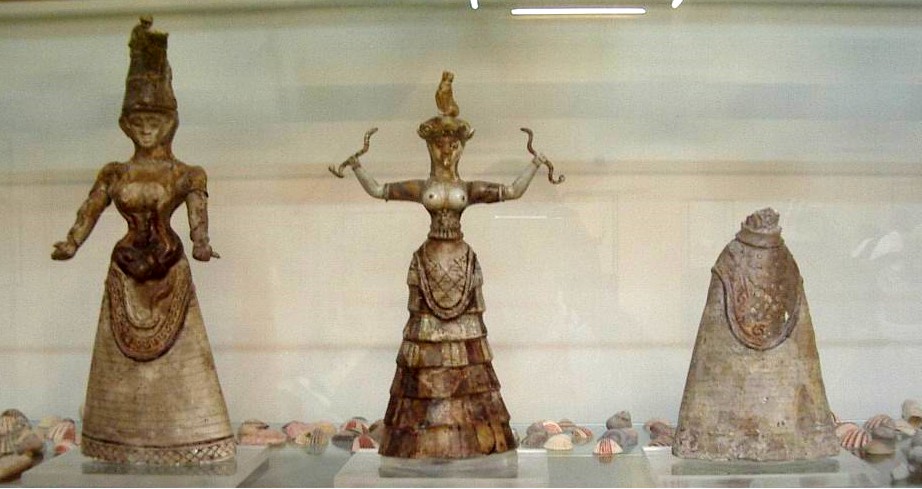
Two Minoan “Snake Goddess” figurines — photo by C messier, via Wikimedia Commons, licensed under CC BY-SA 4.0.
Divine Mother In Ancient Mediterranean Art And Myth
If you look at ancient Mediterranean art and myth, you find a world saturated with symbols of nourishment, regeneration, and sacred feminine power. These stories are not only “old.” They are psychologically and spiritually sophisticated maps of human experience.
Demeter And The Grain Cycle: Nourishment, Loss, Return
Demeter, the Greek goddess of grain and agriculture, is one of the most poignant Divine Mother figures in myth because her story includes both nourishment and grief. Her relationship with her daughter Persephone is not a simple “fertility tale.” It is a story about love, loss, the rhythm of separation and return, and the way the world itself seems to mirror personal pain.
Demeter’s sorrow is tied to the land becoming barren, and her joy is tied to life returning. In spiritual terms, this myth speaks to how growth often comes in seasons. There are times when we feel full of faith and vitality, and times when something feels wintered inside us. The Divine Mother, through Demeter’s lens, teaches that grief is not a failure of spirituality. Sometimes grief is part of the cycle that makes deeper maturity possible.
Minoan Snake Goddess: Regeneration, Healing, Embodied Power
In Minoan Crete, images often referred to as the Snake Goddess appear with striking presence. The snake, across many cultures, carries associations with renewal because it sheds its skin. It can symbolize healing, cyclical rebirth, and the intelligence of the body.
What makes this imagery feel “Divine Mother” is the sense of embodied sacredness. The spiritual is not separate from life; it is woven through vitality, fertility, and the mysterious power of regeneration. For modern readers, the Snake Goddess can be a reminder that spiritual growth is not only mental clarity. It is also learning to trust the body, honor cycles, and allow transformation to happen at the pace of nature.
Goddess With Uplifted Arms: Ritual Gesture And Devotion
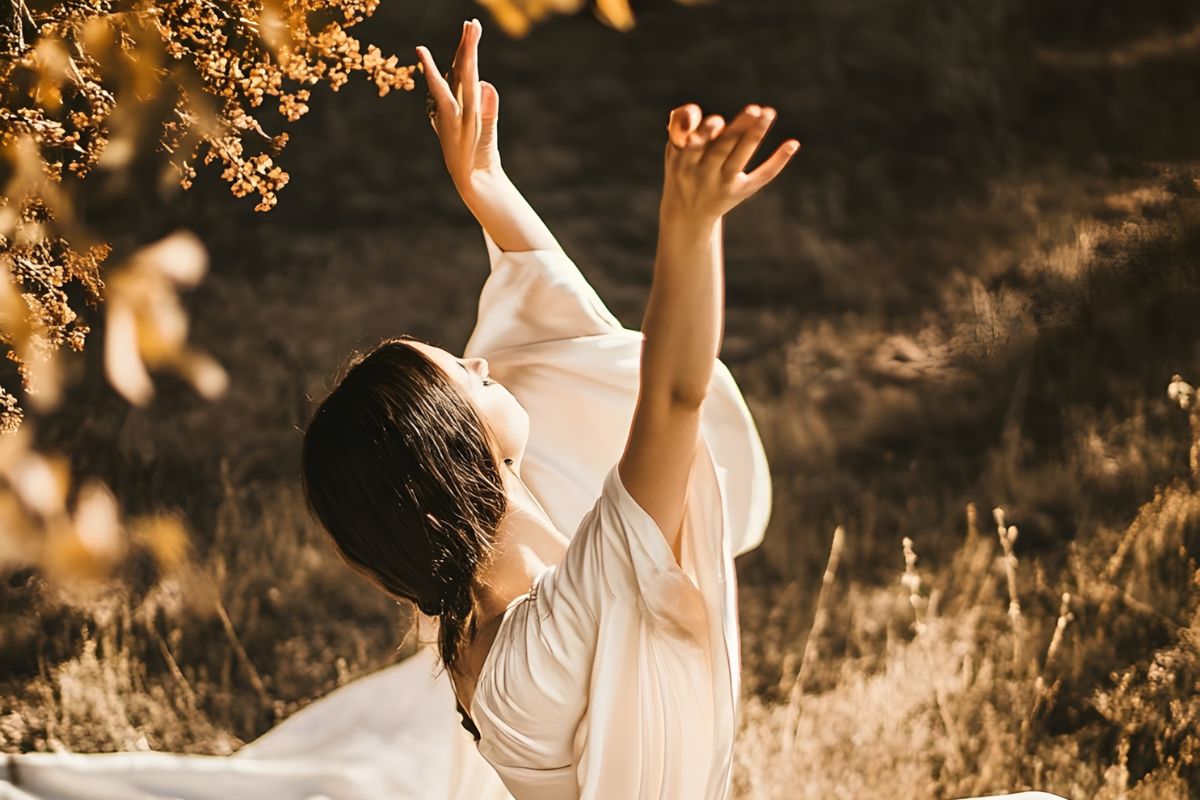
Another recurring figure in Minoan and later contexts is the goddess or worshipper with uplifted arms, a gesture that communicates invocation, openness, and reverence. Even without words, the posture speaks: “I am present. I am receiving. I am offering myself to what is greater.”
This is one of the quiet bridges between art and practice. The Divine Mother is not only conceptual. She is relational. Ancient gesture-based devotion suggests that human beings have long used the body to express spiritual longing. Sometimes the simplest act, standing with open arms, breathing, and allowing yourself to be met, carries more spiritual truth than an elaborate philosophy.
Divine Mother In Devotion And Mysticism
Devotion and mysticism bring the Divine Mother from history and symbol into lived experience. This is where the Divine Mother shifts from an idea into a relationship, whether that relationship is understood as with a divine being, the inner Self, or the sacred intelligence of life itself.
“You Are Divine Mother”: What Non-Separation Really Means
Some teachings use bold language, saying things like “You are the Divine Mother” or “Everything is the Divine.” At first, this can sound confusing or even arrogant. The deeper meaning is usually not “your personality is god,” but that the divine presence you seek is not separate from the reality of your being.
Non-separation points to the idea that the sacred is not “over there,” reserved for rare mystical experiences. The Divine Mother can be encountered as the love that witnesses you, the compassion that rises when you stop fighting yourself, and the deep intelligence that moves life through you. When understood maturely, this teaching does not inflate the ego; it softens the ego’s fear. It invites humility because it suggests you belong to something vast, and your life is part of it.
Tuning Into The Divine Mother: Form, Prayer, And Visualization
People connect with the Divine Mother through many doorways. Some prefer form, such as a specific goddess, saint, or symbol. Others connect through prayer, speaking honestly as if to a loving presence. Others use visualization, not as fantasy, but as a way of focusing attention and opening the heart.
A simple practice might look like this: you choose a form that feels safe and resonant, even if it is only an image of warm light. You speak inwardly in a natural voice, not trying to sound spiritual. You ask for guidance, protection, clarity, or help in becoming more loving. Then you pause long enough to listen, not for dramatic messages, but for subtle shifts, softening, calm, a clearer next step. Over time, that listening becomes a relationship.
Never Lose Sight Of The Infinite Behind The Form
Forms can be deeply helpful, especially for the heart, but mature devotion also includes discernment. The Divine Mother is bigger than any single image we use. The point of form is not limitation; it is intimacy. It gives the mind something to hold so the heart can open.
If you find yourself becoming rigid about one “right” representation, it can help to step back and remember that the infinite cannot be contained. The Divine Mother may meet you through a goddess name one day, through silence the next, and through an unexpected moment of kindness another day. When the form remains connected to the infinite, devotion becomes spacious rather than narrow.
Qualities Of The Divine Mother That Support Spiritual Growth
When people say the Divine Mother nurtures spiritual growth, they usually mean she cultivates certain inner capacities that make growth steady, real, and sustainable.
Unconditional Love And Self-Compassion As A Spiritual Skill
Self-compassion is not indulgence. It is a skill that stabilizes the inner world. Without it, people often swing between spiritual ambition and burnout, or between harsh self-criticism and avoidance. The Divine Mother teaches a different rhythm: accountability held in love.
Unconditional love does not mean “anything goes.” It means you are still worthy of care while you learn. When you practice self-compassion, your nervous system becomes less reactive. You can observe your patterns without being swallowed by them. This steadiness creates the conditions where real transformation can happen, because you no longer need shame as your main motivator.
Creativity, Birth, And New Beginnings
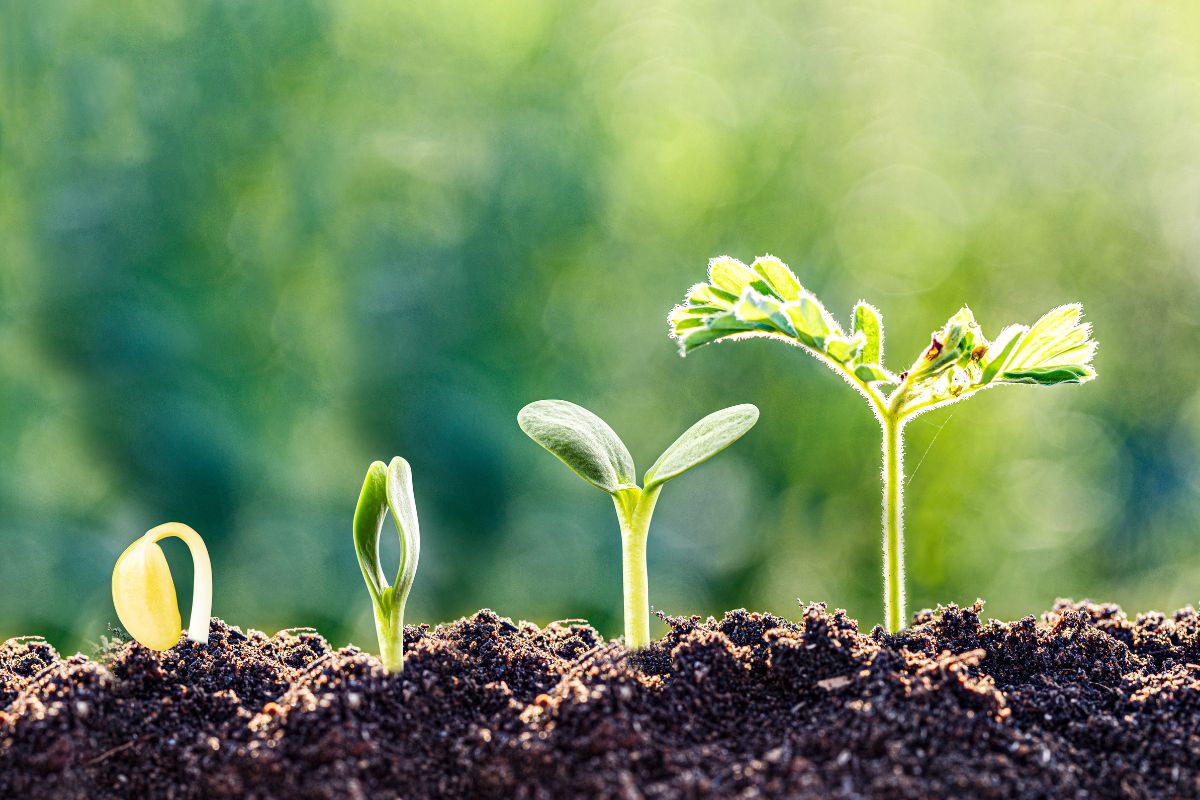
The Divine Mother is also the force of creation. Not only physical birth, but the birth of insight, the birth of courage, the birth of a new way of living. Spiritual growth often asks us to become someone we haven’t been before, which can feel vulnerable.
When you approach change through the Divine Mother, the process feels less like self-improvement and more like cultivation. You start to ask, “What is trying to be born in me?” You begin to nurture it the way you would nurture something living, through patience, attention, and gentle consistency. This mindset can be especially helpful for people who have tried to force growth and ended up feeling discouraged.
Cycles Of Life, Death, And Rebirth: Integrating Change
Nearly every tradition linked to the Divine Mother includes cycles. There is growth and harvest, decline and rest, loss and renewal. Spiritual growth follows a similar pattern. Some phases are expansive and joyful, and others are quieter, even disorienting.
The Divine Mother helps us integrate change by teaching that endings are not always failures. Sometimes an identity, belief, or relationship pattern needs to “die” for a more honest life to emerge. When you hold that process with mothering energy, you stop treating every difficult season as a crisis. You start treating it as a passage.
How To Connect With The Divine Mother
Connection becomes real when it becomes practical. You do not need elaborate rituals to begin, but you do need sincerity and repetition. The relationship grows through return.
Prayer And Honest Conversation: A Relationship, Not A Performance
If you want to connect with the Divine Mother, start with honesty. Speak inwardly the way you would speak to someone who truly loves you. You do not need special words. You can say, “I feel overwhelmed,” or “I don’t know what to do,” or “Help me soften,” or “Teach me how to trust.”
One simple framework is to include three parts: gratitude for something real, a truthful sharing of what you are carrying, and a clear request for support. Then pause. Give the moment time to land. Often the shift you receive is not an answer in sentences, but a change in your inner atmosphere, more calm, more tenderness, more courage.
Meditation: Receiving The Embrace And Inner Guidance
A gentle Divine Mother meditation can be very simple:
-
Sit comfortably and let your breath become natural.
-
Place a hand on your heart or belly if that feels supportive.
-
Imagine a warm presence, like soft light, surrounding you without demand.
-
On the inhale, silently receive: “I am held.”
-
On the exhale, release: “I don’t have to do this alone.”
-
After a few minutes, ask one question: “What is the next kind step?”
-
Listen for a small, practical answer, even if it’s just “rest,” “apologize,” or “go outside.”
If nothing comes, that is still okay. Sometimes the practice itself is the guidance. Receiving love is not always instant when we are used to striving. It becomes easier with time.
Movement And Art: Singing, Dancing, Painting As Devotion
For many people, the Divine Mother is easiest to feel through the body. Movement, song, and art bypass the part of the mind that wants to analyze everything. You might play music and move in a way that feels freeing, not performative. You might sing a simple chant or hum without worrying about sounding good. You might paint or write without aiming for a product.
These practices work because the Divine Mother is not only an idea; she is a living current. When you create, you participate in creation. When you move, you honor life’s energy. The goal is not aesthetic perfection. The goal is presence, sincerity, and the feeling of being in relationship with something larger than the self.
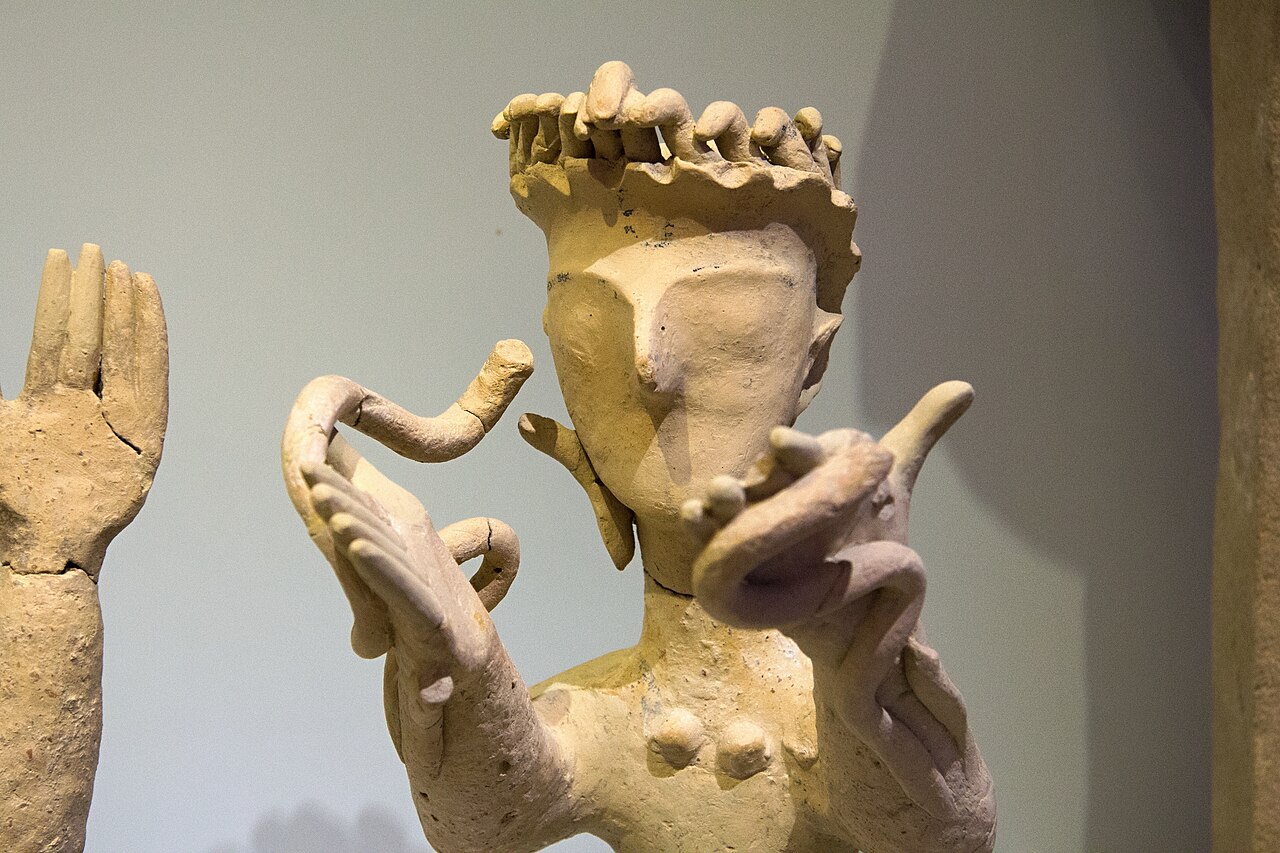
Goddess with upraised arms and snakes (terracotta, Kania–Gortys, 1300–1200 BC), Archaeological Museum of Heraklion — photo by Zde, via Wikimedia Commons, licensed under CC BY-SA 4.0.
Conclusion
The Divine Mother endures across time because she speaks to something essential in human life: the need to be held, guided, and nourished into our own becoming. Whether you meet her through ancient images of the Mother Goddess, through myths of loss and return, through devotion and mysticism, or through quiet daily practices, the invitation is the same. Spiritual growth does not have to be a battle. It can be a relationship, shaped by compassion and steadiness.
If you want a simple way to continue, choose one daily practice for the next seven days: a short prayer of honest conversation, a gentle meditation of receiving, or a small act of creativity offered as devotion. Let it be imperfect but sincere. Over time, you may notice something subtle yet profound: you feel more supported from within, more resilient in change, and more able to meet life with the kind of love that truly transforms.
Frequently Asked Questions
Is The Divine Mother A Goddess, An Archetype, Or An Aspect Of God?
The Divine Mother can be understood in more than one way, and the most helpful interpretation is often the one that genuinely supports your growth. Some people relate to the Divine Mother as a goddess with a distinct personality and mythology. Others experience her as an archetype, a deep pattern of nurturing wisdom within the human psyche. Others understand her as an aspect of God, emphasizing that the Divine includes both nurturing and protective qualities.
These lenses can coexist. The spiritual life is not always about choosing the one “correct” theory. It is often about noticing what opens the heart, deepens compassion, and helps you live with more truth.
Who Can Work With The Divine Mother And How Do You Start?
Anyone can work with the Divine Mother, regardless of background, religion, or level of experience. You do not need to label yourself a mystic, and you do not need to adopt beliefs that don’t feel authentic.
To start, choose one simple practice you can repeat for a week. It might be a short daily prayer, a five-minute meditation of receiving, or a walk in nature where you intentionally relate to life as a nurturing presence. Consistency matters more than intensity. The relationship grows the way trust grows, with steady contact.
What If The Divine Mother Brings Up Intense Emotions?
This is common, and it does not mean you are doing anything wrong. Nurturing presence often brings buried feelings to the surface because the system finally senses it is safe enough to release them. Tears, grief, tenderness, even anger can arise when the heart begins to open.
Go slowly. Keep practices gentle and time-limited if you feel overwhelmed. It can help to ground through the body, drink water, go for a walk, or journal. If intense emotions connect to trauma or feel unmanageable, it may be wise to seek support from a therapist or a trusted guide. The Divine Mother path is not about forcing catharsis; it is about compassionate integration.
Ask us more at www.elissos.com
Feature Image Credit: Image credit: “Museu arqueologic de Creta24” — Author: Jolle~commonswiki (J. Ollé) — Source: https://commons.wikimedia.org/wiki/File:Museu_arqueologic_de_Creta24.jpg — License: https://creativecommons.org/licenses/by-sa/3.0/ — No changes made.