
Discover Psiloritis Crete: A Guide to Hiking Adventures
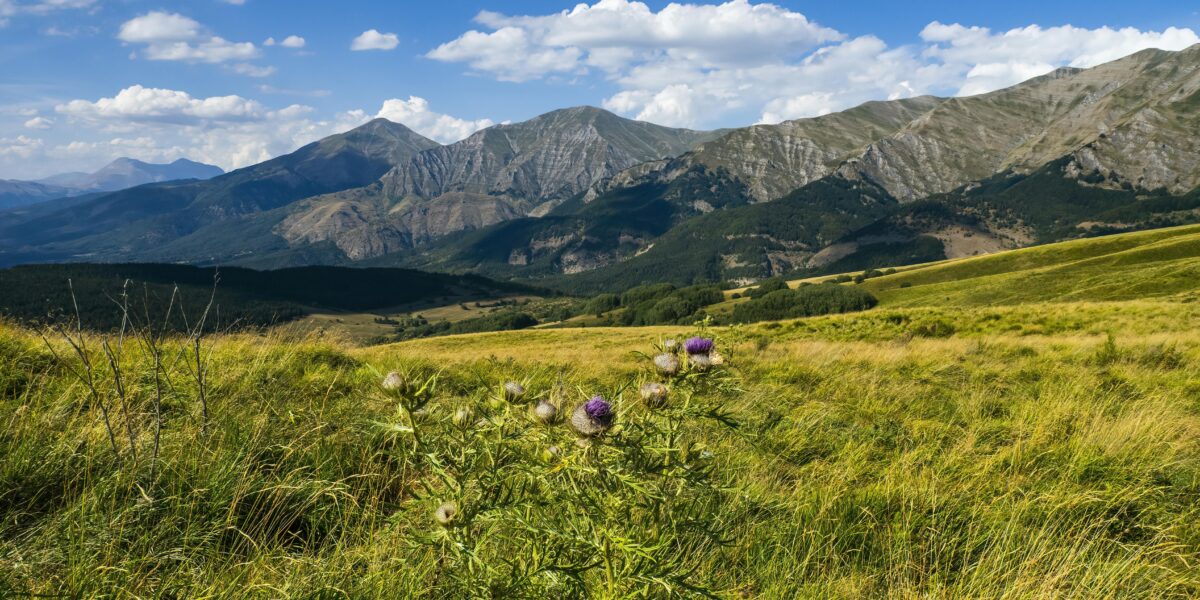
For anyone who truly loves the mountains, Psiloritis Crete, also known as Mount Ida, is more than just a pin on a map; it is a rite of passage. Standing on the highest peak of the island feels like standing on the very backbone of Greece. The landscape here is a dramatic mix of high-altitude Cretan plateaus, deep mythological caves, and rugged limestone ridges that challenge the physical endurance of hikers while offering a profound sense of connection to the land.
Whether you are visiting for the physical feat of the climb or the quiet beauty of the UNESCO Global Geopark, this guide provides the essential details for a successful journey, from the best hiking routes to the ancient legends of Zeus.
Psiloritis Crete Overview: Mount Ida’s “Roof of Crete”
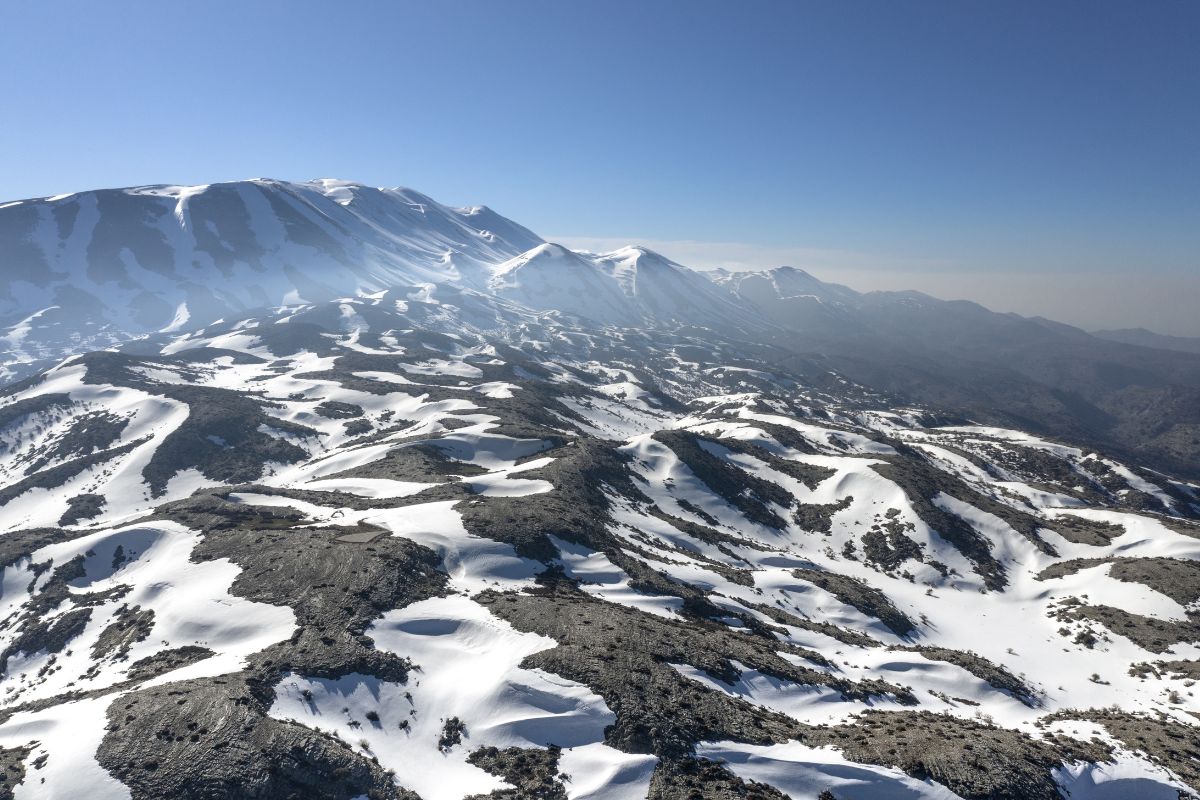
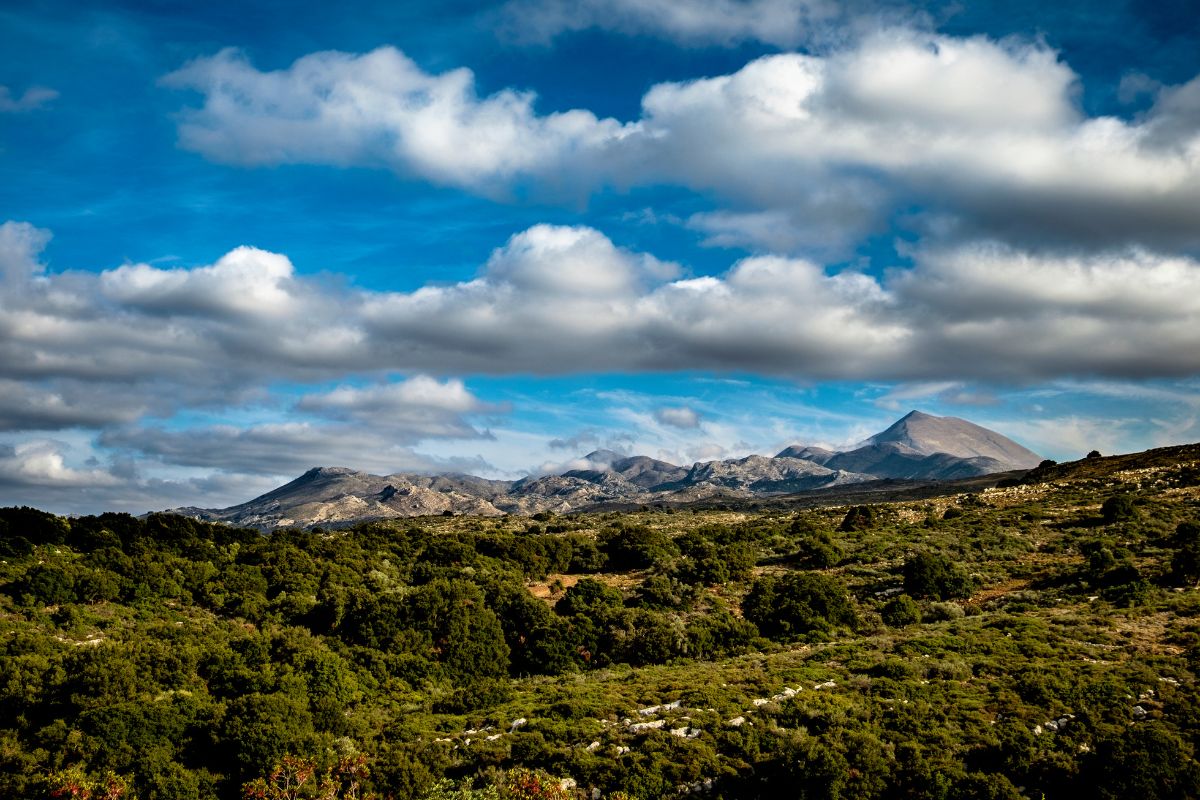
Mount Psiloritis Crete is the highest point on the island, soaring to 2,456 meters at its summit, Timios Stavros. It is the centerpiece of a massive range that splits the island between the north and south coasts. For adventure travelers, it is iconic because it offers a „lunar“ trekking experience, where vegetation is sparse but the energy of the terrain is immense.
Where Is Mount Psiloritis Crete and How to Get There
The massif is located in central Crete, straddling the regional units of Rethymno and Heraklion. Most hikers use the northern mountain village of Anogeia as their base camp, though the Amari Valley to the west offers a completely different, more lush perspective of the Crete mountain.
Driving to Nida Plateau from Anogeia
The most common approach for hikers is the drive from Anogeia up to the Nida Plateau. The road is paved but winding, offering spectacular views of the karst landscape as you climb. Once you reach the plateau at roughly 1,400 meters, you will find a large parking area near the trailhead, which serves as the main starting point for the summit and the Idaean Cave.
Other Access Points: Fourfouras and Kamares Routes
For those seeking a more grueling and authentic mountaineering experience, the Fourfouras route from the west or the Kamares route from the south are excellent alternatives. These trails are significantly steeper than the Nida approach and take you through diverse microclimates, requiring a higher level of fitness and better navigational skills.
Geography and Geology of Psiloritis Mountain Crete
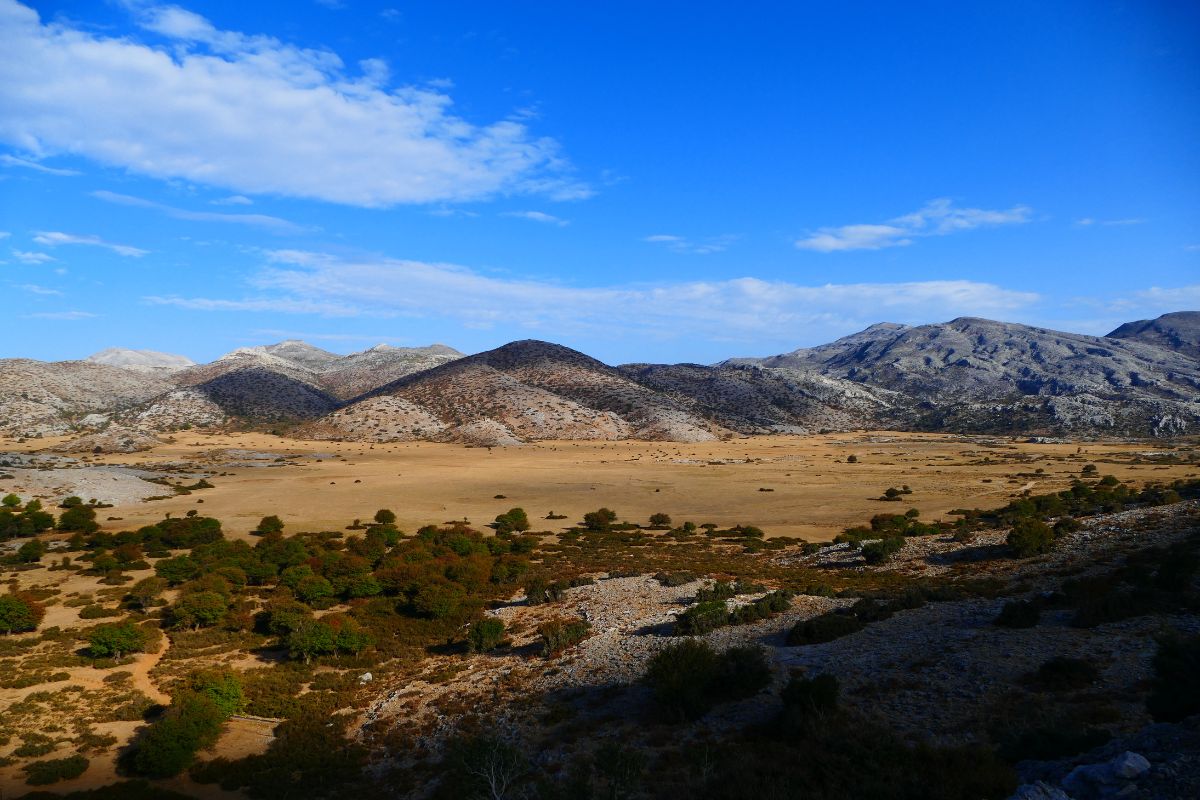
The Psiloritis range is a masterpiece of geological time. As a UNESCO Global Geopark, the area is famous for its limestone formations, sinkholes, and large flat plains known as „poljes.“ The terrain feels prehistoric, with jagged rocks that have been weathered by thousands of years of wind and snow.
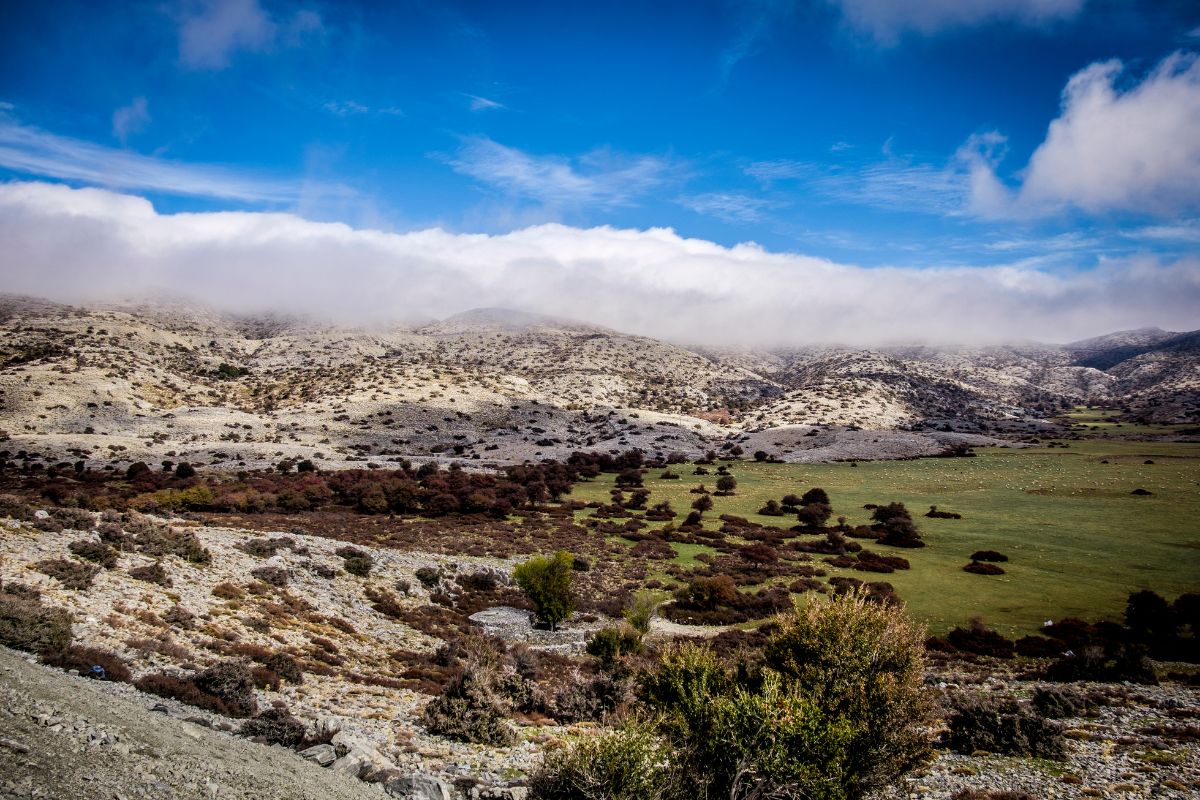
Nida Plateau, Karst Landscapes, and Stone “Mitata”
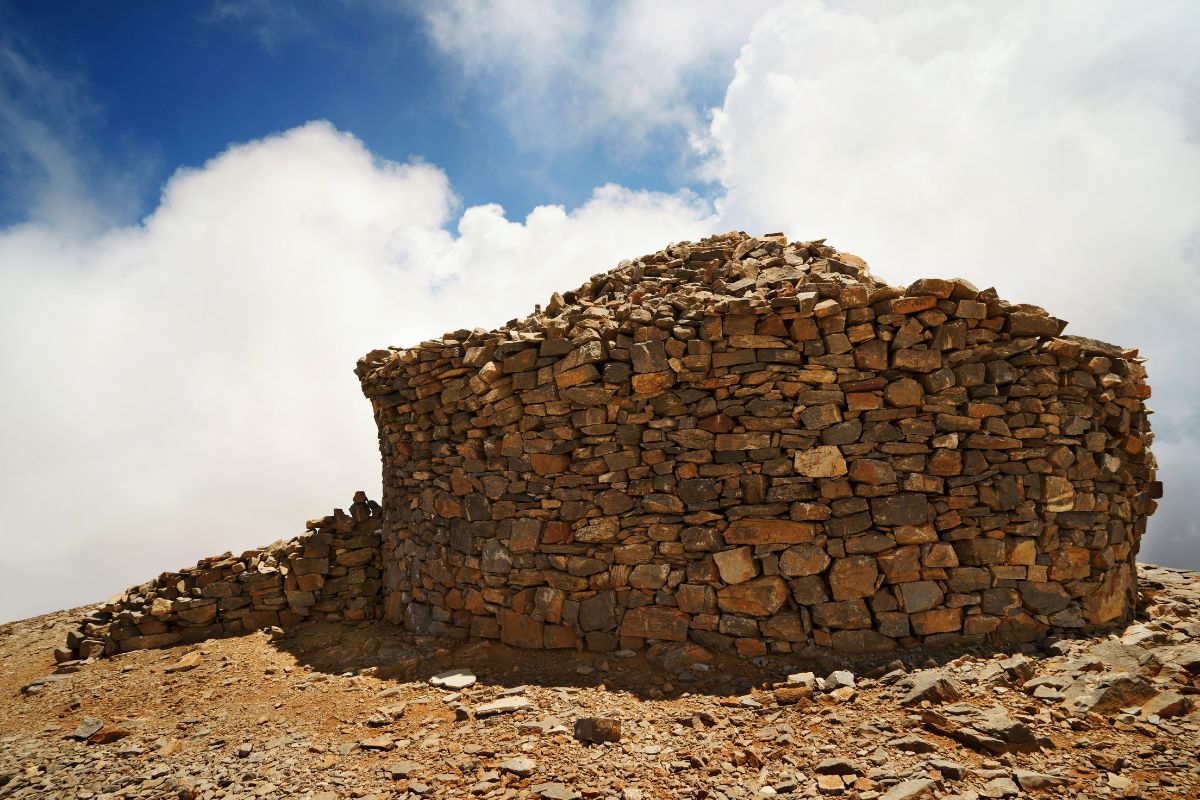
The Nida Plateau is the heart of the mountain’s pastoral life. As you hike, you will spot „mitata“, unique, circular dry-stone huts built by shepherds. These structures are architectural wonders, built entirely without mortar to withstand the extreme mountain weather, serving as a testament to the island’s enduring traditions.
Peaks and Viewpoints: Timios Stavros and Neighboring Summits
The ultimate goal is usually Timios Stavros, the highest peak, which features a small stone chapel of the same name. On a clear day, the view is staggering, allowing you to see both the Aegean Sea to the north and the Libyan Sea to the south. Neighboring peaks like Agathias also offer incredible, less-crowded vistas for those with additional energy.
Mythology and History on Mount Psiloritis Crete
You are not just hiking a mountain; you are walking through the pages of Greek mythology. Mount Psiloritis has been a sacred site since the Minoan era, long before the modern world discovered its trails for leisure.
Zeus and the Idaean Cave (Ideon Andron)
The Idaean Cave, located just a short walk from the Nida Plateau, is legendary as the place where Rhea hid the infant Zeus from his father, Cronus. Visiting the cave adds a layer of spiritual depth to the hike, allowing visitors to stand in a sanctuary that has seen thousands of years of worship.
Minoan Connections and Sacred Mountain Traditions
Archaeological sites like Zominthos, a Minoan mountain palace situated on the road to Nida, prove that high-altitude living was a sophisticated part of Cretan life even 3,500 years ago. The mountain has always been a place of refuge and resilience for the people of Crete.
Best Time to Hike Psiloritis Crete
Choosing the right window is the difference between a glorious trek and a dangerous struggle.
Season-by-Season Conditions
- Spring (May-June): This is often considered the ideal time. The snow is melting, wildflowers are blooming, and the air remains crisp.
- Summer (July-August): It can be scorching during the day, though the summit remains surprisingly cool and windy.
- Autumn (September-October): This season offers stable weather and clear skies, though the landscape is much drier.
- Winter: This period is strictly for professionals. Psiloritis is covered in deep snow and requires alpine equipment such as ice axes and crampons.
Timing Your Hike
To avoid the heat and the midday clouds that often swallow the peak, an early start is highly recommended. Aim to be at the trailhead by 7:00 AM or 8:00 AM. This ensures you have plenty of daylight and often allows you to enjoy the summit in near-solitude before larger groups arrive.
Best Hiking Routes on Psiloritis Crete
There is a path for every type of adventurer on this mountain.
Classic Summit Hike: Nida Plateau to Timios Stavros
This is the standard route and is a well-marked part of the E4 European Long Distance Path. The hike takes about five to six hours round trip and involves a steady, rocky ascent. It is physically demanding but technically straightforward for anyone with hiking experience.
Alternatives Hikes Around Psiloritis Mountain Crete
If you are not up for the summit, the easy walk to the Idaean Cave or the paths around the Skinakas Observatory are excellent choices. These offer the same high-mountain air and panoramic views without the grueling elevation gain required for the peak.
Preparation and Safety for Hiking Psiloritis Mountain Crete
The mountain commands respect. Even in the height of summer, conditions at 2,400 meters are vastly different from the coastal beaches.
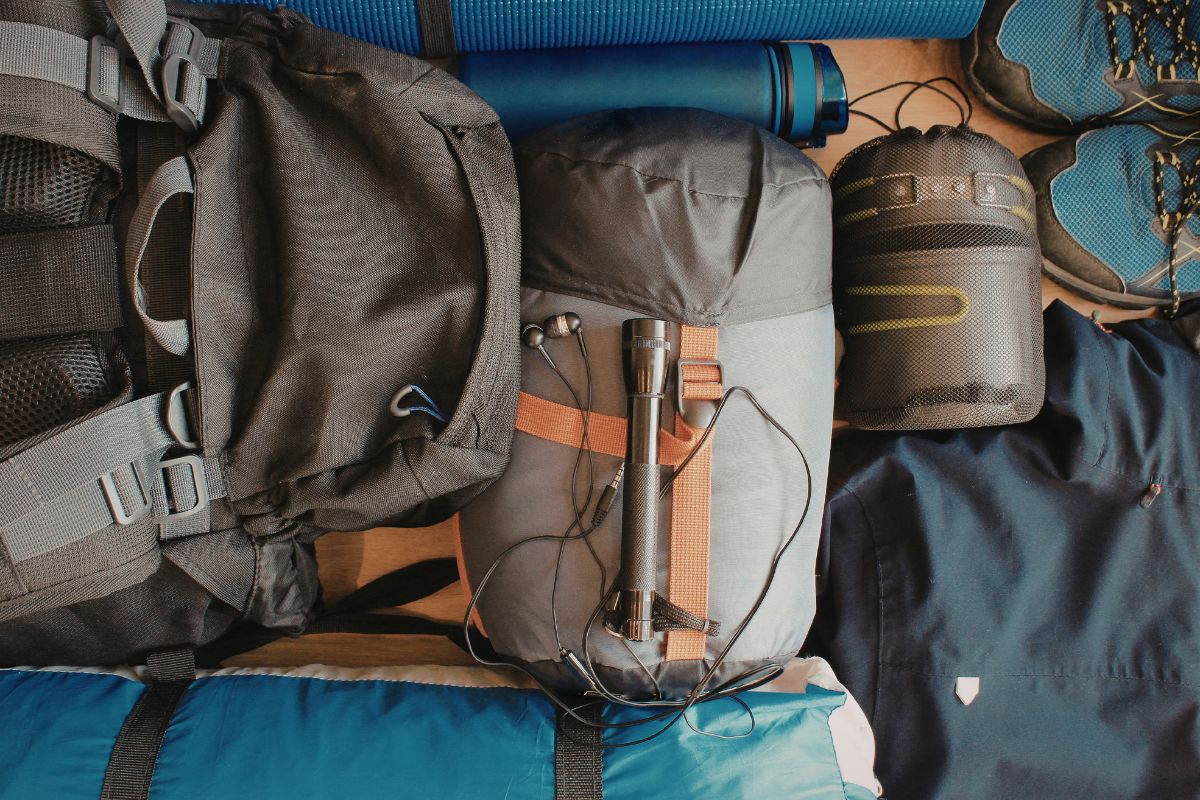
Packing List
- Water: There are no natural springs on the trail. It is essential to carry at least 2-3 liters per person.
- Footwear: Sturdy hiking boots are mandatory as the limestone is sharp and unforgiving.
- Layers: Even if it is warm at sea level, it can be cold and windy at the top. A windbreaker is a necessity.
- Sun Protection: The trail is completely exposed. Use high-SPF sunscreen and wear a hat.
Navigation, Weather Shifts, and Etiquette
Weather can change in minutes on Psiloritis. If clouds roll in and visibility drops, it is easy to lose the trail markings. Always use a GPS app or carry a physical map. It is important to stay on marked paths to protect the fragile alpine flora and to carry all trash back down with you.
Extend the Adventure Around Psiloritis Crete
A mountain day is best followed by a taste of local culture.
Anogeia Village
After the hike, a stop in Anogeia is a must. This traditional Cretan village is the heart of Cretan music and history. Visiting a local café for a coffee or sampling the famous „Antikristo“ lamb provides the perfect end to a physically demanding day.
Sfendoni Cave and Scenic Detours
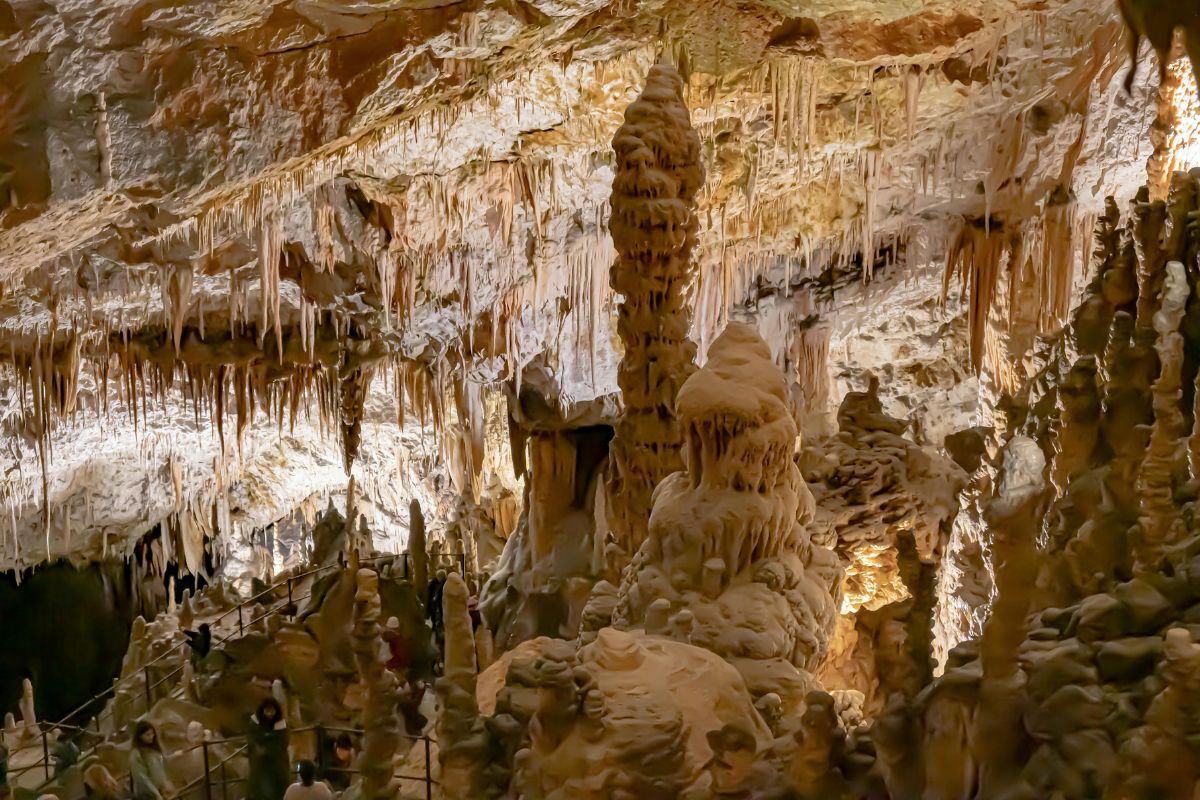
If you have more time, the Sfendoni Cave in Zoniana is one of the most beautiful decorated caves in Greece. Additionally, the Zominthos archaeological site offers a fascinating look at Minoan life at high altitudes.
Conclusion
Hiking Psiloritis Crete is an experience that stays with you long after you have left the island. Whether you choose the classic Nida route or a more secluded path, you will find a mountain that is as much about mythology as it is about natural beauty. By respecting the weather, preparing adequately, and hiking responsibly, you can fully enjoy the majesty of the „Roof of Crete.“