
The Divine Feminine Goddess: Lessons from Ancient Mythology

iscover the Divine Feminine Goddess through ancient myth, and the timeless lessons of cycles, sovereignty, love, and renewal.
There’s a reason the idea of the divine feminine goddess keeps resurfacing, even in the most modern, secular spaces. Across ancient myths, she appears as wisdom and wildness, tenderness and boundaries, renewal and consequence. She is the part of the story that reminds us life moves in cycles, that power can be generative rather than dominating, and that love doesn’t have to require self-erasure.
This article is a guided walk through the Divine Feminine Goddess in mythology, especially ancient Mediterranean traditions, along with the lessons these stories offer today. Not as a rigid belief system, but as a living library of symbols that people still recognize in their own inner lives.

The Divine Feminine Goddess
Definition of “The Divine Feminine Goddess” in Myth & Psyche
When people say Divine Feminine Goddess, they usually aren’t referring to one single deity. They’re pointing to a recurring pattern in myth: the feminine principle as a force of creation, intuition, transformation, relational intelligence, and deep renewal.
In psychology and storytelling, this pattern is often called an archetype, an emotional “shape” the human mind recognizes across cultures and eras. That’s why the divine feminine goddess can be present in a Greek hymn, a temple carving, a folktale, or a modern poem and still feel familiar. She isn’t a stereotype of “women should be like this.” She’s a symbol of what humans need to become whole: receptivity without passivity, strength without hardness, devotion without self-abandonment.
Sacred Feminine Goddess Vs. “Feminine Energy”
You’ll often see people use the phrase sacred feminine goddess alongside “feminine energy.” They overlap, but they aren’t identical.
“Feminine energy” is usually used as a broad concept, sometimes helpful, sometimes vague, about qualities like intuition, creativity, empathy, sensuality, and cyclical living. A sacred feminine goddess, on the other hand, is more specific and more storied. A goddess carries narrative. She has relationships, consequences, contradictions, and power dynamics. She can be generous and terrifying. Protective and ruthless. Loving and unyielding. That complexity matters, because real life is complex.
Also worth saying plainly: “feminine” here doesn’t mean “only for women.” Myths weren’t written as self-help manuals, but they were designed to speak to communities. Anyone can learn from goddess stories because the goal isn’t to perform a gender role, it’s to integrate human capacities we all have.
Goddess of Divine Feminine as a Mirror For Values
A goddess of divine feminine often acts like a mirror: she reflects back what a culture reveres and what it fears. In some stories, she guards justice. In others, she presides over fertility, the harvest, love, wisdom, or the hearth. When people feel drawn to the divine feminine goddess today, it’s often because they’re craving values that feel thin in everyday life, balance instead of burnout, compassion without naïveté, creation instead of constant consumption, and justice that isn’t just punishment but restoration.

Mythology as a Teacher: How Ancient Stories Encode Wisdom
Why Archetypes Persist Across Eras and Cultures
Myths endure because they speak in a language older than logic: image, symbol, and emotion. A myth doesn’t try to prove a point the way an essay does. It shows you a pattern, what happens when someone breaks a taboo, betrays themselves, refuses to grieve, clings too tightly, loves too blindly, or tries to control what must change.
That’s why archetypes persist. They describe recurring human experiences: leaving home, losing love, becoming a parent, facing betrayal, rebuilding identity, growing into authority, and meeting mortality. The Divine Feminine Goddess is one of the most resilient archetypes because she embodies transformation, birth, death, and rebirth, at both the personal and collective level.
The Key to Using Goddess Stories Without Idealizing Them
If you only take the “pretty” parts of goddess lore, you end up with inspiration posters. But myth is rarely that clean. The real value of goddess narratives comes when you allow the shadows to be present. A goddess can be protective and jealous. Wise and cold. Nurturing and smothering. Free and indifferent. The shadow isn’t there to shame us; it’s there to warn us what happens when a strength gets distorted. In that sense, the divine feminine goddess isn’t a fantasy of perfection. She is a whole system. She teaches that intimacy without boundaries can become depletion, that independence without tenderness can become isolation, and that devotion without discernment can become self-betrayal.
Why Divine Feminine Narratives Keep Returning in Modern Life
People talk about “reawakening” the feminine because many modern lifestyles reward linear productivity: push harder, do more, measure everything, optimize constantly. That mindset can be useful, but it can also flatten the emotional world. Divine feminine narratives return when people feel over-managed, emotionally dehydrated, or disconnected from meaning. Myths offer a counterbalance: cycles, seasons, ritual, embodiment, community, and reverence for what cannot be rushed.
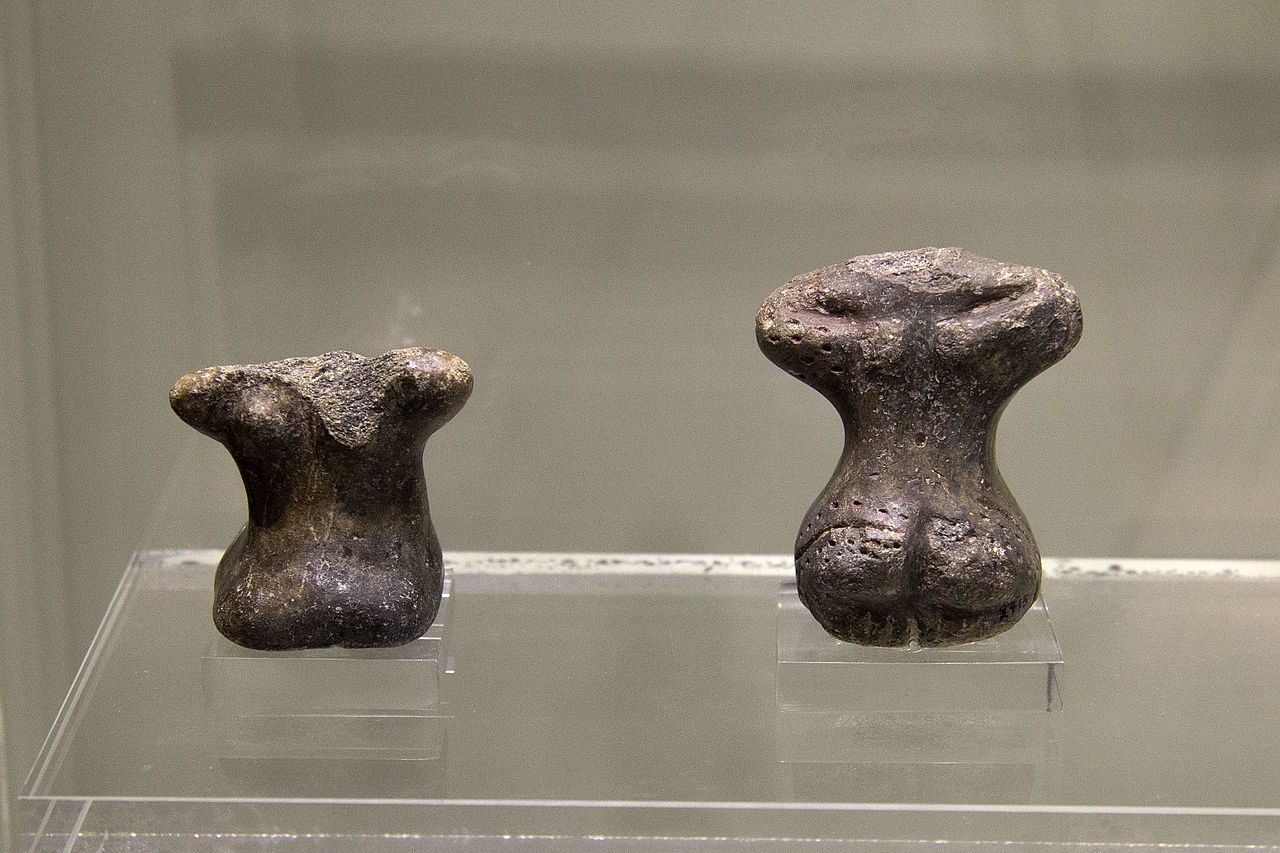
Neolithic female pottery figurines (torsos), 5000–3000 BC, Archaeological Museum of Heraklion — photo by Zde, via Wikimedia Commons, licensed under CC BY-SA 4.0.
Mother Goddess Cultures and The Sacred Feminine Goddess
Prehistoric Mother-Goddess Imagery
Long before the familiar Olympian stories, many regions produced figurines and symbols that scholars often associate with fertility, abundance, and the mysteries of birth and life. It’s important to be careful here, archaeology doesn’t always allow certainty about what a figurine “meant.” But what we can say is that feminine imagery appears again and again in ancient material culture.
This is one reason the sacred feminine goddess idea resonates: it points to the possibility that early communities honored life-making forces as sacred and powerful, not trivial or secondary.
Temples, Priestesses, And Community Rites
In many ancient settings, spirituality wasn’t a private identity, it was woven into seasons, food, marriage, harvests, mourning, and civic life. Rites weren’t abstract. They were embodied and communal. That matters for modern readers because it reframes the divine feminine goddess as something you live, not just something you “believe in.” Mythology becomes less about collecting facts and more about asking: What do I honor? What do I serve? What do I return to when life feels unstable?
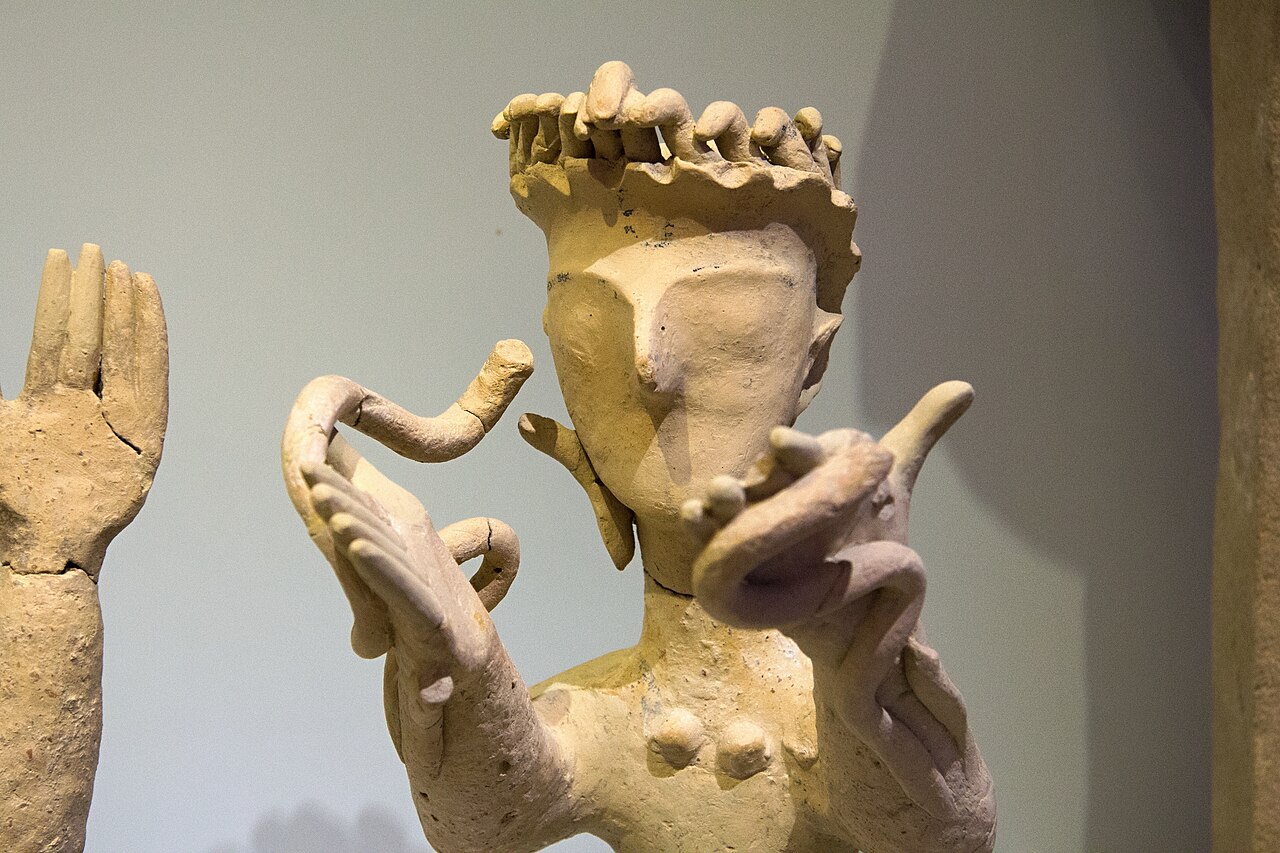
Goddess with upraised arms and snakes (terracotta, Kania–Gortys, 1300–1200 BC), Archaeological Museum of Heraklion — photo by Zde, via Wikimedia Commons, licensed under CC BY-SA 4.0.
Minoan Threads and The Goddess in Relationship
Crete and the Idea Of Multiple “Great Mothers” Across Land, Sky, and Sea
The Mediterranean world holds deep threads of goddess traditions, and ancient Crete in particular often captures people’s imaginations. In Minoan-related discussions, you’ll hear about powerful female figures connected to nature, animals, mountains, caves, and the sea, suggesting a worldview where the sacred is everywhere, not confined to a single temple. Rather than one all-purpose “Mother Goddess,” many interpretations emphasize multiple expressions of feminine divinity: the mountain mother, the sea mother, the earth mother, the one of caves and thresholds. It’s relational. Place-based. Seasonal.
What Modern Reconstructions Get Right
Modern writers and spiritual communities sometimes reconstruct goddess traditions with confidence that goes beyond the evidence. There’s value in imaginative reconstruction, myth is, after all, a living language, but there’s also a need for humility. A grounded approach looks like this: let the art and archaeology inspire you, but don’t pretend certainty where it doesn’t exist. Treat mythology as a conversation between past and present. If you’re drawn to the goddess, you can still honor the mystery rather than trying to pin her down.
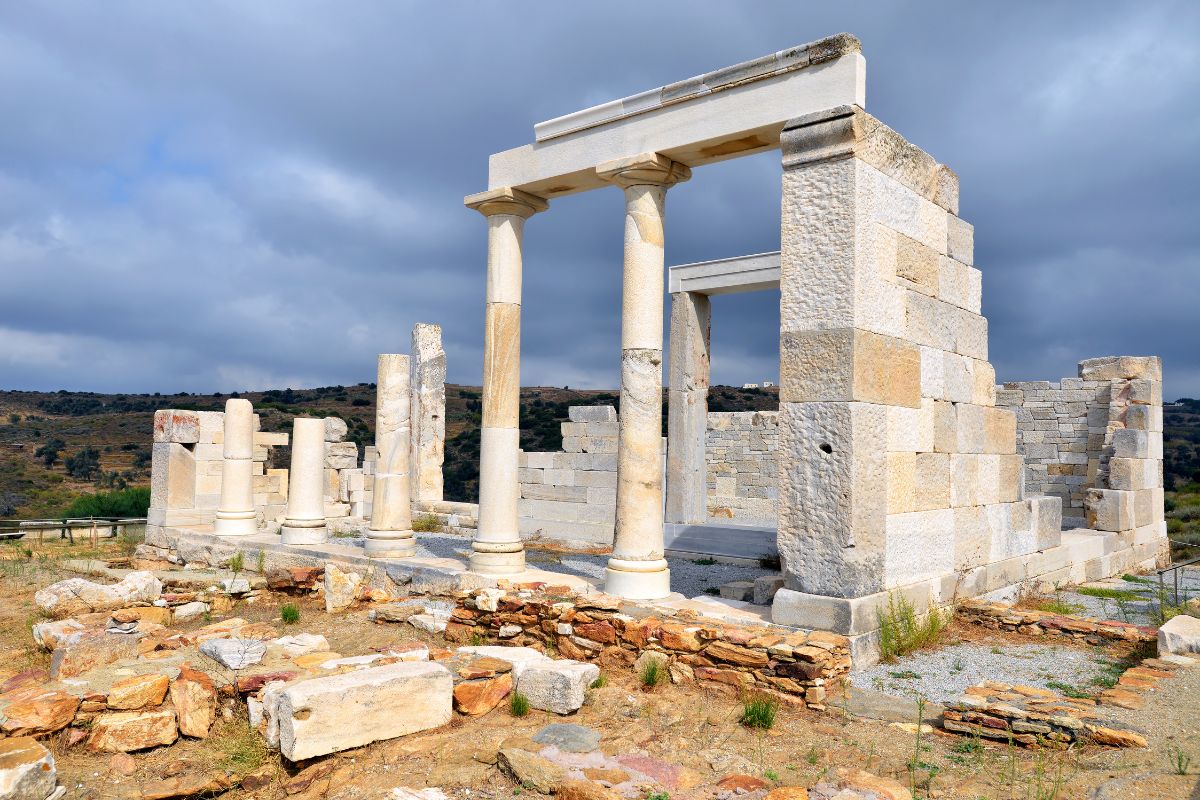
Seven Greek Goddess Archetypes Within The Divine Feminine Goddess
Greek mythology offers a rich set of goddess archetypes, distinct faces of the divine feminine that often show up as inner “modes” in modern life. You don’t have to choose only one. Most people recognize themselves in several, depending on season and circumstance.
Persephone (Maiden)
Persephone is the archetype of becoming: the moment life takes you past what you knew, and you cannot return unchanged. Her story holds the emotional truth of transitions, moving, ending relationships, losing innocence, entering adulthood, meeting grief. Persephone teaches that initiation is not optional. Life initiates us through change. The lesson is learning how to descend without losing your soul, and how to rise without denying what you’ve lived.
Demeter (Mother)
Demeter carries the fierce love of the mother archetype, nourishment, protection, devotion, and the moral clarity that comes from caring deeply. But her story also shows what happens when love becomes possession or when grief becomes a refusal to let life move. Demeter’s lesson is not “be endlessly giving.” It’s: nourish, yes, but set boundaries. Grieve fully, but don’t freeze the world. Care is sacred, and it must be sustainable.
Hera (Queen)
Hera is often reduced to jealousy in modern retellings, but as an archetype she represents queenship: commitment, legitimacy, and the sacredness of vows. She raises hard questions about partnership and self-respect. Hera’s medicine is dignity. She asks: Are you compromising your worth to keep a role? Are you loyal to something that isn’t loyal to you? The queen archetype helps people reclaim standards without becoming bitter.
Aphrodite (Lover)
Aphrodite embodies beauty, desire, magnetism, and creative life force. She reminds us that pleasure isn’t frivolous, it’s a form of intelligence. When people disconnect from pleasure, they often disconnect from vitality. Aphrodite’s lesson isn’t indulgence at any cost. It’s embodiment. Presence. The courage to receive. The ability to create, attract, and enjoy without shame, and without using desire as an escape from truth.
Athena (Sage)
Athena is the mind sharpened into clarity: strategy, discernment, pattern recognition, and wise problem-solving. She’s the part of the divine feminine that can plan, negotiate, design systems, and make hard calls. Her shadow can show up as over-intellectualizing or emotional distance, but her gift is invaluable: she teaches that wisdom isn’t only intuition, it’s also structure, boundaries, and precision.
Artemis (Huntress)
Artemis is independence with integrity. She is the goddess of the wild, the protector of boundaries, and the one who doesn’t apologize for choosing her path. She teaches self-trust and clean refusal.
In modern life, Artemis energy shows up when you stop negotiating with what drains you. Her “no” isn’t cruel. It’s clear. And clarity can be a form of compassion.
Hestia (Mystic)
Hestia is quieter than the others, but her archetype is profound: inner home, steadiness, and sacred attention. She represents the hearth, the center that holds life together. Hestia teaches that you don’t always need reinvention. Sometimes you need return. Simplicity. Consistency. A private devotion that makes the rest of your life possible.
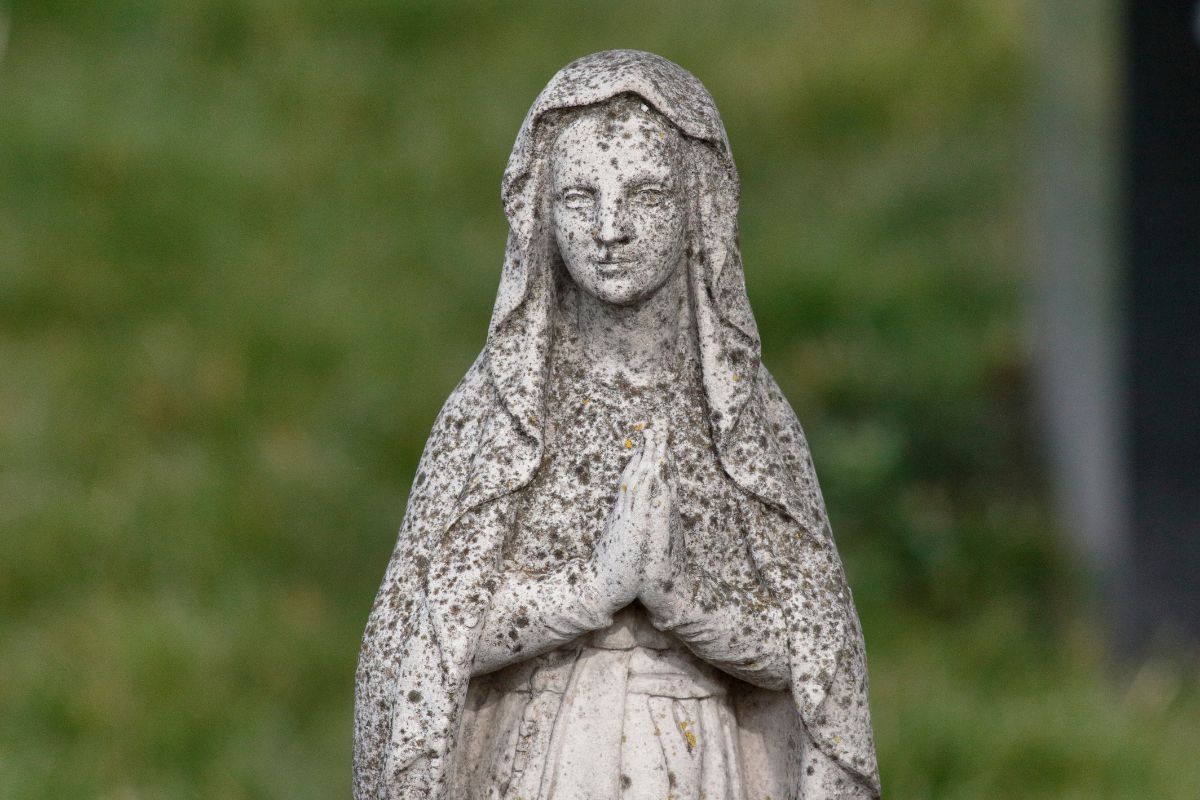
Global Faces Of The Goddess Of Divine Feminine
Greek archetypes are powerful, but they’re not the only language of the feminine divine. Across many traditions, people have honored feminine figures representing compassion, wisdom, restoration, and spiritual authority.
Isis
Isis is often associated with restoration, putting back together what has been torn apart. As an archetype, she represents the capacity to repair, to remember what matters, and to reclaim power without becoming hardened by loss. Her lesson is that healing is both practical and sacred. It requires patience, skill, and devotion, not just hope.
Kuan Yin
Kuan Yin is compassion as a living practice: the willingness to hear suffering without turning away. In a world that often rushes to fix or judge, this archetype offers something rarer, presence. Her strength is gentle, but it isn’t weak. It’s the kind of softness that can hold pain without being consumed by it.
Mary Magdalene
Mary Magdalene has become, for many, a symbol of reclaimed dignity, especially in traditions where women’s spiritual authority was complicated by social narratives. As an archetype, she speaks to devotion, courage, and the right to tell your own story. Her lesson is deeply modern: don’t let others define your meaning, your purity, or your worth.
Sophia
Sophia represents wisdom not as information, but as a living presence, something that shapes choices, relationships, and conscience. In a practical sense, Sophia asks: does your life reflect what you say you value? Wisdom isn’t what you know. It’s what you embody.
Symbols Of The Divine Feminine Goddess in Ancient Myth
Symbols matter because they bypass the rational mind and speak directly to feeling. When you see a recurring mythic symbol, it usually points to a recurring human lesson.
The Dove
The dove often symbolizes peace, blessing, and the soft return to harmony after turmoil. It’s a reminder that gentleness can be a spiritual force, not a weakness. In divine feminine symbolism, the dove can represent reconciliation: the part of the soul that wants wholeness more than victory.
Water, Wells & Sea
Water is the classic symbol of emotion, intuition, and transformation. Wells and springs suggest inner resources, places you return to when you’re depleted. The sea suggests mystery and the unknown, the vastness you can’t control but can learn to navigate.
Water symbolism ties directly into the divine feminine goddess as a teacher of feeling: emotions aren’t obstacles; they’re information.
Labyrinth, Spiral & Cycles
The labyrinth and spiral are symbols of initiation: you don’t go “straight” to wisdom. You circle, you return, you repeat lessons at deeper levels. What looked like failure is often the path working as intended. These symbols also anchor one of the most practical teachings of the Divine Feminine Goddess: life moves in seasons. You won’t be in bloom all year, and you’re not meant to be.
What The Divine Feminine Goddess Teaches Today
Lesson 1: Cycles Are Not Failures
Modern culture often treats rest like a reward you earn after you’ve exhausted yourself. Mythology tells a different story: rest is part of the cycle, not a moral weakness. If you’re in a season of low energy, it may not mean something is wrong. It may mean something is changing. In goddess myths, especially those connected to harvest, underworld journeys, and seasonal return, “wintering” is preparation. It clears space, it teaches honesty, and it creates depth. The lesson is simple but not easy: stop interpreting every slowdown as a personal failure. Some phases are meant for composting, turning old material into new life.
Lesson 2: Sovereignty
Sovereignty is a word that sounds lofty, but it’s actually incredibly practical. It means you belong to yourself. Your boundaries matter. Your “yes” and “no” have integrity. You don’t betray your inner truth to keep peace. The divine feminine goddess often represents a form of power that doesn’t require domination. It’s not about winning. It’s about alignment. Choosing yourself doesn’t have to mean closing your heart, it can mean opening it with discernment.

Find Your Path: How to Identify Your Personal Divine Feminine Goddess Thread
Which Stories Trigger Recognition, Resistance, or Longing?
A useful way to approach goddess archetypes is to notice your emotional response.
-
Recognition often points to a strength you already carry.
-
Resistance often points to a shadow you avoid or a wound you protect.
-
Longing often points to an archetype you’re ready to develop.
If Artemis annoys you, ask why. Does Hestia feel boring? Ask what you’re running from. If Aphrodite feels “too much,” ask what you were taught about pleasure or visibility. This isn’t about labeling yourself, it’s about understanding your patterns with kindness and honesty.
A 7-Day Experiment
Try a simple seven-day experiment, lightweight, realistic, and revealing:
Day 1–2: Notice what drains you and what restores you. Don’t fix it yet, just track it.
Day 3: Identify one boundary you’ve been avoiding. Write a compassionate “no.”
>Day 4: Choose one nourishing act (Demeter energy): food, sleep, a slower morning, a supportive conversation.
>Day 5: Choose one clarity act (Athena energy): make a plan, solve one lingering problem, organize one area.
>Day 6: Choose one embodiment act (Aphrodite energy): music, movement, scent, beauty, something that brings you into your senses.
>Day 7: Choose one stillness act (Hestia energy): quiet, candle, prayer, journaling, a walk without a podcast.
At the end, ask: which day felt most natural, and which felt most challenging? That contrast often reveals your next step.
Conclusion
The Divine Feminine Goddess isn’t a doorway into escapism. If anything, she’s a doorway back into reality, into the parts of life that can’t be optimized: seasons, grief, desire, devotion, intuition, and renewal. Ancient goddesses are not tidy role models. They’re maps. They teach that cycles aren’t failures, that sovereignty can coexist with love, and that wisdom is as much about embodiment as it is about insight. When you approach the divine feminine goddess with curiosity and humility, whether as myth, metaphor, or spiritual presence, you’re not just reading old stories. You’re learning a language for wholeness.

FAQ
Is The Divine Feminine Goddess a Religion, A Metaphor, or a Psychological Model?
It can be any of the above, depending on how you approach it. For some, the divine feminine goddess is devotional and spiritual, but for others, it’s symbolic, a way of engaging mythology and meaning. We can say that for many, it functions as a psychological model: archetypes that help them understand patterns, healing, boundaries, creativity, and self-worth. A grounded approach doesn’t demand one “correct” interpretation. It asks what the symbol helps you see more clearly in your life.
Can Men Work With Sacred Feminine Goddess Teachings (And How)?
Yes. If goddess myths represent human capacities, intuition, compassion, renewal, relational intelligence, then they belong to everyone. A respectful way to engage is to focus on integration rather than performance. Instead of trying to “act feminine,” the invitation is to develop qualities often neglected in hyper-linear living: emotional literacy, patience, receptivity, creativity, and reverence for cycles.
How do I Avoid Cultural Appropriation While Exploring Goddess Traditions?
A good rule is: learn before you claim.
-
Be clear about what is historical evidence, what is modern interpretation, and what is personal practice.
-
Avoid adopting rituals, titles, or sacred objects from living cultures as aesthetics.
-
Credit sources, read widely, and keep humility when traditions aren’t yours.
-
Let mythology inspire your inner work without pretending you “own” the tradition.
Respect is not about walking on eggshells, it’s about honesty, context, and care.
Ask us more at www.elissos.com