
Must-See Attractions in the Crete White Mountains
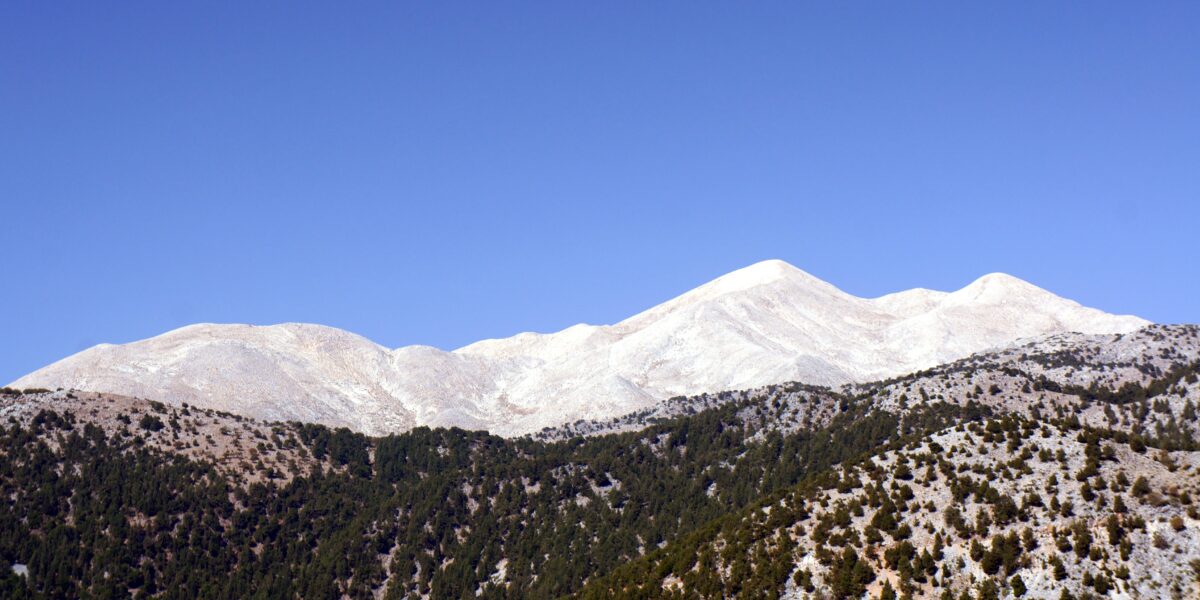
The Crete White Mountains (also known as Lefka Ori) aren’t the kind of place you “tick off” in a single day. They’re a whole landscape, plateaus that feel like open-air balconies, gorges that pull you from pine shade to the Libyan Sea, and high ridgelines where Crete suddenly looks wild and spacious again. If you’re searching for white mountains Crete Greece because you want the island beyond beaches, you’re in the right place.
In this guide, I’m focusing on the attractions that genuinely deserve the label “must-see,” while also helping you choose the version of the White Mountains Crete that fits your pace, whether you want a famous gorge hike, a scenic drive with viewpoints, or a quieter day in villages and plateaus. Along the way, you’ll see the phrases locals use too, because the Cretan White Mountains are as much about culture and naming as they are about geography.

Crete White Mountains: Where Lefka Ori Begins
Lefka Ori covers a huge portion of western Crete, stretching across the Chania region and shaping the island’s character in a way you can feel even from the coast. The range is often described as the dominant feature of West Crete, and once you drive inland, that makes immediate sense: roads lift quickly, the air cools, and the island’s scale changes.
Lefka Ori And Madares: Names To Know
You’ll hear “Lefka Ori” on maps and signs, but locals may also call parts of the range Madares, a term associated with the high, bare terrain. “White Mountains” is the English name, and it’s not a poetic exaggeration, it’s tied to the look of the rock itself, and, in colder months, to lingering snow on the peaks.
Chania, Omalos, And Sfakia: Main Gateways
Most travelers enter the mountains in one of two ways:
-
From Chania heading toward Omalos (a classic base for Samaria and high viewpoints).
-
Or via the road toward Sfakia, which opens up plateaus like Askifou and connects you to gorges and south-coast villages.
If you’re building an itinerary, it helps to think of Omalos and Sfakia as two “gateways” into different mountain moods: Omalos feels like a high plain with dramatic horizons; Sfakia feels steeper, more rugged, and more tied to the sea.
White Mountains Landscape: What To Expect
One of the most surprising things about the Crete White Mountains is how quickly the scenery shifts. In the lower elevations you’ll see cypress, plane trees, and pockets of cultivation. Higher up, especially above 2,000 meters, the landscape can feel stark and almost lunar, rocky, open, and quietly immense. The range is famous for its peaks and gorges, but it’s this contrast, green-to-bare, shade-to-glare, that gives the area its emotional punch.
Why The Cretan White Mountains Look White
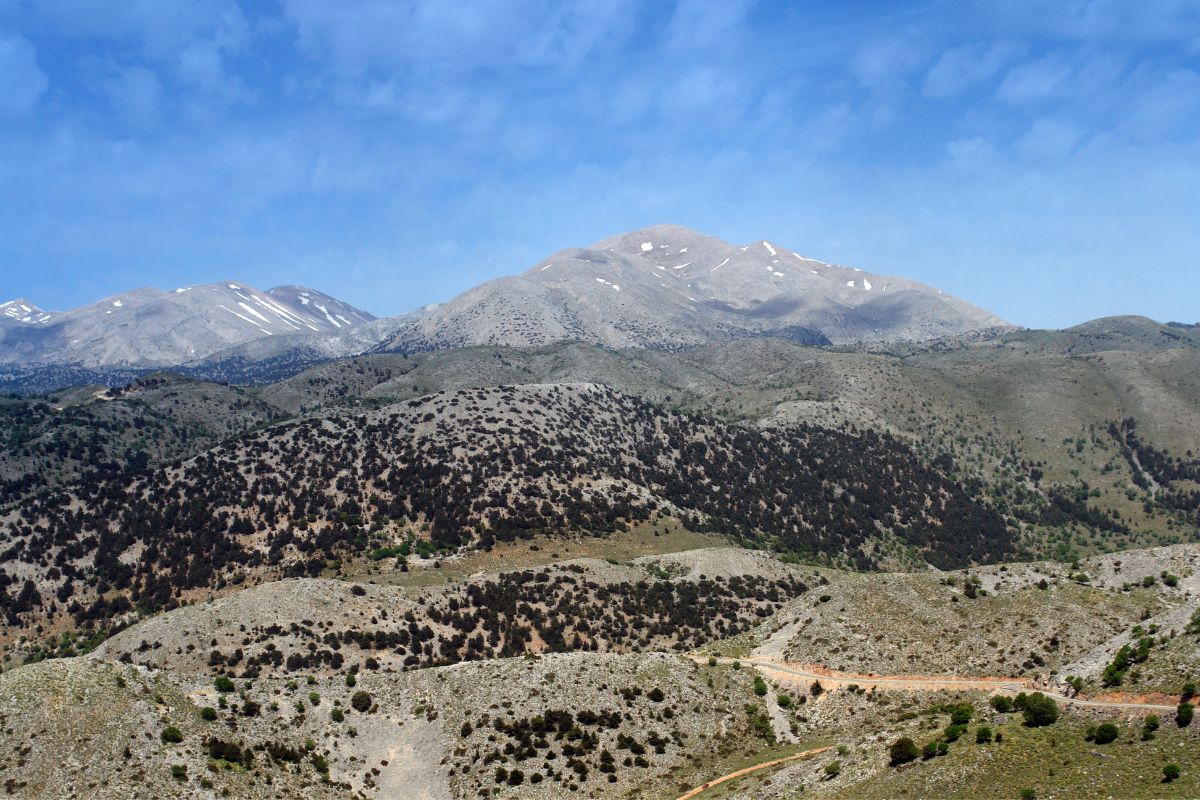
People expect “white” to mean snow, but in Lefka Ori, the brightness is also geological. The mountains are largely limestone, and in strong Mediterranean light, pale rock can look almost bleached. In shoulder season, that same rock takes on softer tones, and if you’re lucky, you’ll still catch snow high on the ridges well into spring.
Limestone Glow In The White Mountains
In summer and early autumn, the peaks often look off-white because the limestone reflects light so intensely. Even if you’re not hiking, it’s worth planning at least one drive or viewpoint stop where you can see the range stretching in layers.
Snow Season In The White Mountains Crete
The “white” effect becomes literal when snow lingers at altitude. While conditions vary year to year, it’s not unusual for snow to remain visible on the higher sections until late spring.
Best Viewpoints In White Mountains Crete Greece
If you want the big, cinematic view without a full-day hike, aim for:
-
A stop on the approach roads to Omalos (where the plateau opens up suddenly).
-
Higher bends on the Sfakia approach roads, where the landscape turns from olive groves to open mountain.
The best panoramas often happen “between” places, those few minutes when you’re driving and you instinctively slow down because the view feels unreal.
Omalos Plateau In The White Mountains Crete
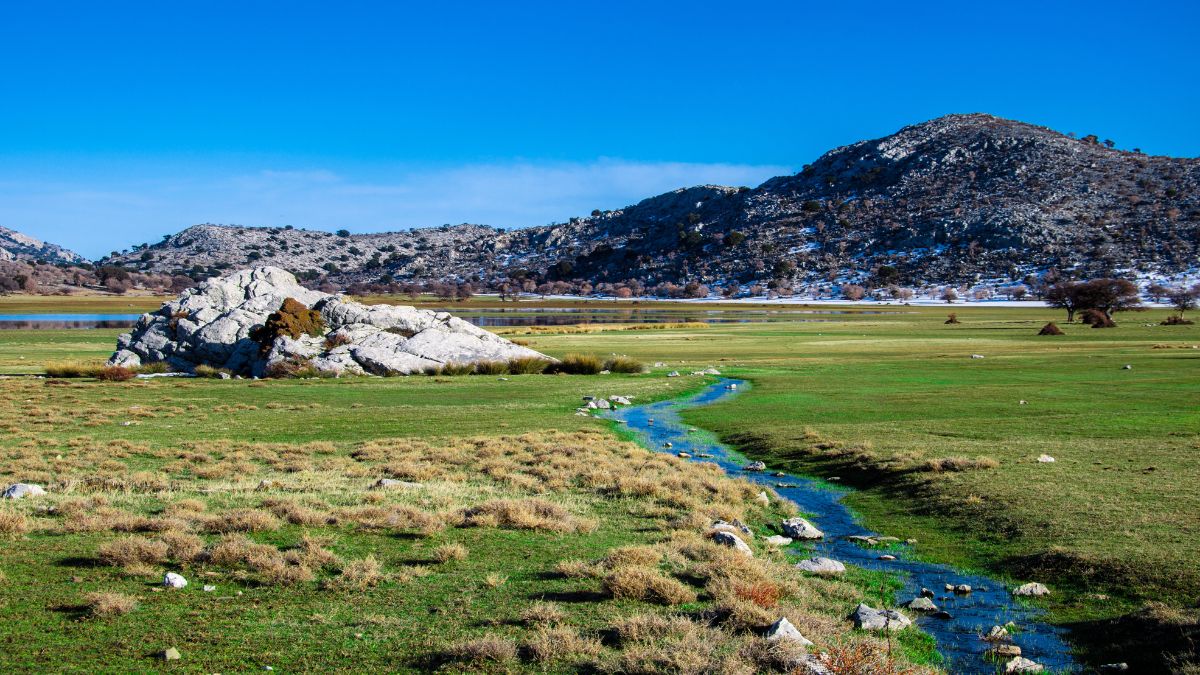
If you only have time for one mountain area on a first visit, Omalos Plateau is the obvious choice. It’s wide, open, and surrounded by peaks, and it’s also the practical jumping-off point for Samaria Gorge. The Omalos plateau sits around 1,100 meters in elevation, which explains why the air feels noticeably cooler than Chania even in midsummer.
Omalos Village And Mountain Tavernas
Omalos has a calm, working-mountain feel. You’ll find tavernas that serve hearty food without fuss, exactly what you want after time on the trail or a long, curvy drive. It’s also one of those rare places in Crete where “summer” doesn’t automatically mean heat; evenings can feel brisk.
Xyloskalo Viewpoint And Samaria Trailhead
Xyloskalo is the famous northern entrance to Samaria Gorge. Even if you don’t hike the full route, this viewpoint is worth visiting because it gives you that first dramatic look into the gorge, one of those moments where Crete stops feeling like an island and starts feeling like a mountain world.
Easy Walks Near Omalos Plateau
Not everyone wants a long descent into a gorge, and that’s fine. Around Omalos you can do:
-
Short, scenic walks on easier paths.
-
Viewpoint-hopping by car, stopping for photos and fresh air.
-
A gentle outing paired with a long lunch, which, honestly, is also a very Cretan way to experience a place.
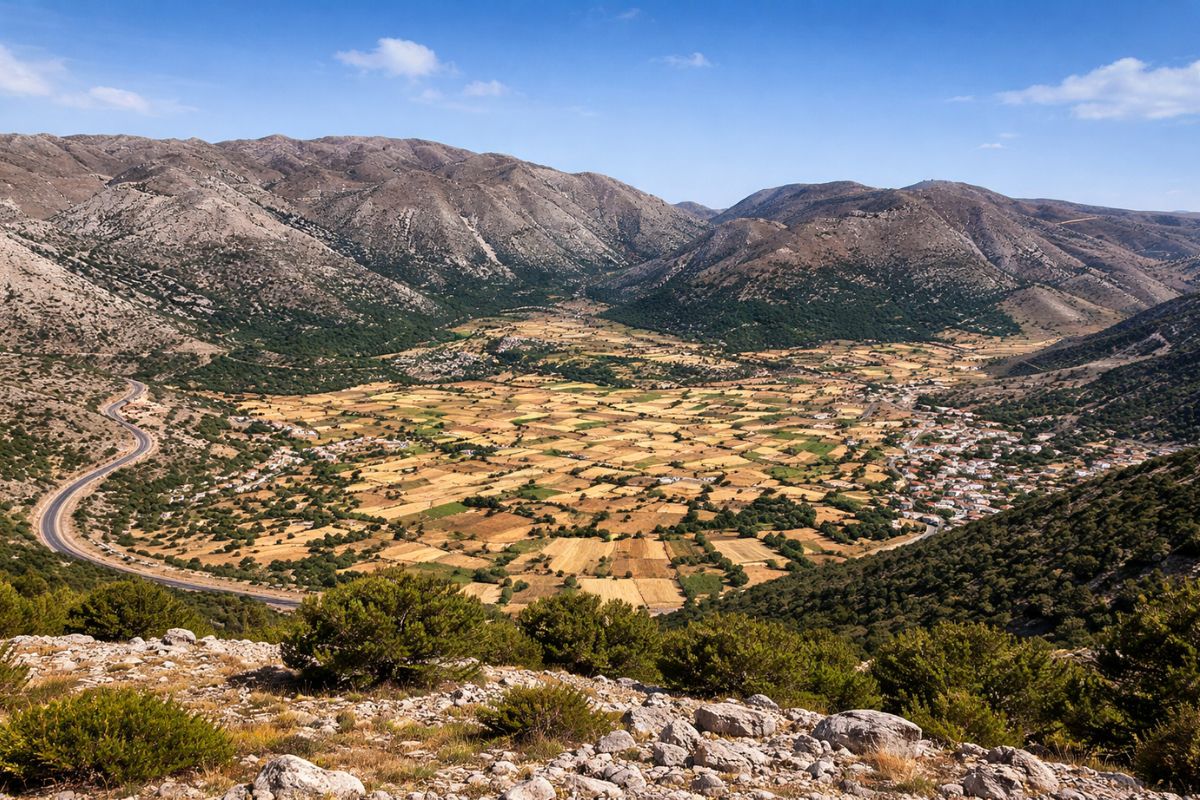
Image generated with AI for illustrative purposes (Askifou Plateau, Crete).
White Mountains Crete Plateaus To Visit
Plateaus are one of the White Mountains’ quiet superpowers. They give you space, light, and perspective, and they’re also a reminder that mountain life in Crete has always been practical, these open areas mattered for movement, grazing, and survival.
Plateau Viewpoints
Askifou Plateau sits inland on the route toward Sfakia and is known for its open valley feel and mountain-ringed horizon. Sources commonly place it around the 730–750 meter range, depending on where you measure on the plateau and nearby settlements.
It’s a rewarding stop even if you’re just passing through, especially in spring when the landscape feels fresh and green.
Anopolis Plateau And Village Stops
The road up to Anopolis is scenic in that rugged, south-Crete way, less polished, more dramatic. This area works well for travelers who want mountain atmosphere without committing to a full summit day, and it’s also a gateway toward places like Aradena and coastal villages.
Impros Plateau And Hidden Plateaus
Beyond the headline names, Lefka Ori is dotted with smaller plateaus in Crete that show up on maps and surprise you in the best way. If you like slow travel, these are the kinds of places where you stop “for five minutes” and somehow stay for an hour.
Samaria Gorge In The White Mountains Crete
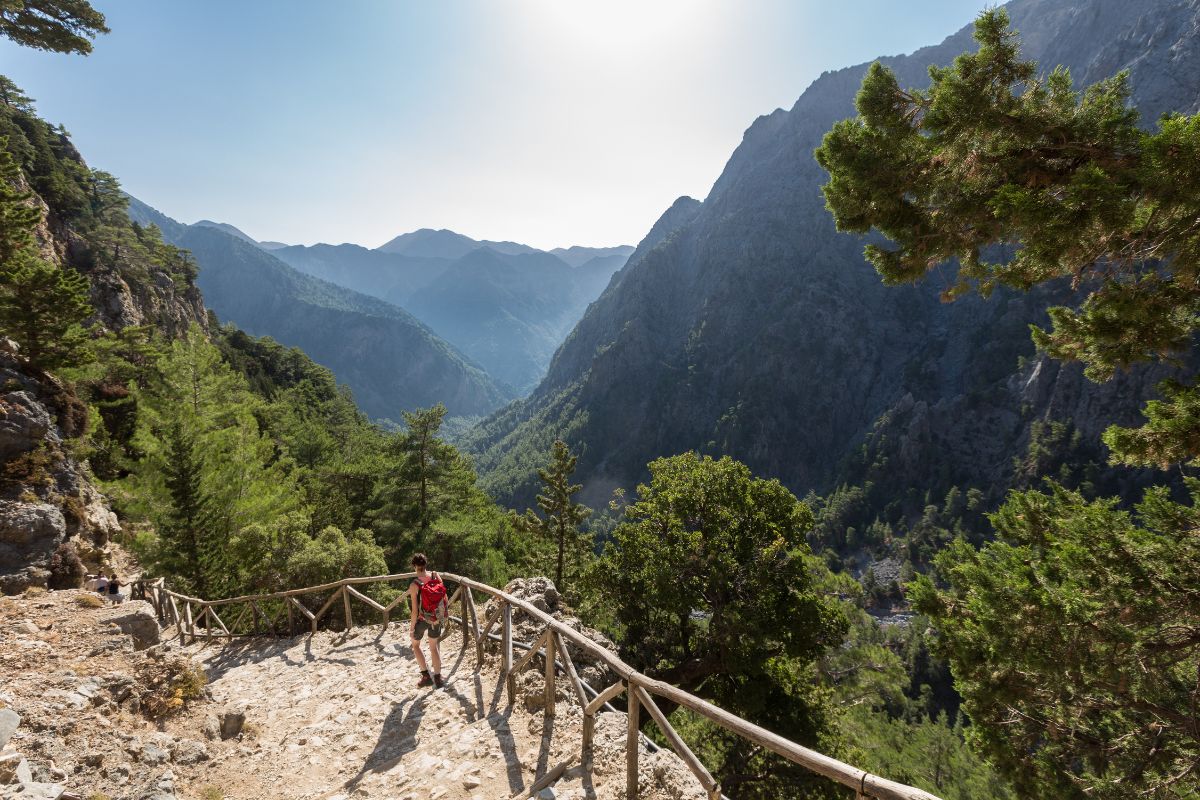
Samaria is famous for a reason: it’s a true mountain-to-sea journey, and it carries that rare mix of scenery, scale, and story. The hike is typically described as about 13 km within the gorge, plus roughly 3 km from the southern exit to Agia Roumeli, for a total of around 16 km.
Samaria Route: Xyloskalo To Agia Roumeli
Most people start at Xyloskalo near Omalos and hike down to the coast. The ending is part of what makes Samaria special: you don’t simply turn around and walk back. You finish at the sea, and you return by boat and bus/car, so your timing matters.
Samaria Highlights: Cliffs And Narrow Passages
Samaria’s magic is the rhythm of it. You begin high, with mountain air and long views, and you gradually move into tighter, more dramatic sections where the walls feel close and the gorge becomes a world of its own. Even if you’ve hiked in other countries, the feeling of finishing a gorge hike at the Libyan Sea is a very specific kind of satisfaction.
Samaria Return Logistics: Boat And Timing
Plan this part early. Boats connect Agia Roumeli to nearby ports on the south coast, and from there you typically travel onward by bus or car. A simple rule: start early, keep a steady pace, and build in buffer time so you’re not hiking the final kilometers while watching the clock.
Best Gorges In The Crete White Mountains
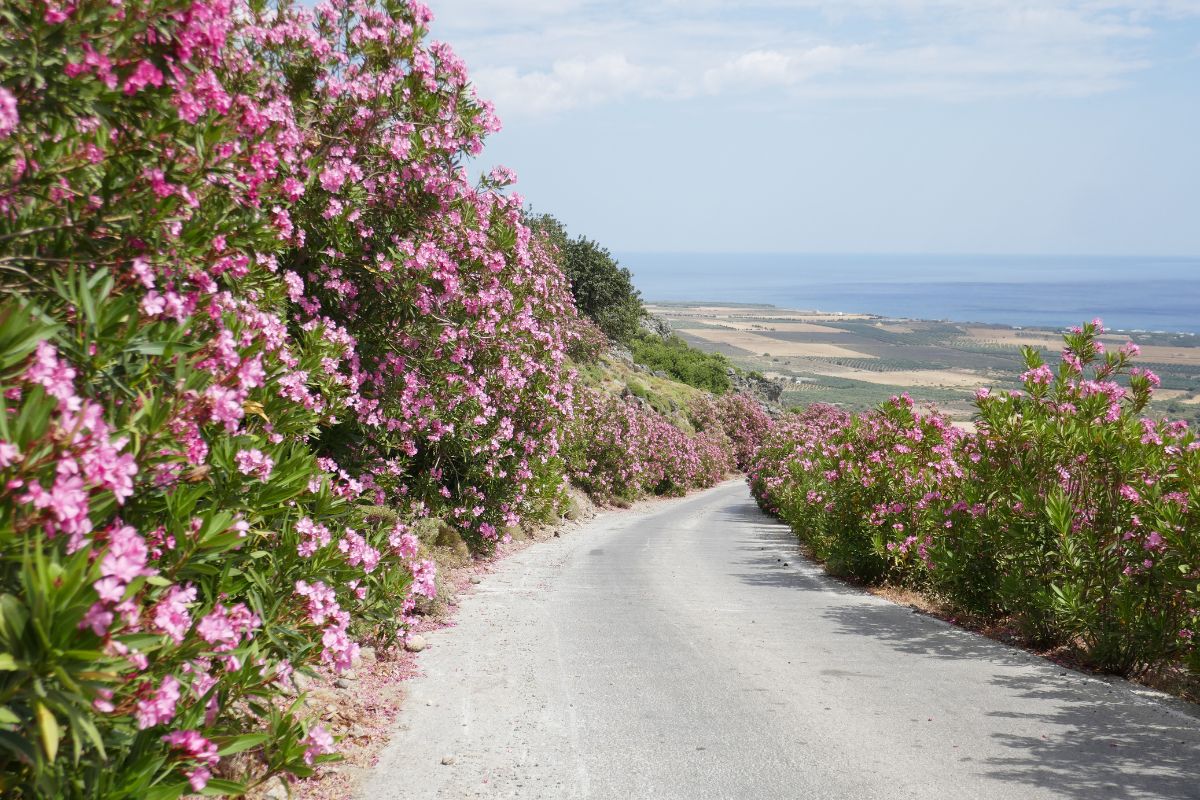
Samaria isn’t the only gorge that matters here. In fact, if you want something more relaxed, or you’re visiting outside the core summer season, these alternatives can be the better choice.
Imbros Gorge Hike
Imbros Gorge is a popular alternative because it’s shorter and generally easier for many hikers. It’s often described as around 8 km for the main downhill hike (with the broader gorge length sometimes cited longer depending on the full route).
It’s a good pick if you want a gorge experience without dedicating an entire day.
Aradena Gorge And Aradena Bridge Viewpoint
Aradena Gorge feels wilder and more dramatic. Even if you don’t hike the entire gorge, the Aradena Bridge viewpoint is an attraction on its own. It’s widely promoted as a major adrenaline spot, with the bridge standing about 138 meters above the gorge.
The area around the village of Aradena also has a slightly haunting storybook feel, tied to abandonment and local history.
Gorge To Beach Walks In South Crete
One of the simplest pleasures in south Crete is pairing a hike with a coastal finish. Even modest walks feel rewarding when the “after” includes a swim and a slow meal by the sea. If you’re building a balanced itinerary in the White Mountains, this mountain-to-coast contrast is one of the best experiences you can give yourself.
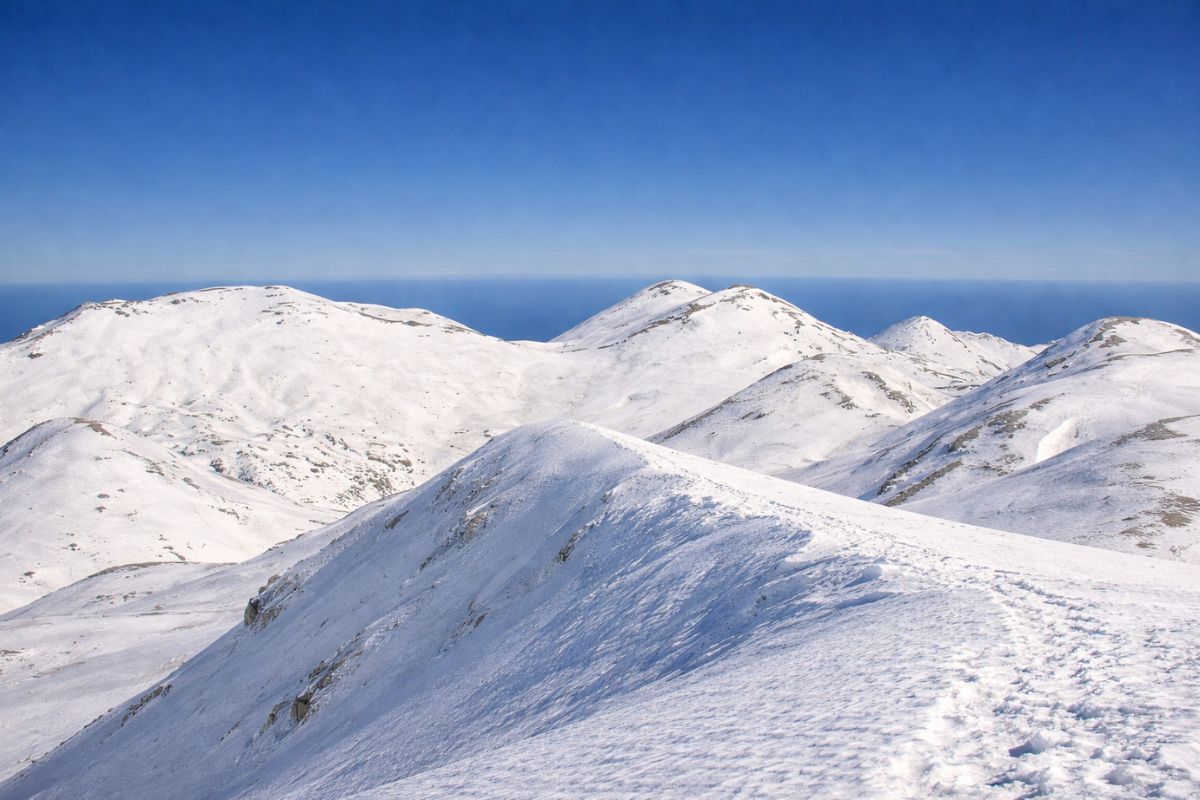
Image generated with AI for illustrative purposes (Pachnes Peak, Crete White Mountains/Lefka Ori).
Best Peaks And Viewpoints In The Cretan White Mountains
You don’t have to summit a 2,000+ meter peak to feel the power of Lefka Ori, but it’s helpful to know what the big names are, so you can decide whether you want a serious hike or a viewpoint-based day.
Pachnes Peak: Highest Summit
Pachnes is the highest summit of the White Mountains at 2,453 meters, making it one of the key reference points for the range.
This is not a casual stroll for most travelers, but it’s an iconic goal for experienced hikers, and it gives you a sense of just how vertical western Crete can be.
Gingilos Peak Viewpoints
Gingilos is famous because it’s accessible compared to many peaks and because the views are instantly rewarding. Sources vary on the exact elevation cited in different guides, but it’s commonly presented around the 1,980 m mark in hiking descriptions.
If you want a “mountain summit feeling” without committing to the highest peaks, Gingilos is often the name people recommend first.
Easy Viewpoints In The White Mountains Crete
Not everyone wants loose rock, steep drops, or long hours on trail. The good news is that the Crete White Mountains offer a lot of reward even from:
-
Plateau edges and roadside pull-offs,
-
Samaria entrance viewpoints,
-
The approach roads toward Sfakia.
In other words, you can still have a powerful mountain day without calling it a “hike.”

Mountain Refuges In The Crete White Mountains
Mountain refuges are part practical shelter, part symbol. They’re the places that remind you the White Mountains aren’t just scenery, they’re a living terrain people move through.
Kallergi Refuge Near Omalos
Kallergi Refuge sits above Omalos at around 1,680 meters, and it’s closely linked to the Samaria area and E4 trail references.
Even if you’re not staying overnight, knowing about Kallergi helps you understand how hikers approach the range: not as a single trail, but as a network.
High Routes And Refuge Trails
The White Mountains have multiple refuge-related routes and high traverses. Many are best left to experienced hikers or those going with a qualified guide, but it’s still worth mentioning them in a travel plan because they represent the “second layer” of Lefka Ori, what opens up once you go beyond the famous gorges.
Mountain Refuge Tips And Etiquette
Refuges are simple by design. Expect basic facilities, early nights, and a strong reliance on good planning, water, layers, weather awareness, and respect for shared space. Even if you never sleep in one, the refuge culture is part of what makes the White Mountains Crete feel like a genuine mountain region rather than a scenic backdrop.

White Mountains Crete Villages And Traditions
If you only chase the biggest gorge or the highest peak, you’ll miss the quieter side of the mountains, where the stories live. The Cretan White Mountains aren’t empty; they’re threaded with villages, chapels, and a kind of hospitality that feels both proud and understated.
Anopolis And Sfakia Villages
Traditional villages in Crete like Anopolis and the Sfakia region settlements aren’t “polished resort” Crete. They feel more direct, more tied to terrain, and, especially in shoulder season, more personal. This is where you slow down, ask questions, and let the day be shaped by small discoveries rather than big plans.
Chapels And Vulture Viewpoints
One of the most memorable White Mountains moments can be surprisingly simple: a small chapel you notice on a ridge, a viewpoint where the wind is strong and the sky feels enormous, or the sight of birds gliding over a gorge you just walked through. This is the kind of detail that makes the mountains feel sacred without needing to say the word.
Mountain Food And Raki Culture
Mountain food in Crete tends to be straightforward and satisfying, slow-cooked dishes, local cheese (if you eat dairy), greens when in season, and the kind of welcome that often includes a small treat “on the house.” Even if you’re only visiting for the day, a long lunch in a plateau taverna can be the moment your trip starts to feel grounded.
Crete White Mountains Travel Tips And Safety
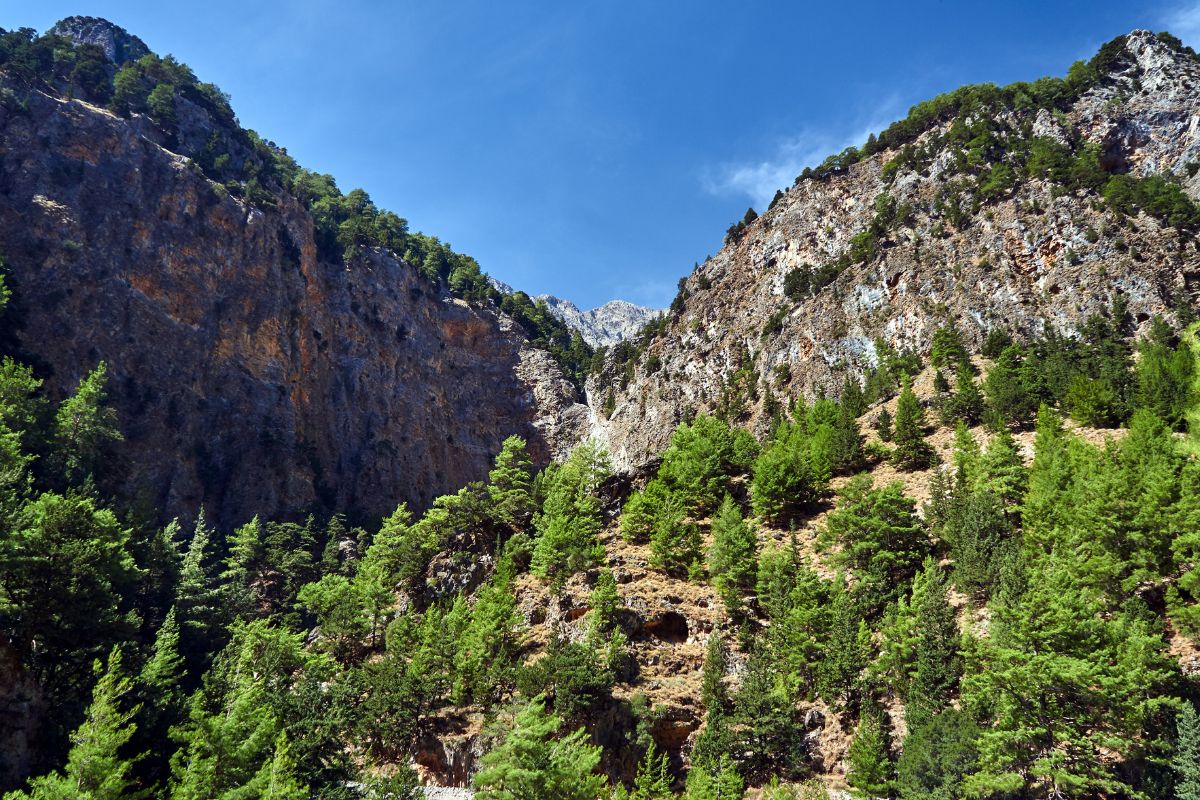
The White Mountains are generous, but they’re not forgiving if you underestimate them. A little planning makes the difference between a memorable day and a stressful one.
Best Time To Visit The White Mountains Crete
For most travelers, late spring and early autumn offer the best balance: comfortable temperatures, clearer hiking conditions, and fewer crowds than peak summer. Mid-summer is still doable, but you’ll want early starts and realistic expectations, especially for long gorges like Samaria.
What To Pack For The White Mountains
Even if you’re “just going to a viewpoint,” bring:
-
Plenty of water (more than you think you’ll need),
-
Proper shoes with grip,
-
Sun protection (hat + sunscreen),
-
A light layer for wind and cooler plateau evenings.
Mountain weather in Crete can change quickly, and the sun at elevation is no joke.
Guides, Trails, And Safety Decisions
Choose routes that match your fitness and comfort with uneven terrain. If you’re attempting longer hikes, high peaks, or less-traveled gorges, consider going with a professional guide, especially if conditions are windy, hot, or uncertain. And if rain is in the forecast, avoid gorges: flash-flood risk is real, and the safest decision is sometimes the simple one.
Conclusion
The Crete White Mountains reward travelers who mix ambition with softness. You don’t need to “do it all” to feel the power of Lefka Ori. Pick one plateau for perspective, one gorge for that deep, dramatic landscape, and one village stop for the human story behind the mountains. That combination, scenery, movement, and culture, is what turns the White Mountains Crete from a destination into a memory you’ll keep.
And if you leave wanting to come back for the parts you didn’t reach, that’s not a failure of planning. That’s just how the Cretan White Mountains work.